
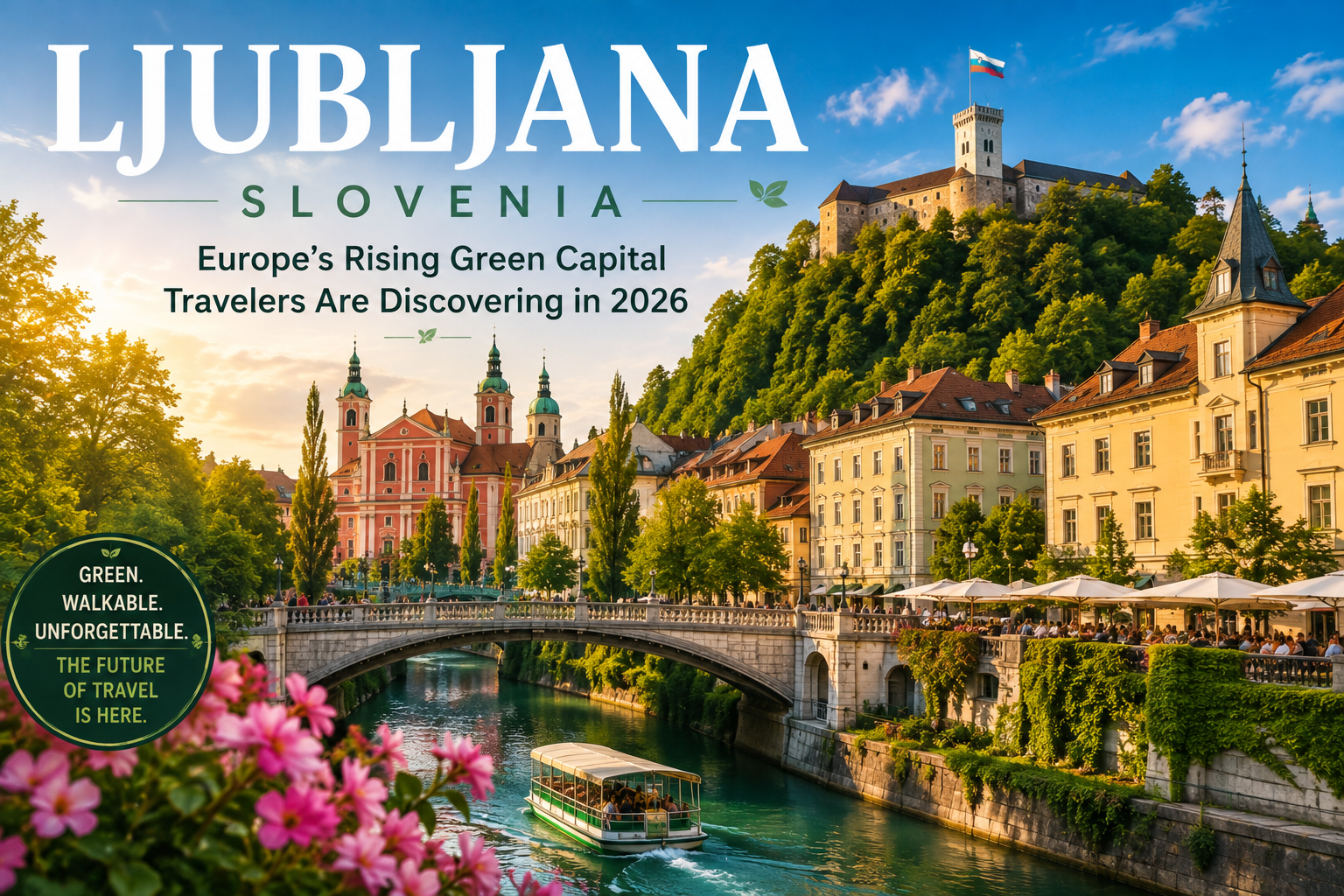
There is a particular kind of European city that travelers discover almost by accident and then spend years recommending to friends. Ljubljana, Slovenia is one of them.
For years, Slovenia’s capital sat in the shadow of better-known Central European destinations such as Venice, Vienna, and Prague. Today, that is changing. Travelers are increasingly looking beyond Europe’s busiest cities for destinations that combine history, culture, nature, and a more relaxed pace.
Ljubljana fits that search remarkably well.
The city is compact, walkable, surrounded by green spaces, and built around the Ljubljanica River. Its historic center is largely free of regular car traffic, while cafés, markets, parks, galleries, and riverside promenades create a city that feels easy to explore.
For travelers planning a Ljubljana trip in 2026, the appeal goes beyond sightseeing. This is a European capital where sustainability is part of everyday life rather than simply a tourism slogan.
Why Is Ljubljana Becoming Popular in 2026?
Ljubljana has been building its reputation as a sustainable destination for years.
The city became the European Green Capital in 2016, and its approach to urban sustainability has continued to influence how visitors experience the city.
The historic center is largely pedestrianized, making it easy to explore without a car. Bicycles are common, electric vehicles operate in the center, and green spaces are integrated throughout the urban landscape.
This has created a different type of city break.
Instead of rushing between major attractions, visitors can walk beside the river, stop at a café, explore a market, visit a museum, and finish the afternoon in a park.
That slower rhythm is one reason Ljubljana Slovenia is increasingly appealing to travelers looking for alternatives to Europe’s busiest capitals.
A City Designed for Walking
One of the first things visitors notice in Ljubljana is the lack of regular traffic in the historic center.
The city began transforming its central streets into pedestrian-friendly areas in the late 2000s. Today, much of the old town is designed around pedestrians, cyclists, and small electric vehicles.


The Ljubljanica River runs through the heart of the city, with bridges, cafés, restaurants, and walking paths along its banks.
This makes Ljubljana particularly enjoyable for travelers who prefer exploring on foot.
You can start your morning at the Central Market, walk toward the Triple Bridge, explore the old town, and continue toward Ljubljana Castle without needing a complicated transportation plan.
Ljubljana Castle and the Old Town
Ljubljana Castle is one of the city’s most recognizable landmarks.
Sitting on Castle Hill above the historic center, the castle offers panoramic views over Ljubljana and the surrounding landscape.
The funicular provides an easy way to reach the hill, while walking routes are available for visitors who prefer to climb on foot.
Inside the castle, visitors can explore exhibitions and historical spaces while learning more about the city’s development.
After visiting the castle, return to the old town and explore the narrow streets surrounding the river. Ljubljana’s historic center is relatively compact, which means you can experience many of its highlights without spending hours traveling between attractions.
Tivoli Park: Ljubljana’s Green Heart
If Ljubljana’s old town shows how the city welcomes visitors, Tivoli Park shows how residents use their city.
Located close to the center, Tivoli is Ljubljana’s largest park and a popular place for walking, running, relaxing, and spending time outdoors.


Instead of feeling like a tourist attraction, the park has a distinctly local atmosphere.
Paths lead through wooded areas and landscaped sections, while cultural attractions and outdoor artwork add another dimension to the experience.
For travelers who enjoy combining city breaks with nature, Tivoli Park is one of the easiest places to slow down during a Ljubljana itinerary.
The Central Market and Local Life
For a glimpse of everyday Ljubljana, head to the Central Market.
Located near the Ljubljanica River, the market brings together local produce, flowers, food products, and other goods.
The market is closely associated with architect Jože Plečnik, whose work shaped much of Ljubljana’s architectural identity.
It is also a good place to experience the city beyond its major monuments.
Rather than simply photographing the historic center, visitors can watch locals shop, sample regional products, and discover ingredients that appear in Slovenian cuisine.
Metelkova: Ljubljana’s Creative Side
Ljubljana has a quieter side, but it is not without character.
Metelkova is a former military complex that evolved into an alternative cultural and artistic district.
Its colorful murals, sculptures, galleries, studios, and nightlife spaces make it one of the most visually distinctive areas in the city.


The area offers a contrast to Ljubljana’s elegant historic center and is particularly interesting for travelers interested in contemporary art, independent culture, and alternative nightlife.
Lake Bled: The Classic Slovenia Day Trip
Although Lake Bled is not inside Ljubljana, it is one of the easiest and most popular additions to a Slovenia itinerary.
The lake is roughly an hour from Ljubljana by road, depending on traffic and transportation.
Its famous island church, medieval castle, turquoise water, and mountain surroundings have made it one of Slovenia’s most recognizable landscapes.


A day trip from Ljubljana allows travelers to experience Bled without changing hotels.
However, if you have more time, consider staying overnight. Early mornings and evenings are considerably quieter than the busiest daytime hours.
Ljubljana’s Food Scene
Food is another reason to spend more than a quick overnight in Ljubljana.
Restaurants increasingly focus on seasonal Slovenian ingredients, while cafés and bakeries provide easy options for travelers exploring the city on foot.
Traditional Slovenian cuisine reflects influences from Central Europe, the Alps, the Mediterranean, and the Balkans.
Visitors can look for dishes such as štruklji, potica, jota, and local meat and vegetable preparations.
Ljubljana’s is also a convenient place to discover Slovenian wines, with vineyards across the country’s different wine regions.
For food-focused travelers, visiting the Central Market and trying local dishes at independent restaurants can add a more authentic dimension to a city break.
Sustainable Travel in Ljubljana
Sustainability is one of the strongest reasons to visit Ljubljana.
The city’s pedestrianized center reduces the need for cars, while cycling and public transportation provide practical alternatives for getting around.
Slovenia also operates the Slovenia Green tourism program, which promotes sustainability across destinations and tourism businesses.
For visitors, traveling sustainably in Ljubljana is relatively straightforward.
Walk whenever possible, use public transportation for longer journeys, choose locally owned restaurants and accommodation, and explore nearby attractions without relying on private cars when practical.
The result is a destination where sustainable travel does not necessarily require extra effort.
How Many Days Do You Need in Ljubljana?
Three to four days in Ljubljana is a comfortable amount of time for a first visit.
A three-day trip could include:
- Day 1: Ljubljana Old Town, Triple Bridge, Central Market, and Ljubljana Castle
- Day 2: Tivoli Park, museums, cafés, and Metelkova
- Day 3: Lake Bled day trip
- Day 4: A slower city day or another Slovenia excursion
If you are planning a longer Slovenia itinerary, Ljubljana works particularly well as a starting point for exploring Lake Bled, Lake Bohinj, the Julian Alps, and other parts of the country.
Best Time to Visit Ljubljana
The best time to visit Ljubljana‘s depends on what you want from your trip.
Spring
Spring brings mild weather, flowering parks, and longer days. It is an excellent season for walking around the city and exploring Slovenia’s countryside.
Summer
Summer offers long daylight hours and plenty of outdoor activity. Riverside cafés and public spaces become particularly lively, although popular attractions and Lake Bled can be busy.
Autumn
Autumn is one of the most atmospheric seasons in Ljubljana. The city’s parks and surrounding landscapes take on warm colors, while cooler temperatures make walking comfortable.
Winter
Winter brings shorter days and colder weather, but Ljubljana’s Christmas markets and decorated historic center create a festive atmosphere.
For a combination of pleasant weather and comfortable sightseeing, spring and early autumn are excellent choices.
Getting Around Ljubljana
Ljubljana is one of Europe’s easier capitals to explore without a car.
The historic center is compact and pedestrian-friendly, while city buses connect neighborhoods farther from the center.
Cycling is also popular, and visitors can use bike-sharing and rental services where available.
If you are planning to explore Slovenia beyond Ljubljana, however, renting a car can be useful for reaching rural areas, mountain destinations, and smaller towns.
Is Ljubljana Worth Visiting in 2026?
Yes.
Ljubljana may not have the monumental scale of Paris, the canals of Venice, or the historic grandeur of Vienna, but that is exactly what makes it appealing.
The city offers something increasingly valuable to modern travelers: space to slow down.
You can walk along the Ljubljanica, drink coffee beside the river, explore Plečnik’s architecture, spend an afternoon in Tivoli Park, discover alternative art at Metelkova, and still have time for a day trip into the Slovenian countryside.
For travelers searching for a green European city break in 2026, Ljubljana deserves a place near the top of the list.
Frequently Asked Questions About Ljubljana
What is Ljubljana famous for?
Ljubljana is known for its historic old town, Ljubljanica River, Ljubljana Castle, Tivoli Park, Plečnik architecture, pedestrian-friendly center, and reputation for sustainable urban tourism.
Is Ljubljana worth visiting in 2026?
Yes. Ljubljana is a compact and walkable capital with a strong combination of culture, architecture, food, green spaces, and easy access to Slovenia’s natural attractions.
How many days do you need in Ljubljana?
Three to four days are enough for a comfortable first visit. Travelers with more time can use Ljubljana as a base for exploring Lake Bled, Lake Bohinj, and the Julian Alps.
What is the best time to visit Ljubljana?
Spring and early autumn are excellent for comfortable weather and sightseeing. Summer is livelier, while winter offers a quieter atmosphere and festive events.
Is Ljubljana expensive?
Ljubljana can be more affordable than some major Western European capitals, although prices vary depending on accommodation, restaurants, and the season.
Can you visit Lake Bled from Ljubljana?
Yes. Lake Bled is close enough to Ljubljana for a convenient day trip by car, bus, or organized tour.
Is Ljubljana a walkable city?
Yes. Much of the historic center is pedestrian-friendly, and many major attractions are within walking distance of one another.
Final Thoughts
Ljubljana, Slovenia does not need to compete with Europe’s famous capitals.
Its strength lies elsewhere.
It is a city where the river is part of everyday life, where the historic center can be explored on foot, where parks are genuinely used by residents, and where sustainability has influenced the way the city operates.
Add easy access to Lake Bled, the Julian Alps, Slovenian cuisine, and the country’s wider green tourism network, and Ljubljana becomes more than a quick stop between bigger European destinations.
For 2026 travelers looking for a walkable, green, culturally rich European escape, Ljubljana is no longer a city to overlook.
Internal Links
- The Rise of Do-Less Travel
- The Future of Sustainable Travel: How to Explore Without Leaving a Trace
- Experience-Led Travel 2026: Okinawa, Marrakech, Swiss Alps
- Hidden Gems: Why Offbeat Travel Creates the Best Memories
- Traveling Through the Seasons: Why Every Time of Year Offers a Unique Adventure
- The Joy of Getting Lost: Why Unplanned Travel Adventures Are the Most Rewarding
- Forgotten Kingdoms: Ancient Cities Every History Lover Should Visit
Outbound Links
- https://www.slovenia.info
- https://www.gov.si/en/policies/business-and-economy/tourism/
- https://whc.unesco.org
- https://www.unesco.org
- https://www.nationalgeographic.com/travel
- https://www.lonelyplanet.com
- https://www.cntraveler.com
- https://www.britannica.com
- https://www.iucn.org
- https://www.worldwildlife.org