
I booked this trip for one reason: I needed two days where nobody could reach me. There was no dramatic reason behind it, just the usual tiredness that builds up after a few months of back-to-back deadlines – Dharamshala.
A colleague who had visited McLeod Ganj the year before gave me one line that stayed with me: “You don’t really do much there, you just sit and look at the mountains and somehow that’s enough.”
At the time, I didn’t completely believe her.
Now, I do.
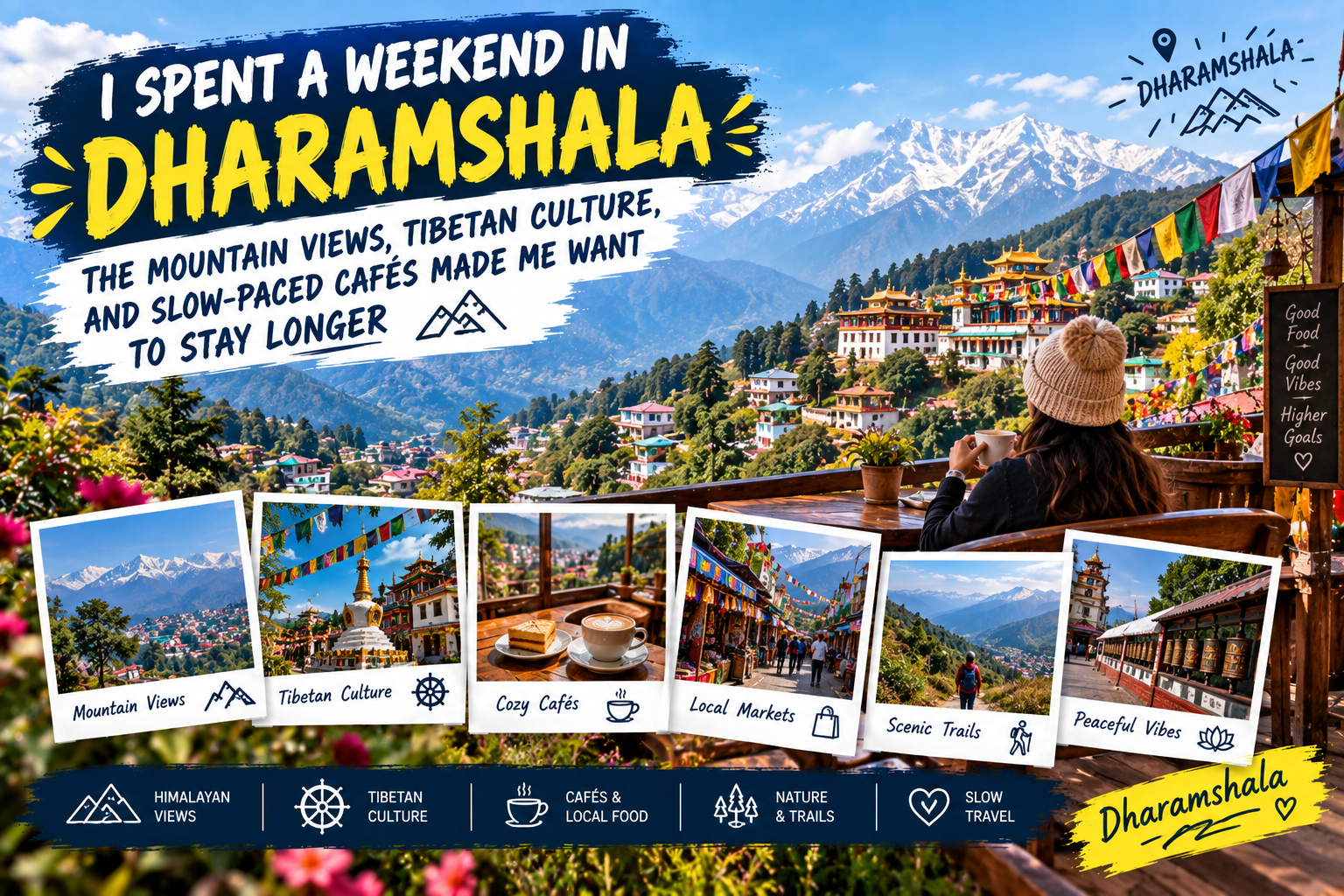
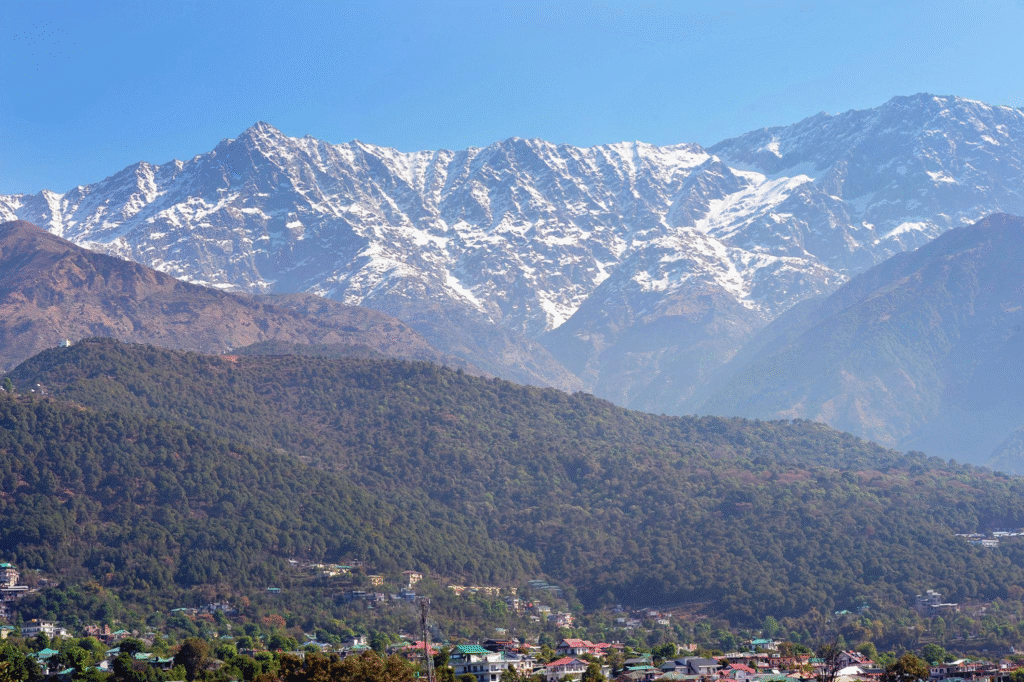
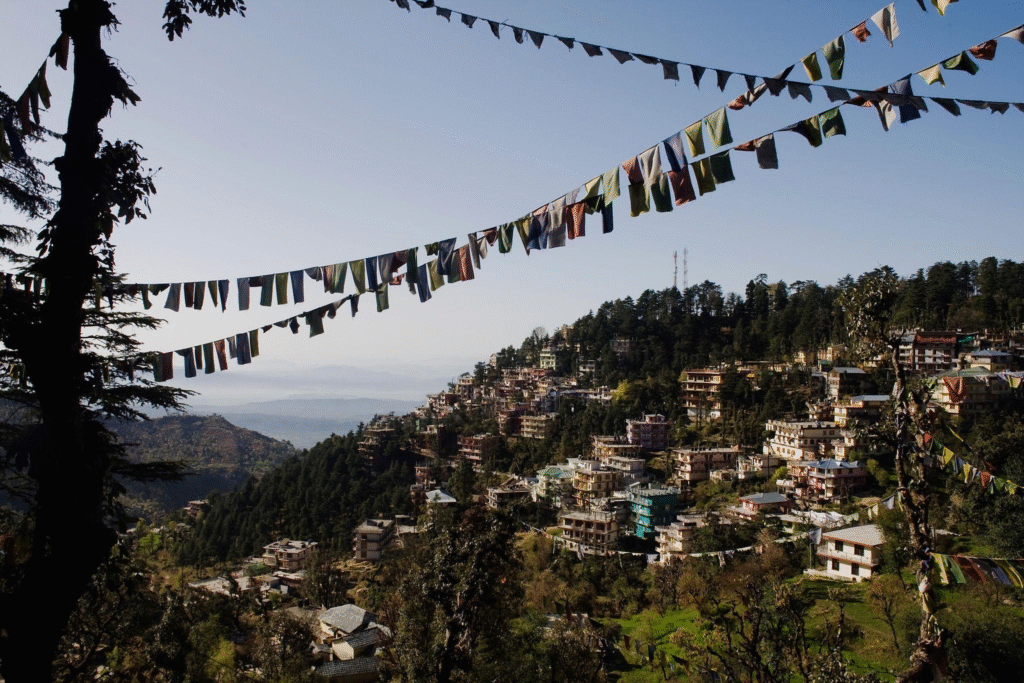
Dharamshala turned out to be exactly that kind of place. The Dhauladhar mountains dominate the skyline, while the upper part of town moves at a noticeably slower pace. Around McLeod Ganj, Tibetan monasteries, prayer flags, small restaurants, bookshops, and cafés create an atmosphere that feels very different from other popular Himachal Pradesh hill stations.
The town is also closely connected with Tibetan culture. McLeod Ganj has been associated with the Dalai Lama and the Tibetan community in exile since the 1960s, shaping much of the area’s food, religious life, markets, and everyday character.
What surprised me most, though, was how little I wanted to rush.
A Dharamshala weekend trip can easily become a checklist of waterfalls, viewpoints, temples, and cafés. My own two days went differently. Some of the moments I remember most clearly came from sitting with a cup of tea, walking through quiet lanes, watching monks turn prayer wheels, and simply looking at the mountains.
That slower rhythm was the real reason I left wanting more time.
Getting There: The Journey to Dharamshala
For anyone wondering how to reach Dharamshala, there are several practical options from Delhi and other major cities in northern India.
Flights operate to Kangra Airport, also known as Gaggal Airport, which is located around 15 kilometres from McLeod Ganj. Road travel is another popular choice, with overnight Volvo buses connecting Delhi and Dharamshala.
Train travel is slightly less direct. Pathankot is the nearest major railway connection, followed by a road journey into the hills.
I chose an overnight Volvo bus from Delhi’s Kashmiri Gate. Sleeping on a moving bus has never been my strength, so the journey was hardly luxurious. By the time I arrived, I was groggy, slightly cold, and ready for coffee.
Then the mist lifted.
The Dhauladhar range appeared beyond the road, rising dramatically behind the town. That first glimpse made the sleepless journey feel completely worthwhile.
For a short Dharamshala weekend trip, arriving early is useful because you can leave your luggage at your accommodation and start exploring without losing half the day.
Day One: First Impressions of McLeod Ganj
McLeod Ganj is compact enough to explore on foot, but the steep lanes make the experience slower than the distances on a map suggest.
My guesthouse was on Jogiwara Road, close enough to the main market to walk almost everywhere. After dropping my bag, I headed outside with no particular destination.
The main square was already busy.
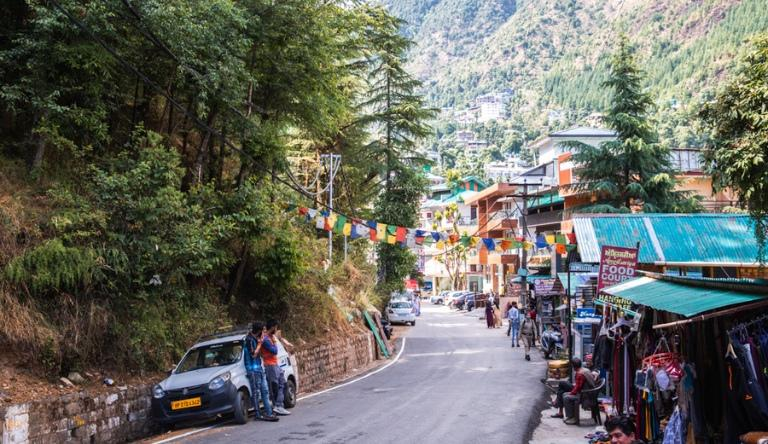
Small shops displayed Tibetan jewellery, prayer flags, woollens, handicrafts, and colourful souvenirs. Narrow lanes branched away from the main road, leading toward monasteries, bakeries, guesthouses, and cafés.
One detail caught my attention almost immediately.
The smell of burning juniper incense drifted through the morning air. Someone was preparing incense a couple of doors away, and the woody fragrance mixed with the cool mountain air.
It was a small moment, but it gave me my first sense of the character of McLeod Ganj.
Nothing felt hurried.
That became a recurring theme throughout the weekend.
Tibetan Culture at the Heart of Dharamshala
A Dharamshala travel guide would feel incomplete without spending time around the Tibetan cultural landmarks of McLeod Ganj.
The Tsuglagkhang complex is one of the most important places to visit. It includes the main temple and is closely associated with the Dalai Lama’s residence.
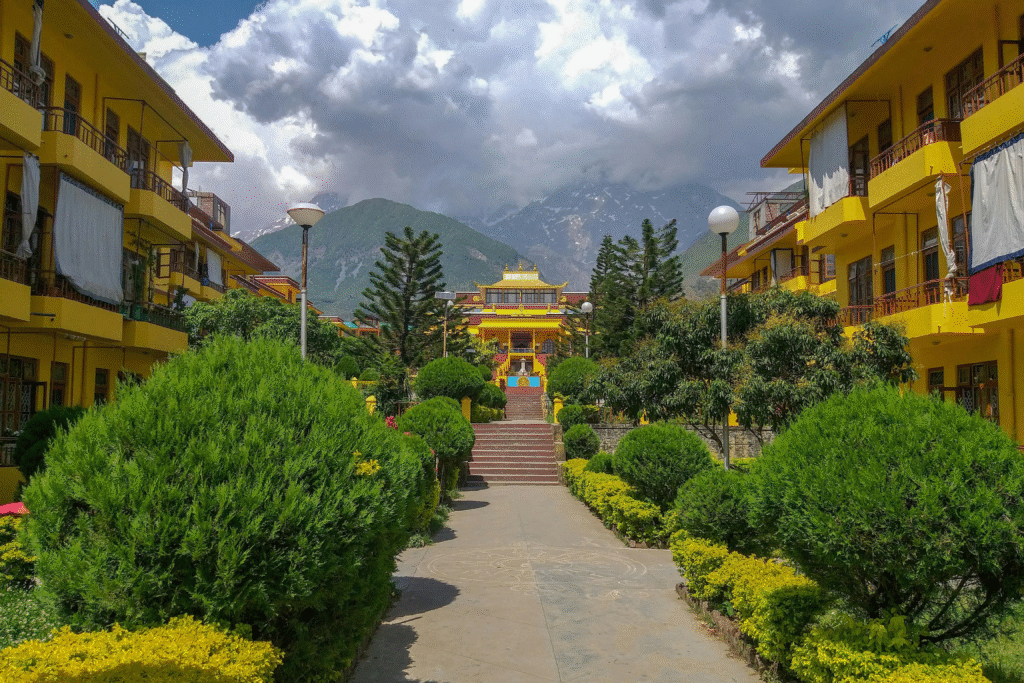
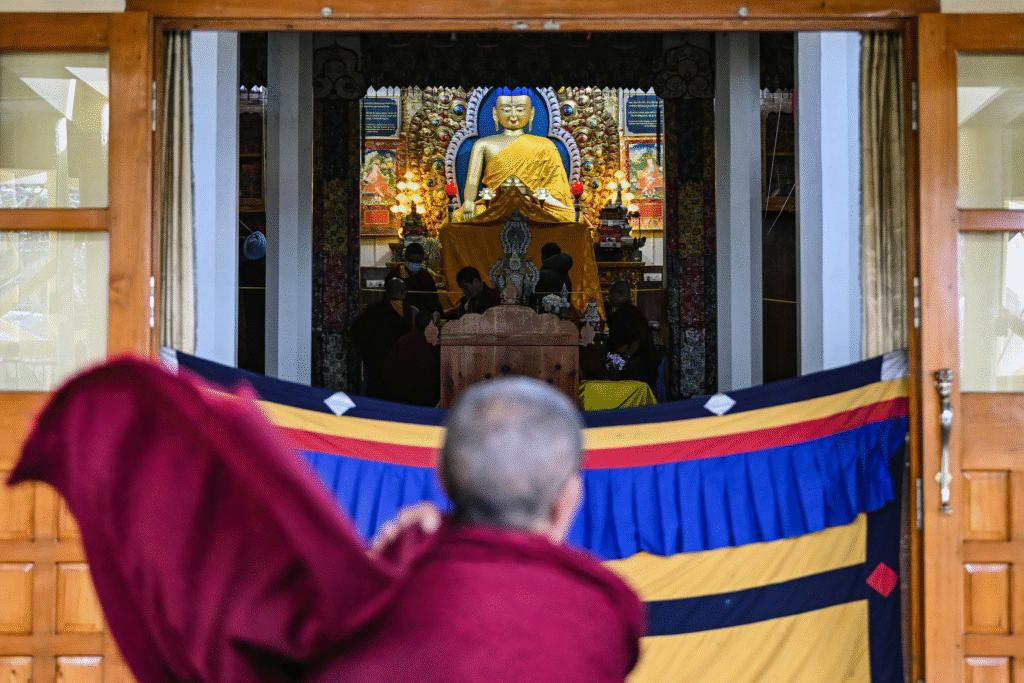
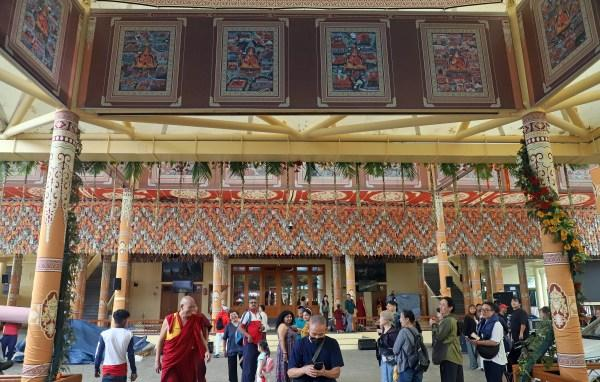
The complex itself is relatively simple compared with many of India’s elaborate temples. Inside, you’ll find rows of butter lamps, Buddhist imagery, prayer spaces, and monks going about their daily routines.
Photography restrictions apply in certain areas, and security checks are part of the visit.
What stayed with me was the atmosphere.
Despite being one of the most visited places in McLeod Ganj, the temple complex felt remarkably peaceful. Visitors moved quietly while monks continued with their prayers and daily activities.
The Kora Walk
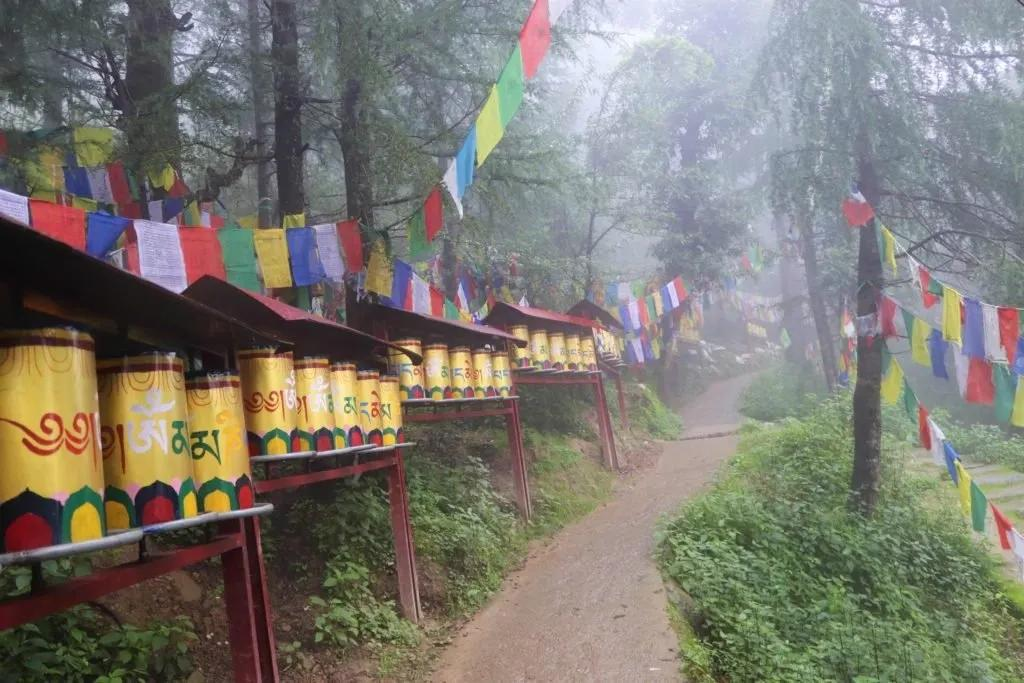
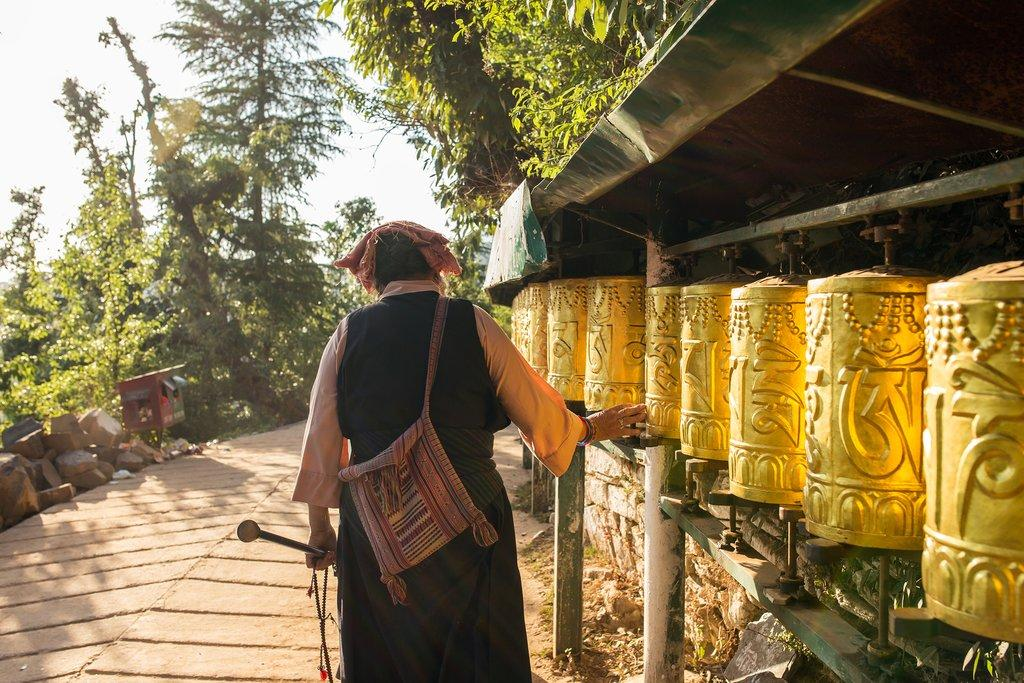
Just outside the temple complex, the Kora walking path loops around the hillside.
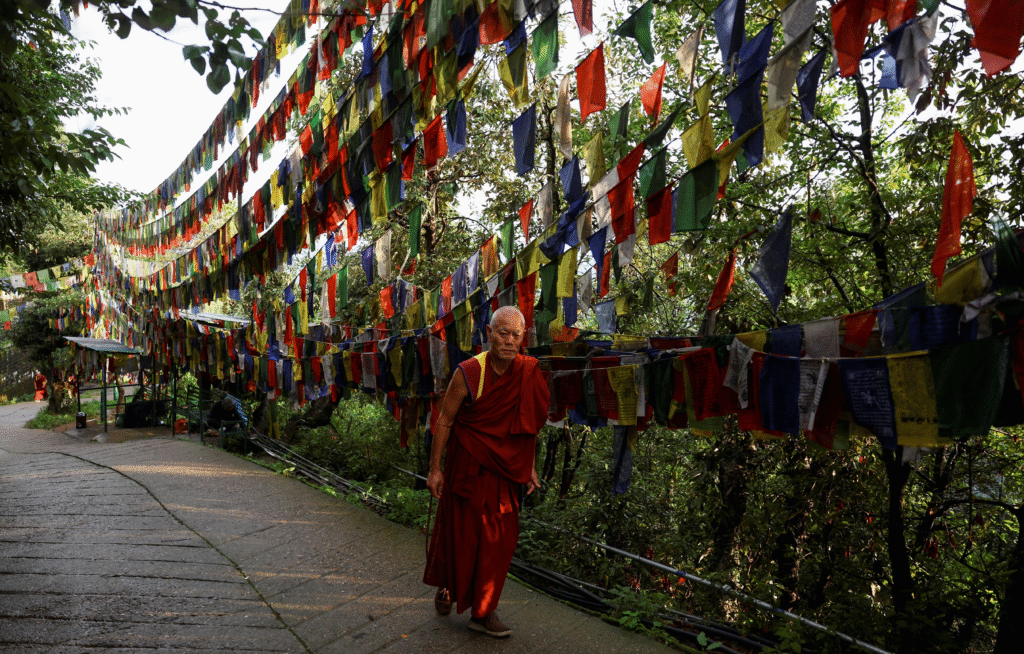
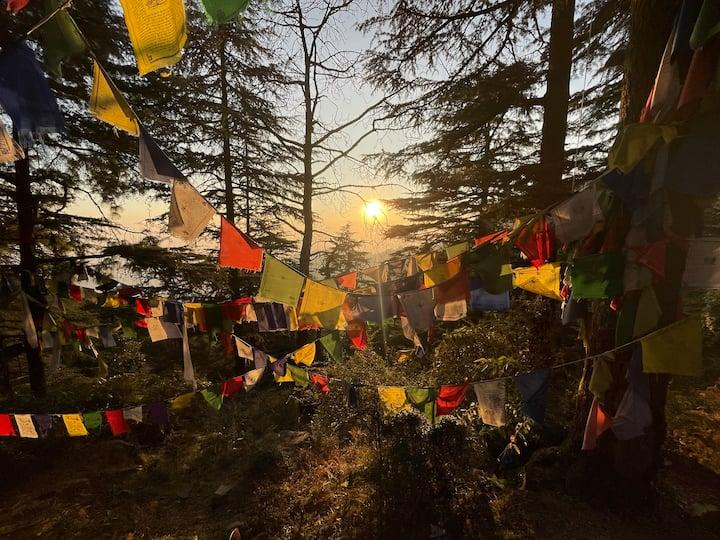
Prayer wheels line sections of the route, accompanied by colourful prayer flags fluttering above the path. Tibetan Buddhist pilgrims traditionally walk clockwise around the circuit while turning the wheels as they pass.
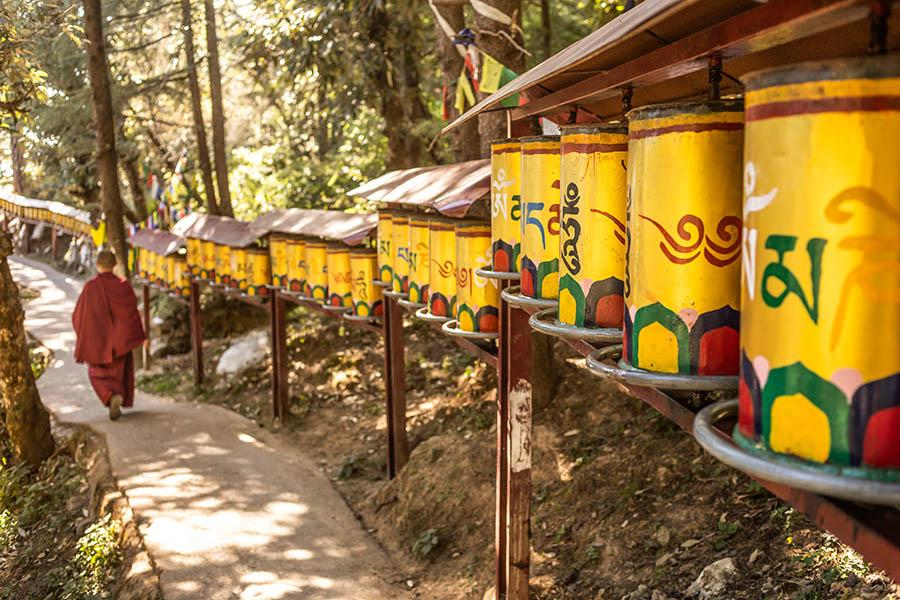
I started walking without any particular plan.
One lap became two.
The repetitive movement was strangely calming. There was no sightseeing checklist involved and nowhere I needed to reach. For a short while, the walk became the entire activity.
The Tibet Museum
The Tibet Museum offers a different experience.
Photographs, documents, and personal accounts explain the history of the Tibetan community and its journey into exile. Compared with the cafés and mountain viewpoints around McLeod Ganj, the museum feels considerably more serious.
Still, it adds important context to the destination.
Understanding that history makes the Tibetan temples, prayer flags, food, and cultural institutions around Dharamshala feel much more meaningful.
Norbulingka Institute
For travellers with additional time, the Norbulingka Institute is another worthwhile stop.
The institute works to preserve traditional Tibetan arts and crafts, including painting, woodcarving, tailoring, and other forms of craftsmanship. Its landscaped setting makes the visit feel very different from the busier streets of McLeod Ganj.
Rather than simply looking at finished objects, visitors can get a glimpse into the skills and traditions behind them.
That was one of the experiences I appreciated most.
Dharamshala Cafés That Made Me Slow Down
The Dharamshala cafes were not originally part of my plan.
They became one of the highlights anyway.
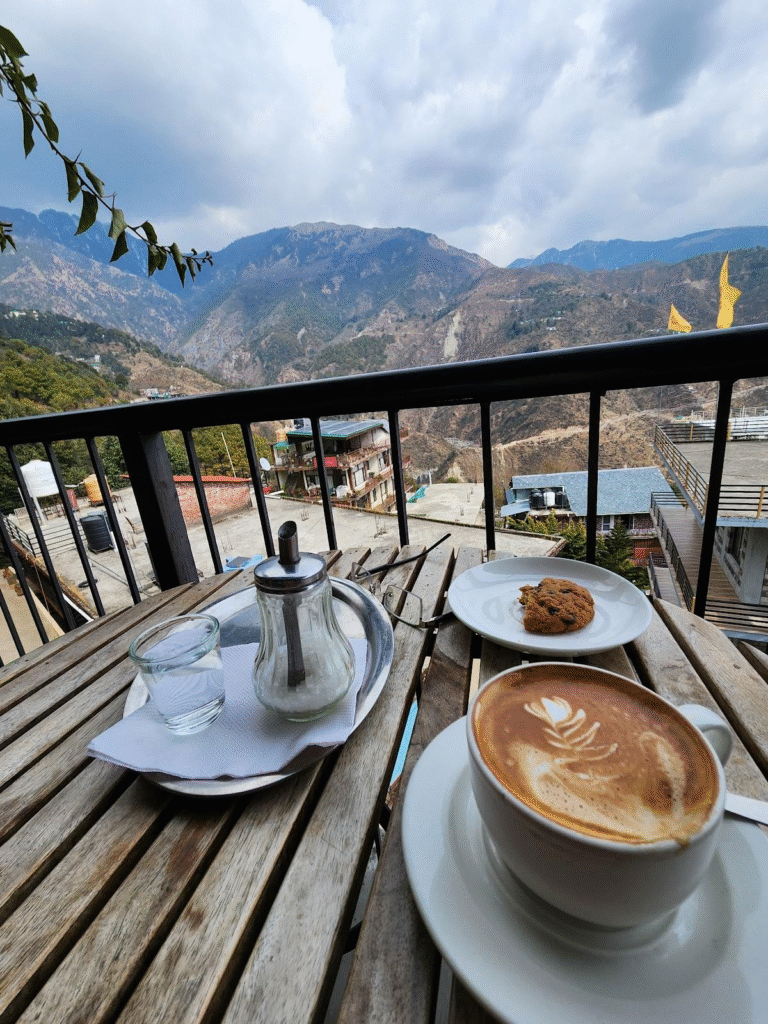
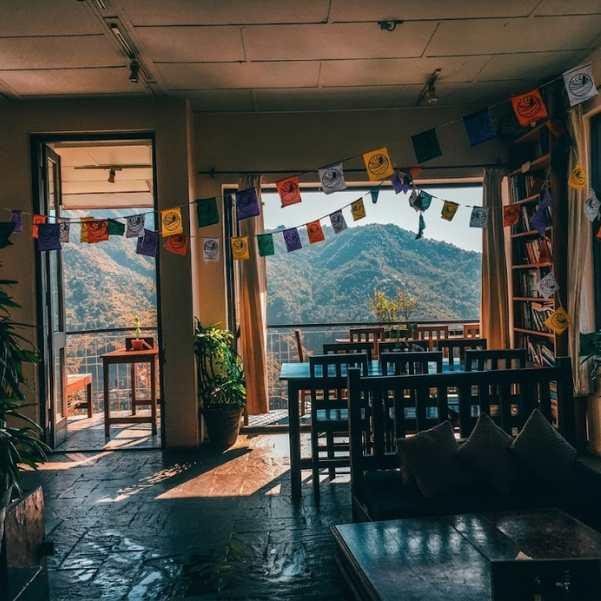
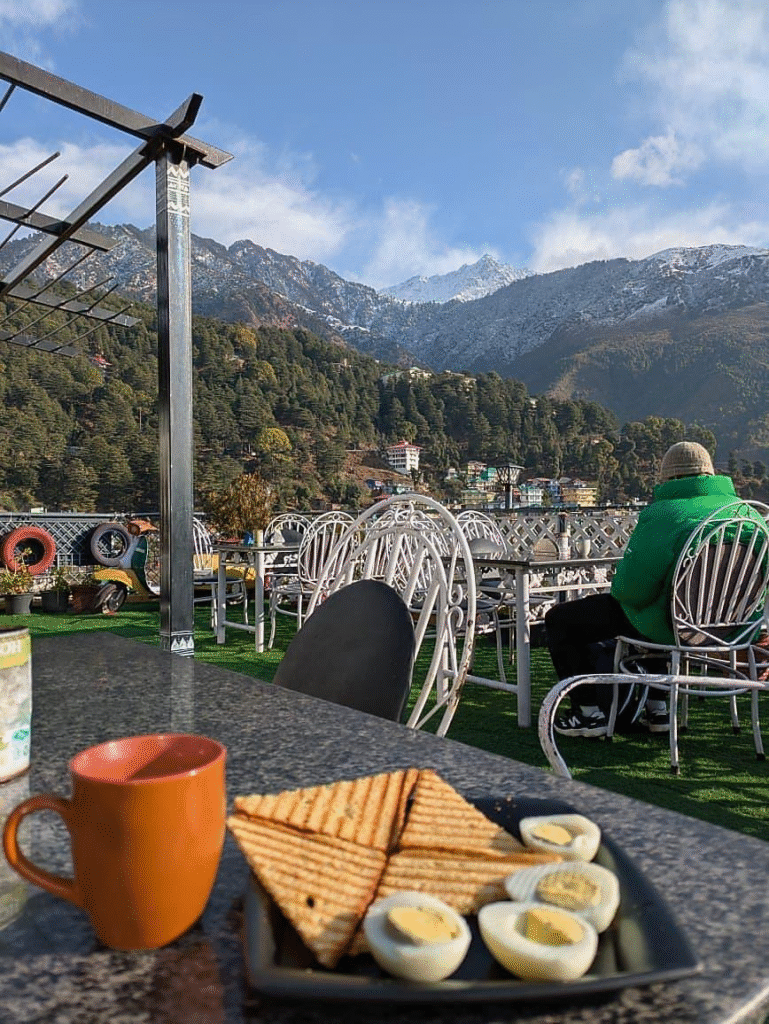
Around McLeod Ganj, Bhagsu, and Dharamkot, cafés tend to encourage lingering. A cup of coffee can easily turn into an hour of reading, conversation, or simply looking at the mountains.
One afternoon, I walked into a bookshop café intending to stay for twenty minutes.
Two hours later, I was still there.
Books filled the shelves, conversations drifted between tables, and the mountain views outside made checking the time feel unnecessary.
Other cafés around McLeod Ganj offer everything from specialty coffee to Tibetan dishes such as momos and thukpa. The combination is part of what makes the local café culture interesting.
You can order a flat white in the morning and a steaming bowl of thukpa later in the day without leaving the neighbourhood.
For me, that was the perfect pace.
Mountain Views Without a Long Trek
One of the best things about Dharamshala is that spectacular Dharamshala mountain views don’t always require a serious hike.
Bhagsu Waterfall
Bhagsu Waterfall is an easy outing from McLeod Ganj.
The walk passes through Bhagsu village before reaching the waterfall area. It can become crowded later in the morning, so an early start makes the experience much quieter.
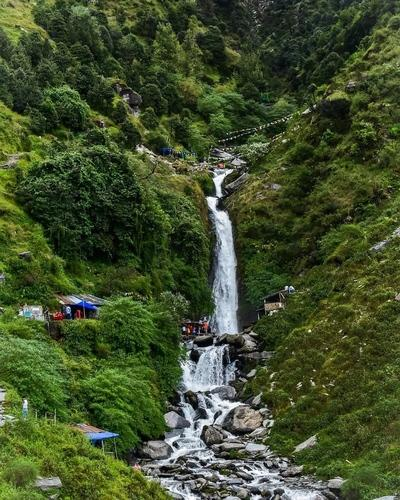
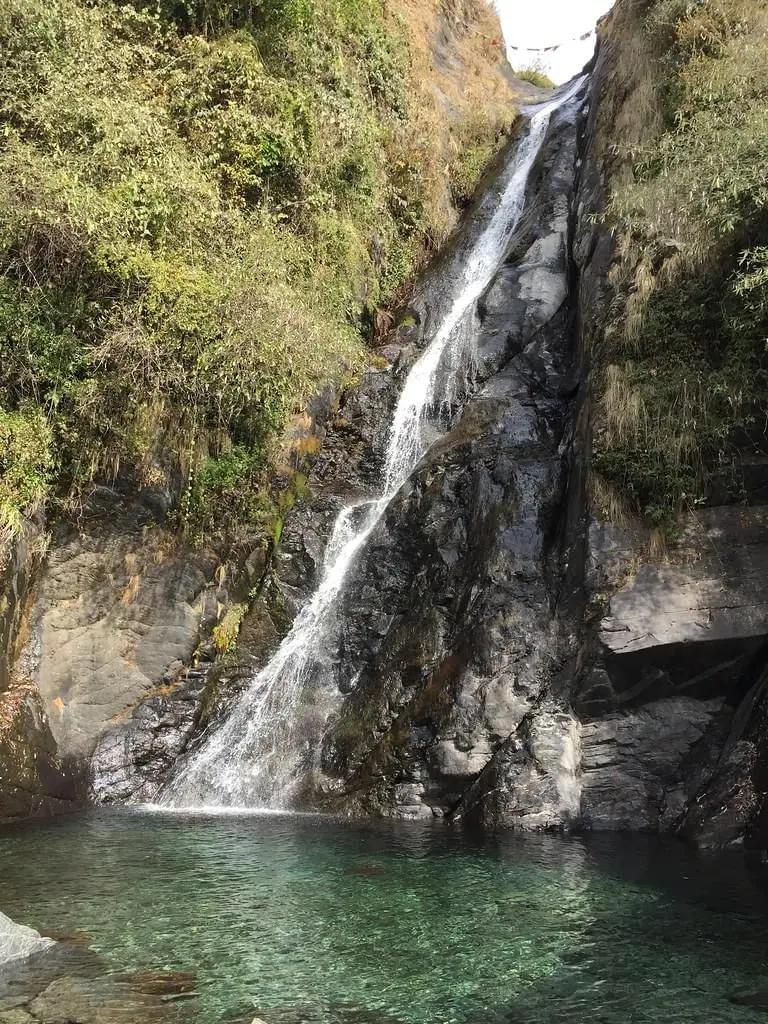
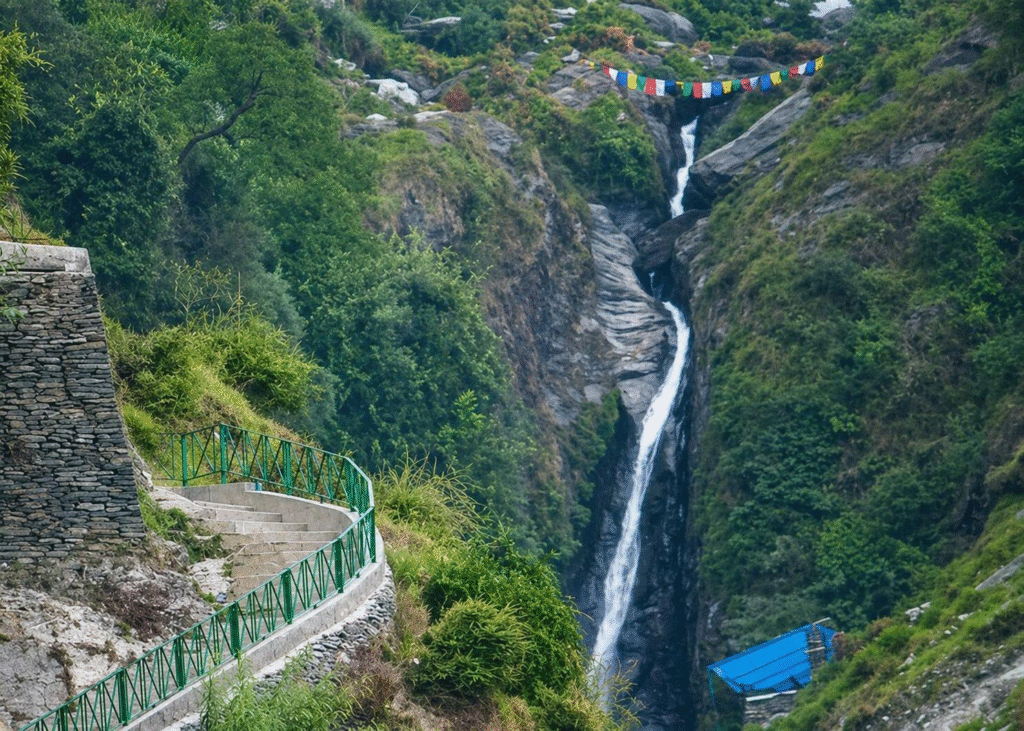
I arrived before the busiest period.
Water rushed down the rocks while the surrounding forest remained relatively still. After spending so much time walking through busy market lanes, the change in atmosphere was welcome.
Dharamkot Village
Dharamkot sits above McLeod Ganj and feels noticeably quieter.
The village has become popular with travellers interested in yoga, meditation, long stays, and slow travel. Cafés and guesthouses are scattered along the hillside, but the surrounding landscape remains the main attraction.
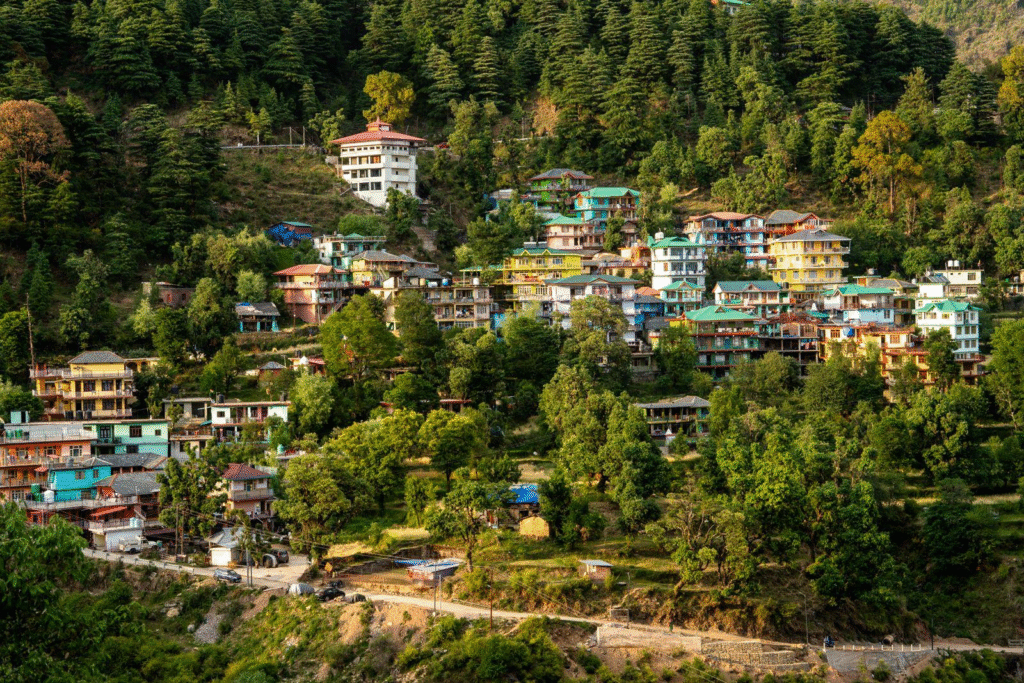
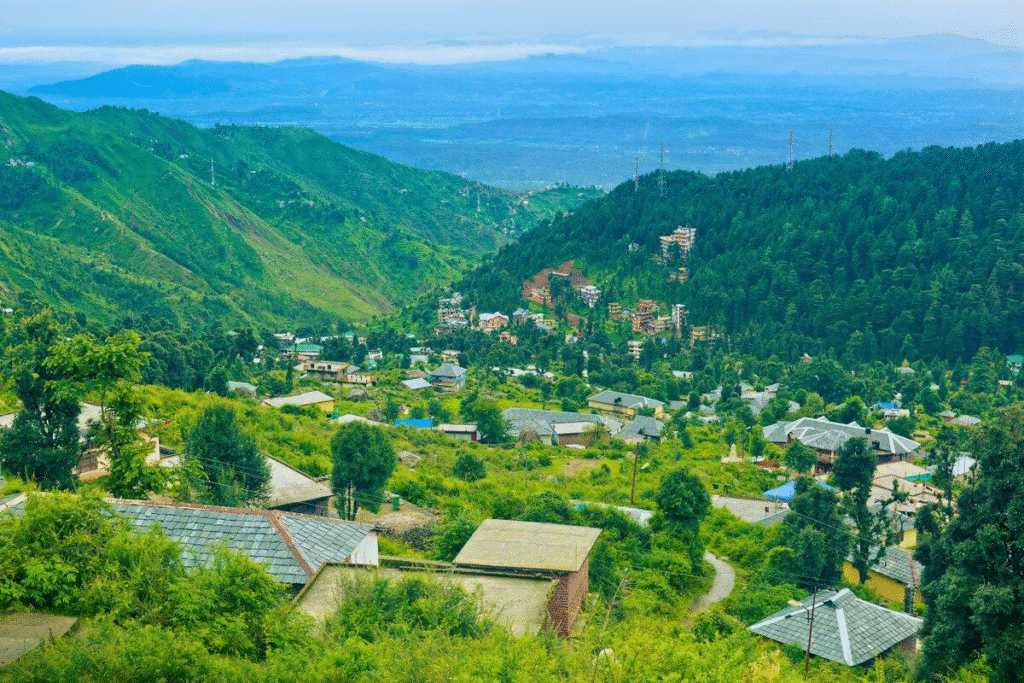
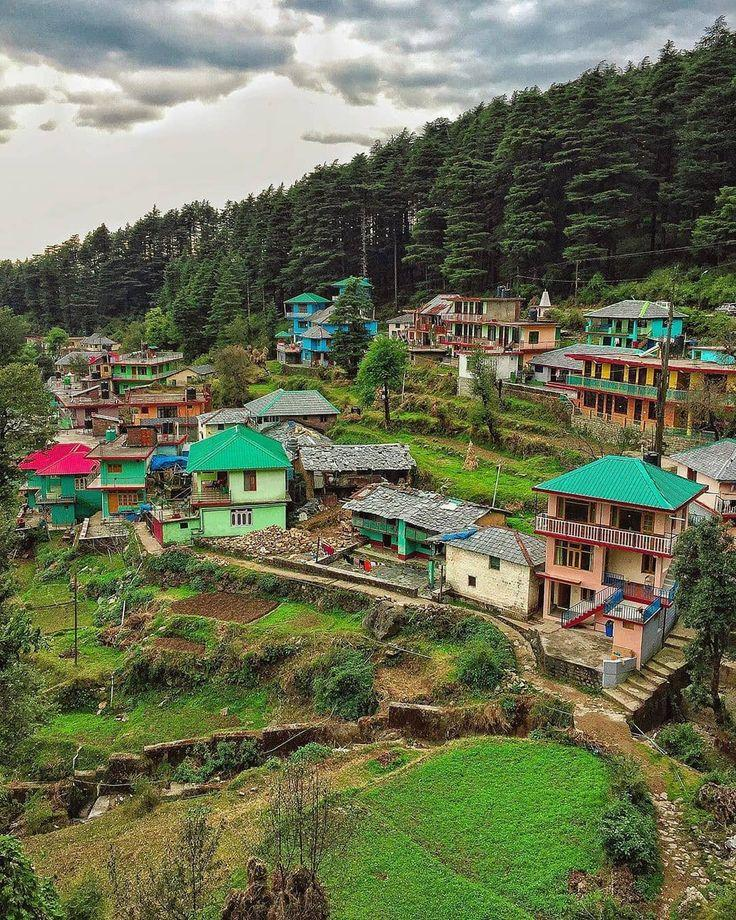
A short walk through the village was enough to understand why some visitors arrive for a weekend and end up staying much longer.
Triund Trek
The Triund trek is one of the best-known adventures around Dharamshala.
The trail climbs through forest before reaching an open ridge with expansive views of the Dhauladhar range. A full trek requires considerably more time and preparation than a standard weekend itinerary.
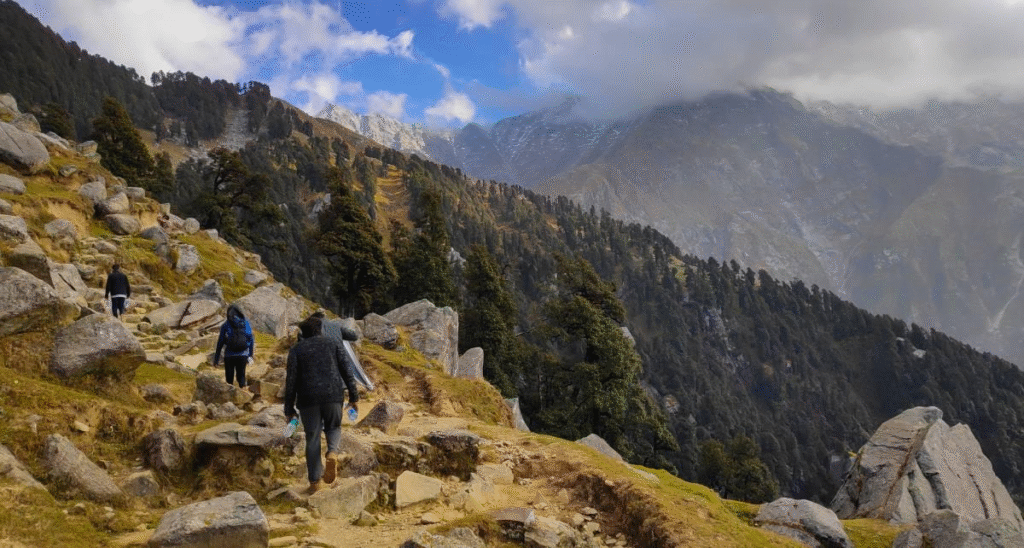
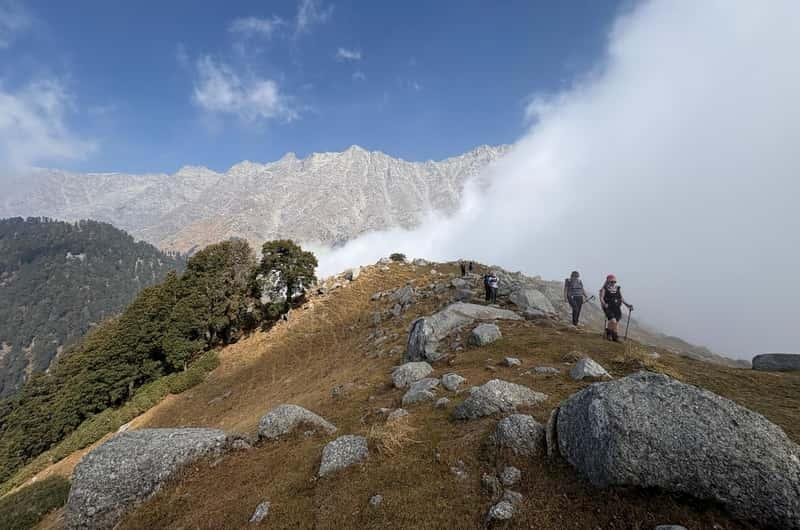
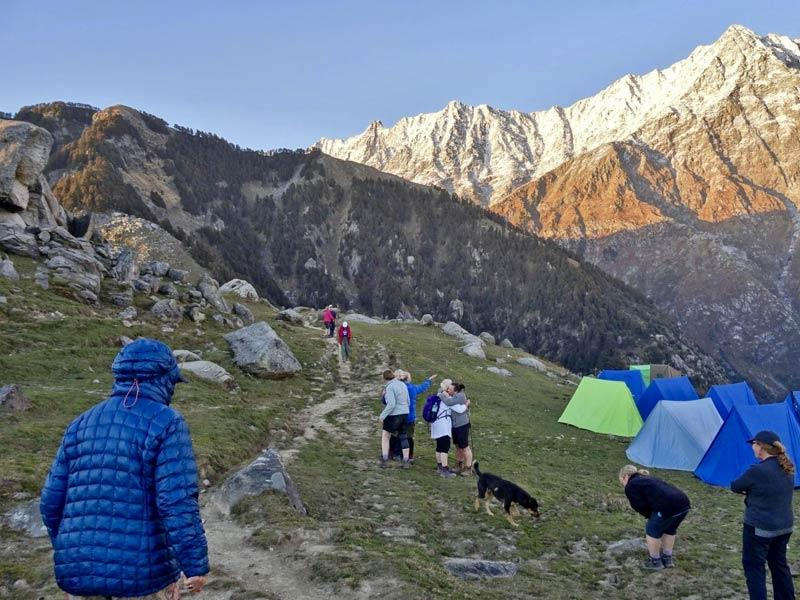
I didn’t attempt the entire route during my two days.
Instead, I walked part of the trail to get a sense of the landscape. Even that short section made it easy to understand why Triund attracts trekkers from across India and beyond.
Naddi Viewpoint at Sunset
For sunset, I headed toward Naddi viewpoint.
The location overlooks the Kangra Valley and offers a wide mountain panorama. On a clear evening, the changing light gradually moves across the valley and surrounding peaks.
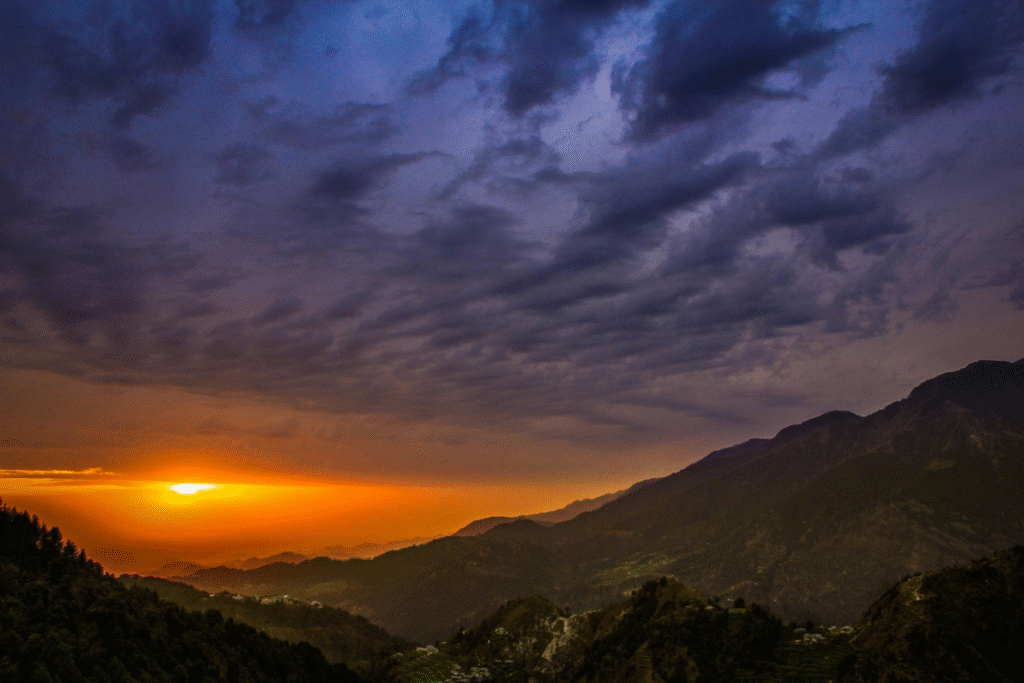
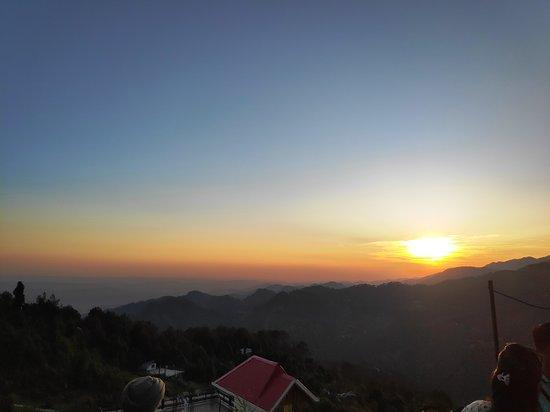
A roadside stall provided a cup of tea.
Then I found a quiet spot and simply watched.
Half an hour passed without much happening, which was precisely why I liked it.
A Simple 2-Day Dharamshala Itinerary
Day 1
- Arrive in Dharamshala or McLeod Ganj
- Check into your accommodation
- Explore the main market
- Visit the Tsuglagkhang complex
- Walk the Kora circuit
- Visit the Tibet Museum
- Explore local Tibetan restaurants and cafés
- Watch sunset from Naddi viewpoint
Day 2
- Start early for Bhagsu Waterfall
- Walk around Bhagsu village
- Explore Dharamkot
- Attempt the opening section of the Triund trail if time and fitness allow
- Return to McLeod Ganj
- Spend a slow afternoon at a bookshop café
- Try momos, thukpa, Tibetan bread, or butter tea
This 2 day Dharamshala itinerary covers the main highlights without turning the weekend into a race between attractions.
Best Time to Visit Dharamshala
The best time to visit Dharamshala depends on what you want to do.
March to June generally offers pleasant conditions for sightseeing and outdoor activities. September to November can also be a good period, particularly for clearer mountain views and trekking conditions.
July and August bring the monsoon.
Rain can make mountain roads and trekking trails more challenging, while landslides can occasionally affect travel routes.
Winter brings colder temperatures, particularly around McLeod Ganj and higher elevations.
If mountain views and outdoor walks are your priority, checking the weather forecast shortly before travelling is worthwhile.
Dharamshala Budget Travel: What to Expect
A weekend in Dharamshala doesn’t have to be expensive.
Budget guesthouses and hostels are available around McLeod Ganj, Bhagsu, and Dharamkot. Local Tibetan restaurants and cafés also offer plenty of affordable meal options.
Your overall cost will depend largely on transportation and accommodation.
Travelling by overnight bus can reduce the cost of both transport and one night’s accommodation. Staying slightly away from the busiest lanes can also help keep the budget under control.
For a relaxed Dharamshala budget travel experience, I would rather spend money on an extra night than try to fit too many attractions into two days.
Quick Facts for a Dharamshala Weekend Trip
| Detail | Information |
|---|---|
| Best time to visit | March–June and September–November |
| Nearest airport | Kangra Airport (Gaggal) |
| Nearest major railway station | Pathankot |
| Ideal short-trip length | 2–3 days |
| Longer trekking trip | 4–5 days |
| Main areas to stay | McLeod Ganj, Bhagsu, Dharamkot |
| Must-try food | Momos, thukpa, Tibetan bread, butter tea |
| Main experiences | Tibetan culture, mountain views, cafés, waterfalls, trekking |
Frequently Asked Questions About a Dharamshala Weekend Trip
Is two days enough for Dharamshala?
Two days is enough for the main McLeod Ganj attractions, including the Tsuglagkhang complex, Kora walk, Bhagsu Waterfall, Dharamkot, cafés, and a sunset viewpoint.
A full Triund trek requires additional time, especially if you want to complete it without rushing.
What is Dharamshala known for?
Dharamshala is known for its Dhauladhar mountain scenery, Tibetan culture, Buddhist monasteries, the Dalai Lama’s association with McLeod Ganj, trekking routes, cafés, and nearby villages.
Is Dharamshala good for a weekend getaway from Delhi?
Yes. Overnight buses make Dharamshala accessible for a short trip from Delhi. Travellers who are comfortable with overnight journeys can leave Delhi in the evening and arrive in the hills the following morning.
What should I pack for Dharamshala?
Layers are useful because temperatures can change considerably between daytime and evening. Comfortable walking shoes are important for McLeod Ganj’s steep lanes and nearby trails.
A light jacket and rain layer are especially useful during cooler months and the monsoon season.
Is McLeod Ganj the same as Dharamshala?
McLeod Ganj is a suburb of Dharamshala located higher in the hills. It is particularly known for Tibetan cultural institutions, monasteries, cafés, restaurants, and guesthouses.
Can you visit Triund during a weekend trip?
It is possible, but the trek requires more planning than the other attractions around McLeod Ganj. If Triund is a priority, adding an extra day gives you more flexibility.
Why I’m Already Planning to Go Back
I left Dharamshala with a slightly sunburned face, a bag full of prayer flags I probably didn’t need, and one clear thought: two days weren’t enough.
Nothing specific was missing from the itinerary.
I had visited the temple complex, walked the Kora, explored Bhagsu, spent time in cafés, wandered through Dharamkot, and watched the sunset from Naddi.
The problem was the pace.
A weekend gives you enough time to see Dharamshala, but barely enough time to settle into it.
That is what stayed with me after leaving.
Some destinations reward a packed itinerary. Dharamshala felt different. The best moments came when I stopped trying to make the most of every hour.
A cup of coffee became an afternoon.
A short walk became two laps.
A mountain viewpoint became thirty minutes of silence.
That is probably why this Dharamshala weekend trip felt longer than two days while simultaneously making me wish I had stayed for another week.
The mountains didn’t ask me to hurry.
Neither did the cafés, monasteries, villages, or winding roads.
And perhaps that is the real appeal of Dharamshala.
You arrive thinking you need a break.
Then the place quietly teaches you how to take one.
Internal Links
- The Rise of Do-Less Travel
- The Hidden Mental Health Benefits of Travel
- Hidden Gems: Why Offbeat Travel Creates the Best Memories
- The Future of Sustainable Travel: How to Explore Without Leaving a Trace
- Traveling Through the Seasons: Why Every Time of Year Offers a Unique Adventure
- The Joy of Getting Lost: Why Unplanned Travel Adventures Are the Most Rewarding
- Experience-Led Travel 2026: Okinawa, Marrakech, Swiss Alps