
Introduction
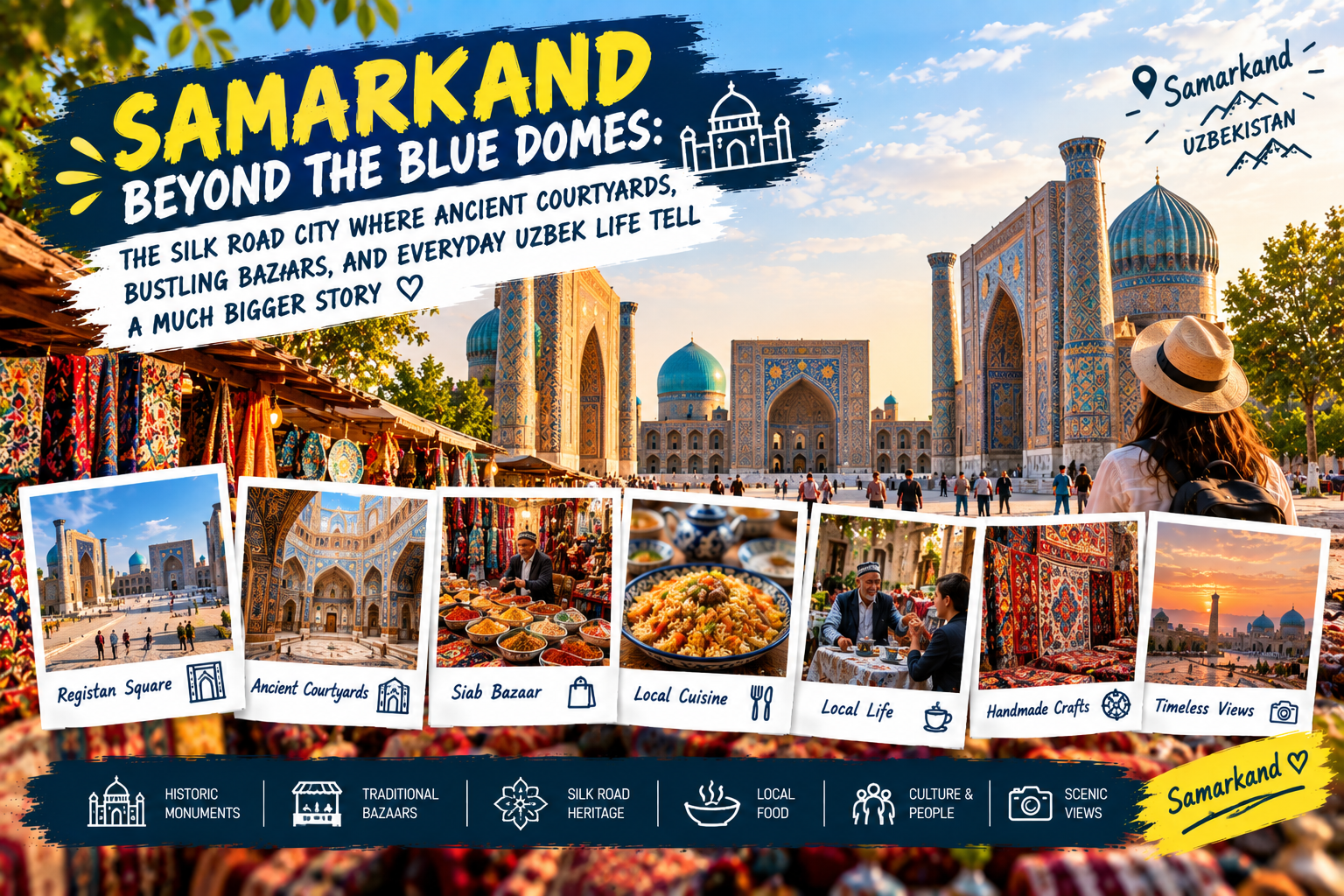
Samarkand Uzbekistan is much more than its famous blue domes. The city is one of the best-known destinations on the historic Silk Road. Its grand monuments tell stories of science, trade, religion, and empire. However, the city’s everyday life is just as interesting.
Walk beyond the main tourist sites and you will find traditional neighborhoods, busy bazaars, local bakeries, quiet courtyards, tea houses, and family-run workshops. These places show a different side of Samarkand.
The city is home to famous landmarks such as Registan Square, Shah-i-Zinda, Gur-e-Amir, and Bibi-Khanym Mosque. Samarkand is also known for Siab Bazaar, traditional crafts, Uzbek food, and its connection to the Silk Road.
If you want to experience more than the postcard views, spend time exploring the streets between the monuments. That is where Samarkand begins to feel like a living city rather than an open-air museum.
Why Visit Samarkand Uzbekistan?
Samarkand has been an important cultural and trading center for centuries. During the Timurid period, it became a major center of science, culture, and architecture. Today, the city combines this historic heritage with modern Uzbek life.
There are many reasons to add Samarkand Uzbekistan to your travel plans:
- Explore the famous Registan Square
- Visit the Shah-i-Zinda complex
- See the Gur-e-Amir Mausoleum
- Walk through Siab Bazaar
- Discover Bibi-Khanym Mosque
- Explore traditional neighborhoods
- Try authentic Uzbek food
- Visit local craft workshops
- Learn about Silk Road history
- Experience everyday life in Uzbekistan
The Blue Domes You Should Not Miss
The famous monuments are still an important part of any Samarkand Uzbekistan itinerary.
You should see them, but there is no need to stop there.
Registan Square
Registan Square is the most recognizable landmark in Samarkand. The complex features three major madrasahs: Ulugbek, Sher-Dor, and Tilla-Kari.
The square played an important role in the city’s public and commercial life. Today, its decorated facades and blue tilework make it one of the city’s most photographed places.
Visit early in the morning if you prefer a quieter atmosphere. Evening is another good time to see the illuminated buildings.
Gur-e-Amir Mausoleum
Gur-e-Amir is the mausoleum associated with Amir Timur and members of the Timurid dynasty.
Its blue ribbed dome and detailed interior make it one of Samarkand’s most important historic monuments.
The building is smaller than Registan, but its atmosphere is very different. Take your time to look at the tilework and decorative details.
Shah-i-Zinda
Shah-i-Zinda is a remarkable complex of mausoleums decorated with blue and turquoise tiles.
The narrow passage between the buildings creates a completely different experience from the wide open space of Registan.
Go early in the day if you want to explore the complex at a slower pace.
Bibi-Khanym Mosque
Bibi-Khanym Mosque is one of Samarkand’s major historic monuments. It was built during the reign of Amir Timur and remains one of the city’s most recognizable landmarks.
The mosque is also close to Siab Bazaar, making it easy to combine the two during the same visit.
Traditional Courtyards in Samarkand Uzbekistan
The grand monuments show Samarkand’s public face. Traditional residential neighborhoods show something more personal.
In older parts of the city, homes may be organized around an internal courtyard. These spaces can provide shade, privacy, and a place for family members to gather.
Look for traditional details such as wooden doors, shaded courtyards, grapevines, and outdoor seating areas.
If you have the opportunity to visit a local home or courtyard through a legitimate homestay or cultural experience, take the opportunity. A cup of tea and a conversation can reveal a side of Samarkand Uzbekistan that monuments cannot.
Siab Bazaar: Experience Everyday Samarkand
Siab Bazaar is located near Bibi-Khanym Mosque and is one of the best places to experience local food and shopping.
The market is known for dried fruits, nuts, sweets, bread, and other local products. Uzbekistan’s official tourism site specifically highlights Samarkand bread, halva, dried fruits, nuts, and other foods sold at the bazaar.
What to Look For
When visiting Siab Bazaar, look for:
- Uzbek non bread
- Dried apricots
- Raisins
- Almonds and walnuts
- Halva
- Spices
- Fresh fruit
- Local sweets
- Traditional food products
Take your time walking through the market. The colors, smells, conversations, and everyday activity are part of the experience.
Everyday Life in Samarkand
One of the most interesting things about Samarkand Uzbekistan is the way modern life exists alongside centuries-old landmarks.
You can visit a historic monument in the morning and then find yourself in a neighborhood bakery or local café a few minutes later.
People shop for food, children go to school, families meet for meals, and tea is served throughout the day.
This everyday rhythm gives Samarkand its character.
Instead of planning every hour of your trip, leave some time for walking without a fixed destination. You may discover a quiet street, a small bakery, or a local shop that never appeared on your itinerary.
Traditional Crafts in Samarkand Uzbekistan
Samarkand has a strong connection with traditional crafts.
The region is known for handmade textiles, ceramics, embroidery, woodwork, and traditional paper production.
Konigil Paper Workshop
Near Samarkand, the Meros paper mill in Konigil preserves a traditional method of making paper from mulberry bark. Uzbekistan’s official tourism website highlights the workshop and its connection to historic Samarkand paper production.
A visit gives travelers a chance to see traditional craftsmanship rather than simply buying a finished souvenir.
Suzani Embroidery
Suzani is a traditional Uzbek textile art known for colorful embroidered designs.
You can find embroidered textiles in workshops and markets around Uzbekistan. Look closely at the patterns and stitching before purchasing anything.
Ceramics and Ikat
Traditional ceramics and ikat textiles are also associated with Uzbek craftsmanship.
If you want to take something home, buying directly from an artisan or established workshop can make the experience more meaningful.
Ancient Samarkand and the Silk Road
Samarkand’s importance comes partly from its location along the historic Silk Road.
The city has been a major cultural and trading center for centuries. The ancient settlement of Afrasiab, located in the northern part of modern Samarkand, provides evidence of the city’s much older history. Official Uzbekistan tourism information dates the ruins to the 8th century BC.
This long history helps explain why Samarkand contains so many different layers of architecture and culture.
You can see ancient archaeological sites, medieval Islamic monuments, traditional neighborhoods, and modern city life within the same trip.
Best Things to Do in Samarkand Uzbekistan
If you are visiting for the first time, add these experiences to your itinerary:
- Visit Registan Square
- Explore Shah-i-Zinda
- Visit Gur-e-Amir
- See Bibi-Khanym Mosque
- Walk through Siab Bazaar
- Visit the ancient Afrasiab settlement
- Explore traditional neighborhoods
- Try Samarkand bread and Uzbek plov
- Visit the Konigil paper workshop
- Shop for traditional crafts
- Spend time in a local tea house
- Leave an afternoon free for independent exploration
Best Time to Visit Samarkand Uzbekistan
Spring and autumn are generally comfortable seasons for exploring the city.
Summer can be hot, so early morning sightseeing can make outdoor visits more comfortable. Uzbekistan’s official tourism information describes Samarkand’s summer as very hot and recommends sun protection such as a hat and sunglasses.
Spring
Spring brings pleasant weather and greenery. It is a good period for walking around the historic areas.
Summer
Summer can be hot. Plan major outdoor sightseeing for the morning or later afternoon.
Autumn
Autumn offers comfortable conditions for exploring the city and its markets.
Winter
Winter can be cooler, but the city’s major attractions can still be visited.
How Many Days Do You Need in Samarkand?
Two full days can cover the major landmarks.
A simple itinerary could look like this:
Day 1
- Registan Square
- Gur-e-Amir
- Bibi-Khanym Mosque
- Siab Bazaar
Day 2
- Shah-i-Zinda
- Afrasiab
- Local neighborhoods
- Traditional crafts
- Local restaurant or tea house
If you have a third day, keep the schedule flexible.
Use it to explore markets, neighborhoods, workshops, and local restaurants without rushing.
Getting to Samarkand
Samarkand is well connected with other major cities in Uzbekistan.
The Afrosiyob high-speed train connects Samarkand with Tashkent, making it convenient to include the city in a wider Uzbekistan itinerary. Official tourism itineraries also include Afrosiyob services between Tashkent and Samarkand.
You can combine Samarkand with other historic destinations such as:
- Tashkent
- Bukhara
- Khiva
- Shakhrisabz
This makes Samarkand a useful stop on a longer Uzbekistan or Silk Road journey.
Visa and Entry Information
Visa rules depend on your nationality.
Uzbekistan currently has visa-free arrangements for citizens of many countries and also provides an electronic visa system for eligible nationalities. The official government information lists the current visa-free countries and e-visa eligibility.
Always check the current requirements before booking flights because visa policies can change.
Practical Tips for Visiting Samarkand
A few simple tips can make your trip easier:
- Start sightseeing early during hot months.
- Carry drinking water.
- Wear comfortable walking shoes.
- Carry sun protection.
- Dress respectfully when visiting religious sites.
- Keep some local currency for markets and small purchases.
- Allow time for markets and local food.
- Check attraction opening times before visiting.
- Keep your itinerary flexible.
- Book high-speed train tickets in advance when possible.
Why Samarkand Is More Than Its Blue Domes
The blue domes are what first attract travelers to Samarkand Uzbekistan.
Registan is unforgettable. Shah-i-Zinda is extraordinary. Gur-e-Amir and Bibi-Khanym reveal the city’s remarkable Timurid heritage.
But the city becomes more interesting when you walk beyond these famous landmarks.
Visit the bazaar. Try the bread. Sit down for tea. Explore a traditional neighborhood. Watch artisans work. Leave an afternoon without a plan.
Samarkand’s monuments tell you about its past.
Its markets, streets, food, and people show you how that history continues to live in the present.
Frequently Asked Questions
Is Samarkand worth visiting beyond Registan Square?
Yes. Samarkand has many experiences beyond Registan, including Shah-i-Zinda, Gur-e-Amir, Bibi-Khanym Mosque, Siab Bazaar, Afrasiab, traditional crafts, and local neighborhoods.
How many days should I spend in Samarkand?
Two full days are enough for the main landmarks. A third day gives you more time for markets, neighborhoods, food, and local experiences.
What is Siab Bazaar known for?
Siab Bazaar is known for local food products including Samarkand bread, dried fruits, nuts, sweets, and other market goods. It is located near Bibi-Khanym Mosque.
What is Samarkand famous for?
Samarkand is famous for its Silk Road history, Timurid architecture, Registan Square, Shah-i-Zinda, Gur-e-Amir, Bibi-Khanym Mosque, traditional crafts, and Uzbek food.
Do I need a visa to visit Samarkand?
It depends on your nationality. Uzbekistan has visa-free arrangements with many countries and an e-visa system for eligible travelers. Check the official government requirements before traveling.