
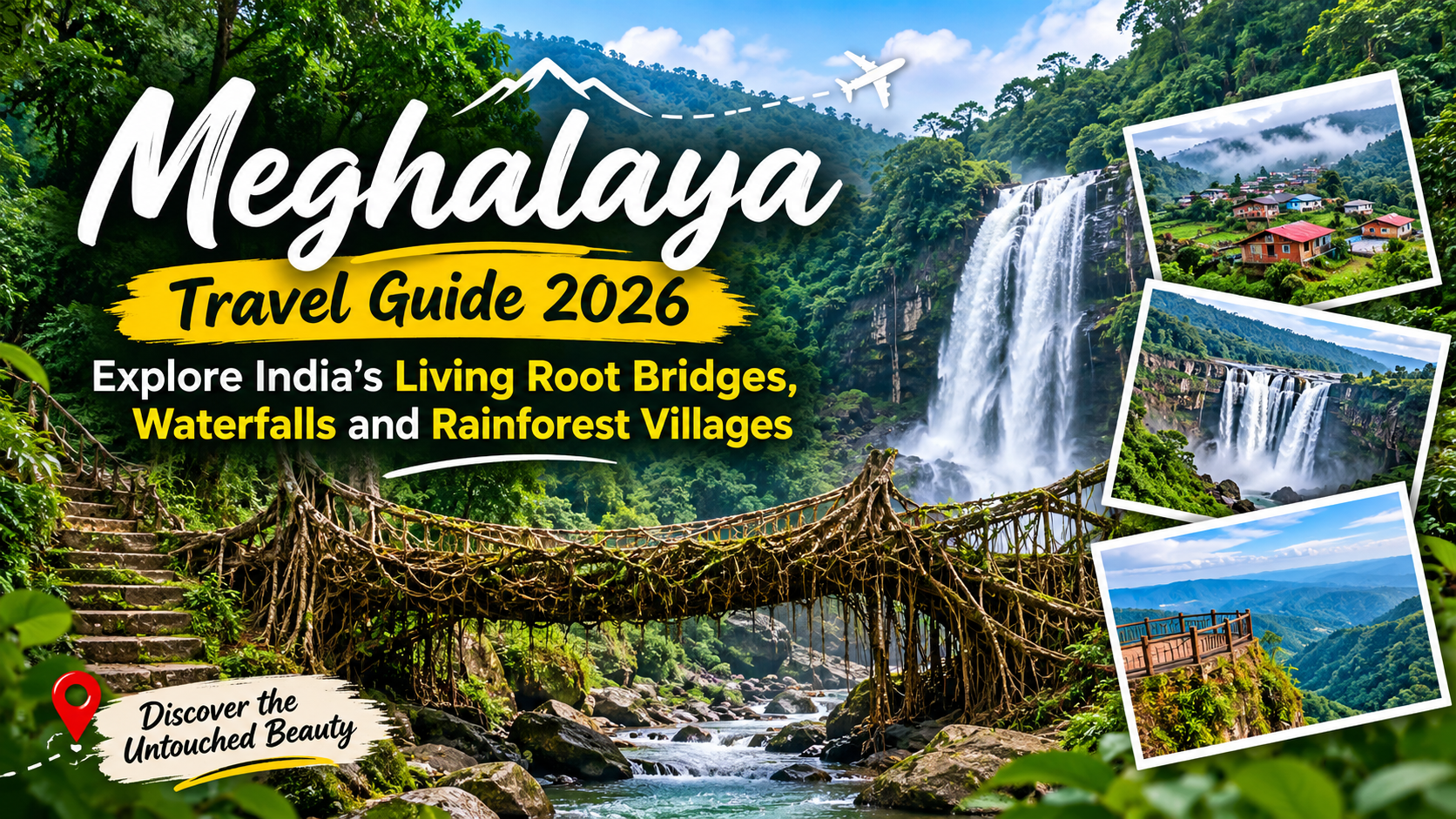
Meghalaya is a destination where nature shapes everyday life. Located in Northeast India, this beautiful state is known for its mist-covered hills, dramatic waterfalls, limestone caves, crystal-clear rivers and villages surrounded by dense greenery – Meghalaya Travel Guide.
From the famous living root bridges of Cherrapunji to the transparent waters of Dawki, Meghalaya offers experiences that feel very different from a conventional hill-station holiday. Moreover, its distinctive Khasi and Garo cultures add another layer to the journey.
For travellers planning a Northeast India holiday, this Meghalaya travel guide explores the best places to visit, memorable activities, ideal travel seasons and a practical itinerary.
Best Places to Visit – Meghalaya Travel Guide
1. Sohra (Cherrapunji)
Sohra, popularly known as Cherrapunji, is one of Meghalaya’s most famous destinations. It is celebrated for its dramatic cliffs, deep valleys, waterfalls and spectacular monsoon landscapes.
Among the highlights are Nohkalikai Falls, Seven Sisters Falls and the surrounding viewpoints. Nohkalikai is particularly impressive, with water plunging down a steep cliff into a pool below.
For the best experience, explore the viewpoints early in the day when visibility is good. However, mist and rain can arrive quickly, so keep your schedule flexible.
2. Nongriat and the Double-Decker Living Root Bridge
Nongriat is home to one of Meghalaya’s most extraordinary natural attractions: the Double-Decker Living Root Bridge.
Created by guiding the aerial roots of rubber fig trees across streams, these bridges are examples of traditional Khasi knowledge and sustainable engineering. Unlike conventional bridges, they continue growing over time.
Reaching Nongriat involves a challenging trek with numerous steps from the Tyrna village area. Therefore, wear proper hiking shoes, carry drinking water and allow enough time for the return journey.
3. Dawki and the Umngot River
Dawki is famous for the clear waters of the Umngot River, where boats appear to float above the riverbed on days with excellent visibility.
A boat ride is one of the most popular experiences here. Additionally, the surrounding hills and riverbanks create beautiful opportunities for photography.
Water clarity depends on weather, rainfall and river conditions. Consequently, the transparent-water effect is not guaranteed throughout the year.
4. Mawlynnong Village
Often promoted as one of Asia’s cleanest villages, Mawlynnong is a wonderful place to discover community-led environmental practices.
The village is known for its tidy pathways, gardens, traditional homes and living root bridge nearby. Visitors can also explore the bamboo sky viewpoint for a different perspective of the surrounding landscape.
More importantly, take time to understand how residents maintain their village. Respect local customs and support small community businesses during your visit.
5. Laitlum Canyons
Located near Shillong, Laitlum Canyons offers sweeping views of deep valleys, rolling hills and distant settlements.
The name is commonly associated with the idea of the end of hills, and the landscape certainly feels vast. On clear days, the viewpoints provide excellent opportunities to appreciate Meghalaya’s mountainous terrain.
Although the location is popular with photographers, the paths can become slippery in wet weather. Stay away from exposed edges and follow local safety advice.
6. Mawsmai Cave
Meghalaya is well known for its limestone cave systems, and Mawsmai Cave near Sohra is among the most accessible options for visitors.
Inside, you can discover narrow passages, impressive rock formations and naturally shaped chambers. The cave offers an introduction to the underground landscapes found across the state.
Some sections are narrow and damp. As a result, comfortable footwear and careful movement are essential.
Best Things to Do – Meghalaya Travel Guide
Meghalaya offers more than scenic viewpoints. Its landscapes and local communities provide plenty of opportunities for meaningful experiences.
- Trek to living root bridges: Explore traditional Khasi root bridges and learn about the techniques used to create them.
- Enjoy waterfall viewpoints: Visit Nohkalikai, Seven Sisters and other waterfalls around Sohra.
- Take a river boat ride: Experience the Umngot River around Dawki when conditions are suitable.
- Explore limestone caves: Discover the region’s underground formations through accessible guided routes.
- Experience local cuisine: Try Khasi dishes such as jadoh, dohneiiong and tungrymbai.
- Discover village traditions: Visit rural settlements and learn about community life and local craftsmanship.
- Go hiking: Explore scenic trails around Laitlum, Nongriat and other suitable locations.
Furthermore, travellers interested in photography should consider spending more than one day around Sohra. The changing light, clouds and rainfall can transform the same landscape throughout the day.
Best Time to Visit – Meghalaya Travel Guide
Meghalaya has a distinctive climate, with rainfall playing a major role in shaping its landscapes. Your ideal travel season depends on whether you prefer waterfalls, outdoor activities or clearer sightseeing conditions.
| Season | What to Expect |
|---|---|
| March–April | Pleasant weather, fresh greenery and comfortable sightseeing |
| May–June | Increasing rainfall and impressive waterfall scenery |
| July–September | Heavy monsoon conditions and dramatic landscapes, but possible travel disruption |
| October–November | Generally more comfortable conditions for sightseeing and trekking |
| December–February | Cooler, relatively drier weather and good opportunities for outdoor exploration |
For a balanced trip, October to April is generally worth considering. However, travellers hoping to see powerful waterfalls may prefer the rainy season, provided they are prepared for difficult road and trail conditions.
Always check local weather alerts before visiting waterfalls, caves or trekking routes. Heavy rainfall can cause sudden changes in water levels and make paths unsafe.
How to Reach Meghalaya – Meghalaya Travel Guide
Shillong is the main starting point for most Meghalaya trips. Although the state has road connections to neighbouring regions, travellers commonly enter through Guwahati in Assam.
By Air: Guwahati Airport is the main airport used by visitors travelling to Meghalaya. Shillong Airport has limited flight connectivity, so check schedules before relying on it.
By Train: Guwahati Railway Station is a major railhead for the region. From there, taxis and other road transport options are available towards Shillong.
By Road: Shillong is approximately 100 kilometres from Guwahati by road, although journey time depends on traffic and road conditions.
Once in Shillong, you can hire a taxi or arrange local transport to reach Sohra, Dawki, Mawlynnong and other attractions.
A Simple 5-Day Meghalaya Itinerary
A five-day trip gives you a reasonable introduction to Meghalaya’s main attractions without rushing between every destination.
Day 1: Explore Shillong
Arrive in Shillong and explore the city. Visit local markets, enjoy Khasi food and spend time discovering its cafés and cultural atmosphere.
Day 2: Discover Sohra
Travel to Sohra and explore Nohkalikai Falls, Seven Sisters Falls and nearby viewpoints. If time permits, visit Mawsmai Cave.
Day 3: Trek to Nongriat
Begin early and travel towards Tyrna village for the trek to Nongriat. Visit the Double-Decker Living Root Bridge and return according to your fitness level and trail conditions.
Day 4: Visit Mawlynnong and Dawki
Explore Mawlynnong village before continuing towards Dawki. Enjoy the river scenery and consider a boat ride if weather and water conditions permit.
Day 5: Explore Laitlum and Return
Visit Laitlum Canyons if visibility and weather are suitable. Afterwards, return towards Shillong or Guwahati for your onward journey.
Travel Tips for Visiting Meghalaya
A little preparation can make your journey safer and more comfortable.
- Carry a waterproof jacket and suitable walking shoes, as rain can occur unexpectedly.
- Keep extra travel time for mountain roads and changing weather conditions.
- Book accommodation early during popular holidays and peak travel periods.
- Carry some cash for smaller villages and local businesses.
- Hire local guides for longer treks and unfamiliar routes.
- Avoid swimming in rivers or waterfalls unless the area is officially designated as safe.
- Respect village customs and ask permission before photographing residents.
- Carry reusable water bottles and avoid leaving waste along trails.
- Check road conditions and local advisories before visiting remote areas.
Why Meghalaya Should Be on Your Travel List in 2026
Meghalaya offers a remarkable combination of natural beauty, cultural heritage and outdoor adventure. Its living root bridges demonstrate an extraordinary relationship between people and nature, while its waterfalls, caves and river valleys create unforgettable landscapes.
Unlike destinations focused mainly on sightseeing, Meghalaya encourages visitors to explore slowly. You can spend one day trekking through forests, another discovering village traditions and another enjoying the peaceful scenery beside a river.
For anyone looking to experience a different side of Northeast India, Meghalaya deserves serious consideration. Plan responsibly, support local communities and give yourself enough time to appreciate the state beyond its most famous viewpoints.
Internal Links:
- Meghalaya Offbeat Travel Guide 2026: Discover Hidden Waterfalls, Living Root Bridges and Secret Villages
- Autumn Road Trips in India 2026: 9 Scenic Routes
- Shillong Cherry Blossom Festival 2026: Dates, Music, Pink Blooms and a Meghalaya Travel Guide