
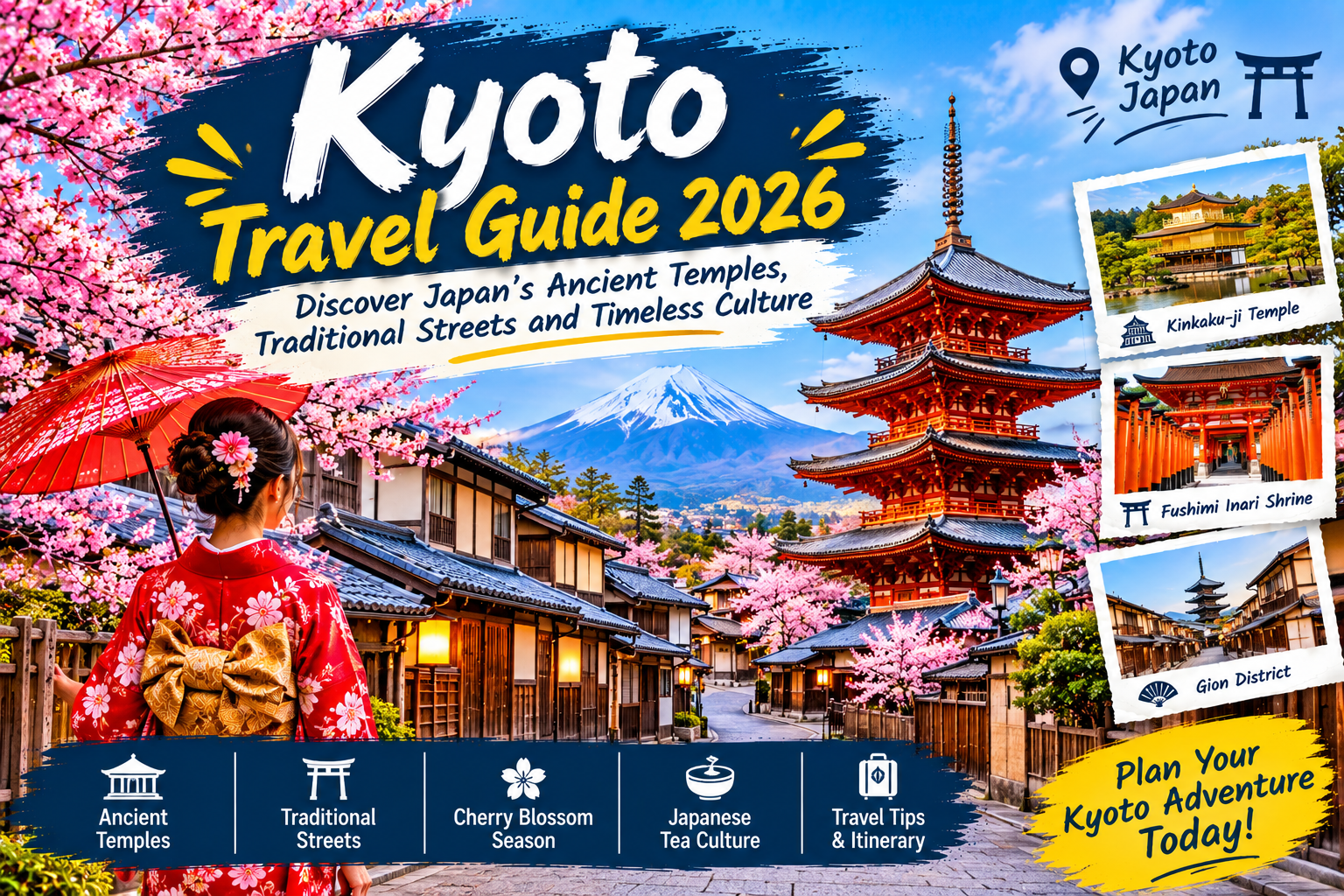
Kyoto is one of Japan’s most captivating destinations, where centuries-old traditions blend beautifully with modern city life. Once the imperial capital of Japan, this historic city is famous for its elegant temples, traditional wooden houses, peaceful gardens and atmospheric streets. From the iconic red gates of Fushimi Inari Taisha to the bamboo groves of Arashiyama, every corner offers a glimpse into Japan’s rich cultural heritage.
Whether you are planning your first trip to Japan or returning to explore beyond Tokyo and Osaka, Kyoto deserves a place on your itinerary. Moreover, its traditional tea houses, seasonal scenery and distinctive local cuisine make it an unforgettable destination throughout the year.
Why Visit Kyoto, Japan?
Kyoto offers a different experience from Japan’s larger, fast-paced cities. Instead of towering skyscrapers and neon-lit entertainment districts, visitors discover historic neighbourhoods, quiet shrines and beautifully preserved architecture.
The city is home to numerous UNESCO World Heritage properties, including celebrated temples and historic landmarks. Furthermore, Kyoto provides opportunities to experience traditional Japanese culture through tea ceremonies, kimono experiences, local crafts and seasonal festivals.
Its convenient railway connections also make Kyoto an excellent base for exploring other destinations in the Kansai region.
Best Places to Visit in Kyoto
1. Fushimi Inari Taisha
Fushimi Inari Taisha is among Kyoto’s most recognisable attractions. The shrine is famous for its thousands of vibrant red torii gates, which create picturesque pathways along Mount Inari.
Visitors can walk through the gates and explore the mountain trails at their own pace. Although the entrance area attracts large crowds, the pathways become quieter as you climb higher.
The shrine is particularly beautiful during the early morning, when the atmosphere is peaceful and the light filters through the gates.
2. Arashiyama Bamboo Grove
The Arashiyama Bamboo Grove is one of Japan’s most photographed natural attractions. Towering bamboo stalks line a walking path, creating a distinctive landscape that feels far removed from the busy city.
Additionally, the surrounding Arashiyama district has several attractions worth exploring. These include Tenryu-ji Temple, the Togetsukyo Bridge and scenic riverside walking routes.
Allow enough time to enjoy the neighbourhood rather than visiting the bamboo grove alone.
3. Kinkaku-ji – The Golden Pavilion
Kinkaku-ji, commonly known as the Golden Pavilion, is a stunning Zen Buddhist temple covered in gold leaf. Its golden exterior reflects beautifully in the surrounding pond, creating one of Kyoto’s most memorable views.
The landscaped gardens and carefully arranged pathways add to the peaceful atmosphere. However, visitors generally follow a designated route, so plan to arrive early if you want to enjoy the surroundings before the busiest hours.
4. Kiyomizu-dera Temple
Located on the eastern hills of Kyoto, Kiyomizu-dera is celebrated for its large wooden terrace overlooking the city.
The temple is especially popular during cherry blossom season and autumn, when the surrounding hills become colourful. In addition, the nearby streets of Sannenzaka and Ninenzaka are filled with traditional shops, cafés and Japanese sweet shops.
These historic lanes are ideal for experiencing Kyoto’s traditional atmosphere.
5. Gion District
Gion is Kyoto’s famous traditional entertainment district, known for wooden townhouses, narrow streets and historic tea houses.
Visitors can explore the neighbourhood on foot, admire its traditional architecture and discover small restaurants serving local dishes. The area is also associated with geiko and maiko culture, an important part of Kyoto’s performing arts heritage.
Remember to respect private property and local photography restrictions. In particular, avoid blocking narrow streets or photographing residents and performers without permission.
6. Nishiki Market
Food lovers should make time for Nishiki Market, often called Kyoto’s Kitchen. This lively shopping street features a variety of local ingredients, Japanese snacks, pickles, seafood and traditional sweets.
It is an excellent place to discover Kyoto’s food culture. Moreover, visitors can sample regional specialities and purchase edible souvenirs.
Follow individual stall rules when sampling food, as some vendors may request that customers eat in designated areas.
Best Things to Do in Kyoto
Beyond visiting famous landmarks, Kyoto offers several experiences that help travellers understand Japanese culture.
- Experience a Japanese tea ceremony: Learn about traditional tea preparation and its cultural significance.
- Explore traditional streets in a kimono: Rent a kimono and enjoy a walk through historic neighbourhoods.
- Visit a Japanese garden: Spend time appreciating the carefully designed landscapes at Kyoto’s temples.
- Try Kyoto cuisine: Sample local dishes such as yudofu, Kyoto-style sushi and seasonal Japanese sweets.
- Explore local craft shops: Discover traditional pottery, textiles, ceramics and handmade souvenirs.
- Take a scenic train journey: Explore the countryside around Arashiyama and the wider Kyoto region.
For a deeper cultural experience, consider joining a small-group cooking class or a guided historical walking tour.
Best Time to Visit Kyoto
Kyoto is a year-round destination, although each season offers a different atmosphere.
Spring (March to May): Cherry blossoms transform parks, temple grounds and riverside paths. Late March and early April are popular periods, but flowering dates vary each year.
Summer (June to August): The city becomes warm and humid. However, summer offers lively cultural events, including the famous Gion Matsuri festival in July.
Autumn (September to November): Autumn foliage creates spectacular scenery around temples and gardens. November is particularly popular for colourful maple leaves, depending on weather conditions.
Winter (December to February): Kyoto becomes quieter, and occasional snowfall gives some temples and traditional streets a beautiful appearance. Temperatures can be cold, so warm clothing is essential.
For a balance of comfortable weather and seasonal scenery, spring and autumn are excellent choices. Nevertheless, travellers should expect larger crowds during these periods.
What to Eat in Kyoto
Kyoto has a distinctive food culture shaped by its history and traditional culinary practices.
Some local specialities worth trying include:
- Yudofu: A simple tofu dish traditionally served in a light broth.
- Kaiseki: A carefully prepared multi-course Japanese meal featuring seasonal ingredients.
- Obanzai: Traditional Kyoto home-style cooking, often prepared with locally available vegetables.
- Yatsuhashi: A popular Kyoto sweet made with rice flour, commonly flavoured with cinnamon.
- Matcha desserts: Green tea-flavoured ice cream, cakes and traditional sweets.
Additionally, Nishiki Market and the restaurants around Gion offer plenty of opportunities to discover regional flavours.
How to Reach Kyoto
Kyoto is well connected to major Japanese cities through the country’s extensive railway network.
By air: Kyoto does not have its own major commercial airport. International visitors commonly arrive through Kansai International Airport near Osaka. From there, trains and airport buses connect travellers to Kyoto.
By train: Kyoto Station is a major railway hub. The Tokaido Shinkansen connects Kyoto with Tokyo, Nagoya and Osaka, making train travel one of the most convenient options.
By bus: Long-distance buses connect Kyoto with several Japanese cities and can be a budget-friendly alternative to the Shinkansen.
Once in the city, visitors can use trains, buses, taxis and walking routes to explore the main attractions.
Suggested 3-Day Kyoto Itinerary
A three-day visit provides a good introduction to Kyoto’s historic landmarks, food culture and traditional neighbourhoods.
First Day: Eastern Kyoto
- Visit Kiyomizu-dera Temple.
- Explore the Sannenzaka and Ninenzaka streets.
- Discover the historic Gion district.
- Enjoy a traditional Japanese dinner.
Second Day: Western Kyoto
- Start the day at Arashiyama Bamboo Grove.
- Visit Tenryu-ji Temple.
- Walk across Togetsukyo Bridge.
- Explore the riverside neighbourhood.
Third Day: Northern and Southern Kyoto
- Visit Kinkaku-ji, the Golden Pavilion.
- Explore Nishiki Market.
- Spend the afternoon at Fushimi Inari Taisha.
- Enjoy local food before departing.
You can adjust the order depending on accommodation, transport connections and crowd conditions.
Travel Tips for Visiting Kyoto
A little preparation can make your Kyoto trip more comfortable.
- Start early: Popular attractions become crowded, particularly during cherry blossom and autumn foliage seasons.
- Use public transport: Trains and buses are useful for reaching major attractions, although some journeys may involve walking.
- Carry cash: While card payments are widely accepted, smaller shops and traditional businesses may still prefer cash.
- Respect local customs: Follow temple rules, remove shoes where required and maintain a quiet atmosphere at religious sites.
- Wear comfortable shoes: Many attractions involve walking, stairs and uneven traditional streets.
- Book popular experiences in advance: Tea ceremonies, guided tours and selected restaurants may require reservations.
- Check seasonal conditions: Weather, opening hours and special events can affect your itinerary.
Final Thoughts
Kyoto is a destination where Japan’s history and everyday culture come together. Its magnificent temples, traditional neighbourhoods, peaceful gardens and distinctive cuisine make it much more than a sightseeing destination.
From walking beneath the red torii gates of Fushimi Inari to enjoying the scenery of Arashiyama, every experience reveals another side of the city. Moreover, Kyoto’s seasonal beauty ensures that each visit feels different.
Whether you are exploring Japan for the first time or returning for a deeper cultural experience, Kyoto offers an unforgettable journey through the country’s timeless traditions.
Internal Links:
- Okinawa, Japan: Why This Tropical Paradise Is One of 2026’s Hottest Travel Destinations
- Tromsø Travel Guide 2026–27: Discover Norway’s Northern Lights and Arctic Wonders
- Alghero Italy Travel Guide: Discover Sardinia’s Coastal Gem
- Porto Santo Madeira: Discover Portugal’s Golden Island Escape