
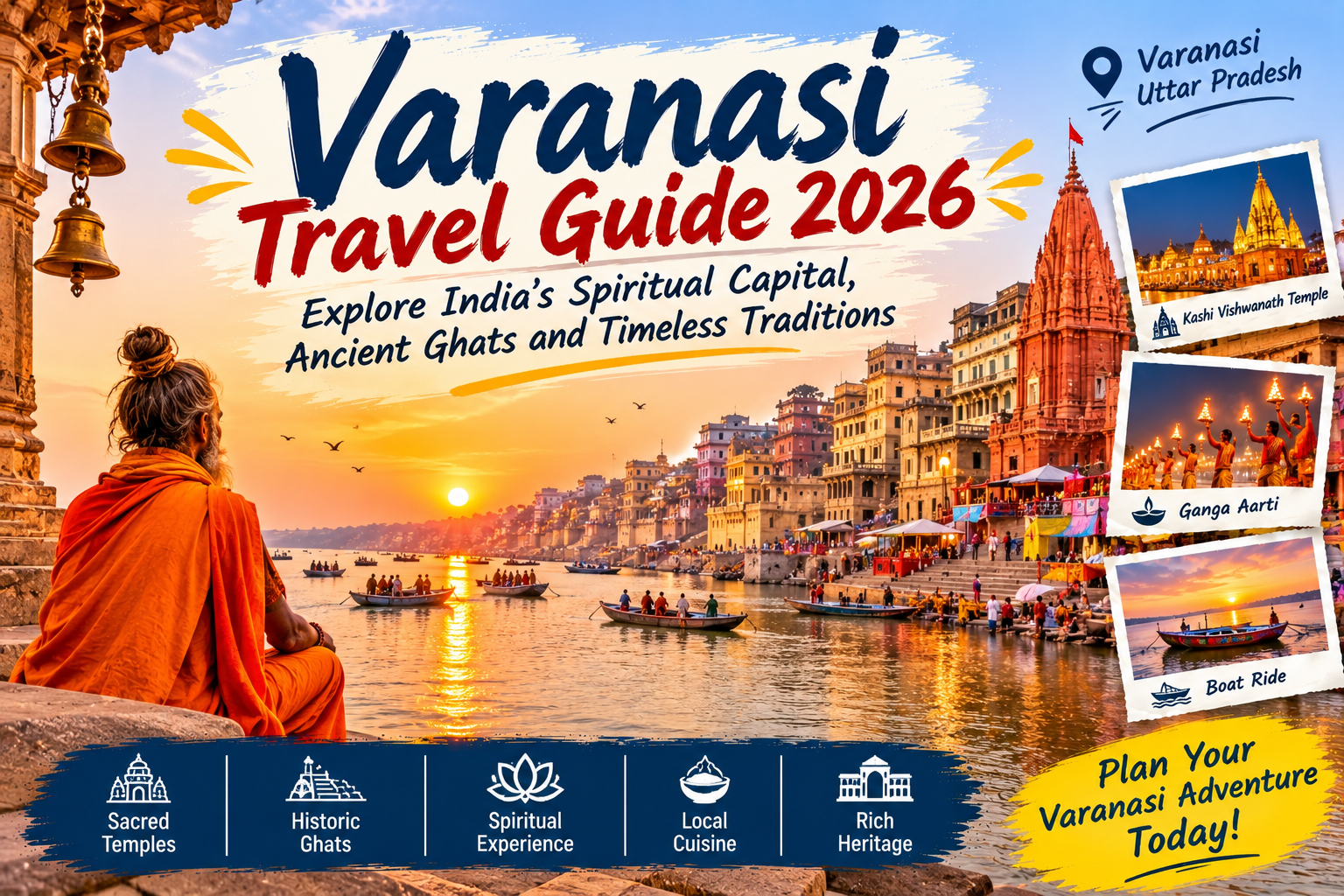
Along the banks of the sacred River Ganges, Varanasi offers an experience unlike any other destination in India. Known for its ancient temples, centuries-old traditions, colourful streets and unforgettable riverfront, this historic city provides a fascinating glimpse into India’s spiritual and cultural heritage.
Often called Kashi or Banaras, Varanasi is regarded as one of the world’s oldest continuously inhabited cities. Its narrow lanes, traditional markets and riverside steps reveal stories shaped by generations of pilgrims, artists, musicians and local communities.
From witnessing the spectacular Ganga Aarti to taking a peaceful sunrise boat ride, there are countless ways to experience the city’s character. Moreover, Varanasi’s famous silk weaving, traditional sweets and vibrant street food make it an appealing destination for culture and food enthusiasts.
Whether you are visiting for spirituality, history, photography or local experiences, Varanasi deserves a place on your India travel itinerary.
Why Visit Varanasi?
Varanasi is much more than a religious destination. It is a living cultural landscape where ancient customs remain closely connected to everyday life.
The city is particularly famous for its ghats, which are stone steps leading down to the River Ganges. These riverfront spaces serve different purposes, from religious ceremonies and meditation to everyday activities.
Additionally, Varanasi has a long association with classical music, Sanskrit learning, traditional crafts and Indian philosophy.
Visitors can explore historic temples, discover traditional neighbourhoods, enjoy regional cuisine and experience ceremonies that have been part of the city’s identity for generations.
Best Places to Visit in Varanasi
1. Dashashwamedh Ghat
<escape> </escape>Dashashwamedh Ghat is one of Varanasi’s most famous riverfront locations. It is particularly known for the evening Ganga Aarti, a religious ceremony performed by priests with lamps, incense and coordinated rituals.
As evening approaches, visitors gather along the steps and boats to witness the ceremony. The atmosphere becomes especially memorable as bells ring and devotional chants fill the riverfront.
Arrive early to find a suitable viewing position, particularly during weekends and major religious occasions.
2. Kashi Vishwanath Temple
Kashi Vishwanath Temple is among the most important Hindu temples dedicated to Lord Shiva. Located in the historic centre of Varanasi, it attracts pilgrims from across India and beyond.
The temple’s golden spire is one of its most recognisable features. Visitors can explore the surrounding temple corridor and discover the religious significance of the area.
However, entry arrangements, security procedures and visitor restrictions may change. Check the official temple information before planning your visit.
3. Assi Ghat
Situated towards the southern end of Varanasi’s main riverfront, Assi Ghat offers a comparatively relaxed atmosphere.
It is a popular place for morning walks, yoga sessions and cultural activities. Visitors often gather here early in the day to watch the sunrise over the Ganges.
Moreover, the nearby cafés and small restaurants provide convenient places to enjoy breakfast after exploring the riverfront.
4. Manikarnika Ghat
Manikarnika Ghat is one of Varanasi’s most significant cremation ghats. It holds deep religious importance and is associated with Hindu beliefs about life, death and liberation.
Unlike the city’s more tourist-oriented riverfront locations, this is an active and deeply personal place of mourning and ritual.
Visitors should approach with sensitivity, respect privacy and avoid intrusive photography. A local guide can help explain its cultural and religious significance appropriately.
5. Sarnath
Located approximately 10 kilometres from Varanasi, Sarnath is an important Buddhist pilgrimage destination.
It is traditionally recognised as the place where Gautama Buddha delivered his first sermon after attaining enlightenment.
Major attractions include Dhamek Stupa, the archaeological museum and the remains of ancient monasteries. The peaceful surroundings offer a different atmosphere from the busy streets of Varanasi.
For travellers interested in Indian history and Buddhism, Sarnath is an excellent addition to the itinerary.
6. Ramnagar Fort
Situated across the Ganges from the main city, Ramnagar Fort is a historic riverside structure associated with the former royal family of Varanasi.
Its architecture, courtyards and museum collections provide insights into the region’s royal history.
The fort is particularly interesting for visitors who enjoy heritage attractions. Check opening arrangements before travelling, as access to different sections may vary.
Best Things to Do in Varanasi
Exploring Varanasi is best done at a relaxed pace. Beyond its famous temples, the city offers several memorable experiences.
- Take a sunrise boat ride: Watch the ghats come alive as the morning light reflects across the Ganges.
- Witness the Ganga Aarti: Experience the evening ceremony at Dashashwamedh Ghat.
- Walk through the old city: Discover narrow lanes, traditional shops and historic architecture.
- Explore Banarasi silk markets: Learn about the city’s famous silk weaving tradition and browse traditional textiles.
- Visit Sarnath: Discover Buddhist heritage and important archaeological sites.
- Enjoy classical music: Look for cultural performances showcasing Varanasi’s musical traditions.
- Taste local street food: Sample kachori sabzi, tamatar chaat, Banarasi paan and traditional sweets.
Additionally, consider taking a guided heritage walk to understand the city’s history and cultural traditions beyond the most popular attractions.
Best Time to Visit Varanasi
Varanasi experiences distinct seasons, so choosing the right travel period can make a significant difference.
Winter (November to February): Winter is generally the most comfortable period for sightseeing. Temperatures are cooler, making morning boat rides and walking tours more enjoyable. Fog can occasionally affect visibility and transport.
Summer (March to June): Temperatures can become extremely high, particularly in May and June. Visitors should plan outdoor activities early in the morning or later in the evening.
Monsoon (July to September): Rainfall brings humidity and can affect riverfront access. Water levels in the Ganges may rise, so boat activities and ghat conditions should be checked locally.
Festival season (October to November): Major celebrations such as Diwali and Dev Deepawali create a particularly vibrant atmosphere. However, accommodation and transport can become crowded, so advance planning is essential.
For most travellers, November to February offers a comfortable sightseeing experience. Nevertheless, those interested in major cultural celebrations may prefer visiting during the festival season.
What to Eat in Varanasi
Varanasi has a distinctive food culture influenced by traditional North Indian cooking and local culinary practices.
Some popular specialities include:
- Kachori Sabzi: A popular breakfast featuring crispy fried kachoris served with spicy potato curry.
- Tamatar Chaat: A flavourful local snack prepared with tomatoes, spices and traditional toppings.
- Banarasi Paan: A famous betel-leaf preparation associated with the city’s food culture.
- Malaiyyo: A delicate seasonal milk-based dessert traditionally enjoyed during cooler months.
- Banarasi Lassi: A thick yoghurt-based drink, often served with a creamy topping.
- Thandai: A traditional milk-based drink flavoured with nuts and spices.
Food enthusiasts should explore local markets and established eateries to discover the city’s culinary traditions.
How to Reach Varanasi
Varanasi is well connected to major Indian cities by air, rail and road.
By air: Lal Bahadur Shastri International Airport connects Varanasi with several major Indian destinations. Travellers can use taxis and other local transport to reach the city centre.
By train: Varanasi has important railway connections through Varanasi Junction and Banaras railway station. Regular trains connect the city with destinations across India.
By road: National highways connect Varanasi with cities such as Lucknow, Prayagraj and Patna. Buses, taxis and private vehicles are available.
Within the city, visitors can use auto-rickshaws, cycle-rickshaws, taxis and walking routes. However, many old-city lanes are narrow and are best explored on foot.
Suggested 3-Day Varanasi Itinerary
A three-day trip provides enough time to explore the city’s major attractions and experience its cultural atmosphere.
1st Day: Explore the Ghats
- Begin with a sunrise boat ride on the Ganges.
- Walk along Assi Ghat and nearby riverfront areas.
- Explore the old city’s narrow streets.
- Attend the evening Ganga Aarti at Dashashwamedh Ghat.
2nd Day: Temples and Heritage
- Visit Kashi Vishwanath Temple.
- Explore nearby historic streets and traditional markets.
- Discover Banarasi silk shops.
- Visit Ramnagar Fort if time and access conditions permit.
3rd Day: Buddhist Heritage and Local Food
- Take a trip to Sarnath.
- Visit Dhamek Stupa and the archaeological museum.
- Return to Varanasi.
- Explore local food markets and enjoy traditional sweets.
This itinerary can be adjusted according to temple entry arrangements, transport conditions and personal interests.
Essential Travel Tips for Visiting Varanasi
A little preparation will help you enjoy the city more comfortably.
- Book accommodation early: Hotels near the ghats are popular, especially during major festivals.
- Wear comfortable footwear: Exploring the old city involves considerable walking.
- Respect religious customs: Dress appropriately when visiting temples and follow local instructions.
- Be careful with photography: Always respect privacy, particularly around religious ceremonies and cremation areas.
- Use authorised boat operators: Agree on the price and duration before starting a boat ride.
- Keep valuables secure: Crowded markets and busy riverfront areas require normal travel precautions.
- Check festival arrangements: Major celebrations can affect traffic, accommodation and access to popular locations.
- Stay hydrated: Carry drinking water, particularly during warmer months.
Final Thoughts
Varanasi is a destination that offers a remarkable combination of spirituality, history, architecture and everyday culture. Its ancient ghats, historic temples and traditional markets create an atmosphere that is difficult to find elsewhere.
From watching the sunrise over the Ganges to discovering the Buddhist heritage of Sarnath, every experience reveals another part of the city’s identity.
Moreover, its traditional cuisine, Banarasi silk and musical heritage make the journey rewarding beyond religious sightseeing.
Whether you are planning a cultural holiday, a spiritual journey or your first exploration of India’s historic cities, Varanasi offers an unforgettable travel experience.
Internal Links:
- Dev Deepawali 2026 in Varanasi: The Night Millions of Diyas Light Up the Ganga
- Noctourism: 10 Best Places to Explore After Dark in 2026
- Festive Travel 2026: 10 Best Places to Visit in India
- Lucknow Travel Guide: Explore Nawabi Heritage, Famous Awadhi Food and the City of Tehzeeb