
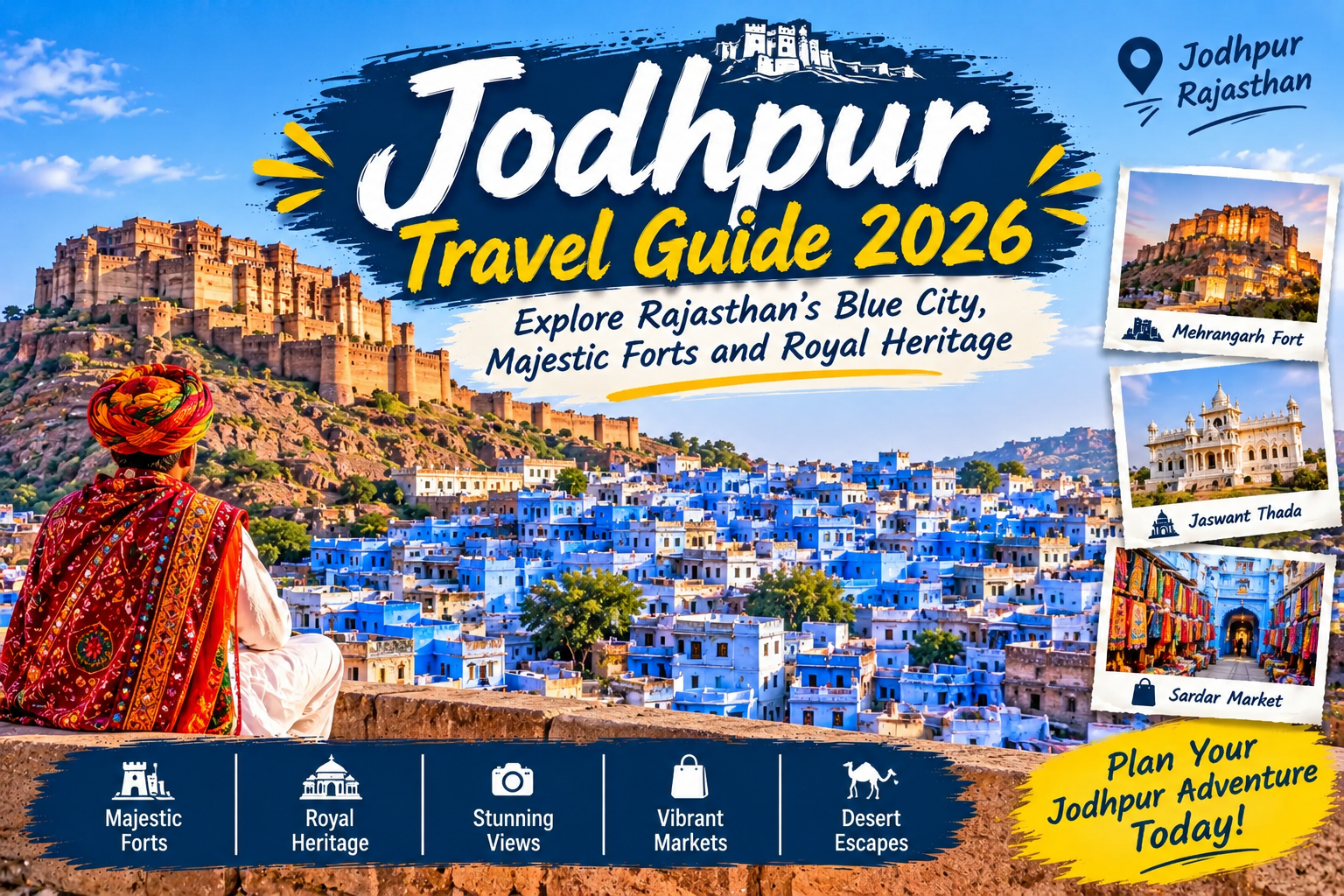
Rising above the edge of the Thar Desert, Jodhpur is one of Rajasthan’s most captivating destinations. Known as the Blue City, it is famous for its blue-painted houses, magnificent forts, historic palaces and lively traditional markets. Every street reveals a fascinating combination of royal history, colourful culture and everyday Rajasthani life.
Dominated by the impressive Mehrangarh Fort, Jodhpur offers visitors a chance to explore centuries-old architecture while enjoying the warmth of Rajasthan’s traditional hospitality. From wandering through narrow blue lanes to tasting authentic Marwari food, the city provides experiences that go far beyond ordinary sightseeing.
Whether you are interested in history, photography, architecture or food, Jodhpur deserves a place on your Rajasthan travel itinerary.
Why Visit Jodhpur?
Jodhpur was founded in 1459 by Rao Jodha, the ruler of the Rathore dynasty. Its strategic location along historic trade routes helped it develop into an important centre of commerce and royal influence.
Today, the city is celebrated for its architectural landmarks and distinctive old neighbourhoods. Its blue houses, particularly around the historic centre, create a memorable urban landscape.
Moreover, Jodhpur provides a wonderful introduction to Rajasthan’s traditions through its handicrafts, textiles, folk music, local cuisine and colourful bazaars.
The city is also an excellent starting point for exploring nearby desert landscapes and other historic destinations in western Rajasthan.
Best Places to Visit in Jodhpur
1. Mehrangarh Fort
<escape> </escape>Mehrangarh Fort is the most iconic landmark in Jodhpur. Built on a rocky hill overlooking the city, this enormous fort offers spectacular views of the surrounding blue neighbourhoods.
Its impressive gates, courtyards, palaces and museum collections reveal the history of the Rathore rulers. Inside, visitors can discover royal costumes, weapons, paintings and decorative objects.
The fort’s architecture is particularly impressive, combining intricate carvings with massive stone walls. Allow at least a few hours to explore its different sections.
2. Jaswant Thada
Located close to Mehrangarh Fort, Jaswant Thada is a beautiful marble memorial built in honour of Maharaja Jaswant Singh II.
Its delicate marble architecture, carved screens and peaceful gardens create a striking contrast with the imposing fort nearby.
The surrounding landscape also provides lovely views of the city. Consequently, it is worth including both attractions in the same sightseeing trip.
3. Umaid Bhawan Palace
Umaid Bhawan Palace is one of India’s most remarkable royal residences. Constructed during the twentieth century, the palace combines elements of Indian and European architectural styles.
Part of the building continues to serve as a royal residence, while other sections operate as a heritage hotel and museum.
The museum displays historical photographs, royal memorabilia and vintage objects. Visitors should check current access arrangements before planning their visit.
4. Clock Tower and Sardar Market
The Clock Tower, located in the heart of Jodhpur’s old city, is surrounded by the lively Sardar Market.
This traditional marketplace is an excellent place to discover local life. Shops sell spices, textiles, handicrafts, jewellery and traditional Rajasthani products.
Furthermore, the market’s narrow lanes offer plenty of opportunities to explore local flavours and purchase souvenirs.
5. Toorji Ka Jhalra
Toorji Ka Jhalra is a historic stepwell located in Jodhpur’s old city.
Built in the eighteenth century, this beautifully designed structure demonstrates the traditional water-management systems used in Rajasthan’s dry climate.
Its symmetrical steps and sandstone architecture make it a popular photography location. The surrounding neighbourhood also has cafés and small shops, making it a pleasant stop during an old-city walking tour.
6. Mandore Gardens
Situated around nine kilometres from the city centre, Mandore Gardens is an important historical attraction associated with the former Marwar kingdom.
The gardens feature distinctive cenotaphs, temples, memorial structures and landscaped surroundings.
Unlike the busy markets and central monuments, Mandore offers a relatively peaceful environment for exploring Jodhpur’s historical heritage.
7. Rao Jodha Desert Rock Park
Located near Mehrangarh Fort, Rao Jodha Desert Rock Park protects an area of rocky desert landscape and native vegetation.
The park was developed to restore the natural ecology around the fort. Its walking trails provide opportunities to discover local plant species and appreciate the region’s distinctive terrain.
For nature lovers, this attraction offers an interesting alternative to the city’s architectural landmarks.
Best Things to Do in Jodhpur
Jodhpur offers several experiences that allow visitors to connect with Rajasthan’s history and culture.
- Explore the Blue City: Walk through the historic neighbourhoods and photograph the famous blue-painted houses.
- Enjoy a heritage walk: Discover traditional architecture, historic streets and local stories with an experienced guide.
- Experience Rajasthani cuisine: Try local specialities at traditional restaurants and food stalls.
- Shop for handicrafts: Browse textiles, leather goods, antiques, jewellery and traditional decorative items.
- Discover local music: Experience Rajasthani folk performances featuring traditional instruments and regional songs.
- Watch the sunset: Enjoy panoramic city views from suitable viewpoints around Mehrangarh Fort.
- Explore desert landscapes: Consider a guided excursion outside the city to experience the surrounding arid countryside.
Additionally, visitors interested in photography should explore the old city early in the morning, when the streets are generally quieter.
Best Time to Visit Jodhpur
Jodhpur experiences a hot desert climate, making seasonal planning particularly important.
Winter (November to February): Winter is generally the most comfortable season for sightseeing. Temperatures are relatively pleasant, making it ideal for exploring forts, markets and outdoor attractions.
Summer (March to June): Summer can be extremely hot, with daytime temperatures rising significantly. If travelling during this period, plan sightseeing early in the morning and later in the evening.
Monsoon (July to September): Rainfall is generally limited compared with many other parts of India. However, occasional showers can bring a different atmosphere to the city and surrounding landscape.
Autumn (October): October marks the transition towards cooler weather. It can be a good time to explore the city before the peak winter travel season.
For most travellers, November to February is the best period to visit Jodhpur.
What to Eat in Jodhpur
Jodhpur is an excellent destination for discovering traditional Rajasthani food. Its cuisine reflects the region’s desert environment, local ingredients and long-standing culinary traditions.
Some popular dishes and snacks include:
- Mirchi Bada: Large green chillies stuffed with a spicy filling, coated in batter and fried.
- Pyaaz Kachori: A crispy pastry filled with a seasoned onion mixture.
- Makhaniya Lassi: A rich yoghurt-based drink known for its creamy texture.
- Dal Baati Churma: A traditional Rajasthani combination of lentils, baked wheat balls and sweetened crushed baati.
- Ghewar: A popular Rajasthani dessert with a distinctive honeycomb-like texture.
- Mawa Kachori: A sweet pastry filled with rich milk-based ingredients and often coated with sugar syrup.
Food lovers should explore the local markets and established eateries to experience the city’s traditional flavours.
How to Reach Jodhpur
Jodhpur is well connected to major destinations across Rajasthan and other parts of India.
By air: Jodhpur Airport has domestic flight connections to selected major cities. From the airport, taxis and local transport can take visitors to the city centre.
By train: Jodhpur Junction is an important railway station with connections to cities such as Jaipur, Delhi, Ahmedabad and Mumbai.
By road: National and state highways connect Jodhpur with Jaipur, Jaisalmer, Udaipur and other destinations. Buses, taxis and private vehicles are available.
Within the city, visitors can use auto-rickshaws, taxis and walking routes. However, the narrow lanes of the old city are often easier to explore on foot.
Suggested 3-Day Jodhpur Itinerary
Three days provide a comfortable introduction to Jodhpur’s main attractions and cultural experiences.
1st Day: Royal Heritage
- Visit Mehrangarh Fort.
- Explore Jaswant Thada.
- Discover Rao Jodha Desert Rock Park.
- Enjoy sunset views overlooking the Blue City.
2nd Day: Old City Exploration
- Visit the Clock Tower and Sardar Market.
- Explore Toorji Ka Jhalra.
- Walk through the Blue City neighbourhoods.
- Enjoy traditional Rajasthani food.
3rd Day: Palaces and Gardens
- Explore Umaid Bhawan Palace Museum.
- Visit Mandore Gardens.
- Shop for local handicrafts.
- Enjoy a traditional cultural performance if available.
This itinerary can be adjusted depending on attraction opening hours, weather and personal interests.
Essential Travel Tips for Visiting Jodhpur
A few practical considerations can make your visit more comfortable.
- Start sightseeing early: The desert climate can make afternoon outdoor activities uncomfortable.
- Wear comfortable footwear: Forts, gardens and historic neighbourhoods involve considerable walking.
- Carry drinking water: Stay hydrated, particularly during warmer months.
- Respect local traditions: Dress appropriately when visiting temples and religious places.
- Use authorised guides: A knowledgeable guide can provide useful historical context during heritage walks.
- Check attraction timings: Museum and palace access arrangements may vary.
- Negotiate carefully: When shopping in traditional markets, compare prices and confirm costs before purchasing.
- Book accommodation ahead: Popular heritage hotels can fill up during the winter travel season.
Final Thoughts
Jodhpur is a destination where Rajasthan’s royal past and vibrant everyday culture come together. Its magnificent forts, blue-painted streets, historic stepwells and colourful markets create an unforgettable travel experience.
From exploring Mehrangarh Fort to enjoying traditional Marwari dishes, every part of the city offers something distinctive. Moreover, its heritage architecture and desert surroundings make it an excellent destination for travellers interested in India’s history and culture.
Whether you are planning a short city break or a longer Rajasthan journey, Jodhpur promises a memorable experience in the heart of the Blue City.
Internal Links:
- Varanasi Travel Guide 2026: Explore India’s Spiritual Capital, Ancient Ghats and Timeless Traditions
- Hampi Travel Guide 2026: Explore the Ancient Ruins, Stone Temples and Timeless Beauty of Karnataka
- North Coast 500, Scotland: The Ultimate Road Trip Through the Scottish Highlands
- Kyoto Travel Guide 2026: Discover Japan’s Ancient Temples, Traditional Streets and Timeless Culture