
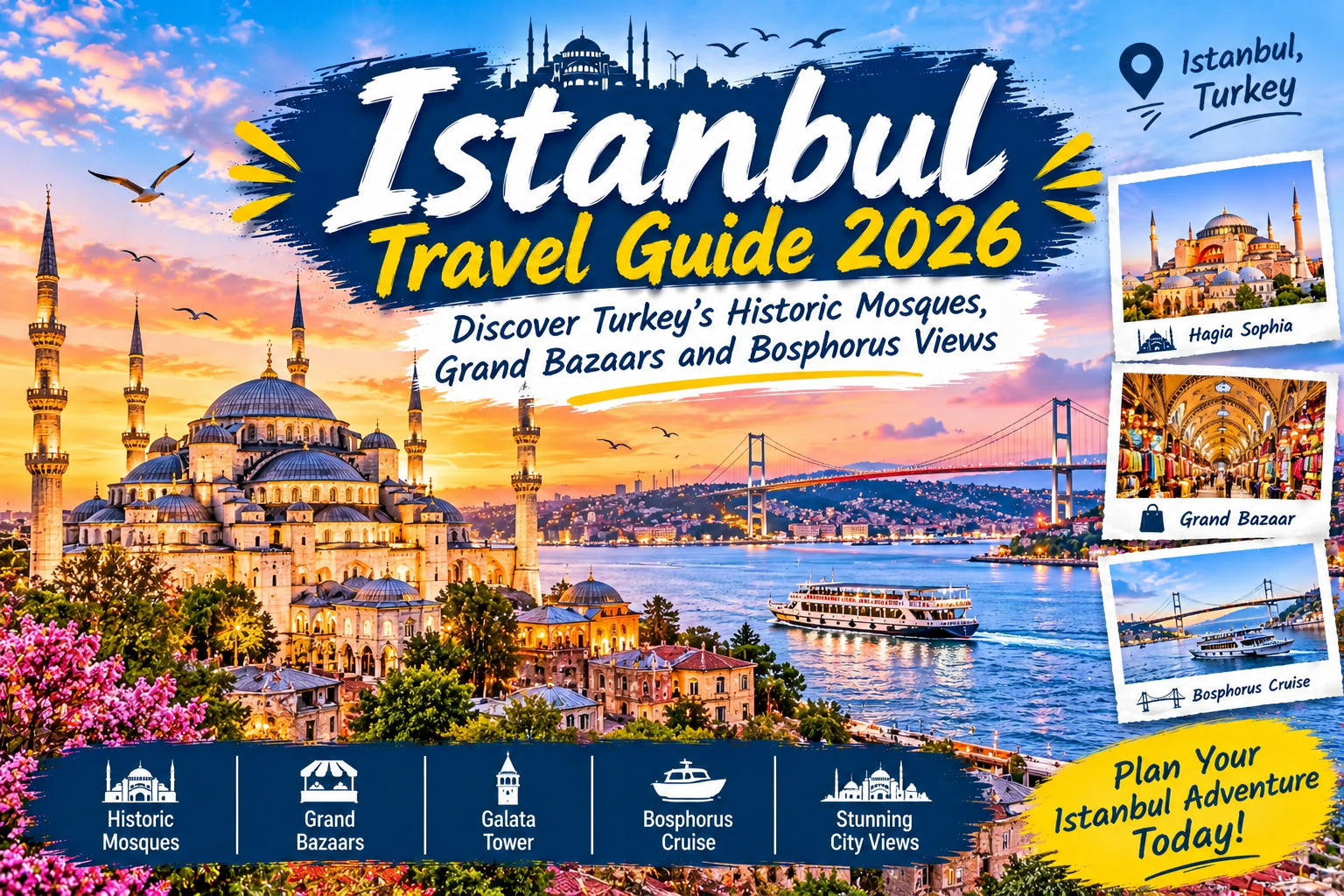
Where Europe meets Asia, Istanbul offers a fascinating blend of cultures, architecture, history and unforgettable food. Set along the Bosphorus Strait, this remarkable Turkish city has served as the capital of several great empires, leaving behind an extraordinary collection of palaces, mosques, churches and historic neighbourhoods.
From the magnificent Hagia Sophia to the colourful streets of Balat, Istanbul brings centuries of history into everyday life. Visitors can explore traditional bazaars, enjoy Turkish coffee overlooking the water, discover Ottoman architecture and experience the lively atmosphere of its waterfront districts.
Whether you are planning a cultural holiday, a food-focused getaway or your first visit to Turkey, Istanbul offers countless experiences. Moreover, its unique position across two continents makes it one of the world’s most distinctive travel destinations.
Why Visit Istanbul?
Istanbul is a city where different historical periods and cultural influences come together. Formerly known as Byzantium and Constantinople, it played an important role in the Byzantine and Ottoman empires.
Today, its historic landmarks sit alongside modern shopping streets, contemporary restaurants and vibrant neighbourhoods. The city is particularly famous for its waterfront scenery, traditional markets and impressive religious architecture.
Additionally, Istanbul is an excellent destination for travellers interested in food. Turkish breakfast, kebabs, baklava, seafood and traditional tea culture are all part of the city’s appeal.
Best Places to Visit in Istanbul
1. Hagia Sophia
Hagia Sophia is one of Istanbul’s most extraordinary historical landmarks. Originally constructed as a Byzantine cathedral in the sixth century, it later became an Ottoman imperial mosque and remains an important religious and cultural site.
Its enormous dome, historic mosaics and impressive interior architecture reflect different periods of its history.
Visitors should check current visitor arrangements and access rules before arriving, as designated areas and prayer schedules can affect sightseeing.
2. Blue Mosque
Located opposite Hagia Sophia in Sultanahmet Square, the Blue Mosque is one of the most recognisable buildings in Istanbul.
Officially known as the Sultan Ahmed Mosque, it is famous for its cascading domes, elegant minarets and decorative blue Iznik tiles.
The mosque remains an active place of worship. Therefore, visitors should dress modestly, follow local instructions and avoid entering during restricted prayer periods.
3. Topkapi Palace
Topkapi Palace was the principal residence and administrative centre of Ottoman sultans for centuries.
The extensive palace complex includes courtyards, historic chambers, beautiful gardens and collections of royal objects. Its location also provides impressive views across the Bosphorus and the Golden Horn.
Exploring the palace offers valuable insight into Ottoman royal life, political history and artistic traditions.
4. Grand Bazaar
The Grand Bazaar is one of the world’s most famous covered markets. Its network of streets and shops offers an exciting introduction to traditional Turkish shopping culture.
Visitors can browse carpets, ceramics, jewellery, textiles, lamps, leather goods and souvenirs.
Furthermore, exploring the market is an experience in itself. Take time to discover its different sections, compare prices and enjoy the atmosphere rather than rushing through.
5. Spice Bazaar
Also known as the Egyptian Bazaar, the Spice Bazaar is a colourful marketplace filled with spices, dried fruits, nuts, Turkish sweets and traditional food products.
The fragrance of freshly ground spices and the colourful displays make it a memorable stop for food enthusiasts.
Visitors can also purchase Turkish delight, tea blends and edible souvenirs to take home.
6. Galata Tower
Galata Tower is a historic stone tower overlooking Istanbul’s surrounding neighbourhoods and waterfront.
Its elevated position makes it one of the city’s popular viewpoints. From the observation area, visitors can enjoy panoramic views of the Golden Horn, historic peninsula and Bosphorus.
The surrounding Galata neighbourhood is equally interesting, with independent shops, cafés, galleries and traditional streets.
7. Balat and Fener
Balat and Fener are among Istanbul’s most characterful historic neighbourhoods.
It is particularly famous for its colourful houses, narrow streets, antique shops and independent cafés. Meanwhile, Fener has a rich historical connection with Istanbul’s Greek Orthodox community.
Walking through these neighbourhoods offers a different perspective on the city beyond its major monuments.
8. Dolmabahce Palace
Located along the European shore of the Bosphorus, Dolmabahce Palace is known for its grand European-inspired architecture and elaborate interiors.
The palace served as an important residence and administrative centre during the later Ottoman period.
Its decorative halls, impressive staircases and waterfront setting make it one of Istanbul’s most striking historical attractions.
Best Things to Do in Istanbul
Beyond sightseeing, Istanbul offers experiences that help visitors understand its traditions and everyday culture.
- Take a Bosphorus cruise: Enjoy views of historic waterfront buildings, bridges and neighbourhoods from the water.
- Experience a traditional Turkish bath: Visit a historic hammam for a cultural wellness experience.
- Enjoy Turkish breakfast: Try a traditional spread featuring bread, cheeses, olives, eggs, honey and tea.
- Taste authentic street food: Sample simit, balik ekmek, roasted chestnuts and local snacks.
- Explore local coffee culture: Visit traditional cafés and discover the preparation of Turkish coffee.
- Shop for traditional crafts: Browse ceramics, textiles, lamps and handmade souvenirs.
- Discover historic neighbourhoods: Explore Galata, Karakoy, Balat and other districts on foot.
Additionally, consider attending a traditional Turkish music performance or joining a guided food tour to explore the city’s cultural heritage.
Best Time to Visit Istanbul
Istanbul can be visited throughout the year, although each season offers a different experience.
Spring (March to May): Spring brings pleasant temperatures and colourful gardens. April is particularly attractive during the city’s tulip season, when parks and public spaces display seasonal flowers.
Summer (June to August): Summer offers long daylight hours and lively waterfront activities. However, temperatures can become hot, and popular attractions are often crowded.
Autumn (September to November): Autumn generally provides comfortable sightseeing conditions. The summer crowds gradually decrease, making it a good period for exploring historic neighbourhoods.
Winter (December to February): Winter is colder and wetter, with occasional snowfall. Nevertheless, visitors can enjoy quieter attractions, cosy cafés and beautiful city views.
For a comfortable sightseeing experience, April, May, September and October are excellent choices.
What to Eat in Istanbul
Istanbul is a paradise for food enthusiasts, offering everything from traditional Turkish breakfasts to delicious street food and elaborate desserts.
Some local specialities worth trying include:
- Simit: A circular bread coated with sesame seeds, commonly enjoyed with Turkish tea.
- Balik Ekmek: A popular fish sandwich traditionally associated with the waterfront around Eminonu.
- Lahmacun: A thin, crispy flatbread topped with seasoned minced meat and herbs.
- Iskender Kebab: Slices of meat served over bread with tomato sauce, yoghurt and melted butter.
- Manti: Small Turkish dumplings traditionally served with yoghurt and seasoned sauce.
- Baklava: A famous layered pastry filled with nuts and sweet syrup.
- Turkish Delight: A traditional confection available in numerous flavours and varieties.
Food markets and neighbourhood restaurants offer excellent opportunities to discover authentic local flavours.
How to Reach Istanbul
Istanbul has extensive international and domestic transport connections.
By air: Istanbul Airport and Sabiha Gokcen International Airport serve the city. Travellers can reach central neighbourhoods through airport buses, taxis and other transport connections.
By train: International and domestic rail connections are more limited than air travel. Visitors arriving from other Turkish cities may find buses or flights more convenient depending on their route.
By bus: Long-distance buses connect Istanbul with numerous destinations across Turkey. Major bus terminals provide connections to different regions.
Within the city, visitors can use the metro, tram, buses, ferries and taxis. Public transport is especially useful for reaching major attractions, although walking remains one of the best ways to explore historic districts.
Suggested 4-Day Istanbul Itinerary
Four days provide a good introduction to Istanbul’s historic landmarks, food culture and waterfront neighbourhoods.
1st Day: Historic Sultanahmet
- Visit Hagia Sophia.
- Explore the Blue Mosque.
- Discover Topkapi Palace.
- Walk through Sultanahmet Square.
2nd Day: Traditional Markets
- Explore the Grand Bazaar.
- Visit the Spice Bazaar.
- Discover the Eminonu waterfront.
- Enjoy traditional Turkish food.
3rd Day: Galata and the Golden Horn
- Visit Galata Tower.
- Explore the streets of Karakoy.
- Discover Balat and Fener.
- Enjoy cafés and local shops.
4th Day: Bosphorus and Ottoman Heritage
- Explore Dolmabahce Palace.
- Take a Bosphorus cruise.
- Enjoy the waterfront scenery.
- Finish the day with a traditional Turkish dinner.
You can adjust this itinerary according to attraction opening hours, transport connections and personal interests.
Essential Travel Tips for Visiting Istanbul
A little preparation can make your visit more enjoyable.
- Use public transport: Trams, metros and ferries are convenient for exploring different parts of the city.
- Get an Istanbulkart: This transport card can make using public transport easier.
- Dress appropriately: Religious sites have specific clothing requirements for visitors.
- Plan popular attractions early: Major landmarks can become crowded, particularly during peak travel seasons.
- Wear comfortable shoes: Historic neighbourhoods often feature cobbled streets and steep pathways.
- Check attraction schedules: Museums and palaces may have different opening arrangements on certain days.
- Compare shopping prices: Browse multiple shops before purchasing souvenirs and traditional products.
- Allow extra travel time: Traffic can be heavy, especially around central districts and bridge crossings.
Final Thoughts
Istanbul is a destination where history, culture and modern city life come together in remarkable ways. Its magnificent mosques, historic palaces, traditional bazaars and lively waterfront create an experience that appeals to many different types of travellers.
From exploring the grandeur of Hagia Sophia to tasting baklava in a traditional café, every part of the city offers something memorable.
Moreover, its position between Europe and Asia gives Istanbul a distinctive identity that is difficult to experience anywhere else.
Whether you are planning your first visit to Turkey or returning to explore more of its cultural heritage, Istanbul promises an unforgettable journey through centuries of history and tradition.
Internal Links:
- Rize Türkiye Travel Guide: Discover Turkey’s Lush Green Highlands
- Alghero Italy Travel Guide: Discover Sardinia’s Coastal Gem
- Kyoto Travel Guide 2026: Discover Japan’s Ancient Temples, Traditional Streets and Timeless Culture
- Samarkand Uzbekistan: Beyond the Blue Domes and Bazaars