
For many travelers, visa applications feel confusing before the trip even begins.
One of the most common questions is simple:
Should I apply for an eVisa or a regular visa?
Both allow international travel, but the process, effort, waiting time, and flexibility can feel very different.
If you’re planning an international trip, here’s what actually matters.
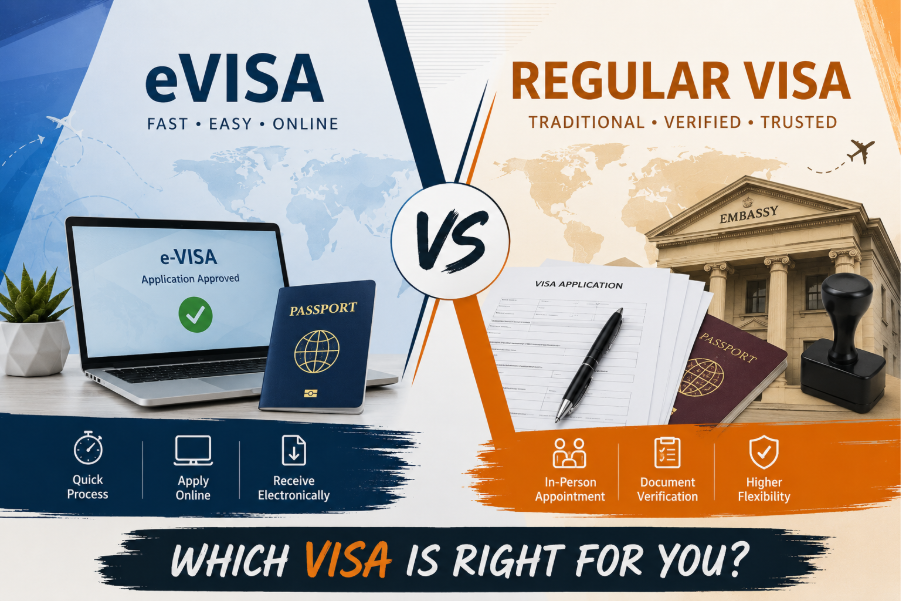
What Is an eVisa?
An eVisa is a visa that can usually be applied for online without visiting an embassy or visa center.
In many cases, the process involves:
- filling out an online application
- uploading required documents
- paying online
- receiving approval digitally
It’s designed to make travel easier.
That convenience is exactly why many travelers prefer it.
What Is a Regular Visa?
A regular visa follows the traditional process.
This may involve:
- filling application forms
- scheduling appointments
- document verification
- embassy/consulate visits
- biometric submission
- interviews (in some cases)
It usually takes more effort but may offer broader travel flexibility depending on the country.
The Biggest Difference: Convenience
This is where eVisa clearly wins.
If your destination offers eVisa access, the process can feel dramatically easier.
No physical visits.
Less paperwork stress.
Faster application experience.
Regular visas, meanwhile, often require more planning and patience.
Processing Time
eVisa approvals are often faster.
Some arrive within days.
Some even faster depending on the country.
Regular visas may take longer because of appointments, verification, interviews, and embassy processing.
If your trip is close, speed becomes important.
Documentation
eVisas generally require fewer steps.
Typical requirements:
- passport copy
- photograph
- travel details
- accommodation details
Regular visas may ask for more:
- financial proof
- employment documents
- invitation letters
- travel history
- biometrics
Requirements vary by destination.
Flexibility
Regular visas often offer more flexibility.
Depending on visa type, they may allow:
- longer stays
- multiple entries
- broader travel purposes
eVisas are often stricter.
Examples:
- shorter stay validity
- tourism-only usage
- single-entry limitations
Always check rules carefully.
Cost
This depends entirely on the destination.
Sometimes eVisas are cheaper.
Sometimes similar.
Sometimes not.
The real “cost” difference often comes from effort, travel to visa centers, printing, courier costs, and time spent.
Approval Certainty
Neither guarantees approval.
But regular visas sometimes involve deeper verification, which can feel more formal and predictable depending on your profile.
eVisas may be simpler—but errors in online applications can lead to rejection too.
Which One Is Better?
Choose eVisa if you want:
- faster process
- convenience
- simpler tourism travel
- less paperwork
- quick approvals
Choose regular visa if you need:
- longer stay
- business travel
- multiple entries
- special visa categories
- destinations without eVisa access
Final Thought
The better visa is not about technology.
It’s about your trip.
For quick vacations, eVisas often make travel dramatically easier.
For complex travel needs, regular visas may still be the smarter option.
The real win is understanding the rules before booking the ticket.