
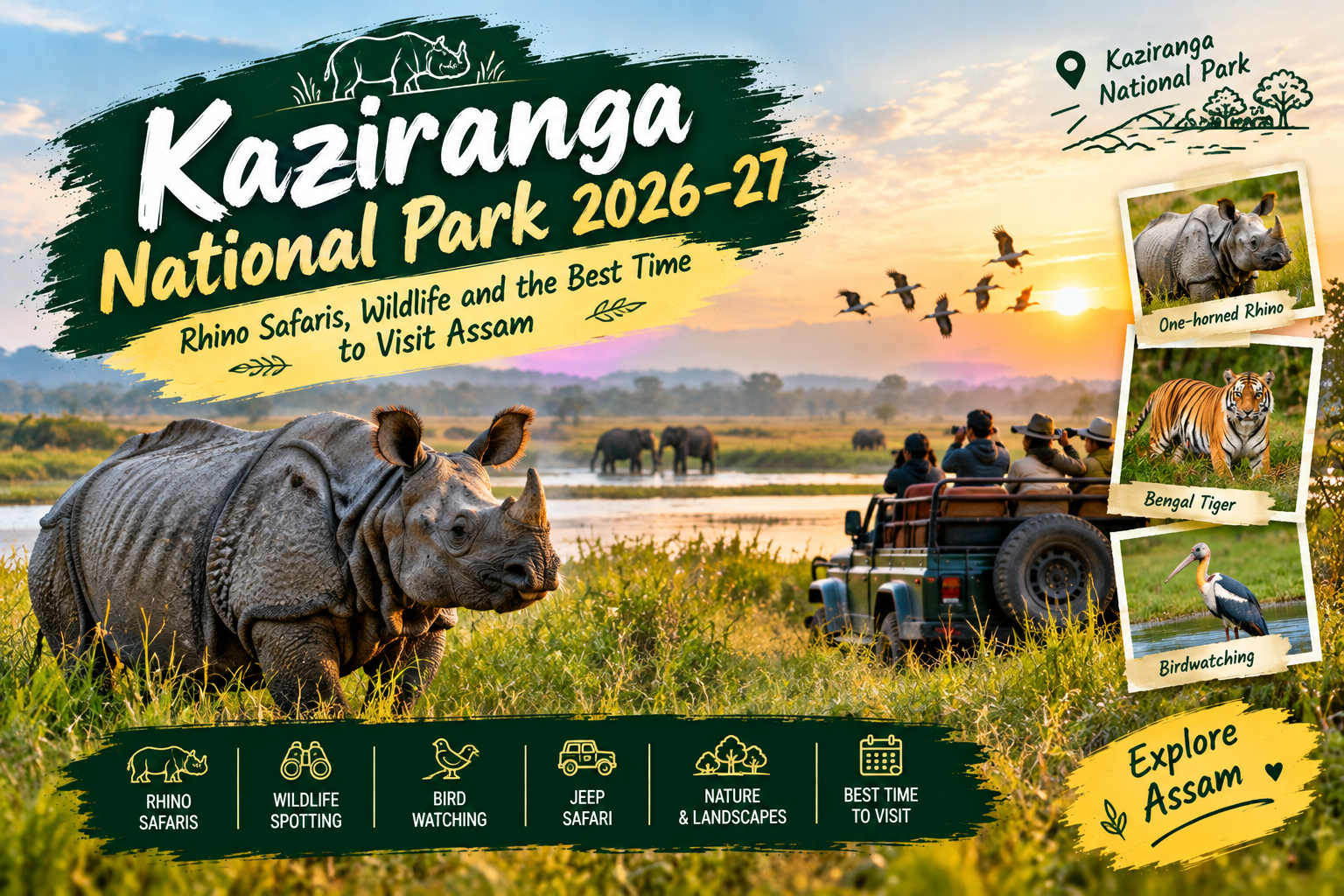
There are few travel experiences as thrilling as watching a wild one-horned rhinoceros emerge from tall elephant grass, with mist drifting across the wetlands and birds calling from the surrounding forest. In Assam, this is not a scene from a wildlife documentary. It is part of the experience waiting for visitors at Kaziranga National Park.
The park’s 2026–27 tourism season reportedly began on 3 October 2026, with jeep safaris resuming in designated areas. As the cooler months approach, Kaziranga is becoming an appealing destination for travellers interested in India’s remarkable wildlife, wetlands, grasslands and lesser-explored corners of the Northeast.
Recognised as a UNESCO World Heritage Site, Kaziranga is best known for the great Indian one-horned rhinoceros. Yet a visit offers much more than a chance to spot a rhino. The park protects a living ecosystem shaped by seasonal floods, extraordinary biodiversity and decades of conservation work.
If you’re planning a wildlife holiday this winter, this Kaziranga National Park travel guide covers the safari experience, wildlife highlights, best time to visit, nearby attractions, accommodation and practical travel advice for the 2026–27 season.
Why Visit Kaziranga National Park in 2026–27?
Kaziranga National Park stretches across parts of Assam, with its wider landscape encompassing areas associated with Golaghat, Nagaon and Biswanath districts. Tall grasslands, shallow pools, marshes, forests and riverine habitats create a diverse environment for wildlife.
The park is globally significant for protecting the one-horned rhinoceros. Its habitats also support Asian elephants, wild water buffalo, deer, tigers and numerous bird species.
October offers an opportunity to visit soon after the reported seasonal reopening. However, November to April is generally considered a favourable period for exploring Kaziranga, as cooler, drier conditions can make wildlife excursions more comfortable.
Actual access depends on weather, local conditions and forest department decisions. Before setting out, check the latest official information about open safari ranges, operating hours and visitor restrictions.
What to See on a Kaziranga Safari
A safari through Kaziranga introduces visitors to a landscape where wildlife and wetlands exist side by side. Each excursion can offer a different experience, depending on the route, season and movement of animals.
1. The Great Indian One-Horned Rhinoceros
The one-horned rhinoceros is Kaziranga’s most famous resident and the main reason many travellers make the journey to Assam.
These powerful animals can sometimes be seen grazing in open grasslands, moving through shallow water or resting near wetlands. Their distinctive single horn and armour-like skin make them instantly recognisable.
Sightings are never guaranteed because these are wild animals living in a protected habitat. An experienced guide can help you understand their behaviour and identify wildlife while maintaining a safe distance.
For many visitors, observing a rhinoceros in its natural surroundings becomes the highlight of a Kaziranga safari.
2. Wild Elephants and Deer
Kaziranga is also home to Asian elephants and several species of deer. You may spot animals feeding in open areas or moving between grasslands and woodland.
Rather than rushing between sightings, take time to appreciate the landscape. Watching wildlife interact with its surroundings can be just as rewarding as seeing a large animal up close.
Early morning excursions may offer pleasant temperatures and beautiful light for photography. Nevertheless, animal activity varies, and every safari unfolds differently.
3. Tigers and Wild Water Buffalo
Kaziranga is a tiger reserve as well as a national park. Tigers inhabit its protected landscapes, although their elusive nature means that sightings cannot be predicted.
Wild water buffalo are another remarkable species associated with the region. Their impressive size and curved horns make them memorable encounters when conditions allow.
Even when larger animals remain hidden, the park’s diversity of birds, smaller wildlife and wetland scenery can make a safari worthwhile.
4. Birdwatching Across Wetlands and Grasslands
Kaziranga’s wetlands and grasslands attract resident and migratory birds, particularly during the cooler months.
Depending on the location and season, birdwatchers may encounter storks, pelicans, eagles, kingfishers and other waterbirds. Binoculars can help you observe birds without disturbing them.
Travellers who enjoy wildlife photography should consider allowing extra time for birdwatching. A knowledgeable local guide can also help identify species and explain the ecological importance of the park’s wetlands.
Kaziranga Jeep Safari: What Visitors Should Know
Jeep safaris are a popular way to explore Kaziranga’s designated tourism areas. They allow visitors to cover more ground than walking and provide opportunities to observe wildlife along authorised routes.
According to the reopening information supplied for the 2026–27 season, jeep safaris initially resumed in the Central Range at Kohora and the Western Range at Bagori. Access to other areas may depend on phased openings and official instructions.
Kaziranga Safari Timings
The reported safari operating windows are:
- Morning: 7:30 am to 10:00 am
- Afternoon: 1:30 pm to 3:00 pm
Treat these timings as provisional until confirmed by the relevant authorities. Operating windows may not indicate the exact duration of every excursion, and routes can vary according to current arrangements.
Before booking, confirm your selected range, reporting time, entry point and exit instructions. Elephant safari operations may follow separate arrangements, so do not assume that every safari type is available.
Tips for a Better Kaziranga Safari
A little preparation can make your wildlife experience more comfortable and rewarding.
- Book through authorised channels: Use the official booking system or a reliable authorised operator.
- Choose your timing carefully: Morning excursions may offer cooler conditions and soft natural light.
- Carry binoculars: These are useful for spotting birds and observing animals at a respectful distance.
- Bring a suitable camera: A zoom lens can help capture wildlife without approaching too closely.
- Wear comfortable clothing: Neutral colours are practical for a nature-focused outing.
- Follow your guide’s instructions: Remain inside the vehicle unless explicitly permitted otherwise.
- Respect wildlife: Never feed, chase or attempt to attract animals for photographs.
- Be patient: Sightings depend on animal movement, habitat conditions, weather and chance.
Remember that a safari is an opportunity to observe wild animals in their own environment, not a guarantee of seeing particular species.
Best Time to Visit Kaziranga National Park in 2026–27
The best time to visit Kaziranga depends on your preferred weather, wildlife interests and travel plans. November to April is generally a popular period for exploring the park, although conditions can vary throughout the season.
November to February: The Winter Wildlife Season
These months are an excellent choice for travellers seeking comfortable weather and opportunities to explore Kaziranga’s grasslands and wetlands.
Cooler conditions can make outdoor excursions more pleasant. The landscape also offers plenty of photographic opportunities, while birdwatchers may enjoy looking for migratory species.
For first-time visitors, winter is a practical period to consider when planning a wildlife-focused holiday in Assam.
March and April: The End of the Main Tourism Season
March and April can also be rewarding for wildlife enthusiasts. Temperatures generally rise as summer approaches, so planning outdoor activities around the cooler parts of the day can be helpful.
The suitability of a visit depends on the prevailing weather and current park operations. Check local conditions before finalising your travel dates.
October: Visiting After the Seasonal Reopening
October is worth considering if you want to visit soon after the park reopens for the tourism season.
However, early-season access may be limited in some areas. Weather conditions and operational decisions can affect which safari ranges are available.
Confirm the latest arrangements before booking accommodation or making non-refundable travel plans.
Understanding Kaziranga’s Monsoon Closure
Kaziranga’s seasonal closure is closely linked to heavy rainfall and flooding across the Brahmaputra region.
Floods are an important part of the area’s ecological cycle. They influence habitats, replenish wetlands and shape the wider landscape that supports the park’s wildlife.
During challenging conditions, seasonal closures and access restrictions help protect visitors and wildlife. Always follow official guidance rather than attempting to enter restricted areas.
Places to Explore Near Kaziranga National Park
A wildlife holiday in Kaziranga can be combined with cultural experiences, local towns and other attractions across Assam. The right additions depend on how much time you have available.
Kohora
Kohora is a convenient base for many visitors and is associated with Kaziranga’s Central Range.
The area offers accommodation, local restaurants and services for arranging a visit to the park. Staying nearby can also make it easier to reach your safari reporting point on time.
For a short wildlife-focused trip, Kohora is a practical starting point.
Bokakhat
Bokakhat is a nearby town that can serve as a useful stop while exploring the wider Kaziranga region.
Local transport and other practical services make it relevant to travellers moving around the area. Depending on your itinerary, the town can also provide an opportunity to experience everyday life in this part of Assam.
Majuli
If your schedule allows more time in Assam, consider extending your journey to Majuli, the river island known for its Assamese cultural heritage, satras and traditional communities.
The island offers a different experience from Kaziranga’s wildlife landscapes. Visitors can explore cultural institutions, learn about local traditions and enjoy a slower pace of travel.
Reaching Majuli requires careful transport planning because river connections are involved. Check ferry operations and onward transport before finalising your itinerary.
Guwahati
Guwahati is a major gateway to Assam and a convenient starting or ending point for a longer journey.
The city offers opportunities to explore local food, cultural attractions and the Brahmaputra riverfront. Travellers arriving from other parts of India may find it useful to spend some time here before heading towards Kaziranga.
Allow sufficient time for the road journey between Guwahati and the national park, particularly if your itinerary includes a scheduled safari.
Where to Stay in Kaziranga
Accommodation around Kaziranga ranges from government tourist lodges to private resorts, guesthouses and nature-focused stays.
Kohora is a popular base because of its access to tourism services and the Central Range. Other locations may suit travellers who prefer a quieter setting or want to explore different parts of the park’s surroundings.
When choosing a property, consider the distance to your safari reporting point, transport availability, meal arrangements and cancellation policies.
Booking ahead is sensible if you’re travelling during weekends, school holidays or the busy winter season. Comparing the actual location of each property can also help you avoid unnecessary early-morning travel.
For a more responsible wildlife holiday, choose accommodation and tour operators that respect park regulations and support sustainable tourism practices.
How to Reach Kaziranga National Park
Kaziranga is connected to the wider region by air, rail and road. Your best route will depend on your arrival city, budget and available travel time.
By Air
Guwahati and Jorhat are useful airport options, depending on your itinerary and available flight connections.
Guwahati generally offers a broader range of connections, while Jorhat may be convenient for certain routes. Compare onward road transfers before deciding which airport works best for your trip.
By Train
Several railway stations serve the wider region around Kaziranga.
The most suitable station depends on your arrival city, train availability and accommodation location. Check the onward road journey before booking, particularly if you need to reach your lodge in time for an early safari.
By Road
Kaziranga is connected to major destinations in Assam by road.
The distance from Guwahati is approximately 200–220 kilometres, depending on the starting point and route. Actual journey time can vary with traffic, road conditions and stops along the way.
For travellers arriving from outside Northeast India, a practical plan is to reach Guwahati, transfer to Kaziranga, spend two or three nights near the park and then return or continue exploring Assam.
A Responsible Wildlife Travel Experience
Kaziranga’s appeal rests on its extraordinary biodiversity, and visitors have a role to play in protecting it.
Keep noise to a minimum during safaris and avoid littering. Never pressure guides to approach animals for photographs, and always respect designated routes and instructions from park authorities.
Responsible wildlife tourism also means understanding that animals move freely through their habitats. A guide cannot guarantee sightings, and attempting to influence animal behaviour can put both visitors and wildlife at risk.
Seasonal flooding and other environmental changes are natural features of this landscape. Although these conditions can affect tourism operations, they are also part of the ecological processes that shape Kaziranga.
By following park regulations and choosing responsible operators, visitors can help support the long-term protection of this remarkable ecosystem.
Is Kaziranga National Park Worth Visiting in 2026–27?
Absolutely. Kaziranga offers a distinctive wildlife holiday for anyone interested in nature, photography and the landscapes of Northeast India.
The opportunity to observe one-horned rhinoceroses in their natural habitat is a major attraction. Beyond that experience, the park offers open grasslands, bird-filled wetlands, forest scenery and a deeper understanding of conservation.
With the 2026–27 tourism season reportedly underway, travellers can start planning around confirmed safari availability and the cooler months ahead.
Two or three nights is a good starting point for a first visit. Additional time allows you to explore nearby destinations such as Majuli or experience more of Assam’s cultural heritage.
For a winter escape that feels different from India’s usual city breaks and hill-station holidays, add Kaziranga National Park to your travel list.
Frequently Asked Questions
Is Kaziranga National Park open now?
The supplied 2026–27 season information states that tourism activities began on 3 October 2026, with jeep safaris resuming in designated areas. Access can vary by range and local conditions, so check current official updates before travelling.
What is Kaziranga National Park famous for?
Kaziranga is best known for the great Indian one-horned rhinoceros. Its habitats also support tigers, Asian elephants, wild water buffalo, deer and numerous bird species.
Which month is best for Kaziranga National Park?
November to February is a popular period because of the generally cooler weather and opportunities for wildlife viewing. March and April can also be rewarding, depending on the conditions and available park access.
How many days are enough for Kaziranga National Park?
Two or three nights is a practical choice for a first visit. This gives you time to arrange safari excursions and explore the surrounding area without rushing.
Can I see a tiger during a Kaziranga safari?
Tiger sightings are possible but never guaranteed. The park is also rewarding for its rhinoceroses, elephants, deer, birds and distinctive wetland and grassland scenery.
What should I carry for a Kaziranga National Park safari?
Comfortable clothing, sun protection, binoculars, a suitable camera and essential personal items can be useful. Follow your safari operator’s rules about drinking water, bags and other items permitted inside the park.
Are jeep safaris available in Kaziranga National Park during October?
The supplied reopening information indicates that jeep safaris resumed in designated areas from 3 October 2026. Availability may vary by range and current conditions, so confirm the latest operating arrangements before booking.
Final Thoughts on Kaziranga National Park
Kaziranga National Park offers a chance to experience one of India’s most remarkable wildlife landscapes. Its one-horned rhinoceroses, expansive grasslands, wetlands and diverse birdlife make it a compelling destination for nature lovers.
Beyond the safari experience, the journey provides an introduction to Assam’s natural heritage and the conservation efforts that help protect it. Adding nearby cultural destinations can make the trip even more rewarding.
If you’re planning a wildlife holiday in the 2026–27 season, begin by checking official park updates, choosing your preferred travel dates and arranging accommodation near your safari area.
Plan thoughtfully, travel responsibly and allow yourself time to experience Kaziranga beyond the search for a single wildlife sighting.
Internal Links
- I Spent 4 Days in Jorhat During Tea Harvest Season—The Slow Mornings, Tea Gardens, and Hidden Assam Changed My Idea of Travel
- I Spent 3 Days in Meghalaya This Monsoon—The Living Root Bridges, Rain, and Mist Made Me Want to Stay Longer
- The Rise of Do-Less Travel
- The Future of Sustainable Travel: How to Explore Without Leaving a Trace
- Hidden Gems: Why Offbeat Travel Creates the Best Memories
- The Hidden Mental Health Benefits of Travel
- Traveling Through the Seasons: Why Every Time of Year Offers a Unique Adventure
Outbound Links
- https://assamtourism.gov.in/Kaziranga.php
- https://assamtourism.gov.in/Safari-packages.php
- https://tourism.assam.gov.in/portlet-sub-innerpage/wildlife
- https://environmentandforest.assam.gov.in/information-services/detail/national-park
- https://www.incredibleindia.gov.in
- https://whc.unesco.org
- https://www.nationalgeographic.com/travel
- https://www.lonelyplanet.com
- https://www.britannica.com
- https://www.iucn.org