
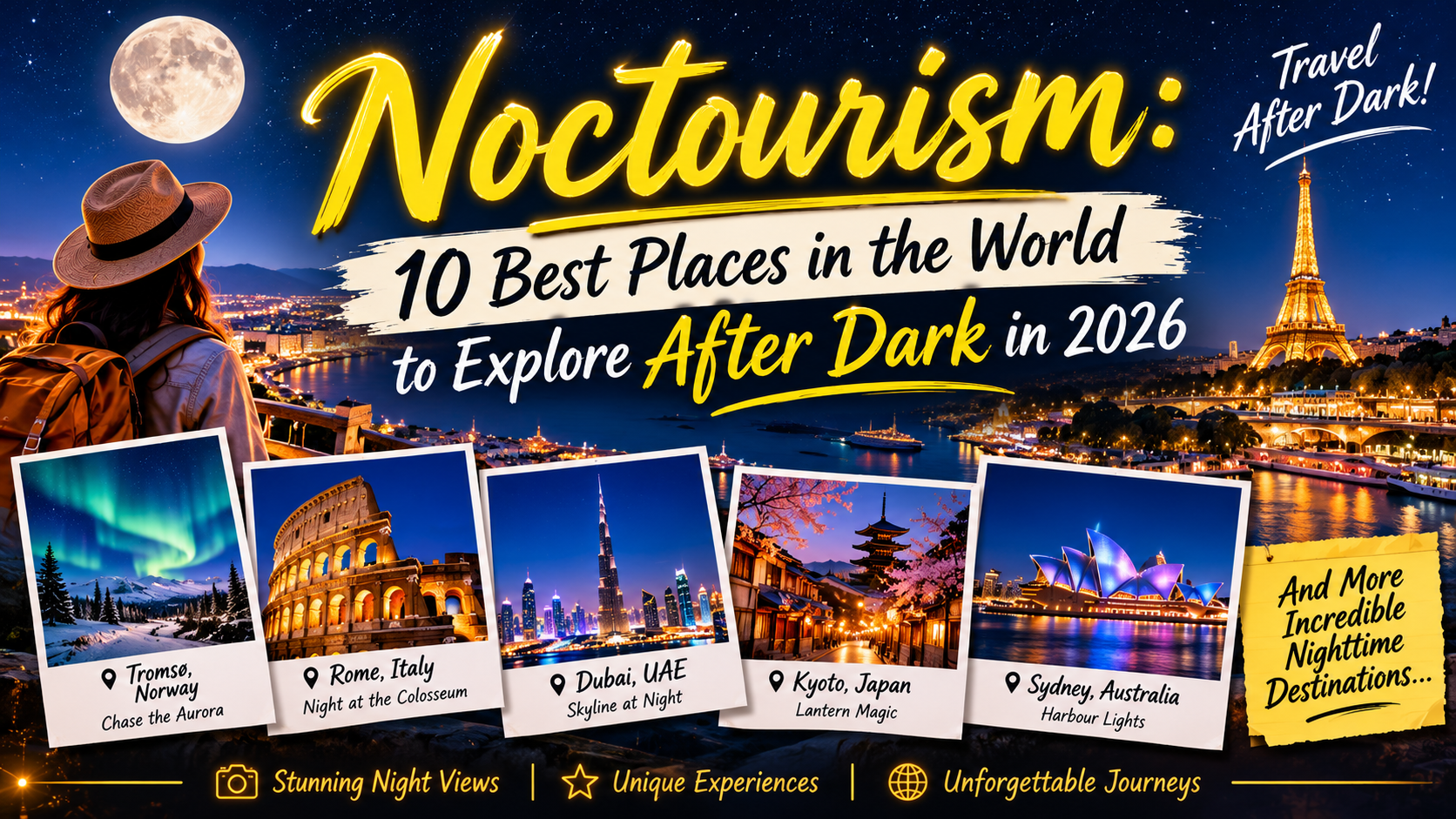
The best travel experiences don’t always happen under a bright blue sky. Some begin when the sun disappears, city lights flicker on, and familiar landscapes transform into something extraordinary – Noctourism.
Imagine watching the Milky Way stretch across a desert sky, walking through centuries-old streets illuminated by lanterns, or exploring a rainforest when its nocturnal wildlife becomes active. These experiences reveal a completely different side of travel.
This growing interest has a name: Noctourism.
As travellers look beyond traditional sightseeing, exploring destinations after sunset is becoming an exciting travel trend. From stargazing adventures and night safaris to illuminated cities and moonlit coastal experiences, noctourism encourages people to discover places at a different pace.
But what makes travelling at night so special? And where can you experience it?
Let’s explore some of the world’s most fascinating after-dark destinations and experiences.
What Is Noctourism?
Noctourism, also known as nocturnal tourism, refers to exploring destinations and enjoying activities after sunset.
Instead of planning every activity around daylight hours, travellers build their itineraries around nighttime experiences.
These can include:
- Stargazing in remote deserts and mountains.
- Exploring historic cities through evening walking tours.
- Watching the Northern Lights.
- Discovering nocturnal wildlife through guided safaris.
- Visiting night markets and illuminated cultural districts.
- Experiencing bioluminescent beaches.
- Enjoying moonlit kayaking and nature walks.
Noctourism is more than nightlife. It focuses on nature, culture, adventure and experiences that become possible or more rewarding after dark.
Why Is Noctourism Becoming Popular?
Several changes in travel behaviour are contributing to its growing popularity.
Escaping daytime crowds: Popular attractions can become extremely busy during regular sightseeing hours. Evening exploration offers a different atmosphere, although popular nighttime attractions can also get crowded.
Avoiding extreme daytime temperatures: In hotter destinations, evening activities can be more comfortable than exploring outdoors during the afternoon.
Discovering something different: Travellers increasingly want experiences beyond conventional sightseeing. Exploring a familiar city after dark can make even a well-known destination feel new.
Reconnecting with nature: Stargazing, night walks and wildlife experiences offer opportunities to disconnect from everyday distractions and appreciate the natural world.
10 Best Places in the World to Experience Noctourism
From ancient cities to remote wilderness destinations, these places offer memorable experiences after sunset.
1. Rome, Italy – Discover Ancient History After Sunset
Rome is a city where history feels particularly atmospheric after dark.
The city offers a different perspective once daytime crowds begin to disappear and historic streets take on a quieter character.
Imagine walking through cobblestone lanes, admiring illuminated fountains and seeing historic architecture against the evening sky.
Best nighttime experiences:
- Explore the streets around the Pantheon.
- Visit Piazza Navona in the evening.
- Admire the illuminated Colosseum from public viewpoints.
- Enjoy an evening food tour.
- Take a guided historical walking tour.
Best time to visit: April to June and September to October.
2. Kyoto, Japan – Experience Traditional Japan at Night
Kyoto becomes especially atmospheric after sunset.
Traditional wooden buildings, narrow lanes and softly illuminated streets create a completely different mood from the busy daytime sightseeing experience.
The historic Gion district is particularly interesting for an evening walk.
Best nighttime experiences:
- Explore Gion’s traditional streets.
- Walk around the illuminated Yasaka Shrine area.
- Enjoy an evening food experience.
- Discover traditional Japanese architecture.
- Take a guided cultural walking tour.
Best time to visit: March to May and October to November.
Remember to respect residential areas, photography restrictions and local etiquette, especially in Gion.
3. Tromsø, Norway – Chase the Northern Lights
For travellers who dream of experiencing the Arctic night, Tromsø deserves a place on the list.
Located above the Arctic Circle, Tromsø is a popular starting point for Northern Lights adventures.
During the aurora season, the darkness creates opportunities to witness one of nature’s most extraordinary displays.
Best nighttime experiences:
- Join a guided Northern Lights excursion.
- Photograph the aurora.
- Experience an Arctic wilderness camp.
- Enjoy a traditional Sami cultural experience.
- Explore the city’s winter atmosphere.
Best time to visit: September to early April.
Northern Lights sightings are never guaranteed. Weather conditions, cloud cover and solar activity all influence visibility.
4. Atacama Desert, Chile – Sleep Under a Sky Full of Stars
The Atacama Desert is one of the world’s most fascinating destinations for astronomy enthusiasts.
Its dry climate, high-altitude landscapes and remote locations create excellent conditions for observing the night sky.
Here, the experience isn’t about rushing between attractions. It is about looking upward and appreciating the scale of the universe.
Best nighttime experiences:
- Join an astronomy tour.
- Observe planets and distant galaxies through telescopes.
- Photograph the Milky Way.
- Experience desert stargazing.
- Stay in accommodation designed around astronomy experiences.
Best time to visit: Year-round, with conditions varying by season and moon phase.
For the darkest skies, consider planning around the new moon.
5. Singapore – Explore a City That Comes Alive After Dark
Singapore offers an exciting combination of modern architecture, cultural experiences and nighttime entertainment.
As daylight fades, the city transforms into a landscape of illuminated skyscrapers, waterfront promenades and lively food streets.
Best nighttime experiences:
- Watch the Garden Rhapsody light show at Gardens by the Bay.
- Walk along Marina Bay.
- Explore Chinatown’s evening food scene.
- Visit Clarke Quay.
- Enjoy the city’s illuminated skyline.
Best time to visit: February to April, although Singapore is a year-round destination.
6. Jaisalmer, India – Experience the Desert Under the Stars
India has its own remarkable noctourism experiences, and Jaisalmer is a wonderful example.
Known for its golden sandstone architecture and vast desert landscapes, Jaisalmer offers an opportunity to experience the Thar Desert after sunset.
As the heat fades, the desert takes on a different atmosphere.
Best nighttime experiences:
- Enjoy an organised desert camping experience.
- Watch the sunset over the sand dunes.
- Experience traditional Rajasthani music and performances.
- Try stargazing away from brightly illuminated areas.
- Explore Jaisalmer Fort during permitted evening hours.
Best time to visit: November to February.
Choose responsible desert camps that respect the surrounding environment and local communities.
7. Varanasi, India – Witness the Spiritual Atmosphere of the Ganges
Few places offer an evening atmosphere quite like Varanasi.
Situated along the River Ganges, the city is known for its ancient ghats, temples and deeply rooted spiritual traditions.
As evening approaches, the riverfront becomes a gathering place for visitors and locals.
Best nighttime experiences:
- Witness the Ganga Aarti at Dashashwamedh Ghat.
- Take an authorised evening boat ride.
- Explore the historic lanes around the ghats.
- Experience traditional food and local culture.
- Observe the riverfront from a respectful distance.
Best time to visit: October to March.
The evening Ganga Aarti is a religious ceremony, so visitors should be mindful of local customs and avoid disrupting worshippers.
8. La Fortuna, Costa Rica – Discover the Rainforest at Night
The rainforest doesn’t become quiet when the sun goes down.
In fact, many creatures become more active after dark.
La Fortuna is a wonderful destination for travellers interested in nocturnal wildlife and tropical ecosystems.
Surrounded by lush forests and located near Arenal Volcano, the region offers guided experiences that reveal a different side of the rainforest.
Best nighttime experiences:
- Join a guided nocturnal wildlife walk.
- Look for tree frogs and insects.
- Discover rainforest sounds.
- Explore designated nature trails.
- Learn about tropical ecosystems from local naturalists.
Best time to visit: December to April for generally drier conditions.
Always explore the rainforest with an experienced guide and avoid disturbing wildlife.
9. Reykjavík, Iceland – Experience the Magic of Arctic Nights
Reykjavík is an excellent base for travellers interested in Iceland’s nighttime landscapes.
During winter, long nights create opportunities for Northern Lights excursions. During summer, the opposite happens: the midnight sun keeps the landscape illuminated late into the night.
Best nighttime experiences:
- Join a Northern Lights tour during the darker months.
- Visit geothermal pools.
- Explore Reykjavík’s evening cultural scene.
- Experience the midnight sun during summer.
- Photograph the city’s waterfront and illuminated landmarks.
Best time to visit: September to March for Northern Lights opportunities; June and July for midnight sun experiences.
10. Puerto Rico – Watch the Ocean Glow at Bioluminescent Beaches
Imagine dipping your hand into the water and watching tiny blue lights appear around it.
This extraordinary natural phenomenon is called bioluminescence.
Puerto Rico is famous for its bioluminescent bays, where microscopic organisms produce a beautiful blue-green glow when disturbed.
Mosquito Bay on Vieques is particularly well known for this phenomenon.
Best nighttime experiences:
- Join an authorised bioluminescent kayaking tour.
- Observe the glowing water.
- Learn about the organisms responsible for the phenomenon.
- Experience the bay with a local guide.
Best time to visit: Conditions vary throughout the year. Dark, moonless nights generally offer better viewing opportunities.
Avoid touching or disturbing sensitive marine environments, and follow local conservation guidelines.
How to Plan a Noctourism Trip
A successful noctourism holiday requires slightly different planning from a conventional sightseeing trip.
You need to consider nighttime transport, weather, visibility, local regulations and the availability of guided experiences.
1. Choose Your Nighttime Experience First
Decide what interests you most.
If you enjoy astronomy, consider the Atacama Desert. For cultural experiences, Kyoto and Rome are excellent choices. Wildlife enthusiasts may prefer Costa Rica.
Choosing your primary experience makes it easier to build the rest of your itinerary.
2. Check the Moon Phase
Moonlight can significantly affect certain nighttime activities.
For example, a full moon can make landscapes brighter but reduce the visibility of faint stars.
If stargazing or photographing the Milky Way is your priority, consider travelling around a new moon.
3. Plan Your Transport in Advance
Public transportation may operate less frequently at night.
Before booking accommodation, check how you will travel between your hotel and nighttime attractions.
Where necessary, arrange authorised taxis or guided transfers.
4. Carry the Right Essentials
Your nighttime travel essentials may include:
- Comfortable walking shoes.
- Warm clothing for cooler destinations.
- A small flashlight or headlamp.
- A power bank.
- Drinking water.
- A camera with suitable low-light capabilities.
- Any necessary personal medication.
5. Choose Responsible Nighttime Experiences
Not every nighttime activity is suitable for every environment.
Avoid disturbing wildlife, shining bright lights at animals or entering restricted areas.
Choose local guides and operators who follow conservation guidelines.
Is Noctourism Safe?
Noctourism can be enjoyable when planned responsibly, but exploring unfamiliar destinations after dark requires additional precautions.
Keep these tips in mind:
- Research neighbourhood safety before booking accommodation.
- Use recognised transport services.
- Prefer guided tours in remote natural areas.
- Avoid isolated locations without proper guidance.
- Keep valuables secure.
- Share your itinerary with someone you trust.
- Follow local restrictions and photography rules.
- Check weather conditions before outdoor activities.
For wildlife experiences, always maintain a safe distance from animals and follow the guide’s instructions.
Frequently Asked Questions About Noctourism
What does noctourism mean?
Noctourism is a form of tourism focused on exploring destinations and enjoying experiences after sunset. It includes stargazing, night safaris, cultural walks, night markets and Northern Lights excursions.
Why is noctourism trending in 2026?
Travellers are increasingly interested in distinctive experiences beyond conventional sightseeing. Cooler evening temperatures, fewer daytime crowds and growing interest in astronomy and nature experiences are contributing to the trend.
Which country is best for noctourism?
There isn’t one single best country. Norway is excellent for Northern Lights experiences, Chile is popular for astronomy, Japan offers atmospheric evening cultural experiences, and Costa Rica provides guided nocturnal wildlife adventures.
Is noctourism suitable for families?
Yes. Families can enjoy suitable evening cultural walks, illuminated gardens, astronomy experiences and guided nature activities. Choose experiences according to children’s ages and local safety conditions.
What is the best time for noctourism?
It depends on the destination and experience. Northern Lights trips are generally planned during darker months, while desert stargazing depends on clear skies and moon phases. Night markets and illuminated city attractions may operate throughout the year.
Is noctourism different from nightlife tourism?
Yes. Nightlife tourism generally focuses on entertainment, bars, clubs and social activities. Noctourism has a broader focus, including nature, astronomy, culture, wildlife and nighttime exploration.
Final Thoughts: Discover a Different Side of the World After Dark
Travel doesn’t have to end when the sun goes down.
Some of the world’s most extraordinary experiences begin when daylight disappears. From watching the Northern Lights in Norway to exploring Kyoto’s historic streets and discovering the glowing waters of Puerto Rico, nighttime travel opens the door to a completely different world.
Noctourism also encourages travellers to slow down and appreciate destinations beyond their familiar daytime attractions.
Perhaps your next adventure won’t begin with an early morning sightseeing tour. It might start with a telescope in the desert, a quiet walk through an illuminated old town or a boat journey beneath a sky full of stars.
Sometimes, the best way to discover a destination is to wait until the world goes dark.