
For years, Porto Santo sat quietly in the shadow of its larger, more famous neighbor. While Madeira built a reputation as one of Europe’s favorite year-round destinations, the small island 43 kilometers to its northeast barely got a mention.
That’s changed fast:
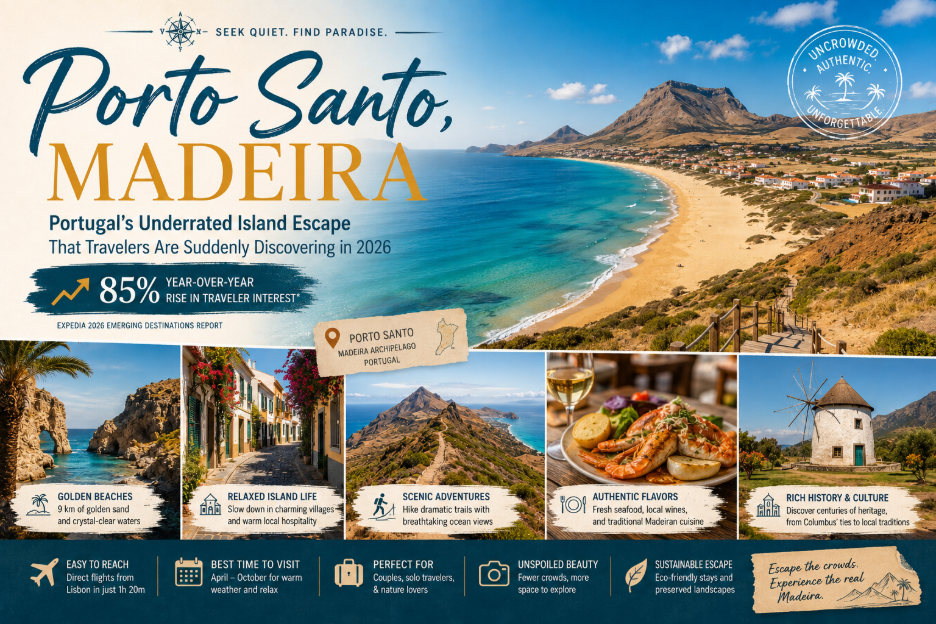
- Expedia’s 2026 Island Hot List ranked Porto Santo #2 among the world’s rising island destinations — right behind St. Lucia.
- Online searches for the island climbed 85% in a single year.
- Tripadvisor’s Travellers’ Choice Awards named Madeira the single most trending destination on the planet for 2026 — and Porto Santo is riding that same wave.
So what’s actually pulling people toward this speck of land in the Atlantic, and is it worth the trip? Here’s a full look: what makes it different from Madeira, how to get there, what to do, and when to go.
Where Is Porto Santo, Exactly?
Porto Santo is part of the Madeira archipelago, a group of Portuguese islands in the Atlantic off the coast of northwest Africa. The island is tiny — about 11 km long and 6 km wide — so you can drive end to end in roughly 20 minutes. It sits around 43 km northeast of Madeira Island, close enough for a short flight or ferry ride.
Despite its size, it has a long history. Portuguese explorers landed here in 1418, before they even reached Madeira. The island also has a cameo in one of history’s biggest stories: Christopher Columbus lived here in the late 1470s after marrying the daughter of the island’s governor. Locals say he spent his time studying ocean currents and washed-up debris — evidence that would later convince him land lay somewhere across the Atlantic.
Why Everyone’s Suddenly Talking About It in 2026
A few things converged at once:
Madeira’s overflow effect. Madeira now draws close to 2.5 million visitors a year, and travelers who fall for it are looking for something quieter nearby. Porto Santo offers exactly that, with only a fraction of Madeira’s visitor numbers.
The beach. Porto Santo’s coastline is a nearly unbroken nine-kilometer stretch of golden sand, made largely from ancient coral and shell sediment rather than the volcanic black sand common on Madeira.
The wellness angle. That coral-and-shell composition is why locals and researchers have long claimed the sand carries therapeutic properties — said to ease joint pain, arthritis, and skin conditions. Expedia specifically flagged the island as a top pick for wellness and relaxation travel in 2026, citing this “geotherapeutic” quality as a genuine draw rather than marketing spin.
The bigger travel trend. A growing appetite for slower, less crowded travel — plus improved flight and ferry connections — means word is finally getting out about a place that’s spent decades as one of Portugal’s best-kept secrets.
Porto Santo vs. Madeira: What’s the Difference?
| Madeira | Porto Santo | |
|---|---|---|
| Landscape | Mountainous, green | Flat, dry, sunny |
| Main draw | Hiking, levada walks, dramatic cliffs | One long, exceptional beach |
| Vibe | Busier capital (Funchal), livelier scene | Quiet, slow-paced |
| Best for | A week or more of exploring | A 2–3 day beach reset |
Where Madeira asks you to explore, Porto Santo asks you to slow down. Many visitors tack it on as an extension to a Madeira trip, though more are now booking it as a standalone beach escape, especially in warmer months.
How to Get There
From Madeira, you have two options:
- By air: A direct flight from Funchal takes about 25 minutes.
- By ferry: The crossing takes roughly 2.5 hours — popular with travelers bringing a rental car or who just want to enjoy the sea journey.
International visitors typically fly into Madeira first (via Funchal or a Lisbon connection), then continue to Porto Santo by plane or ferry. Porto Santo also has its own airport with a runway long enough for long-haul aircraft — a legacy of its use as an emergency landing strip — so direct charter and seasonal flights from elsewhere in Europe are becoming more common.
Best Time to Visit
- Summer (June–August): Peak beach season. Dry skies, warm sea, busiest time of year — though even then, it’s far quieter than most Mediterranean beach destinations.
- September–October: Warm water without the summer crowds. This window also coincides with the Christopher Columbus Festival in Vila Baleira — historical reenactments, live music, and open-air markets.
- Spring: Wildflowers, mild temperatures, some of the year’s best hiking, and lower accommodation prices.
Broadly, the island is comfortable to visit mid-November through late October — a longer usable season than many European beach destinations.
Best Things to Do
Spend a day (or several) on Praia do Porto Santo. The beach is the headline act — calm, shallow, turquoise water, ideal for swimming and paddleboarding. The island stays quiet even in high season, so you can usually find a stretch to yourself.
Explore Vila Baleira. The small capital is worth an unhurried afternoon: whitewashed buildings, cobblestone streets, a relaxed palm-shaded square. Stop by Casa Museu Colombo, believed to be Columbus’s former home, now a small museum of maps and navigation artifacts.
Play a round at Porto Santo Golfe. Designed by Severiano Ballesteros, it combines an 18-hole championship course with a 9-hole pitch-and-putt, set against ocean and volcanic hillside views.
Hike Pico do Facho and Pico Ana Ferreira. Short inland hikes reward you with sweeping views over the beach and surrounding islets — and on a clear day, Madeira itself. The Terra Chã–Pico Branco trail in the northeast is another favorite, especially in spring.
Visit the dunes and Salemas natural pools. Rolling dunes, volcanic rock formations, and calm seawater pools among the rocks make for a peaceful, less touristy swim.
Get out on the water. Boat trips around the coastline and islets, plus reliably calm, clear water for diving and snorkeling.
Try a horseback ride along the coast. A slower way to take in the scenery, offered by several local operators.
Where to Stay
Options range from beachfront resorts to boutique hotels and self-catering apartments, most within easy reach of the main beach.
- Near Vila Baleira: best for a full resort experience.
- Toward the island’s edges: best for a quieter setting.
Given the surge in interest, book several months ahead for summer travel — especially around the September Columbus Festival.
What to Eat
Food here is simple, fresh, and Portuguese through and through:
- Espetada — skewered beef grilled with bay leaves
- Bolo do caco — warm, slightly sweet bread brushed with garlic butter
- Grilled squid, fresh limpets, and other seafood, pulled straight from the surrounding Atlantic
A meal at one of the small restaurants near the marina, timed for sunset, is one of the simple pleasures of a trip here.
Final Thoughts
Porto Santo isn’t trying to be Madeira, and that’s exactly its appeal. It’s a small, unhurried island built around one exceptional beach, a handful of worthwhile sights, and a pace of life that’s getting harder to find elsewhere in Europe. The rankings and search data confirm what a smaller group of travelers has known for years: this island has been worth the trip all along. The only question is whether you’ll get there before everyone else does.