

Every November, the quiet town of Sonepur in Bihar transforms into a lively gathering place for pilgrims, traders, artisans, performers, and travellers. Colourful stalls fill the fairgrounds, traditional music echoes through the crowds, and devotees gather along the riverbanks for age-old religious rituals. This is Sonepur Mela, a remarkable celebration where rural traditions, spirituality, commerce, and entertainment come together.
Also known as Harihar Kshetra Mela, the event is widely recognised as one of Asia’s major traditional cattle fairs. Its distinctive character comes from the combination of livestock-related traditions, religious ceremonies, local markets, cultural performances, and its location near the confluence of the Ganga and Gandak rivers.
The Sonepur Mela 2026 is expected to run from November 22 to December 23, according to recent local announcements. The main Kartik Purnima celebrations are expected around November 23–24. However, travellers should confirm the final dates and programme with Bihar Tourism or the local administration before booking.
For those seeking an experience beyond conventional city breaks, Sonepur offers a fascinating glimpse into Bihar’s living traditions, religious heritage, and vibrant rural culture.
What Makes Sonepur Mela Special?
Sonepur Mela has historical roots in livestock trading and religious pilgrimage. Over the years, it has developed into a large public fair that attracts visitors from different parts of India.
The event is closely associated with Kartik Purnima, an auspicious full-moon day in the Hindu calendar. During this period, pilgrims visit the riverbanks for ritual bathing and offer prayers at Harihar Nath Temple, one of Sonepur’s most important religious landmarks.
Beyond its spiritual significance, the fair features traditional markets, agricultural products, handicrafts, food stalls, entertainment, and cultural programmes. These different elements create an atmosphere that reflects the region’s customs, community life, and rural economy.
For travellers, visiting Sonepur Mela is an opportunity to experience traditions that continue to evolve alongside modern tourism.
Top Things to Experience at Sonepur Mela 2026
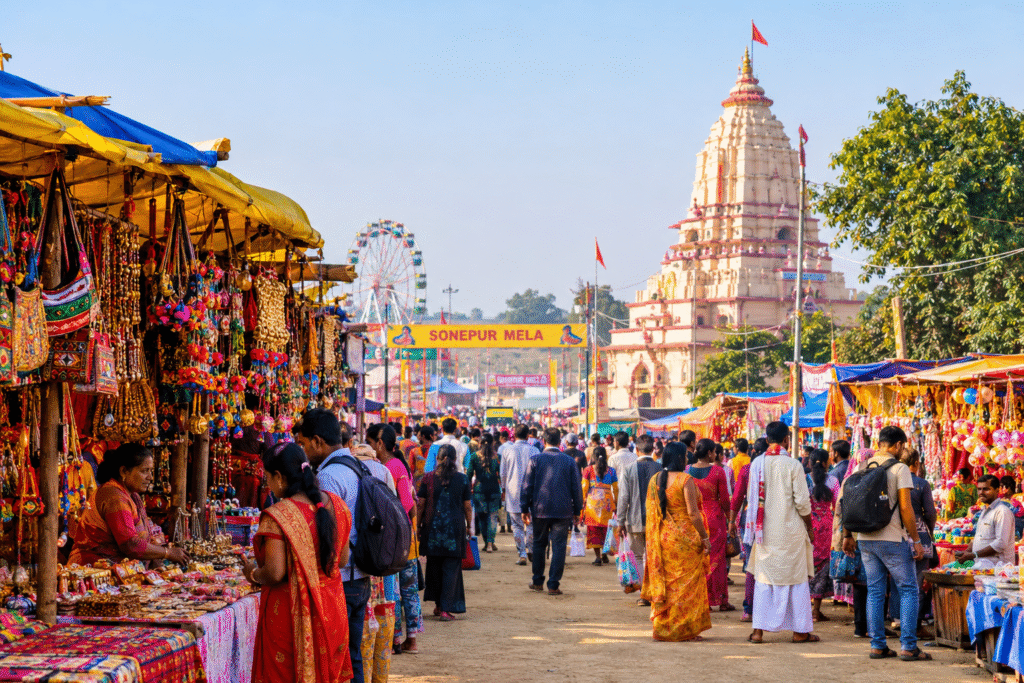
1. Discover the Traditional Fairgrounds
Walking through the fairgrounds is one of the best ways to experience Sonepur Mela. Different sections showcase regional goods, household products, handicrafts, agricultural items, and everyday essentials.
The lively market atmosphere offers plenty of opportunities for photography, people-watching, and discovering products that may be unfamiliar to visitors from larger cities.
Rather than rushing between attractions, take your time exploring the different sections. Crowds can become particularly heavy around major religious celebrations and popular entertainment areas, so allow extra time to move between locations.
2. Visit Harihar Nath Temple
Harihar Nath Temple is one of the most significant spiritual landmarks associated with Sonepur Mela. Devotees visit the temple to offer prayers throughout the festival, particularly around Kartik Purnima.
Its religious importance gives the fair an identity that extends beyond commerce and entertainment. Visitors interested in Indian pilgrimage traditions can observe the rituals respectfully and learn about local customs.
When visiting, dress modestly and follow the temple’s instructions. Always ask permission before photographing worshippers or religious ceremonies.
3. Experience the Sacred River Confluence
The confluence of the Ganga and Gandak rivers is central to the religious significance of Sonepur. During Kartik Purnima, pilgrims gather along the riverbanks for ritual bathing and prayer.
Early morning can be an especially atmospheric time to visit. Soft light spreads across the water as the riverfront gradually fills with devotees preparing for their religious observances.
Safety should remain a priority around the bathing areas. Follow local instructions, use designated access points, and avoid entering the water outside authorised areas, as river currents, changing water levels, and large crowds can create risks.
4. Enjoy Folk Music and Cultural Performances
Cultural programmes add another dimension to the Sonepur Mela experience. Depending on the confirmed schedule, visitors may find folk music, dance, theatrical performances, devotional programmes, and appearances by regional or nationally known artists.
Bhojpuri culture plays an important role in the atmosphere of the fair. Traditional performances offer a glimpse into the music, storytelling, and artistic expressions of the region.
Since the exact 2026 artist lineup and daily programme may change, check official announcements before planning your visit around a particular performance.
5. Explore Rural Crafts and Local Products
Sonepur Mela is also an opportunity to discover the creativity of local artisans, small businesses, and rural producers.
Browse handmade products, traditional decorative items, textiles, and locally produced goods as you explore the market. Buying directly from small vendors can help support the communities that contribute to the fair’s distinctive character.
Preparations for the 2026 edition have also highlighted plans for a Gramshree Mandap intended to showcase rural products and handmade goods. Check the final event layout to find out which exhibitions and stalls will be operating during your visit.
6. Understand the Fair’s Historic Animal-Trading Traditions
Livestock trading is central to the historical reputation of Sonepur Mela. The fair developed as a gathering place for buyers and sellers, particularly in connection with rural agriculture and animal husbandry.
However, the modern fair should not be understood solely through its historical animal markets. Animal trading is subject to legal restrictions, and elephant trading is illegal in India. Historical practices should not be assumed to be lawful or permitted today.
If you encounter animals at the fair, observe them from a respectful distance and avoid supporting unlawful trade or activities that cause distress. The event’s religious traditions, cultural programmes, local crafts, and community celebrations provide many other ways to appreciate its significance.
What to Eat at Sonepur Mela
Food is an essential part of visiting a traditional Indian fair. Stalls and local eateries around Sonepur may offer regional snacks, sweets, and familiar North Indian favourites.
Here are some local specialities and popular fairground treats to look out for:
- Litti chokha: A classic Bihari speciality made with roasted wheat dough balls served with a smoky vegetable accompaniment.
- Sattu-based dishes: A regional favourite featuring roasted gram flour, used in savoury preparations and refreshing drinks.
- Thekua: A traditional sweet snack commonly associated with festivals in Bihar.
- Jalebi and other sweets: Popular treats to enjoy while exploring the stalls.
- Chaat and seasonal snacks: Street-food options that vary according to the vendors present.
Food availability depends on the stalls operating during your visit. Choose clean, busy establishments, carry drinking water, and take sensible food-hygiene precautions during crowded festival days.
Places to Visit Near Sonepur
If you have extra time, consider combining Sonepur Mela with a short exploration of nearby destinations. The surrounding region offers historical landmarks, religious sites, and opportunities to learn more about Bihar’s cultural heritage.
Patna
Bihar’s capital is a practical base for travellers arriving by air or rail. Depending on your interests, explore its museums, historic landmarks, and Ganga riverfront.
Patna can also serve as a convenient starting point for planning onward transport to Sonepur.
Vaishali
Vaishali is known for its ancient historical and religious associations. Travellers interested in archaeology and the region’s long cultural history may find it a worthwhile addition to their itinerary.
Plan your transport in advance if you intend to visit Vaishali as a day trip from Sonepur or Patna.
Golghar, Patna
Golghar is one of Patna’s recognisable historic landmarks. This distinctive granary can be included in a city sightseeing itinerary, particularly if you have additional time before or after attending the fair.
These destinations are best treated as separate excursions rather than squeezed into a single busy day at Sonepur Mela.
Suggested Two-Day Sonepur Mela Itinerary
A two-day visit gives you more time to explore the fairgrounds, visit the temple, experience the riverfront, and enjoy the local atmosphere without rushing.
Day 1: Fairgrounds and Local Culture
- Arrive in Sonepur and check into your accommodation.
- Visit Harihar Nath Temple, allowing time for queues and local rituals.
- Explore the traditional markets, handicraft stalls, and rural product displays.
- Sample regional food and browse the local vendors.
- Attend a cultural performance if one is scheduled.
- Return to your accommodation before late-night crowds become difficult to navigate.
Day 2: Riverfront and a Deeper Exploration
- Visit the riverfront in the morning, following local safety guidance.
- Explore sections of the fair that you missed on the first day.
- Browse local products and learn more about the fair’s traditional trading history.
- If your departure is later in the day, consider a separately planned visit to Patna or another nearby destination.
Travellers primarily interested in the Kartik Purnima rituals should plan around the confirmed religious programme. Keep in mind that the main celebrations are also likely to attract the largest crowds.
How to Reach Sonepur
Sonepur is accessible by air, rail, and road, with Patna and Hajipur serving as useful transport hubs for the wider region.
By Air
Jay Prakash Narayan International Airport in Patna is a practical gateway for many travellers visiting the fair. From the airport, arrange a road transfer to Sonepur.
Allow additional travel time during major festival days, when traffic congestion may affect journeys.
By Train
Sonepur has a railway station, and the wider region is connected by rail through nearby cities, including Hajipur and Patna.
Check current train schedules and compare arrival points before booking. Your most convenient station may depend on your accommodation and the transport arrangements available during the fair.
By Road
Sonepur can be reached from Patna and other parts of Bihar by road. Actual travel times depend on traffic conditions, the route, and congestion around the festival grounds.
During major religious celebrations, allow extra time for parking and local transfers. Families travelling with older adults or young children may find accommodation with straightforward transport access particularly convenient.
Where to Stay During Sonepur Mela
Accommodation options may include hotels and guesthouses in the wider Patna and Hajipur areas, local lodgings, and temporary arrangements associated with the fair.
For the busiest dates, reserve accommodation early and confirm the exact location before making payment. A property that appears close on a map may still require a slow journey because of traffic congestion or road restrictions.
Before booking, ask about transport to the fairgrounds, check-in times, bathroom facilities, and cancellation policies. If you choose temporary festival accommodation, confirm which amenities are actually included rather than assuming that standard hotel facilities will be available.
Best Time to Visit Sonepur Mela
Sonepur Mela takes place around Kartik Purnima in November and may continue into December. For 2026, recent local announcements indicate a planned period from November 22 to December 23, with the principal Kartik Purnima celebrations expected around November 23–24.
Verify the final dates before booking, as published listings may differ and the official programme may be updated.
For a more spiritual atmosphere, consider visiting during the main religious celebrations. These dates are also likely to be the busiest, so prepare for crowds and longer waiting times.
If your main priority is exploring the stalls and attending cultural programmes, a weekday outside the peak pilgrimage period may offer a more comfortable experience, depending on the final schedule.
November and December can bring cool mornings and evenings to Bihar. Pack layers, comfortable walking shoes, and a light jacket. Carry cash for small purchases, keep valuables secure, and use authorised payment methods wherever possible.
Essential Travel Tips for Sonepur Mela 2026
A little preparation can make your visit more comfortable, particularly during the busiest days of the fair.
- Check official updates: Confirm the event dates, transport arrangements, and performance schedule before departure.
- Expect crowds: Keep children close, agree on a meeting point, and save your accommodation details.
- Respect religious customs: Dress appropriately at temples and follow instructions at the riverfront.
- Be considerate with photography: Ask permission before photographing people, religious ceremonies, or animals.
- Choose safe food and water: Use hygienic vendors and carry drinking water.
- Support responsible tourism: Buy from local artisans and avoid illegal wildlife or animal trading.
- Allow extra travel time: Congestion can affect access to the fairgrounds, especially around major rituals.
- Keep belongings secure: Take precautions in crowded markets and busy public areas.
- Plan accommodation early: Confirm the location, facilities, and transport arrangements before paying.
Frequently Asked Questions About Sonepur Mela 2026
When will Sonepur Mela take place in 2026?
Recent local announcements indicate that Sonepur Mela is expected to run from November 22 to December 23, 2026, with the main Kartik Purnima celebrations expected around November 23–24. Confirm the final dates through Bihar Tourism or the local administration before booking.
Where is Sonepur Mela held?
Sonepur Mela takes place in Sonepur, Bihar, near the confluence of the Ganga and Gandak rivers.
Why is Sonepur Mela famous?
The fair is known for its historical livestock-trading traditions, religious significance, Harihar Nath Temple, traditional markets, cultural performances, and rural products.
Is there an entry ticket for Sonepur Mela?
The fair has traditionally been a public event, but arrangements for specific exhibitions, entertainment areas, or special programmes may vary. Check official announcements for the 2026 edition to confirm any entry fees or ticketing requirements.
How many days should I spend at Sonepur Mela?
One full day is enough for a brief visit, but two days allow more time to explore the temple, riverfront, markets, and cultural programmes. Add extra time if you plan to visit nearby destinations.
Is Sonepur Mela suitable for families?
Families can enjoy the cultural programmes and market experiences, but crowds may be intense on major religious dates. Plan meeting points, supervise children closely, and follow safety instructions around the river and animal areas.
Final Thoughts
Sonepur Mela is more than a traditional fair. It offers a window into Bihar’s religious heritage, rural economy, local craftsmanship, and community celebrations. From the spiritual atmosphere of Harihar Nath Temple to the lively markets and cultural performances, the event provides a distinctive experience that differs from India’s more familiar city and hill-station holidays.
For November and December 2026, Sonepur could be an appealing addition to a Bihar travel itinerary, especially for travellers interested in festivals with deep local roots.
Plan ahead, verify the final dates, and leave enough time to experience the fair at a comfortable pace. The most memorable moments may come not only from the scale of the event, but also from the everyday traditions and people that bring it to life.
Internal Links
- I Arrived in Ujjain After the Monsoon—The Ancient Temples, Shipra River, Evening Aarti, and Old City Streets Made the Whole Trip Feel Timeless
- Forgotten Kingdoms: Ancient Cities Every History Lover Should Visit
- The Rise of Do-Less Travel
- Hidden Gems: Why Offbeat Travel Creates the Best Memories
- The Future of Sustainable Travel: How to Explore Without Leaving a Trace
- Traveling Through the Seasons: Why Every Time of Year Offers a Unique Adventure
- The Joy of Getting Lost: Why Unplanned Travel Adventures Are the Most Rewarding