
Travel is exciting.
New cities, unfamiliar streets, local culture, unexpected experiences.
But unfortunately, tourists are often easy targets.
Scammers know travelers are distracted, unfamiliar with local systems, and often in a hurry.
The good news?
Most travel scams follow predictable patterns.
If you know what to look for, they become much easier to avoid.
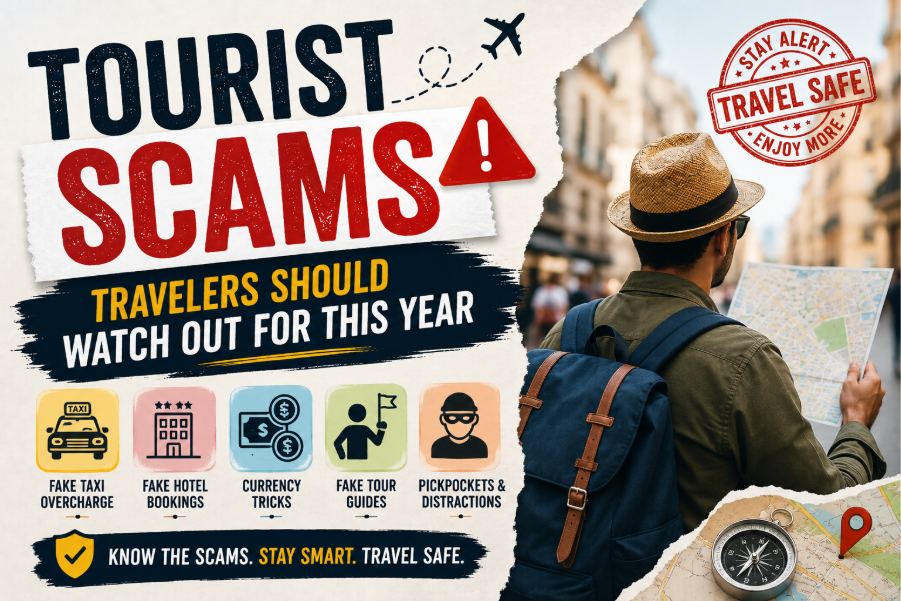
1. Fake Taxi Overcharging
One of the most common scams worldwide.
It usually happens like this:
You arrive tired at an airport or station.
A driver approaches offering a ride.
Then:
- no meter
- inflated prices
- “cash only”
- strange detours
- fake extra charges
How to avoid:
- use official taxi counters
- use trusted ride apps
- confirm fare beforehand
2. Fake Hotel Booking Problems
You arrive at your hotel.
Suddenly:
“Your booking is cancelled.”
“System issue.”
“No rooms available.”
Then they redirect you to an expensive partner hotel.
How to avoid:
- book through trusted platforms
- call hotel before arrival
- keep booking confirmation ready
3. Currency Exchange Tricks
Common international scam.
Examples:
- bad exchange rates
- hidden service fees
- incorrect cash counting
- fake notes
How to avoid:
- use official exchange counters
- count money carefully
- avoid street exchanges
4. “Closed Attraction” Scam
A stranger tells you:
“That place is closed today.”
Then they redirect you to:
- fake tour shops
- expensive stores
- paid alternatives
Classic tourist trap.
How to avoid:
Check official timings yourself.
5. Fake Tour Guides
Someone offers:
“Cheap city tour!”
“Best hidden places!”
Then:
- low-quality experience
- surprise charges
- abandoned tours
How to avoid:
Use licensed operators.
6. Restaurant Bill Inflation
Tourist-heavy places sometimes add:
- fake service charges
- mystery taxes
- extra menu pricing
Sometimes tourists get menu versions with higher prices.
How to avoid:
- check menu carefully
- verify pricing before ordering
- review bill properly
7. Friendship Bracelet / Free Gift Scam
Common in tourist zones.
Someone offers:
“Free bracelet!”
“Small gift!”
Once accepted:
they aggressively demand payment.
How to avoid:
Politely refuse unsolicited offers.
8. Pickpocket Distraction Scams
Very common in crowded areas.
Distractions include:
- asking for directions
- accidental spills
- sudden crowding
- street performances
Meanwhile valuables disappear.
How to avoid:
- keep valuables secure
- use anti-theft bags
- stay alert
9. Fake Wi-Fi Networks
Free public Wi-Fi can be dangerous.
Fake hotspots may steal:
- passwords
- payment info
- personal data
How to avoid:
- avoid sensitive transactions
- use VPN
- confirm official networks
10. ATM Card Skimming
Hidden devices can copy card information.
Red flags:
- loose ATM parts
- unusual card slot attachments
- suspicious keypad overlays
How to avoid:
Use bank ATMs in secure areas.
11. Fake Police Scam
Someone pretending to be authority asks:
- passport
- wallet
- cash inspection
Scary and effective.
How to avoid:
Ask for proper identification.
Stay calm.
12. Photo Scam
A stranger offers:
“Let me take your picture.”
Sometimes:
- demands money
- runs with device
How to avoid:
Be cautious with strangers handling valuables.
Final Thought
Travel scams work because travelers are relaxed, distracted, or unfamiliar.
Awareness is your best defense.
Most scams fail the moment you recognize the pattern.
Because smart travelers enjoy the trip—
without paying for someone else’s trick.