
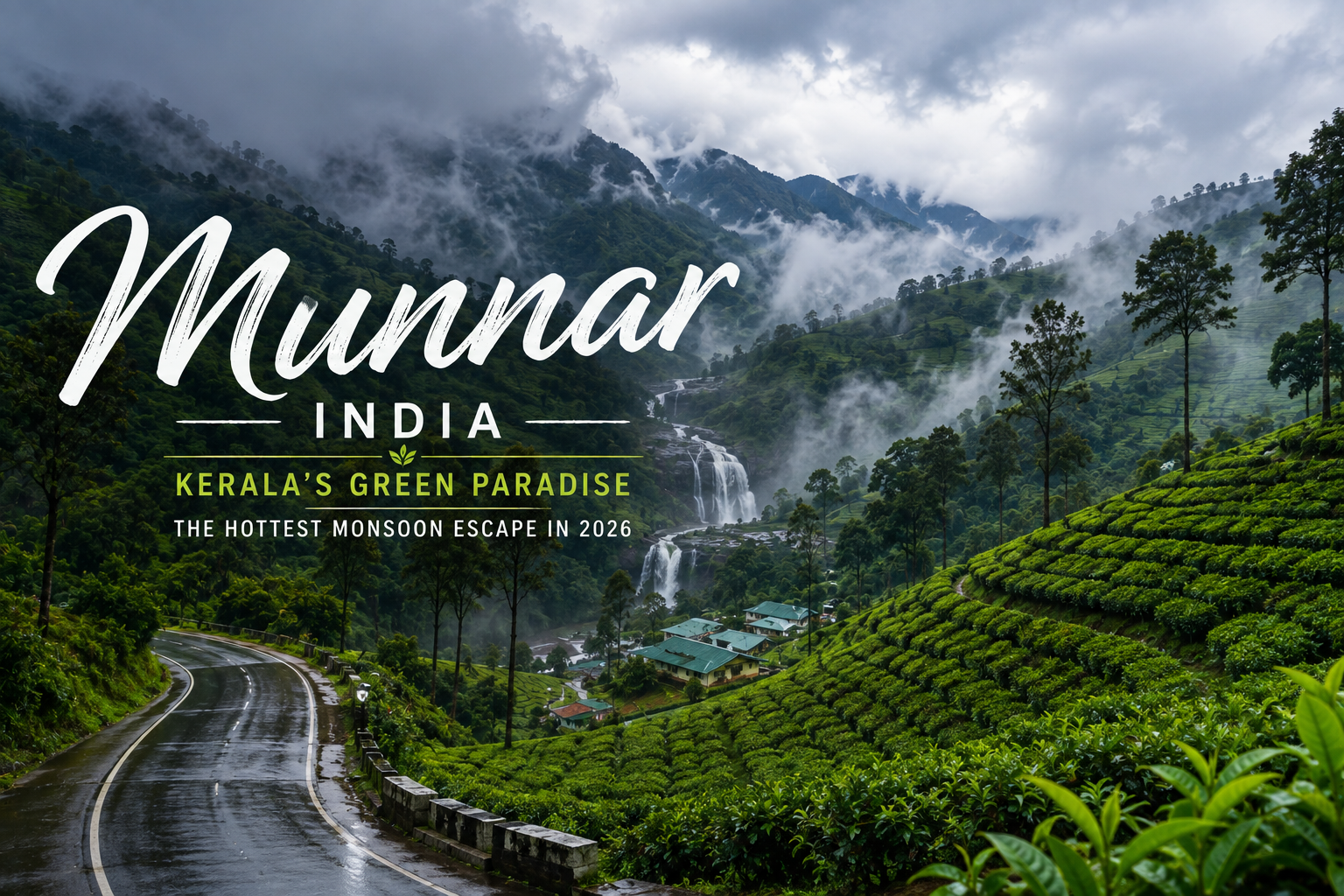
Munnar in the monsoon is a different kind of beautiful. As rain clouds roll across Kerala’s Western Ghats, the tea gardens turn a deeper shade of green, mist settles over the hills, and waterfalls roar back to life. For years, travelers often treated the rainy season as the off-season. In 2026, however, Munnar monsoon travel is gaining attention as more visitors discover the quieter, greener, and more affordable side of this famous Kerala hill station.
Located in Kerala’s Idukki district at around 1,600 metres above sea level, Munnar combines sprawling tea plantations, misty mountains, forests, waterfalls, and cool weather. If you’re looking for a peaceful monsoon escape in India, this is one destination worth considering.
Why Visit Munnar During the Monsoon?
The monsoon transforms Munnar’s landscape. From June through September, regular rainfall gives the tea plantations a vivid green appearance, while streams and waterfalls swell dramatically.
The biggest advantage is the change in atmosphere. Compared with the busy winter months, the monsoon brings fewer tourists, quieter viewpoints, and better opportunities to enjoy the scenery without large crowds.
It can also be a more affordable time to visit. Accommodation prices are often lower during the rainy season, making Munnar monsoon 2026 an attractive option for budget-conscious travelers.
Rather than rushing between attractions, monsoon Munnar is better suited to slow travel—spending time at a scenic homestay, walking through tea country between showers, enjoying hot chai, or simply watching clouds move across the valleys.
What Happens to Munnar When It Rains?
Munnar’s high-altitude location and surrounding Western Ghats create a dramatic monsoon landscape. Weather can change quickly, with sunshine giving way to heavy showers and mist within a short period.
Here are some of the biggest changes you’ll notice:
Tea Gardens Turn Emerald Green
Munnar’s tea estates are beautiful throughout the year, but the rainy season gives them an especially lush appearance. The rows of tea bushes covering the hills become intensely green, while low clouds and mist create dramatic views.
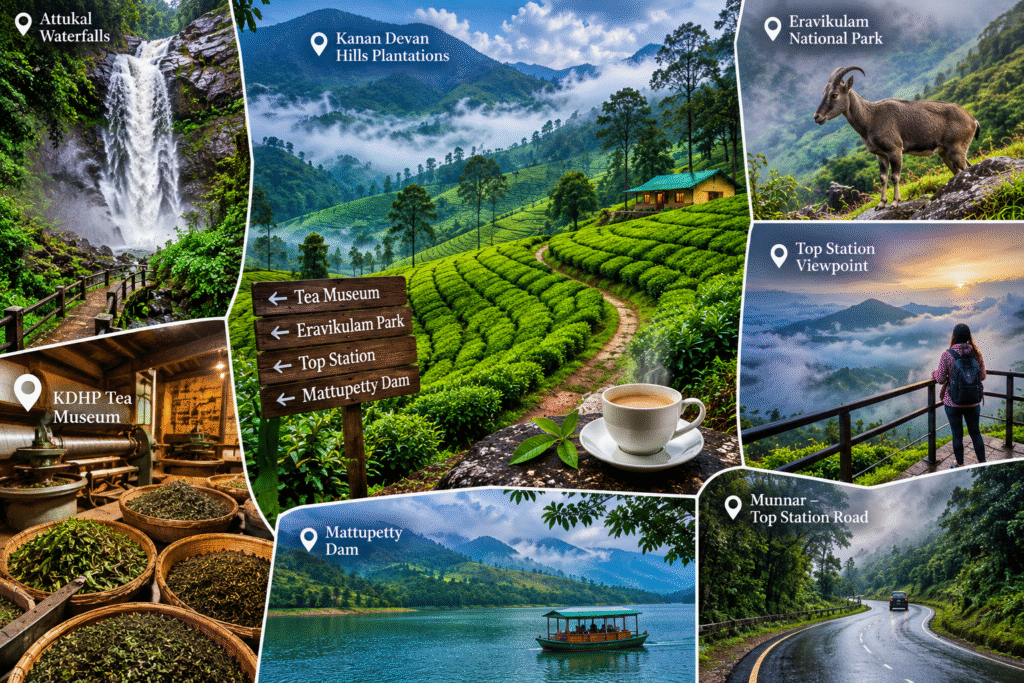
The Kanan Devan Hills Plantations are among the most recognizable tea landscapes around Munnar and are ideal for photography and scenic walks.
Waterfalls Come Alive
Monsoon is arguably the best time to see Munnar’s waterfalls at their most impressive.
Lakkam Waterfalls and Attukal Waterfalls can become significantly more powerful after heavy rainfall. Their surrounding forests also become greener, creating some of the most atmospheric scenery in the region.
Always check local conditions before approaching waterfalls during periods of heavy rain, as water levels and slippery paths can make some areas unsafe.
The Hills Disappear Into Mist
One of the most memorable parts of monsoon in Munnar is the mist.
Roads, valleys, tea plantations, and mountain ridges can disappear behind passing clouds, creating constantly changing views. Scenic routes such as the Munnar–Top Station and Munnar–Marayoor roads take on a completely different character during the rainy season.
Best Things to Do in Munnar During Monsoon
Monsoon doesn’t mean staying indoors for your entire trip. It simply changes the pace of your itinerary.
Visit the KDHP Tea Museum
The KDHP Tea Museum offers an introduction to Munnar’s tea-growing heritage, including how tea is cultivated and processed.
It is also a useful rainy-day activity when outdoor sightseeing becomes difficult.
Explore Eravikulam National Park
Eravikulam National Park is one of the region’s major attractions and is home to the endangered Nilgiri tahr.
However, park opening dates and access can vary because of seasonal conditions and wildlife management, so check official information before planning your visit.
Enjoy Scenic Drives
When conditions are safe, drives through the surrounding hills can be one of the best ways to experience Munnar during the monsoon.
The landscapes around Top Station and the Marayoor route become particularly atmospheric when valleys are covered in clouds.
Slow Down
This is perhaps the most important monsoon activity of all.
Choose a scenic stay, enjoy the view with a cup of Kerala tea, take short walks when the rain stops, and leave room in your itinerary for weather-related changes.
Where to Stay in Munnar
Monsoon can be a good time to find better accommodation value in Munnar.
You can choose from hotels in the town center, homestays around Devikulam, and properties surrounded by tea plantations. If your priority is convenience, staying closer to Munnar town makes restaurants and transportation easier to access.
For peace and scenery, consider accommodation farther from the center, particularly properties overlooking tea estates or valleys.
Prices vary considerably by property, dates, and demand, so it is better to compare current rates rather than rely on fixed seasonal estimates.
What to Pack for Munnar Monsoon
Rain can arrive unexpectedly, so packing appropriately is essential.
Bring:
- A lightweight rain jacket or poncho
- Quick-drying clothes
- Comfortable, non-slip footwear
- Warm layers for evenings
- Waterproof protection for phones and cameras
- An umbrella
- Mosquito repellent
- A small daypack
Avoid planning a packed itinerary where every attraction has to be reached at a specific time. Flexible plans work much better during the rainy season.
Best Time to Visit Munnar for the Monsoon
June to September is the main southwest monsoon period and brings the lushest landscapes and strongest waterfall flows.
If you want a balance between dramatic greenery and somewhat more manageable rainfall, August and September can be appealing months, although weather conditions vary from year to year.
October can also bring rain as Kerala transitions into the northeast monsoon period, so travelers should check the forecast before booking activities.
The rainy season isn’t ideal for every type of traveler. Those looking for guaranteed sunshine, extensive trekking, or completely predictable road conditions may prefer the drier months.
For travelers who enjoy mist, greenery, waterfalls, quiet surroundings, and slow-paced experiences, however, monsoon can be one of the most rewarding times to visit.
Is Munnar Worth Visiting During the Monsoon?
Absolutely—provided you travel with realistic expectations.
Munnar in the rainy season isn’t about checking off every attraction under clear blue skies. It’s about experiencing the Western Ghats at their greenest, watching waterfalls surge through the forests, and seeing tea plantations disappear into mist.
The weather can be unpredictable, roads can become difficult during heavy rain, and some outdoor activities may be restricted. But those willing to slow down can discover a quieter side of one of Kerala’s most famous hill stations.
As travelers increasingly look beyond conventional peak seasons, Munnar monsoon 2026 is emerging as an appealing escape for anyone seeking nature, tranquility, and a refreshing change of pace.
Frequently Asked Questions
Is Munnar worth visiting in the monsoon?
Yes. Munnar is especially beautiful during the rainy season, with lush tea plantations, mist-covered hills, and fuller waterfalls. Travelers should, however, be prepared for unpredictable weather.
What is the best month to visit Munnar for rain?
June to September is the main monsoon period. August and September can be good choices for travelers looking for lush scenery and active waterfalls, subject to weather conditions.
Are hotels cheaper in Munnar during the monsoon?
Monsoon is generally an off-peak period, so travelers may find better accommodation deals than during the busiest winter months. Prices still vary by property and date.
What should I pack for Munnar during monsoon?
Pack a rain jacket or poncho, quick-drying clothing, comfortable non-slip footwear, warm layers, waterproof protection for electronics, and an umbrella.
Can you visit Munnar waterfalls during the monsoon?
Yes, but exercise caution. Water levels can rise quickly after heavy rain, and paths may become slippery. Always follow local safety instructions and avoid restricted areas.
Internal Links
- Volcanoes, Waterfalls, and Glaciers: The Most Dramatic Landscapes on Earth
- The World’s Most Magical Waterfalls: Hidden Cascades Worth the Journey
- Cloud Forests of the World: Mystical Destinations Above the Mist
- Walking Through the Clouds: The World’s Most Spectacular Mountain Trails for Every Explorer
- Hidden Valleys of the World: Secret Landscapes That Feel Like Another Planet
- Experience-Led Travel 2026
- Best Weekend Getaways