
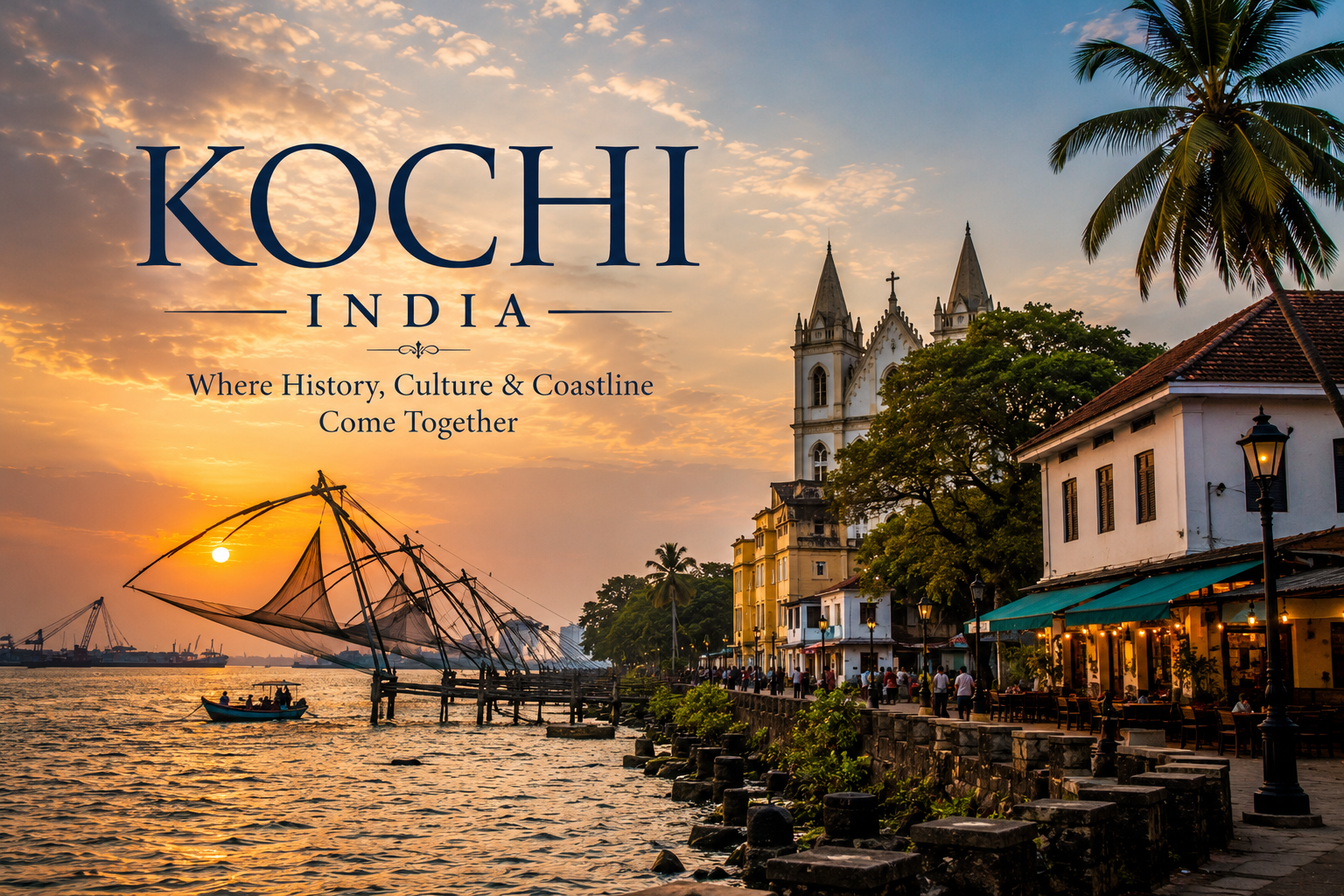
Kochi is no longer just the city travelers fly into before heading to Kerala’s backwaters or Munnar’s tea-covered hills. In 2026, this historic coastal city is becoming a destination in its own right, attracting travelers with its layered history, contemporary art, distinctive food, and easy access to the rest of Kerala.
Kochi’s appeal is not based on one landmark. It comes from the way centuries of cultures coexist across its streets, waterfronts, markets, churches, synagogues, palaces, and old trading neighborhoods. For travelers looking for a destination that combines culture, history, food, and a slower pace, Kochi in 2026 is worth putting on the itinerary.
Why Is Kochi Trending in 2026?
Kochi’s rising profile reflects a broader change in the way people travel. Instead of rushing through major attractions, travelers are increasingly looking for destinations where they can spend a few days experiencing local culture and everyday life.
Kochi’s fit this style particularly well.
Its biggest attractions include:
- Centuries of maritime and colonial history
- Fort Kochi’s distinctive architecture
- The Kochi-Muziris Biennale
- Kerala’s seafood and traditional cuisine
- Chinese fishing nets along the waterfront
- Easy international access through Cochin International Airport
- Proximity to Munnar, Alleppey, and Marari Beach
The city also works well as both a standalone cultural destination and the starting point for a larger Kerala travel itinerary.
Fort Kochi: Where Centuries of History Meet
Fort Kochi is the heart of the city’s historic character.
For centuries, the Malabar Coast attracted traders and merchants interested in Kerala’s spices. Arab, Chinese, Portuguese, Dutch, and British influences all left their mark on the city.
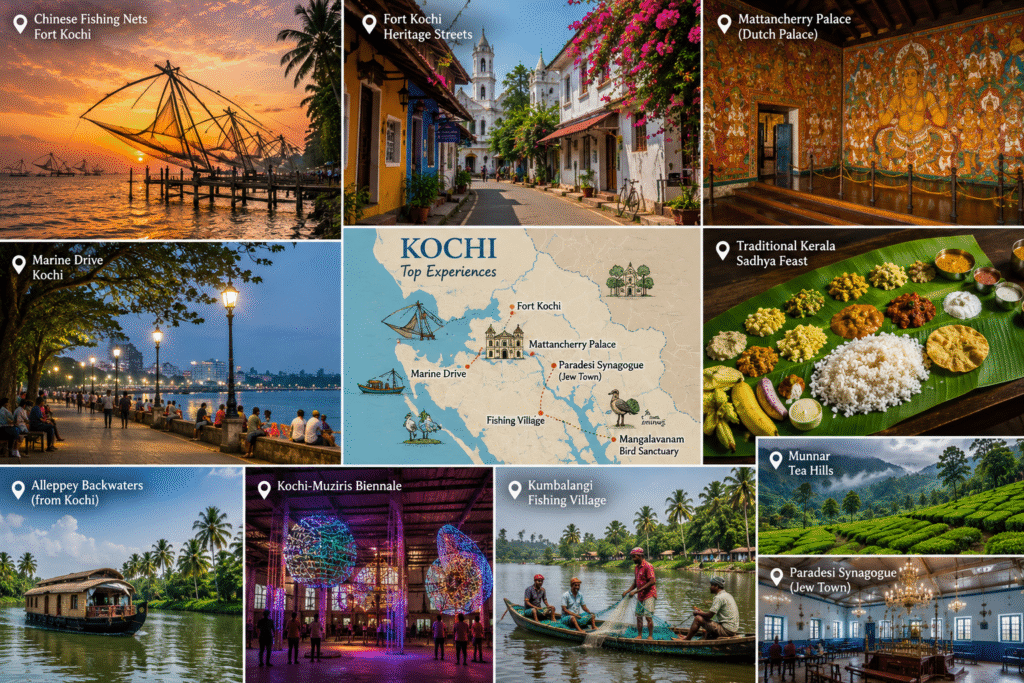
One of the most recognizable sights is the Chinese fishing nets, locally known as cheena vala. These large shore-operated structures line the waterfront and create one of Kochi’s most photographed scenes, particularly around sunset.
Within a relatively small area, visitors can also find historic churches, colonial buildings, museums, and the atmospheric streets of Mattancherry and Jew Town.
This concentration of history makes Fort Kochi’s ideal for exploring on foot.
The Kochi-Muziris Biennale and Kochi’s Art Scene
Art is another major reason Kochi has gained international attention.
The Kochi-Muziris Biennale transforms venues across Fort Kochi and Mattancherry into exhibition spaces, bringing contemporary art into old warehouses, heritage buildings, and former trading spaces.
The result is unusual: visitors can move from centuries-old architecture into a contemporary art installation within minutes.
For travelers interested in art and culture, the Biennale can be a reason to plan an entire trip around Kochi. Its presence has also helped reinforce the city’s reputation as one of India’s most interesting cultural destinations.
If you’re visiting during a Biennale edition, check the official schedule and individual venue information before planning your itinerary, as dates and participating locations can vary.
Best Places to Visit in Kochi
Kochi offers much more than Fort Kochi. Some of the city’s most interesting places include:
Mattancherry Palace
Often called the Dutch Palace, Mattancherry Palace contains impressive Kerala murals, royal portraits, and artifacts connected to the former Kingdom of Cochin.
Its architecture and collections provide a useful introduction to the region’s royal and cultural history.
Jew Town and Paradesi Synagogue
The historic Jew Town area is known for its antique shops, heritage buildings, cafés, and the Paradesi Synagogue.
The neighborhood offers another glimpse into Kochi’s multicultural past and is easily combined with a visit to Mattancherry Palace.
Visitors should check current opening hours before planning a visit, particularly around religious holidays.
Marine Drive
Marine Drive is a popular waterfront promenade in central Kochi.
It is particularly enjoyable in the evening, when locals and visitors gather along the waterfront to enjoy views across the backwaters and watch the sunset.
Kumbalangi
For a different side of Kochi’s, consider visiting Kumbalangi, a coastal fishing village known for its traditional livelihoods and backwater environment.
It offers an opportunity to experience aspects of Kerala’s village life away from the main tourist districts.
Mangalavanam Bird Sanctuary
Located within the city, Mangalavanam is a small urban ecosystem and a useful stop for travelers interested in birds and nature.
Its mangroves and wetland environment provide a surprising contrast to Kochi’s busy urban landscape.
Why Kochi Is a Food Destination
Food is one of the best ways to understand Kochi.
Kerala’s cuisine reflects the region’s geography and long history of international trade. Seafood features heavily, while coconut, spices, curry leaves, and rice form the foundation of many traditional dishes.
Try a traditional Sadhya, a multi-course vegetarian meal served on a banana leaf. Seafood lovers can look for dishes such as fish molee, a mild coconut-based preparation.
Kochi also offers opportunities to experience Kerala’s toddy-shop cuisine, traditional snacks, biryani, and local seafood preparations.
Rather than limiting yourself to hotel restaurants, exploring local eateries and traditional food spots can make the culinary side of a Kochi trip considerably more memorable.
How to Combine Kochi With a Kerala Trip
One of Kochi’s biggest advantages is its location.
It can serve as the starting point for a broader Kerala itinerary.
From Kochi’s, travelers can continue toward:
Munnar for tea plantations, mountain scenery, waterfalls, and cooler weather.
Alleppey for Kerala’s famous backwaters and houseboat experiences.
Marari Beach for a quieter coastal escape.
This makes Kochi particularly convenient for first-time visitors who want to experience several sides of Kerala without constantly changing their travel base.
Rather than treating Kochi as an airport stopover, consider spending at least two or three days exploring the city before continuing elsewhere.
Best Time to Visit Kochi
The best time to visit Kochi generally depends on what you want to experience.
December to February is popular because of relatively comfortable weather and the wider range of cultural and outdoor activities taking place during Kerala’s high travel season.
The period around the Kochi-Muziris Biennale can be particularly appealing for art lovers, but accommodation demand can also increase.
The monsoon months bring heavier rainfall, but they also transform Kerala’s landscapes and can appeal to travelers who enjoy greenery, atmospheric weather, and fewer crowds.
Before booking, check current weather forecasts and event dates rather than relying solely on seasonal averages.
Practical Kochi Travel Tips
A few simple preparations can make exploring Kochi easier:
- Currency: Indian Rupee (INR)
- Language: Malayalam is the main local language; English is widely understood in tourist areas.
- Airport: Cochin International Airport (COK) is the main international gateway.
- Dress: Modest clothing is appropriate when visiting temples, churches, and religious sites.
- Getting around: Walking works well in parts of Fort Kochi’s, while taxis and local transport are useful for exploring the wider city.
- Weather: Carry light clothing and rain protection if visiting during the wetter months.
Because Kochi is part of a major international tourism circuit, it is worth checking current entry requirements and local attraction timings before your trip.
Frequently Asked Questions About Kochi
Why is Kochi’s becoming popular in 2026?
Kochi combines historic architecture, multicultural heritage, contemporary art, distinctive Kerala cuisine, waterfront experiences, and easy access to other popular destinations in Kerala.
How many days are enough for Kochi?
Two to three days is a good starting point for first-time visitors. This allows time for Fort Kochi, Mattancherry, Jew Town, local food, the waterfront, and a few less-visited attractions.
What is Kochi’s famous for?
Kochi is famous for its Chinese fishing nets, historic Fort Kochi, colonial architecture, spice-trade heritage, Kochi-Muziris Biennale, seafood, and multicultural history.
Is Kochi worth visiting on a Kerala trip?
Absolutely. Kochi is an excellent introduction to Kerala and a convenient starting point for trips to Munnar, Alleppey, Marari Beach, and other destinations.
Final Thoughts
Kochi isn’t becoming interesting simply because travel trends have changed. The city has been fascinating for centuries.
What is changing is the number of travelers willing to slow down and notice it.
From Chinese fishing nets glowing against a coastal sunset to historic streets in Fort Kochi, contemporary art inside heritage buildings, and plates of traditional Kerala food, the city rewards travelers who take their time.
For anyone planning a Kerala trip in 2026, Kochi’s deserves to be more than an arrival point. Give it a few days, explore beyond the obvious attractions, and you may find that this historic port city becomes one of the most memorable parts of the journey.
Internal Links
- Munnar, India: Why This Lush Hill Station Is Becoming One of India’s Hottest Monsoon Escapes in 2026
- Volcanoes, Waterfalls, and Glaciers: The Most Dramatic Landscapes on Earth
- Floating Villages Around the World: Communities Living on Water
- Forgotten Kingdoms: Ancient Cities Every History Lover Should Visit
- The World’s Most Breathtaking Cliffside Villages You Need to See Once in Your Lifetime
- The World’s Most Magical Waterfalls: Hidden Cascades Worth the Journey
- Best Weekend Getaways