
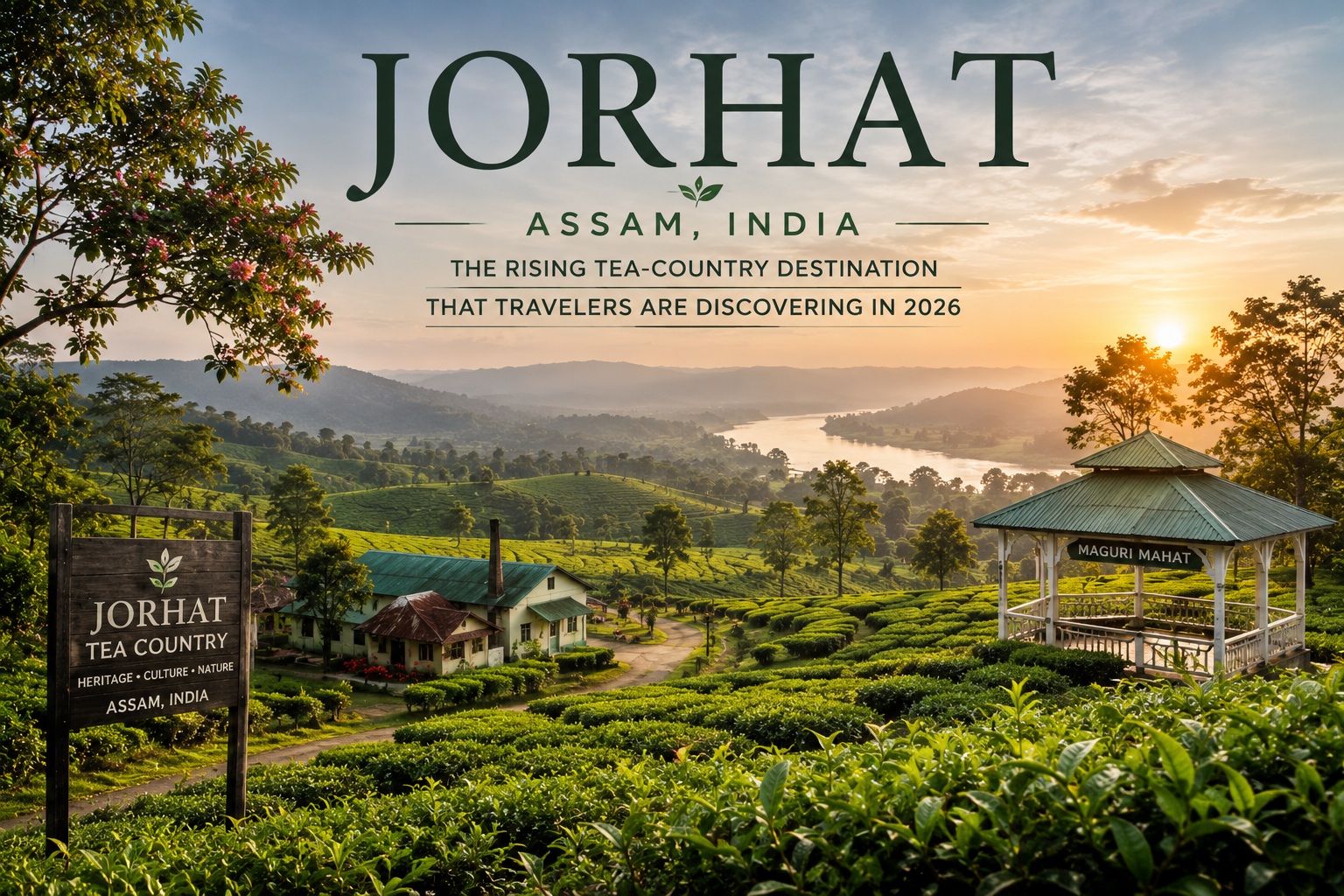
Jorhat, in Upper Assam, is no longer simply a stopover on the way to Kaziranga National Park or Majuli Island. In 2026, this tea-growing city is attracting travelers looking for something slower, more cultural, and distinctly different from India’s better-known tourist destinations.
Surrounded by working tea estates and close to the Brahmaputra River, Jorhat offers a combination of tea heritage, Assamese culture, wildlife, food, and easy access to some of Northeast India’s most fascinating places.
For travelers searching for offbeat destinations in India, Jorhat offers an appealing mix of experiences without the crowds of more established tourist hubs.
Why Is Jorhat Becoming Popular in 2026?
Jorhat’s growing appeal reflects a wider shift toward experiential and slower travel. Instead of visiting only famous landmarks, more travelers are looking for destinations where they can experience local landscapes, food, traditions, and everyday life.
Jorhat fits that trend naturally.
The city is surrounded by Assam’s famous tea country, while nearby attractions include Majuli Island, Hoollongapar Gibbon Wildlife Sanctuary, and Kaziranga National Park.
Tea-estate stays and homestays also give visitors an alternative to conventional hotels. Staying close to a working tea garden can turn a simple sightseeing trip into a deeper introduction to Assam’s landscape and culture.
Jorhat: The Tea Heartland of Assam
Jorhat’s identity is closely connected to tea.
The city developed alongside Assam’s tea industry and became an important commercial and cultural center in Upper Assam. Today, tea gardens stretch across the surrounding landscape, creating one of the region’s defining views.
Jorhat is also often described as the Cultural Capital of Assam, thanks to its connection with Assamese literature, music, art, education, and traditions.
This combination of tea heritage and culture makes the city different from a typical sightseeing destination. Much of its appeal lies in experiences rather than individual monuments.
Best Places to Visit in Jorhat
Explore a Tea Garden
A visit to a working tea estate is one of the best things to do in Jorhat.
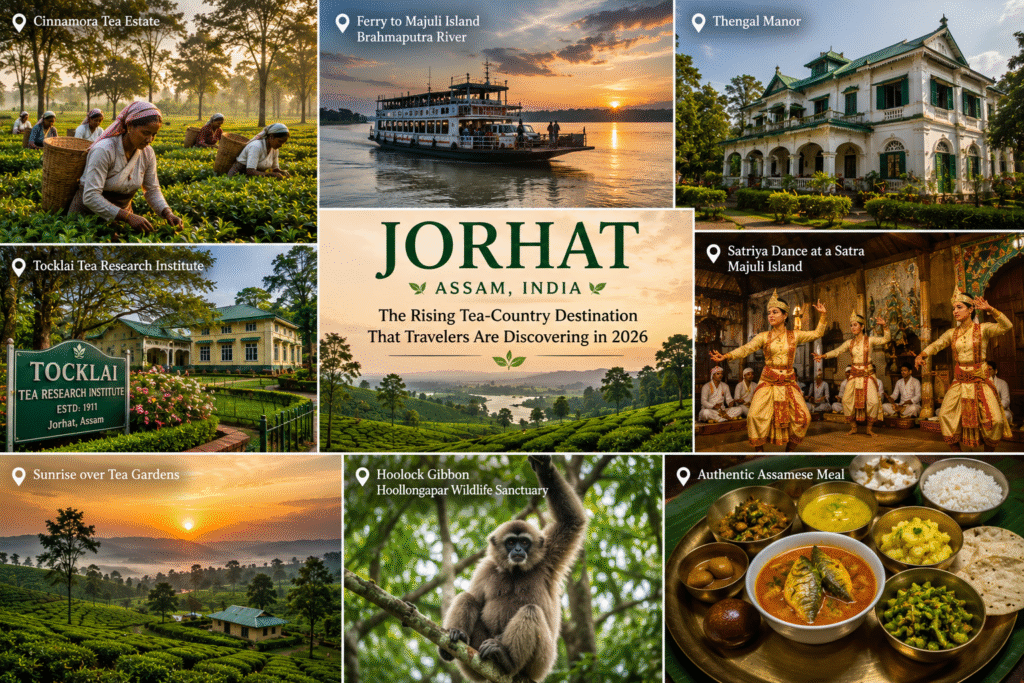
Cinnamora Tea Estate is particularly significant in Assam’s tea history and is widely associated with the early development of the state’s commercial tea industry.
Depending on the estate and current visitor arrangements, travelers may be able to see tea cultivation, learn about processing, and enjoy a tea-tasting experience.
For an even more immersive trip, look for tea-estate accommodation where you can stay surrounded by plantations instead of visiting only for a few hours.
Visit the Tocklai Tea Research Institute
Tea enthusiasts should consider visiting Tocklai Tea Research Institute, one of the world’s major centers for tea research.
Its long history is closely connected to Assam’s tea industry, and the institute has played an important role in research into tea cultivation, production, and processing.
It offers another perspective on the drink that has shaped Jorhat’s economy and identity.
Take the Ferry to Majuli Island
One of the biggest reasons to base yourself in Jorhat is its proximity to Majuli Island.
The journey begins at Nimati Ghat, from where ferries connect travelers with the river island. Ferry schedules can change depending on weather and river conditions, so check the latest timetable before setting out.
Majuli is known for its satras, or Vaishnavite monasteries, which preserve traditions of music, dance, mask-making, and manuscript art.
Travelers interested in Assamese culture should allow enough time to explore the island rather than treating it as a rushed day trip.
Explore Thengal Manor
For a glimpse into Assam’s tea-planter heritage, Thengal Manor is another interesting stop.
The historic property reflects the colonial-era tea plantation culture that shaped much of Upper Assam. Its architecture and surroundings provide context for understanding the region’s tea-growing history.
Check visitor access and opening arrangements before planning your visit.
Spot Hoolock Gibbons
Nature lovers can make the short trip to Hoollongapar Gibbon Wildlife Sanctuary, one of the best places near Jorhat to experience Assam’s forest ecosystem.
The sanctuary is particularly notable for its hoolock gibbons, India’s only ape species, along with other primates and birdlife.
A guided visit can make the experience more rewarding, especially for travelers interested in wildlife photography and birdwatching.
Visit Kaziranga National Park From Jorhat
Jorhat also works well as a gateway to Kaziranga National Park, one of India’s most famous wildlife destinations.
The UNESCO World Heritage Site is particularly known for its population of greater one-horned rhinoceroses, but the park also supports elephants, wild water buffalo, swamp deer, birds, and other wildlife.
If wildlife is a major priority, consider spending at least one night near Kaziranga instead of trying to fit the park into a rushed day trip from Jorhat.
What to Eat in Jorhat
Assamese cuisine is another reason to spend time in the region.
Look for traditional dishes such as:
- Masor Tenga – a light, tangy fish curry
- Aloo Pitika – mashed potato flavored with mustard oil and local ingredients
- Tenga Dali – a tangy lentil preparation
- Khar – a distinctive alkaline Assamese dish
- Traditional Assamese rice preparations
- Fresh Assam tea
Food in Jorhat is generally less about elaborate presentation and more about fresh ingredients, regional flavors, and traditional cooking methods.
Trying local Assamese food is one of the easiest ways to make your trip feel connected to the place rather than simply being a sightseeing itinerary.
Where to Stay in Jorhat
Jorhat offers several accommodation styles, from budget guesthouses and city hotels to homestays and tea-estate properties.
For convenience, staying in or around the city center makes transportation and access to restaurants easier.
For a more memorable experience, consider a tea-estate homestay or heritage property. These stays allow you to wake up among tea gardens and experience a quieter side of Assam.
Homestays can also provide opportunities to learn more about local food, traditions, and daily life directly from residents.
Best Time to Visit Jorhat
The best time to visit Jorhat is generally during the cooler and drier months.
October to March
This is a comfortable period for sightseeing, tea-estate visits, wildlife excursions, and exploring Majuli.
The weather is generally more suitable for spending long periods outdoors, although conditions can vary.
April
April is particularly interesting for experiencing Rongali Bihu, the Assamese New Year and one of the region’s most important cultural celebrations.
Music, dance, traditional clothing, food, and community celebrations bring a special energy to Assam during this period.
June to September
The monsoon brings heavy rainfall to Assam. While the landscape becomes intensely green, rain can affect road conditions, wildlife excursions, and ferry services to Majuli.
Travelers visiting during this period should maintain a flexible itinerary and check local conditions before traveling.
How to Reach Jorhat
By Air
Jorhat Airport, also known as Rowriah Airport, provides air connectivity to the region. Flight schedules and routes can change, so check current availability when planning your trip.
By Rail
Jorhat is connected to the wider Indian railway network, with Mariani Junction serving as an important railhead near the city.
Getting Around
Auto-rickshaws and taxis are useful for exploring Jorhat itself. For tea estates, wildlife sanctuaries, and destinations outside the city, hiring a car with a driver can be more convenient.
Sustainable Travel in Jorhat
Jorhat and the surrounding region are well suited to responsible travel.
Choosing locally operated homestays, hiring local guides, purchasing regional products, and supporting community-run experiences can help ensure tourism benefits people living in the area.
When visiting tea estates, villages, wildlife areas, and Majuli, travelers should also respect local customs, avoid littering, and follow wildlife and environmental guidelines.
Frequently Asked Questions About Jorhat
What is Jorhat famous for?
Jorhat is best known for its connection to Assam’s tea industry, cultural heritage, nearby tea estates, and its role as a gateway to Majuli and other destinations in Upper Assam.
Is Jorhat worth visiting?
Yes. Jorhat is particularly rewarding for travelers interested in tea, Assamese culture, wildlife, food, and less crowded destinations in Northeast India.
How many days are enough for Jorhat?
Two to three days is a good starting point for exploring Jorhat and combining the city with a tea-estate experience or Majuli visit. Add additional days if you plan to include Kaziranga or nearby wildlife destinations.
What is the best time to visit Jorhat?
October to March generally offers comfortable conditions for sightseeing. April is especially interesting for travelers who want to experience Rongali Bihu.
Can you visit Majuli from Jorhat?
Yes. Ferries operate from Nimati Ghat, near Jorhat, to Majuli. Schedules can change because of river and weather conditions, so check the latest information before traveling.
Final Thoughts
Jorhat isn’t trying to become another crowded tourist hotspot, and that may be exactly what makes it appealing.
It is a working city surrounded by tea gardens, shaped by Assamese culture, and positioned close to some of Northeast India’s most memorable experiences.
Spend time walking through a tea estate, taste freshly prepared Assamese food, cross the Brahmaputra to Majuli, look for hoolock gibbons in the forest, or use Jorhat as a starting point for Kaziranga.
For travelers looking beyond India’s usual tourist circuit, Jorhat in 2026 offers a chance to experience Assam at a slower and more authentic pace.
Internal Links
- Munnar, India: Why This Lush Hill Station Is Becoming One of India’s Hottest Monsoon Escapes in 2026
- Rize Türkiye Travel Guide 2026 – Tea Gardens, Misty Mountains & Black Sea Landscapes
- Sapa Vietnam Travel Guide 2026 – Rice Terraces, Fansipan & Mountain Villages
- Georgia Travel Guide 2026: Mountains, Wine, Culture & Hidden Gems
- Forgotten Kingdoms: Ancient Cities Every History Lover Should Visit
- The Great Migration Routes: Wildlife Journeys Every Traveler Should Witness
- Best Weekend Getaways