
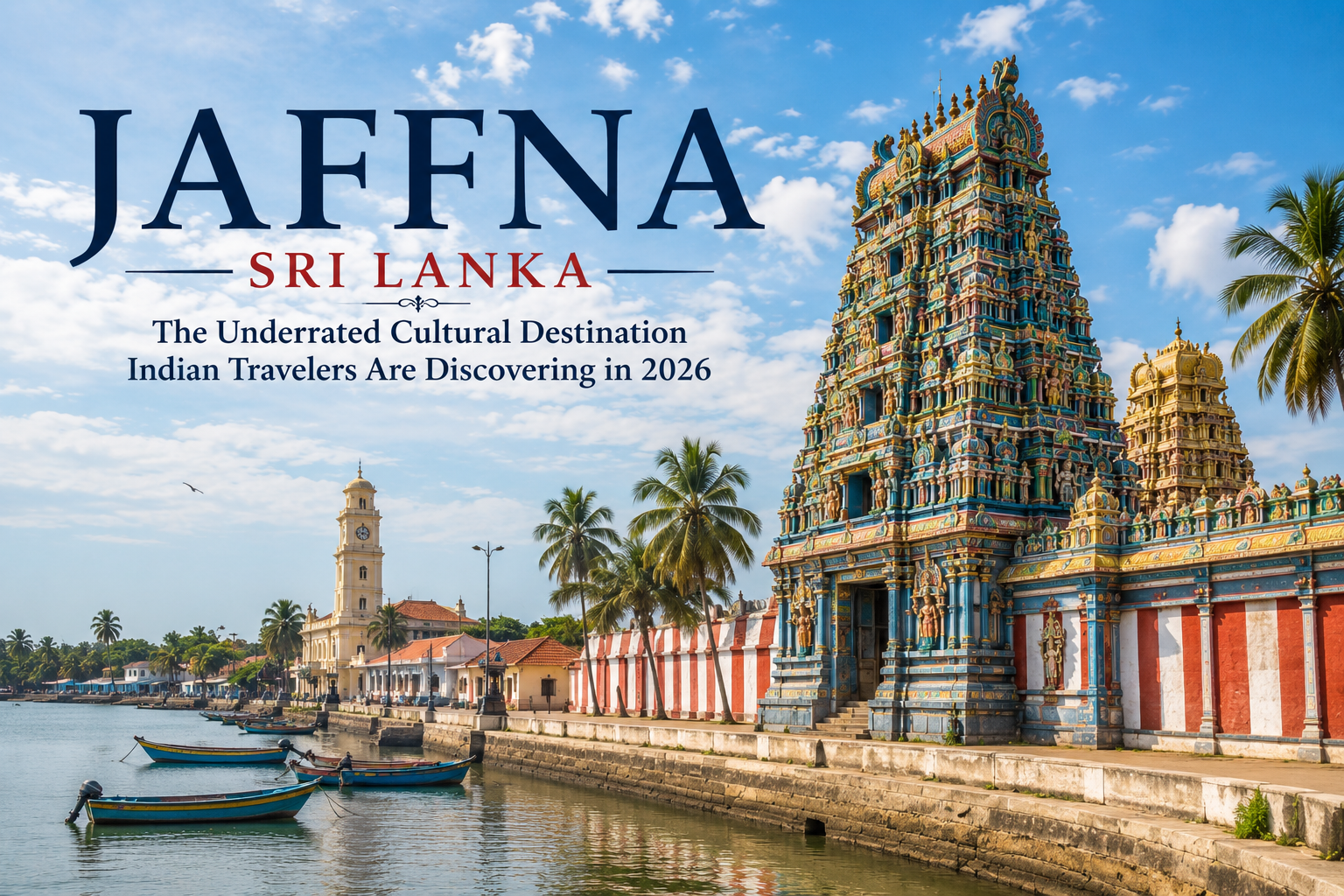
For years, Indian travelers planning a Sri Lanka holiday often followed the same route: Colombo, Kandy, and a beach town on the southern coast. Jaffna rarely appeared on the itinerary.
That is beginning to change.
Located at the northern tip of Sri Lanka, Jaffna offers something many popular destinations struggle to provide: a genuine sense of discovery. The city combines Tamil culture, Hindu traditions, colonial history, distinctive cuisine, quiet beaches, and a fascinating connection with northern Sri Lanka.
For Indian travelers, particularly those interested in culture and heritage, Jaffna in 2026 offers an experience that feels both familiar and completely different.
Why Is Jaffna Becoming Popular in 2026?
Jaffna has spent years away from Sri Lanka’s mainstream tourism circuit. Today, that relative obscurity is becoming one of its biggest advantages.
Travelers are increasingly searching for destinations beyond the usual tourist trail, and Jaffna fits that trend naturally. Its streets feel lived-in rather than designed around tourism, while its temples, markets, historic buildings, islands, and food culture offer plenty to explore.
There is also a strong cultural connection with southern India.
Tamil is widely spoken, Hindu traditions are deeply rooted in everyday life, and many dishes use familiar ingredients such as coconut, curry leaves, tamarind, and rice. Yet Jaffna remains distinctly Sri Lankan, shaped by its own history, geography, and traditions.
For travelers who have already explored popular destinations such as Bali, Bangkok, or Colombo, Jaffna provides something different: a destination that still feels like a discovery.
How to Reach Jaffna From India
Getting to Jaffna is easier than many first-time visitors expect, although flight and ferry schedules can change seasonally.
For Indian travelers, Chennai is the most obvious starting point because of its geographic proximity to northern Sri Lanka. Direct air connections, when operating, can make the journey significantly easier than traveling through Colombo.
Another option is to fly to Colombo and continue north by train, car, or domestic connection.
The overland journey offers an interesting introduction to northern Sri Lanka. Travelers pass through the island’s dry-zone landscapes and can cross the historic Elephant Pass before reaching the Jaffna Peninsula.
Before booking, check the latest airline schedules, ferry operations, and Sri Lankan entry requirements for your passport and travel dates.
What Makes Jaffna’s Culture So Special?
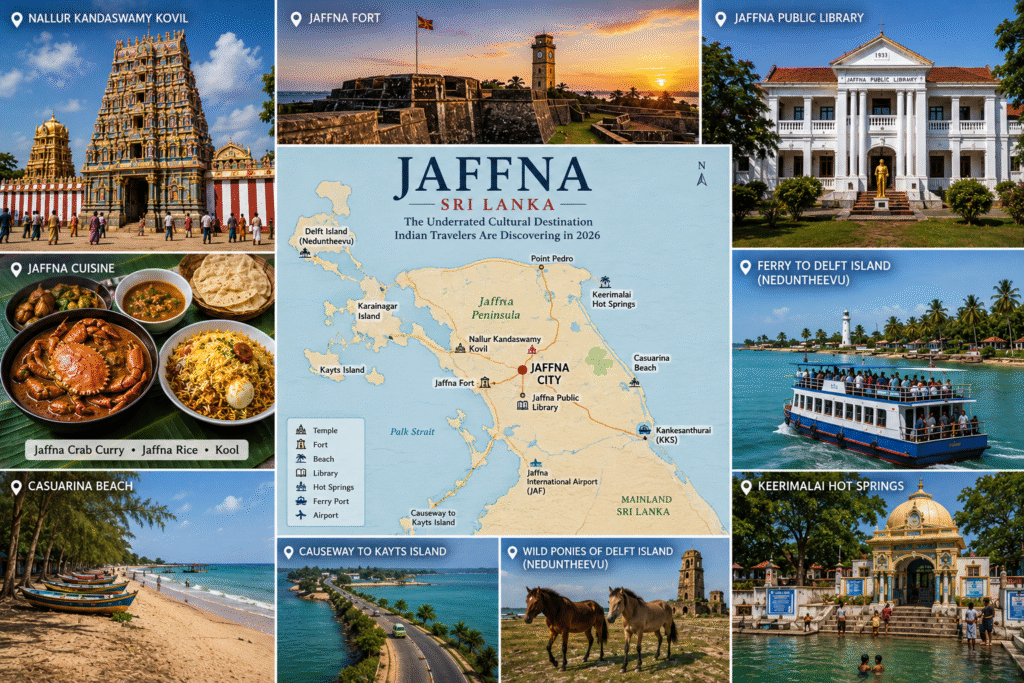
Jaffna’s biggest attraction is not a single landmark. It is the culture that surrounds you as you explore the city.
Tamil is prominent in everyday life, Hindu temples form an important part of the landscape, and traditional food and customs remain deeply connected to the region.
Nallur Kandaswamy Kovil
Nallur Kandaswamy Kovil is one of Jaffna’s most important landmarks and one of Sri Lanka’s major Hindu temples.
Its elaborate architecture and towering gopuram make it one of the city’s most recognizable sights. The temple becomes particularly vibrant during its annual Nallur Festival, when religious processions, music, ceremonies, and large gatherings transform the surrounding area.
Visitors should dress modestly and follow temple photography and visitor guidelines.
Jaffna Fort
Standing near the waterfront, Jaffna Fort reflects the region’s Portuguese and Dutch colonial history.
The fort was originally constructed by the Portuguese and later expanded by the Dutch. Although parts of the structure suffered damage during Sri Lanka’s civil conflict, restoration has helped preserve its distinctive star-shaped layout.
Visit toward the late afternoon for a more comfortable walk and atmospheric views around the fortifications.
Jaffna Public Library
The Jaffna Public Library is more than an architectural landmark.
Its history is closely connected with the city’s difficult recent past, including the devastating fire of 1981. The library was later rebuilt and today stands as an important symbol of Jaffna’s cultural identity and recovery.
For travelers interested in history, it provides an opportunity to understand Jaffna beyond its temples and beaches.
Explore the Islands Around Jaffna
The Jaffna Peninsula opens into a fascinating collection of islands and coastal landscapes.
Delft Island, also known as Neduntheevu, is particularly unusual. Its landscape includes wild ponies, coral-stone structures, colonial-era remnants, and wide open spaces.
Kayts and Karainagar offer quieter coastal experiences and can be incorporated into a longer Jaffna itinerary.
Travel conditions and ferry schedules can vary, so allow extra time when planning island excursions.
Casuarina Beach
For a relaxed afternoon, head toward Casuarina Beach.
The beach is known for relatively calm, shallow waters and a quieter atmosphere than many of Sri Lanka’s better-known coastal destinations.
Keerimalai
Located on the northern coast, Keerimalai is known for its natural springs and religious significance.
It is another interesting addition to a Jaffna itinerary for travelers who want to experience the region beyond its main city landmarks.
Jaffna Food: A Major Reason to Visit
Jaffna’s food culture deserves its own place on any itinerary.
The region’s cuisine has strong Tamil influences while developing its own distinctive character through local ingredients and cooking traditions.
Jaffna Crab Curry
Jaffna crab curry is perhaps the region’s best-known dish. Expect bold spices, seafood, coconut, and a rich curry base.
Kool
Kool is a traditional Jaffna seafood preparation that can include seafood, vegetables, and palmyra-related ingredients. It is one of the dishes that most clearly demonstrates the peninsula’s distinctive food culture.
Jaffna-Style Rice and Biryani
Rice dishes in Jaffna use regional spice combinations that distinguish them from better-known South Indian and North Indian versions.
For Indian travelers, the flavors can feel familiar while still offering something new.
Best Time to Visit Jaffna
Understanding Sri Lanka’s regional weather patterns is important when planning a trip.
The northern part of Sri Lanka generally experiences its driest conditions during the middle months of the year, while the northeast monsoon can bring heavier rainfall later in the year.
This makes Jaffna’s particularly interesting for travelers planning a Sri Lanka trip during periods when other parts of the island may experience less favorable weather.
For the most comfortable sightseeing experience, check the current forecast and regional weather conditions before booking.
If you plan to attend the Nallur Festival, book accommodation well in advance because demand can increase significantly around the festival period.
How Many Days Do You Need in Jaffna?
Two to three days is a good starting point for a first Jaffna’s trip.
A simple itinerary could include:
Day 1: Nallur Kandaswamy Kovil, Jaffna’s Fort, Jaffna’s Public Library and local markets
Day 2: Delft Island or another nearby island, followed by a local food experience
Day 3: Casuarina Beach, Keerimalai and additional cultural or heritage sites
Travelers particularly interested in temples, photography, food, or local culture can easily extend their stay.
Where to Stay in Jaffna
Jaffna’s accommodation scene is smaller and more personal than what you will find in Colombo or Sri Lanka’s major beach destinations.
Options include:
- Small hotels
- Family-run guesthouses
- Heritage-style properties
- Boutique hotels
- Local homestays
Staying near the city center makes it easier to access restaurants, markets, temples, and major attractions.
If you plan to visit during the Nallur Festival, reserve your accommodation early.
A Note on Jaffna’s History
Jaffna’s recent history is an important part of understanding the destination.
The region was deeply affected by Sri Lanka’s civil conflict, which ended in 2009. Many communities continue to carry memories of that period.
Travelers should approach historical sites with sensitivity rather than treating the region’s past simply as a tourist attraction.
That awareness can make a visit more meaningful. Jaffna’s is not only a place of ancient temples and colonial buildings; it is also a city that has experienced enormous change and continues to preserve its cultural identity.
Why Jaffna Appeals to Indian Travelers
Jaffna has a particularly interesting connection with India.
Short travel distances, familiar South Asian flavors, Tamil cultural connections, and Hindu traditions make parts of the experience feel surprisingly recognizable.
At the same time, Jaffna’s Sri Lankan identity is unmistakable.
For Tamil-speaking travelers, the cultural connection can make the destination especially meaningful. For other Indian visitors, Jaffna offers an opportunity to experience a different side of Sri Lanka beyond Colombo, Kandy, and the southern beaches.
That combination of familiarity and difference may be one of the biggest reasons Jaffna travel is attracting more attention in 2026.
Frequently Asked Questions About Jaffna
Is Jaffna worth visiting in 2026?
Yes. Jaffna is an excellent choice for travelers interested in Tamil culture, Hindu heritage, colonial history, local food, beaches, and less-visited destinations in Sri Lanka.
How many days are enough for Jaffna?
Two to three days are enough to experience the major attractions. Add another day if you want to explore Delft Island or other parts of the peninsula at a relaxed pace.
Is Jaffna safe for tourists?
Jaffna is an established destination for visitors. As with anywhere, travelers should follow normal safety precautions and respect local customs, particularly at religious and historical sites.
What is Jaffna famous for?
Jaffna is known for its Tamil culture, Nallur Kandaswamy Kovil, Jaffna Fort, distinctive cuisine, historic library, surrounding islands, and northern Sri Lankan heritage.
Is Jaffna good for Indian travelers?
Yes. Its proximity to India, Tamil cultural connections, Hindu traditions, and South Asian cuisine make Jaffna particularly appealing to Indian travelers looking for a culturally immersive Sri Lankan experience.
Final Thoughts
Jaffna does not have the polished resort atmosphere of Sri Lanka’s southern coast, and that is precisely the point.
It offers something different: temple bells in the morning, historic fort walls at sunset, seafood curries for lunch, quiet northern beaches, and island journeys that take you far from Sri Lanka’s usual tourist circuit.
For travelers looking beyond the obvious, Jaffna could be one of Sri Lanka’s most rewarding discoveries in 2026.
Internal Links
- St. Lucia: The Caribbean Island Emerging as One of 2026’s Hottest Travel Escapes
- Munnar, India: Why This Lush Hill Station Is Becoming One of India’s Hottest Monsoon Escapes in 2026
- Kochi Travel Guide 2026: Why This Historic Kerala City Is Trending
- Forgotten Kingdoms: Ancient Cities Every History Lover Should Visit
- Floating Villages Around the World: Communities Living on Water
- Island-Hopping Beyond the Crowds: Lesser-Known Archipelagos Worth Discovering
- The World’s Most Breathtaking Cliffside Villages You Need to See Once in Your Lifetime