
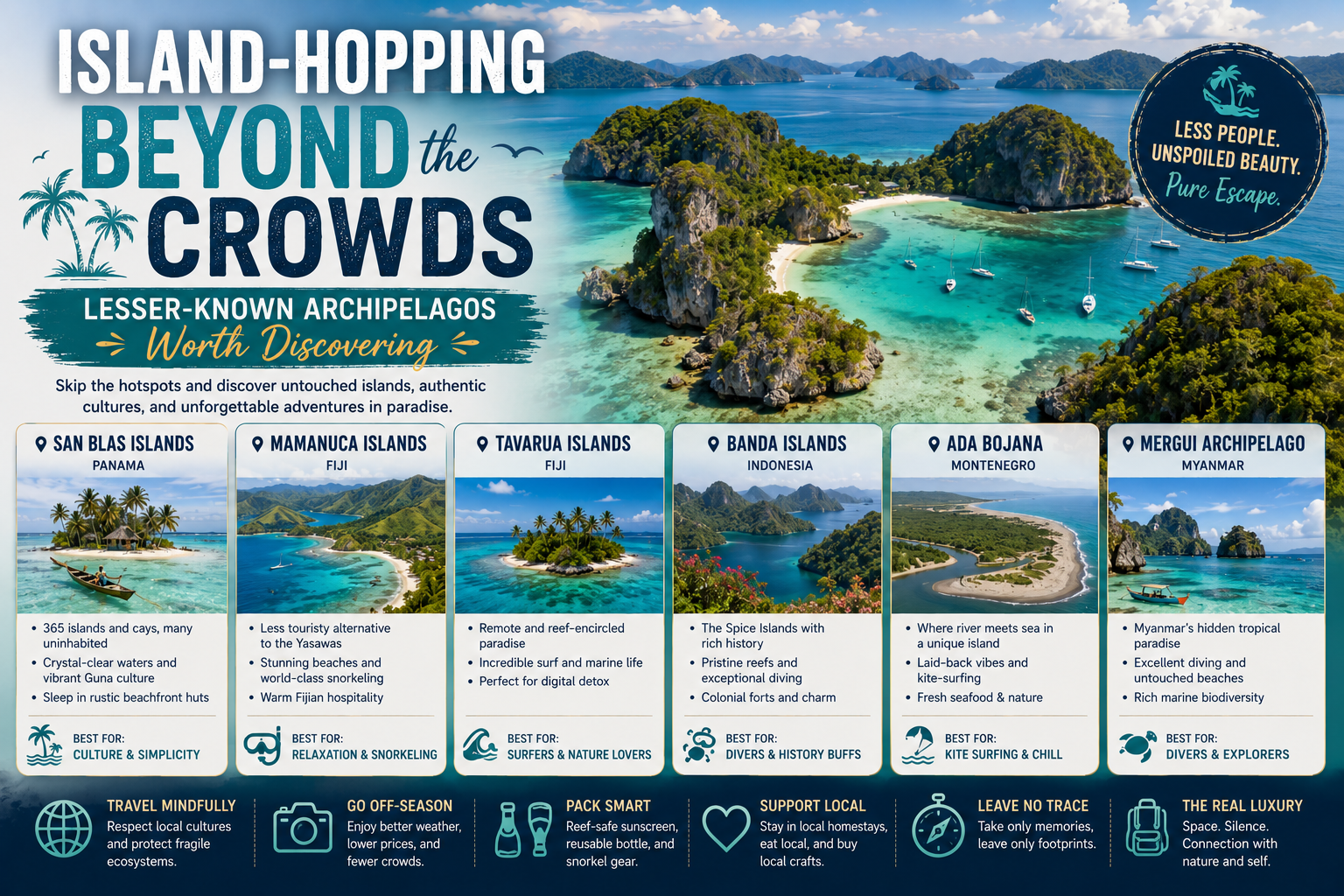
If you’re dreaming of a tropical escape without crowded beaches or packed resorts like island-hopping, it’s time to explore lesser-known archipelagos island-hopping. While destinations like Bali, Santorini, and the Maldives attract millions of visitors every year, many hidden island groups remain peaceful, authentic, and surprisingly affordable island-hopping.
Island-hopping through these remote destinations lets you discover pristine beaches, crystal-clear waters, rich local cultures, and incredible wildlife. Best of all, you can enjoy these experiences without battling large crowds.
Whether you’re planning your next holiday or adding new places to your travel bucket list, these hidden archipelagos deserve your attention.
Why Visit Lesser-Known Archipelagos for Island-Hopping?
Choosing lesser-known archipelagos offers far more than quiet beaches. These destinations provide authentic experiences that are becoming increasingly difficult to find.
Some of the biggest advantages include:
- Fewer tourists and more peaceful surroundings.
- Affordable guesthouses instead of expensive resorts.
- Authentic local food and culture.
- Protected coral reefs and diverse wildlife.
- Unique adventures away from mass tourism.
Although reaching some islands requires extra planning, the rewards are well worth the effort.
1. San Blas Islands, Panama
The San Blas Islands stretch along Panama’s Caribbean coast and include more than 350 islands. The indigenous Guna Yala people manage the archipelago and carefully preserve their traditions.
Most visitors stay in simple beachfront cabins run by local families. Days revolve around snorkeling, swimming, fresh seafood, and boat trips between tiny tropical islands.
If you want an authentic Caribbean experience, San Blas is one of the best lesser-known archipelagos to visit.
2. The Azores, Portugal
The Azores are a volcanic archipelago in the middle of the Atlantic Ocean. Dramatic landscapes, crater lakes, waterfalls, geothermal springs, and whale watching make these islands a paradise for outdoor lovers.
São Miguel attracts most visitors, but Pico, Flores, and Faial offer quieter hiking trails and spectacular coastal scenery.
Thanks to direct international flights, the Azores have become much easier to reach while still feeling refreshingly uncrowded.
3. Island-Hopping: Buccaneer Archipelago, Australia
Off the coast of Western Australia lies the rugged Buccaneer Archipelago, home to more than 800 islands.
The region is famous for the spectacular Horizontal Falls, where powerful tides rush through narrow coastal gorges.
Most visitors arrive by expedition cruise or seaplane, making every trip feel exclusive. Towering sandstone cliffs, turquoise waters, and remote beaches create unforgettable scenery.
4. Fernando de Noronha, Brazil
Few lesser-known archipelagos match the natural beauty of Fernando de Noronha.
Brazil limits daily visitor numbers to protect the islands’ delicate marine ecosystem. As a result, beaches remain clean, coral reefs stay healthy, and wildlife continues to thrive.
Divers regularly encounter sea turtles, spinner dolphins, reef sharks, and colorful tropical fish in exceptionally clear water.
Booking well in advance is essential because visitor permits are limited.
5. Côn Đảo, Vietnam
While Phú Quốc attracts large numbers of tourists, Côn Đảo offers a much quieter island experience.
This chain of fifteen islands features secluded beaches, lush forests, dramatic cliffs, and excellent snorkeling conditions.
Between May and October, visitors may witness endangered sea turtles nesting along protected beaches.
The islands also preserve important historical sites that provide insight into Vietnam’s colonial history.
6. Island-Hopping: Rodrigues Island, Mauritius
Located east of Mauritius, Rodrigues Island remains one of the Indian Ocean’s best-kept secrets.
Its enormous lagoon, colorful coral reefs, and relaxed atmosphere attract travelers looking for peace rather than luxury.
The island also offers excellent kiteboarding, hiking, fresh seafood, and welcoming Creole culture.
Rodrigues proves that smaller islands often deliver richer travel experiences.
7. Island-Hopping: Culebra, Puerto Rico
Just a short ferry or flight from Puerto Rico, Culebra feels worlds away from crowded Caribbean resorts.
Flamenco Beach consistently ranks among the world’s finest beaches thanks to its white sand and turquoise water.
Protected nature reserves, excellent snorkeling, and limited development help preserve the island’s natural beauty.
Culebra is perfect for travelers seeking affordable island adventures.
Island-Hopping: Best Time to Visit Lesser-Known Archipelagos
The ideal travel season depends on the destination. However, the shoulder season usually offers the best balance of good weather, lower prices, and fewer visitors.
Before traveling, check:
- Local weather forecasts.
- Ferry schedules.
- Flight availability.
- Conservation rules.
- Seasonal wildlife activities.
Planning ahead helps avoid unexpected travel disruptions.
Travel Tips for Exploring Lesser-Known Archipelagos
A little preparation makes every island adventure smoother.
- Leave extra time for ferry or flight delays.
- Stay in locally owned accommodations.
- Carry cash because some islands have limited banking services.
- Respect local customs and traditions.
- Reduce plastic waste whenever possible.
- Never disturb marine life or coral reefs.
Responsible travel helps preserve these remarkable destinations for future visitors.
Why Responsible Tourism Matters
Many lesser-known archipelagos protect fragile ecosystems.
Coral reefs, mangrove forests, nesting sea turtles, and rare wildlife all depend on healthy coastal environments.
Choosing eco-friendly accommodations, hiring local guides, and supporting community businesses directly benefits island residents while encouraging conservation.
Every responsible traveler helps protect these beautiful places.
Final Thoughts
The world’s most unforgettable islands are often the ones hidden from the spotlight.
By exploring lesser-known archipelagos, you’ll enjoy quieter beaches, richer cultural experiences, spectacular wildlife, and breathtaking scenery that remains largely untouched by mass tourism.
Whether you choose Panama’s San Blas Islands, Portugal’s volcanic Azores, Australia’s remote Buccaneer Archipelago, Brazil’s Fernando de Noronha, Vietnam’s Côn Đảo, Mauritius’ Rodrigues Island, or Puerto Rico’s Culebra, each destination promises an unforgettable adventure.
Sometimes the best journeys begin far from the crowds.
Frequently Asked Questions on Island-Hopping
What is an archipelago?
An archipelago is a group of islands located close together. These islands often share similar geography, ecosystems, or cultural traditions.
Which lesser-known archipelago is easiest to visit?
The Azores and Culebra are among the easiest to reach because they offer regular flights and reliable transportation.
Are lesser-known archipelagos expensive?
Not always. Many offer affordable guesthouses, local homestays, and budget-friendly dining options that cost much less than luxury island resorts.
Are these destinations suitable for families?
Yes. Many lesser-known archipelagos provide safe beaches, outdoor activities, and family-friendly experiences. Planning ahead is recommended because some remote islands have limited facilities.
Internal Links
- Best Destination Dupes 2026
- Experience-Led Travel 2026
- Where the Desert Meets the Sea: The World’s Most Unexpected Coastal Escapes
- Floating Villages Around the World: Communities Living on Water
- Best Weekend Getaways
- Packing Smart: Travel Light, Experience More
- Why More People Are Traveling Solo and Slowing Down