
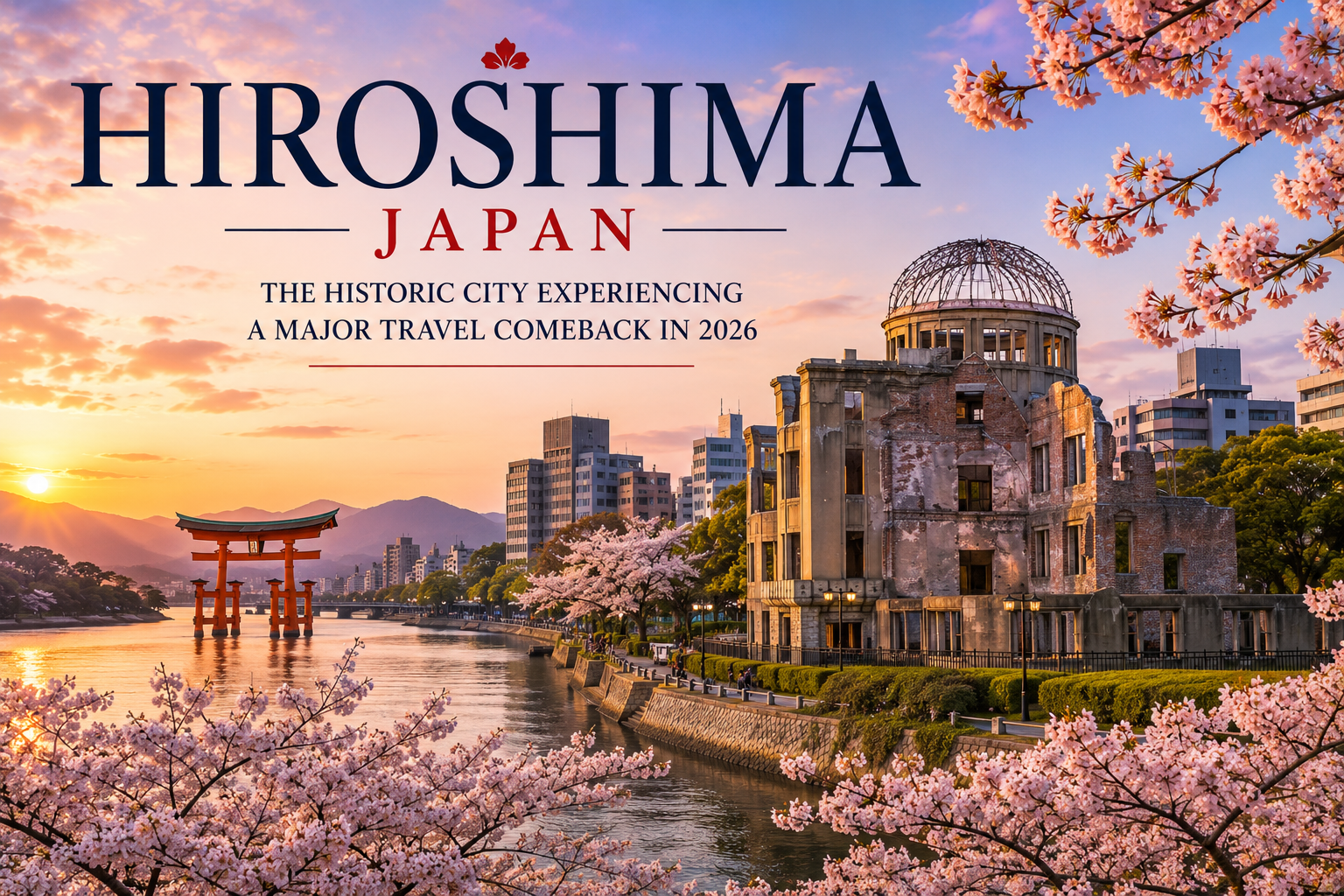
Hiroshima is a city that asks visitors to slow down.
The first stop for most travelers is Peace Memorial Park, where the Atomic Bomb Dome stands as one of Japan’s most recognizable symbols of peace. But Hiroshima is much more than a destination defined by its past. Beyond the memorials, you’ll find a vibrant food scene, historic gardens, shopping streets, traditional neighborhoods, and easy access to Miyajima and other destinations in western Japan.
After years of being treated as a quick stop between Kyoto and Fukuoka, Hiroshima in 2026 is attracting travelers who are choosing to stay longer and experience more of the city.
Whether you’re visiting Japan for the first time or returning for another trip, Hiroshima deserves more than a few hours between trains.
Why Is Hiroshima Trending in 2026?
Hiroshima has always been an important destination in Japan, but the way travelers experience it is changing.
International visitors are increasingly interested in meaningful travel experiences, regional food, history, and destinations beyond Tokyo and Kyoto. Hiroshima combines all of these in a relatively compact city.
Its accessibility is another advantage. The Shinkansen makes Hiroshima easy to reach from major cities such as Osaka, Kyoto, and Fukuoka, while Miyajima provides an entirely different landscape just a short journey away.
The city also offers a useful balance between history and everyday Japanese life. You can spend the morning exploring Peace Memorial Park, eat Hiroshima-style okonomiyaki for lunch, shop along Hondori Street in the afternoon, and finish the day with a quiet walk beside the river.
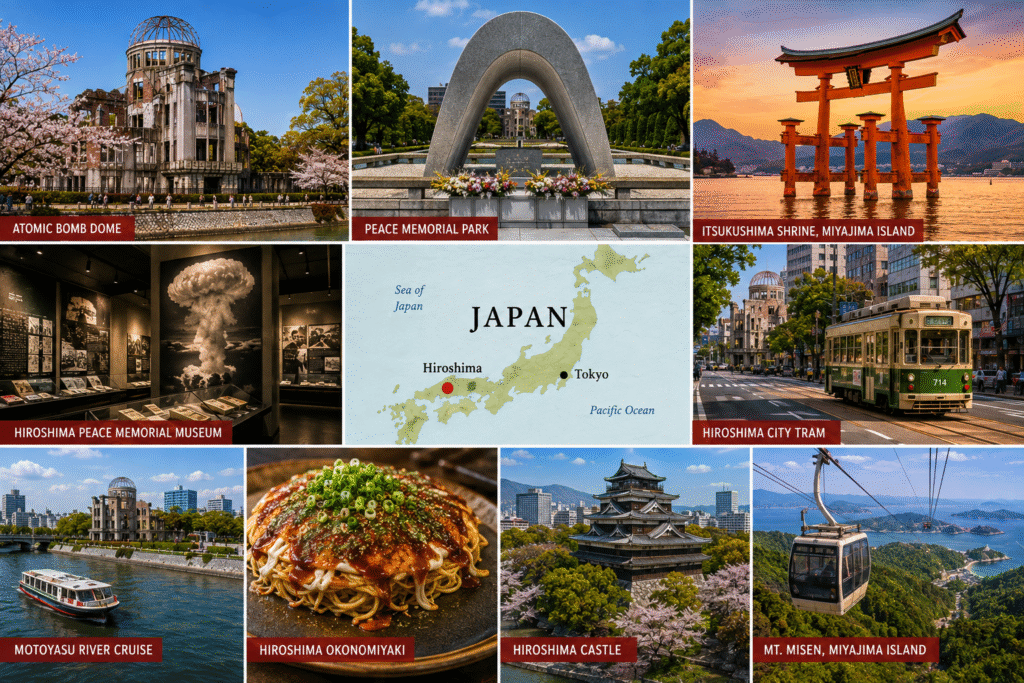
Peace Memorial Park and the Atomic Bomb Dome
For most visitors, Peace Memorial Park is the natural starting point.
The park occupies an area that was once the heart of Hiroshima before the atomic bombing of August 6, 1945. Today, its monuments and memorials create a place for reflection and remembrance.
The Atomic Bomb Dome is the most recognizable structure in the park. It survived the bombing despite being close to the hypocenter and was later preserved as a symbol of the city’s history and the importance of peace.
The site was designated a UNESCO World Heritage Site in 1996.
Other important landmarks within the park include the Cenotaph for the A-Bomb Victims, the Children’s Peace Monument, and the Peace Flame.
Give yourself enough time to explore rather than rushing from one monument to another.
Hiroshima Peace Memorial Museum
The Hiroshima Peace Memorial Museum provides a deeper understanding of the bombing and its human consequences.
Exhibits include photographs, personal belongings, documents, and survivor accounts. It can be an emotionally difficult experience, but it is also one of the most important places to visit in Hiroshima.
Allow around two hours if you want to explore the museum without rushing.
Because visitor numbers can be high, especially during peak travel periods, checking the museum’s current ticketing and reservation requirements before your visit is recommended.
Miyajima Island: Hiroshima’s Essential Day Trip
No Hiroshima travel itinerary is complete without Miyajima.
Officially known as Itsukushima, the island is famous for Itsukushima Shrine and its enormous torii gate, which appears to float on the water during high tide.
The island offers much more than its famous photograph, though.
You can walk through the traditional streets around the shrine, encounter the island’s deer, sample momiji manju—a maple-leaf-shaped Japanese sweet—and hike toward the summit of Mount Misen for views across the Seto Inland Sea.
Miyajima can easily be visited as a half-day trip, but staying overnight is worth considering if you want to experience the island after the main daytime crowds leave.
Hiroshima Castle
Once you’ve explored the city’s wartime history, head to Hiroshima Castle for a look at its older heritage.
The original castle was constructed in the late 16th century but was destroyed during the atomic bombing. The current keep is a reconstruction and houses exhibits covering Hiroshima’s history.
The surrounding grounds are particularly pleasant during spring when cherry blossoms appear.
Shukkeien Garden
For a quieter experience, visit Shukkeien Garden.
Dating back to the early 17th century, the traditional Japanese garden features ponds, bridges, miniature landscapes, walking paths, and carefully maintained greenery.
It offers a completely different atmosphere from Peace Memorial Park and Hiroshima’s busy shopping districts.
Spring is especially popular, but the garden changes character throughout the year.
Eat Hiroshima-Style Okonomiyaki
Food is one of the best reasons to stay in Hiroshima beyond the major historical sites.
The city’s signature dish is Hiroshima-style okonomiyaki, a layered savory pancake prepared with cabbage, noodles, egg, meat or seafood, and a sweet-savory sauce.
Unlike Osaka-style okonomiyaki, where ingredients are mixed together, Hiroshima-style okonomiyaki is built in layers.
For travelers who want to sample several versions in one place, Okonomimura is one of the city’s best-known food destinations.
Don’t leave Hiroshima without trying it.
Explore Hondori Street
For shopping, restaurants, cafés, and evening entertainment, head to Hondori Street.
The covered shopping arcade is one of central Hiroshima’s busiest pedestrian areas and provides a useful contrast to the city’s memorial sites.
It’s also a good place to experience everyday Hiroshima after spending time at the more solemn historical attractions.
More Things to Do in Hiroshima
If you have more than two days, there are plenty of ways to expand your itinerary.
Visit Orizuru Tower
Located close to the Atomic Bomb Dome, Orizuru Tower offers panoramic views over Hiroshima and Peace Memorial Park.
The observation deck provides a different perspective of the city and is particularly appealing around sunset.
Take a Day Trip to Okunoshima
Known as Rabbit Island, Okunoshima is home to a large population of free-roaming rabbits.
The island also has a darker history connected to Japan’s wartime chemical weapons production, making it another destination where the past and present exist side by side.
Explore Onomichi
Onomichi is a charming coastal city that makes an excellent addition to a longer western Japan itinerary.
Its hillside temples, narrow lanes, old houses, and views across the Seto Inland Sea offer a slower experience compared with Japan’s major cities.
Visit Kure
Kure has a strong naval history and is home to museums and attractions connected with Japan’s maritime heritage.
It can be an interesting choice for travelers who want to explore beyond Hiroshima’s central attractions.
Best Time to Visit Hiroshima
Hiroshima can be visited throughout the year, but each season offers something different.
Spring
Late March and early April are popular because of cherry blossom season.
Peace Memorial Park, Hiroshima Castle, and Shukkeien Garden become particularly attractive during hanami season.
However, this is also one of the busiest periods, so accommodation should be booked early.
Summer
Summer brings warm weather and longer days, making it convenient for sightseeing and day trips. It can also be humid, so plan outdoor activities around the hottest parts of the day.
August is particularly significant because of the annual Peace Memorial Ceremony held around August 6.
Autumn
October and November are excellent months for comfortable sightseeing and autumn foliage.
Miyajima is particularly beautiful when the surrounding hills change color.
Winter
Winter is generally quieter, with fewer crowds and cooler temperatures.
It’s a good option for travelers who prioritize peaceful sightseeing over seasonal events.
How Many Days Do You Need in Hiroshima?
Two to three days is ideal for most first-time visitors.
2-Day Hiroshima Itinerary
Day 1: Peace Memorial Park, Atomic Bomb Dome, Peace Memorial Museum, Hiroshima Castle and Hondori Street.
Day 2: Miyajima, Itsukushima Shrine, Mount Misen and local food.
3-Day Hiroshima Itinerary
Add an extra day for Shukkeien Garden, Orizuru Tower, local neighborhoods, or a day trip to Onomichi, Kure, or Okunoshima.
If you’re traveling slowly, four days gives you enough time to explore without turning the trip into a checklist.
Hiroshima Travel Budget
Your budget will depend heavily on accommodation and how many day trips you take.
Budget travelers can reduce costs by staying in hostels or simple hotels and using public transportation. Mid-range travelers can expect to spend more on centrally located hotels, restaurants, attractions, and occasional taxis.
If you’re planning a 2026 trip, also check for any applicable local accommodation taxes or tourism charges when booking your hotel.
Rather than relying on a single daily budget figure, compare accommodation prices first, as hotel rates can vary considerably between cherry blossom season, summer, autumn, and quieter winter periods.
How to Get Around Hiroshima
Central Hiroshima is relatively easy to explore using public transportation.
The city’s streetcars, buses, and trains connect major neighborhoods and attractions. Hiroshima also serves as a convenient base for reaching Miyajima.
For Miyajima, travelers typically combine local transport with a ferry crossing.
If you’re planning multiple day trips, check regional rail and transport passes to see whether one offers better value for your itinerary.
Frequently Asked Questions About Hiroshima
Is Hiroshima worth visiting in 2026?
Absolutely. Hiroshima combines important historical sites with food, gardens, shopping, cultural attractions, and easy access to Miyajima and western Japan.
How many days should I spend in Hiroshima?
Two days is enough for the main sights and Miyajima. Three days is better if you want a slower itinerary or an additional day trip.
Is Hiroshima only about the atomic bombing?
No. Hiroshima’s history is an important part of the destination, but the city also has a strong food culture, gardens, shopping areas, castles, contemporary attractions, and easy access to scenic destinations.
Can you visit Miyajima from Hiroshima?
Yes. Miyajima is one of the easiest and most popular day trips from Hiroshima, and you can also stay overnight on the island.
What food is Hiroshima famous for?
Hiroshima is particularly famous for Hiroshima-style okonomiyaki, a layered savory dish made with cabbage, noodles, egg, meat or seafood, and sauce.
When is the best time to visit Hiroshima?
Spring is popular for cherry blossoms, while autumn offers comfortable temperatures and colorful foliage. For fewer crowds, consider winter or periods outside major festivals and holidays.
Final Thoughts
Hiroshima’s story is impossible to separate from its past, but that past is only one part of the city.
Today, Hiroshima is a place where history, food, nature, and modern Japanese life come together. You can reflect in Peace Memorial Park in the morning, eat okonomiyaki at lunch, explore a traditional garden in the afternoon, and watch the sun set over Miyajima.
For travelers building a Japan itinerary for 2026, Hiroshima deserves more than a quick stop between trains.
It is a city worth staying for.
Internal Links
- St. Lucia: The Caribbean Island Emerging as One of 2026’s Hottest Travel Escapes
- Munnar, India: Why This Lush Hill Station Is Becoming One of India’s Hottest Monsoon Escapes in 2026
- Kochi Travel Guide 2026: Why This Historic Kerala City Is Trending
- Forgotten Kingdoms: Ancient Cities Every History Lover Should Visit
- Floating Villages Around the World: Communities Living on Water
- Island-Hopping Beyond the Crowds: Lesser-Known Archipelagos Worth Discovering
- The World’s Most Breathtaking Cliffside Villages You Need to See Once in Your Lifetime