
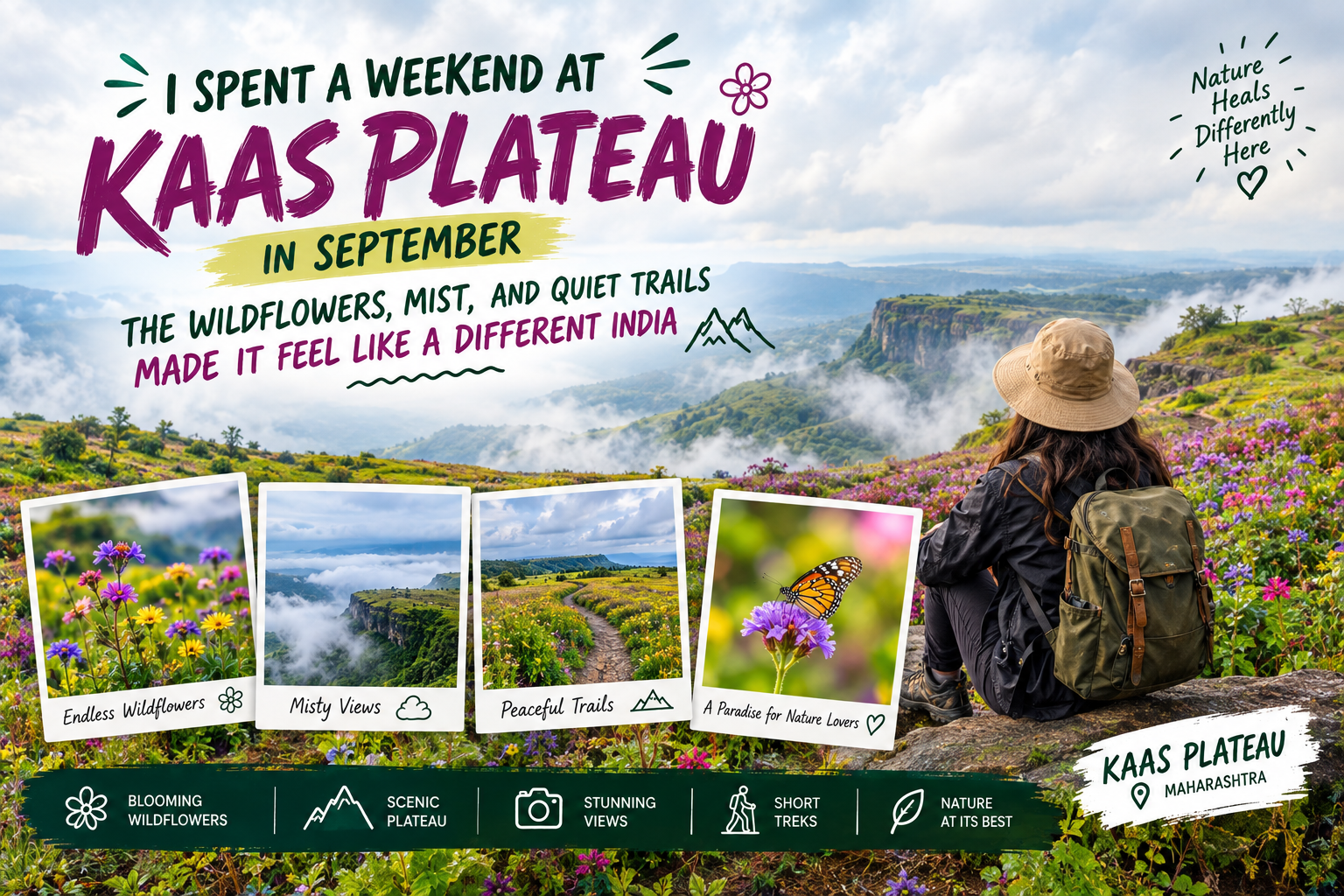
I had seen the photographs before of Kaas Plateau, the way most people probably have.
A hillside covered in purple flowers. Pink blooms scattered across grassland like someone had spilled paint over the landscape. A plateau in Maharashtra that looked, frankly, as though it belonged somewhere else entirely.
For two years, I kept Kaas Plateau on my mental list of places to visit someday.
Then, on a Wednesday in early September, a friend in Pune sent me a message asking if I wanted to drive down to Kaas that weekend.
Suddenly, someday became Saturday.
I knew very little about the place. Kaas Plateau was somewhere near Satara, people called it the Valley of Flowers of Maharashtra, and visitors needed a permit.
Everything else, I discovered on foot.
There was the mist, the wildflowers, the slippery boardwalks and those quiet moments when the fog completely changed the landscape.
By Sunday evening, I understood why people return to Kaas year after year.
Why September Is the Month Everyone Talks About
Kaas Plateau, also known as Kaas Pathar, sits roughly 25 kilometres from Satara in Maharashtra’s Western Ghats. The plateau rises to around 1,200 metres above sea level and looks fairly ordinary for much of the year.
Monsoon changes everything.
Rain soaks the thin laterite soil, temperatures remain relatively cool, and seasonal flowers begin appearing across the grassland. More than 850 species of flowering plants have been recorded in the Kaas region, including several rare and endemic species.
The plateau also forms part of the Western Ghats World Heritage property recognised by UNESCO in 2012 because of the region’s exceptional biodiversity.
What makes Kaas especially fascinating is that the flowers don’t all appear together.
Different species bloom in waves throughout the season. As a result, the colours can change considerably from one week to the next.
During our second weekend of September visit, purple and yellow flowers dominated one slope. Further along, pale white blooms covered another section. Tiny pink clusters appeared close to the ground, almost invisible until our guide pointed them out.
That changing landscape is part of the magic.
You aren’t simply visiting a flower field.
You’re arriving during one brief stage of a constantly changing natural cycle.
Getting to Kaas Plateau
We drove from Pune, which took a little under three and a half hours. Most of the journey was straightforward highway driving before the final stretch toward the hills became narrower and more winding.
Mumbai takes longer. Depending on traffic, the road journey can take around five and a half to six hours via the Mumbai-Pune Expressway and NH-48.
Satara is the nearest railway connection, with Kaas Plateau located around 25 kilometres farther by road.
For anyone who prefers travelling through the Western Ghats by train, our experience of an overnight train journey through the Western Ghats during monsoon is worth reading before planning the route.
The landscape becomes increasingly green as you approach Satara during the monsoon.
By the final stretch, mist often starts appearing between the hills.
Kaas Plateau Permit, Booking and Entry Fee
One thing surprised me before the trip: Kaas isn’t somewhere you can simply arrive at and wander around whenever you want.
The ecosystem is fragile, and increasing tourist numbers have made visitor management necessary.
Entry is therefore regulated, particularly during the flowering season.
For the 2026 season, visitor numbers are limited, with three entry slots generally used during the day:
- 7 AM to 11 AM
- 11 AM to 3 PM
- 3 PM to 6 PM
The 2026 entry fee was reported at around ₹200 per person. Weekend visitors should book online in advance rather than relying on walk-in availability.
Because fees, slots and seasonal rules can change, always check the official Kaas booking information before travelling.
We booked our slot four days ahead. Even then, I noticed the following weekend filling quickly.
My recommendation is simple: once your September dates are fixed, book your entry.
If you’d rather avoid managing the timing and logistics yourself, a guided tour can make the trip easier.
Walking Into the Mist
Our Saturday began early.
We chose the 7 AM entry slot, which meant leaving the homestay while it was still dark. Fog covered the road as we climbed toward the plateau, and visibility became shorter with every turn.
By the time we parked, I could barely see thirty metres ahead.
For a moment, I wondered whether we’d made a mistake.
Then we stepped onto the plateau.
The mist wasn’t ruining the experience.
It was the experience.
Fog moved slowly across the grassland. One moment, an entire hillside appeared through the haze. Seconds later, it disappeared again.
Photographers stood around us with cameras ready, waiting for the next opening in the mist.
When the fog lifted, even briefly, the scenery looked almost surreal.
Soft light fell across the grass.
Purple and yellow flowers appeared between the rocks.
The surrounding hills faded into the distance.
For a few minutes, the landscape felt more like a Scottish highland than a plateau in Maharashtra.
Walking the Kaas Plateau Boardwalks
The forest department has created designated walking routes to reduce damage to the fragile vegetation.
At first, staying on the marked paths felt restrictive.
After learning more about the ecosystem, I understood the reason.
Kaas has a thin layer of soil over volcanic rock. Its seasonal plants have a short window in which to grow, flower and reproduce. A single careless footprint can damage vegetation that may take another season to recover.
Following the boardwalk therefore becomes part of responsible travel.
Along the trail, we spotted deep purple flowers, yellow Sonki, pink Smithia and tiny plants growing close to the ground.
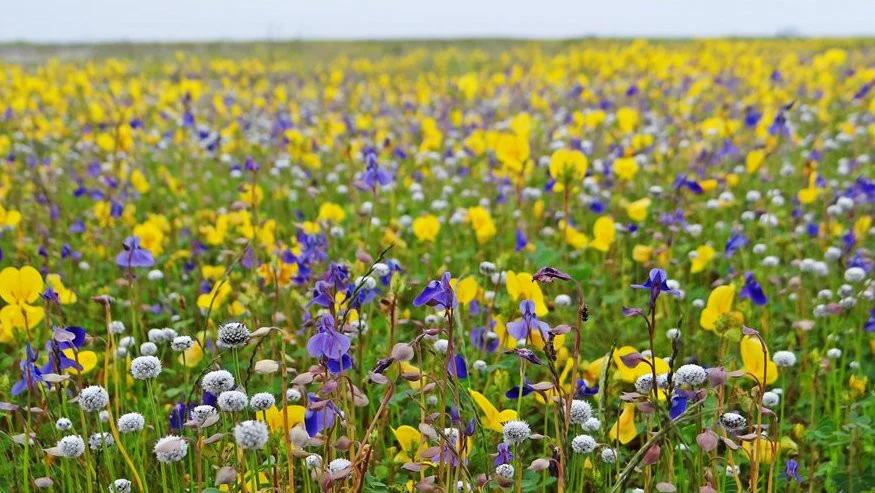
The Smithia was one of my favourites. Locals often call it the “Mickey Mouse flower” because of its unusual shape.
Even more surprising were the tiny Drosera plants.
These insectivorous plants are easy to overlook. Without stopping to examine the ground closely, I would probably have walked straight past them.
The flowers were beautiful, but the quiet stayed with me longer.
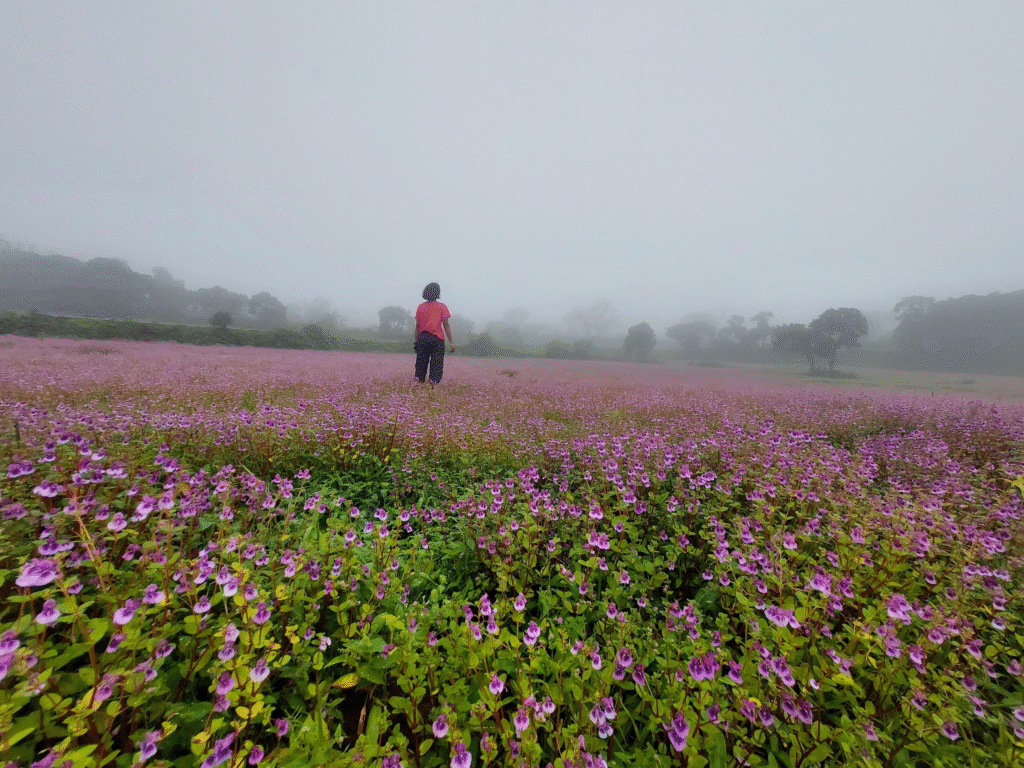
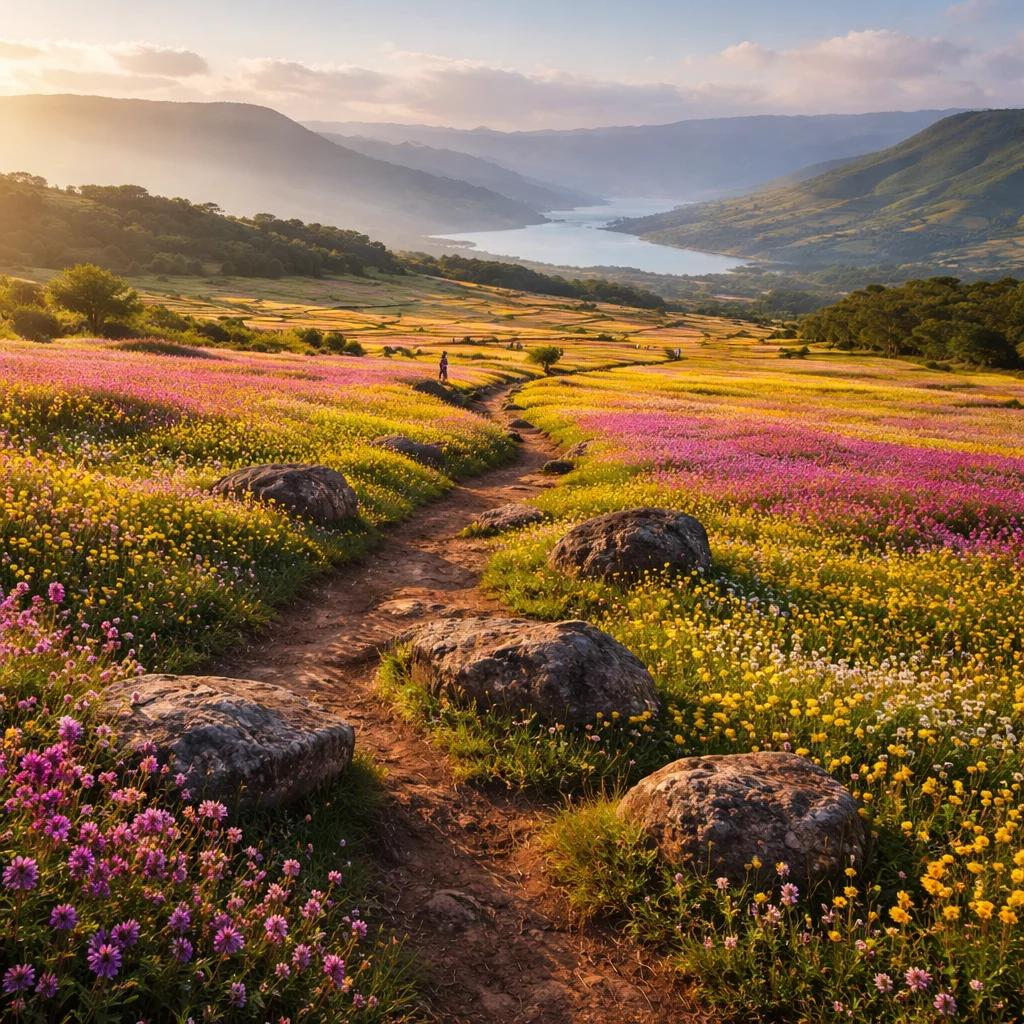
There were visitors around us, yet the plateau never felt overwhelmingly noisy.
Instead, I heard wind moving through the grass, occasional camera shutters and low conversations.
Someone nearby mentioned that the scenery reminded her of trekking in the Himalayas.
I understood exactly what she meant.
Kaas doesn’t have Himalayan peaks, of course. The resemblance comes from the mist, open landscape and sense of distance.
Kaas Lake: The Slower Second Half of the Day
By early afternoon, most of the mist had disappeared.
Sunlight reached the plateau, the colours became brighter, and the landscape looked completely different from the morning.
We decided to head toward Kaas Lake.
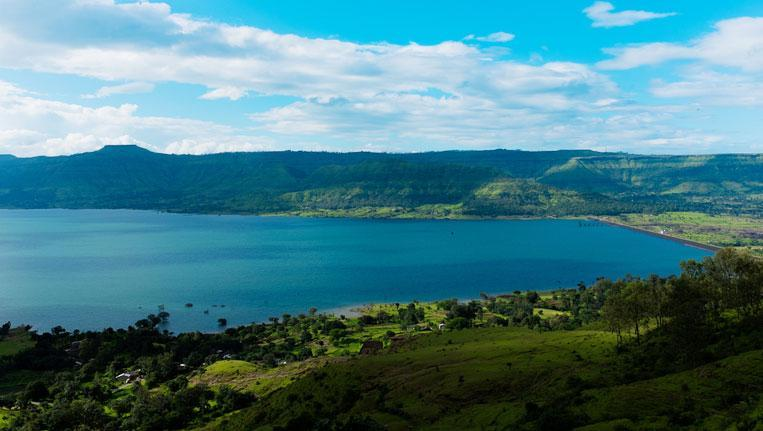
Located close to the plateau, the lake provides a quieter alternative to the main flower-viewing area. Many visitors focus entirely on the wildflowers and leave without spending much time here.
That turned out to be our favourite part of the afternoon.
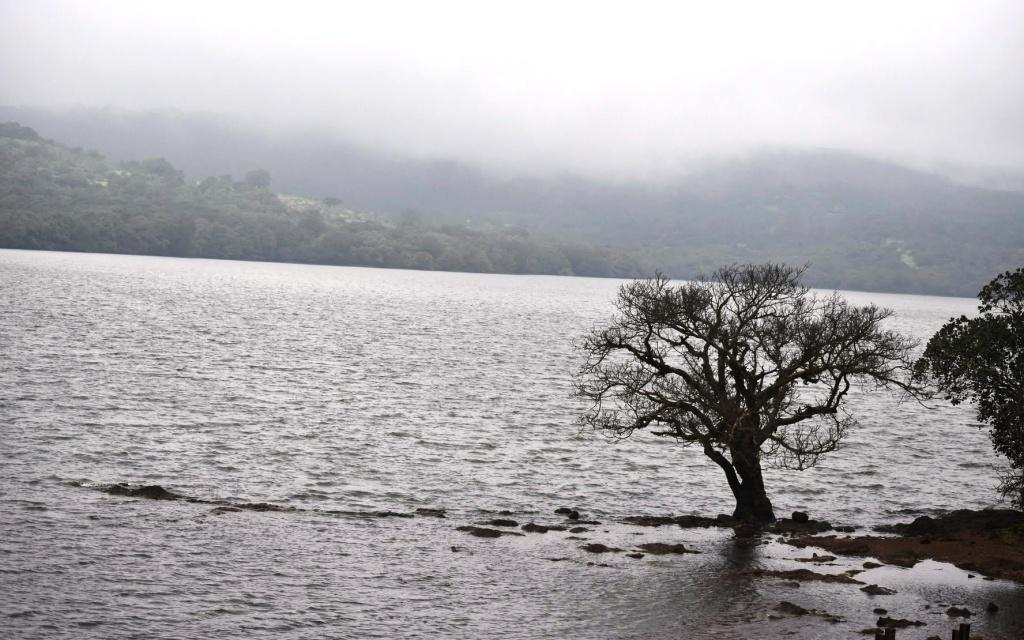
A roadside tea stall gave us exactly what we needed: hot tea, a place to sit and a view of green hills surrounding still water.
There was nowhere we needed to be for the next hour.
So we simply stayed.
Thoseghar Waterfall: A Perfect Monsoon Add-On
Later that afternoon, we drove to Thoseghar Waterfall.
The journey took roughly half an hour, and the scenery remained intensely green after weeks of monsoon rain.
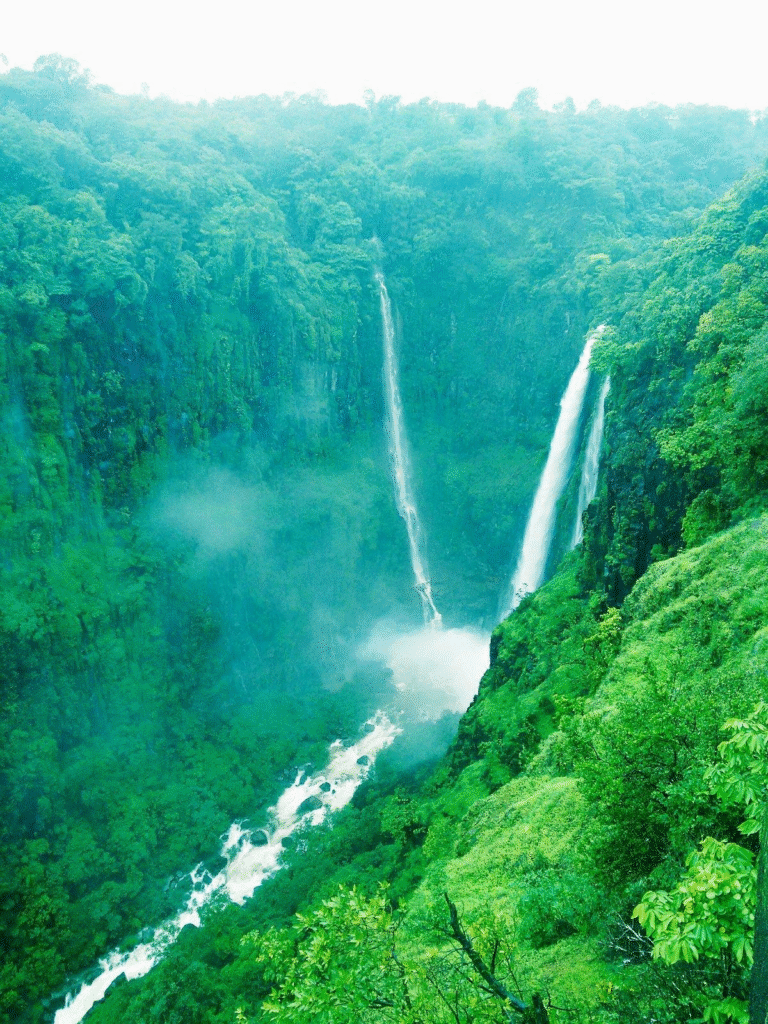
Thoseghar is one of the major waterfall attractions around Satara. During the monsoon, the water volume can be impressive.
Mist filled parts of the valley as we approached the viewpoint.
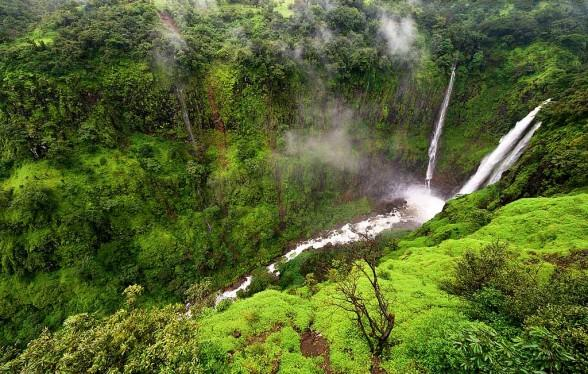
A light rain jacket proved useful even though the weather had looked relatively clear earlier.
The walk itself wasn’t technically difficult, although wet surfaces and steps required some care.
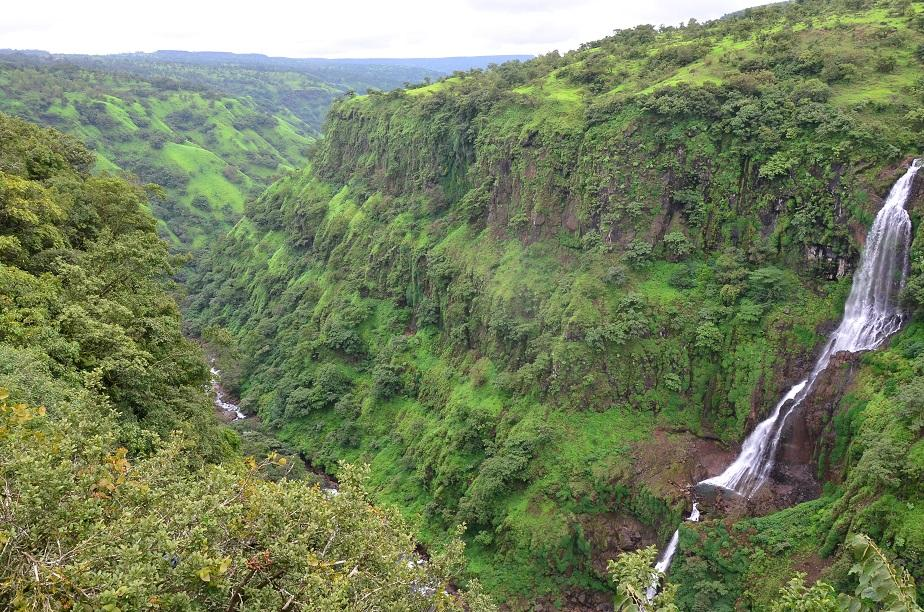
After several hours of walking among flowers, the waterfall offered a completely different experience.
Instead of tiny plants and quiet trails, there was rushing water, spray and the constant sound of the falls.
Together, Kaas and Thoseghar made the perfect monsoon combination.
Sunday Morning: A Slower and Emptier Kaas
We returned to Kaas early Sunday morning.
This time, there was no guide and no real agenda.
The second walk felt surprisingly different.
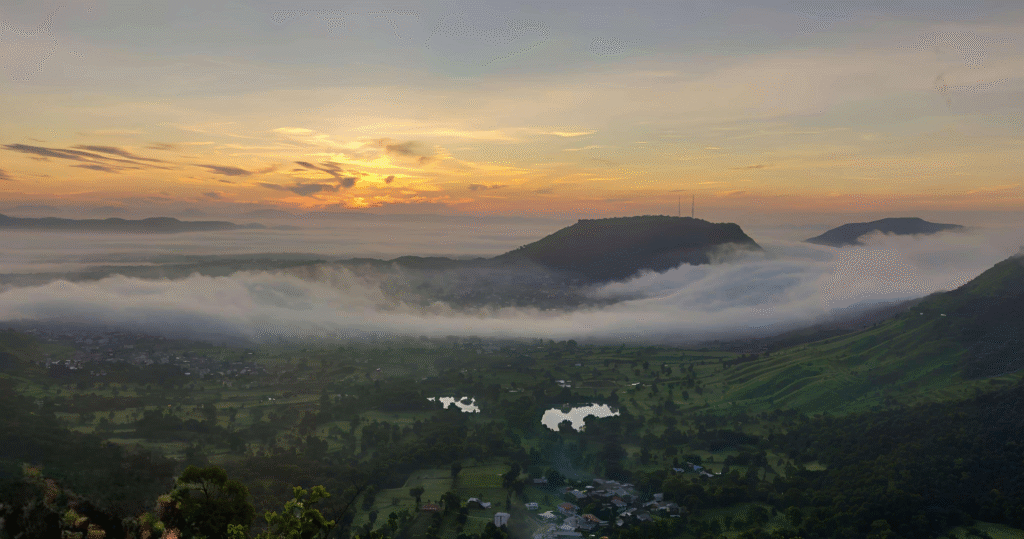
Without the excitement of seeing everything for the first time, I started noticing details that had escaped me on Saturday.
Some flowers had begun closing as the sunlight became stronger.
Tiny insects moved between the grasses.
Water droplets remained on leaves after the night’s moisture.
Even the sounds seemed clearer once the morning crowd thinned out.
Instead of trying to see everything, we simply walked.
That slower pace changed the experience.
Kaas isn’t really a place that rewards rushing.
The more time you give it, the more you notice.
Sajjangad Fort: A Peaceful Add-On Near Satara
If you have additional time, Sajjangad Fort makes a worthwhile addition to a Kaas weekend.
The hilltop fort is closely associated with the saint Samarth Ramdas and adds a historical and spiritual dimension to a trip otherwise dominated by landscapes and flowers.
After spending a morning surrounded by mist and wildflowers, the fort offers a different perspective on the Satara region.
It also fits naturally into a slower weekend itinerary.
There is no need to turn the trip into a checklist of attractions.
Pick a few places and give each one enough time.
What I Would Tell a First-Time Kaas Plateau Visitor
A few practical lessons made the weekend easier.
Book your entry early
September weekends can become busy during peak flowering.
Don’t wait until the day before if your dates are fixed.
Choose the early morning slot
The 7 AM entry was easily my favourite.
Morning light is softer, temperatures are cooler and mist is more likely to linger across the plateau.
Wear shoes with good grip
The trails aren’t technically difficult, but rain and mist can make surfaces slippery.
A pair of comfortable shoes with decent traction is more useful than anything fancy.
Carry a rain jacket
Weather changes quickly in the Western Ghats.
A lightweight poncho or rain jacket is more practical than a large umbrella on narrow walking paths.
Stay on designated trails
This isn’t just a visitor rule.
It’s a conservation measure.
The flowers you’re travelling to photograph are exactly what your footsteps could damage.
Carry water
Even though the walk isn’t a difficult trek, you’ll spend several hours outdoors.
A reusable bottle is enough for most visitors.
Keep some cash
Roadside tea stalls and smaller vendors may not always have reliable digital payment connectivity.
Don’t spend the entire visit behind a camera
I nearly made that mistake.
The photographs are worth taking, but Kaas is better when you occasionally put the camera away.
For clothing, rain protection and other essentials, our travel packing checklist covers most of what you’ll need.
What to Pack for Kaas Plateau in September
You don’t need technical trekking equipment for a typical Kaas visit.
A practical packing list is enough:
- Lightweight rain jacket or poncho
- Comfortable shoes with good grip
- Quick-drying clothes
- Light jacket or warm layer for early mornings
- Small backpack
- Rain cover for your bag
- Reusable water bottle
- Power bank
- Camera or phone
- Sunscreen
- Small towel
- Basic medicines
- Cash for local stalls
The goal is to stay comfortable in cool, wet and changing weather.
Is Kaas Plateau Worth Visiting in September?
For me, absolutely.
The flowers are the obvious attraction, but they’re only one part of the experience.
Mist rolling across the plateau is just as memorable.
So is walking through quiet grassland before the crowds arrive.
The changing colours make each visit slightly different, while the fragile ecosystem gives the experience a sense of responsibility.
Kaas isn’t a landscaped garden created for tourists.
It’s a seasonal ecosystem.
That distinction matters.
Why Kaas Plateau Felt Like a Different India
I’ve travelled through quite a bit of Maharashtra over the years.
Most trips have involved busy highways, crowded towns and the familiar dry landscapes of the Deccan.
Kaas in September felt completely different.
The landscape certainly played a role. Yet the bigger change came from the pace.
There is no way to rush through mist.
Weather determines what you see.
The flowers decide when they bloom.
Even the trail encourages you to slow down.
By the second day, I had stopped checking my phone.
We walked when we felt like walking.
Tea breaks lasted longer than planned.
A ten-minute stop to photograph flowers became half an hour.
That was the real surprise.
Kaas didn’t feel like an ambitious weekend itinerary.
It felt like a pause.
I’ve taken longer trips that involved more places, more activities and considerably more planning.
Still, very few left behind the same sense of quiet.
Perhaps that’s why Kaas stayed with me.
It was only a weekend.
Yet somewhere between the mist, wildflowers, tea beside Kaas Lake and the slow walk back through the grassland, the trip became much more than a flower-viewing excursion.
Sometimes the smallest journeys create the most lasting memories.
Frequently Asked Questions About Kaas Plateau
What is the best time to visit Kaas Plateau?
September is generally one of the most popular months for Kaas Plateau because several seasonal flowers can bloom during this period. However, the exact flowering pattern depends on the monsoon and can change from year to year.
Does Kaas Plateau require a permit?
Visitor entry is regulated during the flowering season, and online booking is recommended. Weekend and peak-season visitors should reserve their slots in advance.
What is the Kaas Plateau entry fee?
The 2026 entry fee was reported at around ₹200 per person. Always check the official Kaas booking information before travelling because fees and visitor arrangements can change.
How many visitors are allowed at Kaas Plateau?
Visitor numbers are restricted to help protect the fragile ecosystem. The commonly used system allows up to 3,000 visitors per day across three entry slots.
How far is Kaas Plateau from Pune?
Kaas Plateau is roughly 125–140 kilometres from Pune, depending on your starting point and route. The drive generally takes around three to three and a half hours in reasonable traffic.
How far is Kaas Plateau from Satara?
Kaas Plateau is approximately 25 kilometres from Satara.
Is Kaas Plateau good for a weekend trip?
Yes. A two-day trip works well from Pune and other parts of Maharashtra. You can combine Kaas Plateau with Kaas Lake, Thoseghar Waterfall and Sajjangad Fort without creating an overly packed itinerary.
What should I wear to Kaas Plateau in September?
Wear comfortable clothes suitable for cool and wet weather. Shoes with good grip are important, while a lightweight rain jacket or poncho is highly recommended.
Can visitors walk into the flower fields?
Visitors should remain on designated trails and follow local conservation rules. Walking through flowering patches can damage fragile plants and the thin soil supporting them.
Is Kaas Plateau a UNESCO World Heritage Site?
Kaas is part of the Western Ghats World Heritage property, which UNESCO inscribed in 2012.
Final Thoughts
Kaas Plateau is easy to understand through photographs.
Purple flowers.
Pink blooms.
Mist-covered hills.
Green grassland.
Yet photographs cannot fully capture the experience.
They don’t show how quickly fog can erase an entire hillside.
They don’t capture the sound of wind moving through wet grass.
Nor do they show the tiny flowers hiding beneath the larger patches of colour.
Most importantly, pictures can’t recreate the feeling of standing in the Western Ghats and realising that such an unusual landscape exists just a few hours from Pune.
If you’re searching for a September weekend trip from Pune, a monsoon destination in Maharashtra, or a place where you can genuinely slow down, Kaas Plateau deserves a spot on your list.
Just remember to travel gently.
The flowers only get a few weeks to put on their show.
Internal Links
- Munnar, India: Why This Lush Hill Station Is Becoming One of India’s Hottest Monsoon Escapes in 2026
- The Rise of Do-Less Travel
- The Hidden Mental Health Benefits of Travel
- The Future of Sustainable Travel: How to Explore Without Leaving a Trace
- Traveling Through the Seasons: Why Every Time of Year Offers a Unique Adventure
- Hidden Gems: Why Offbeat Travel Creates the Best Memories
- Experience-Led Travel 2026: Okinawa, Marrakech, Swiss Alps
Outbound Links
- https://www.maharashtratourism.gov.in
- https://www.incredibleindia.gov.in
- https://www.mahaforest.gov.in
- https://whc.unesco.org
- https://www.nationalgeographic.com/travel
- https://www.lonelyplanet.com
- https://www.cntraveler.com
- https://www.britannica.com
- https://www.iucn.org
- https://www.worldwildlife.org