
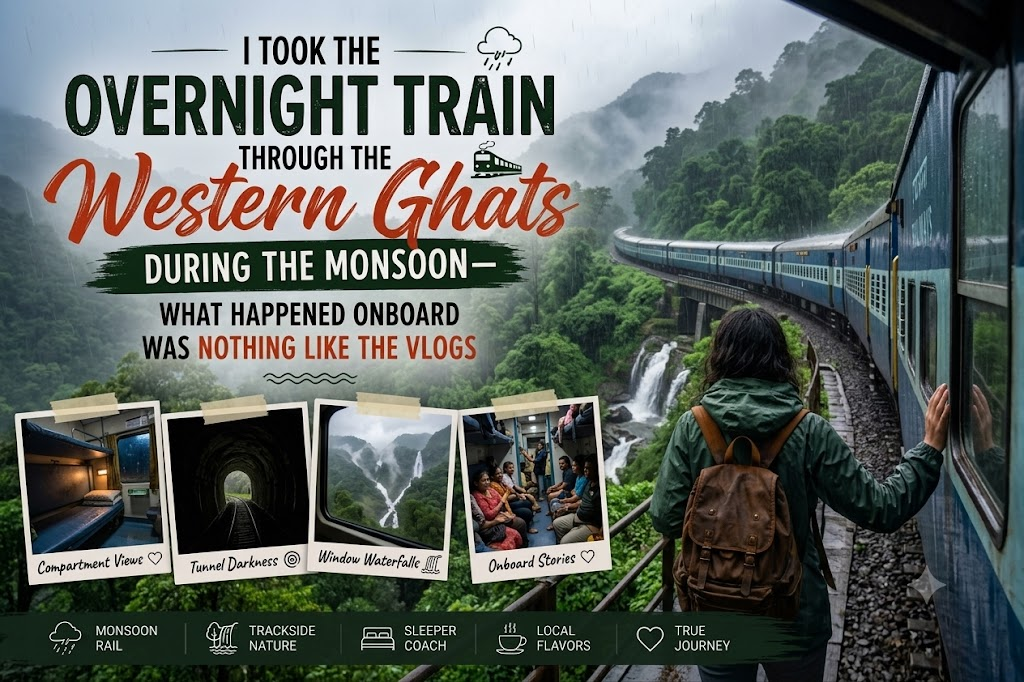
There is a particular kind of confidence that comes from watching too many travel videos before a trip – Overnight Train.
You start to believe you know exactly how something will feel before you have felt it.
I had that confidence in July, standing on Platform 8 at Chhatrapati Shivaji Maharaj Terminus with a sleeper ticket in my hand and a head full of borrowed footage—misty ghats, a lone window seat, someone’s playlist swelling at just the right moment as a waterfall rushed past.
I had seen the Konkan Railway a hundred times before I ever boarded it.
None of that footage prepared me for the actual night.

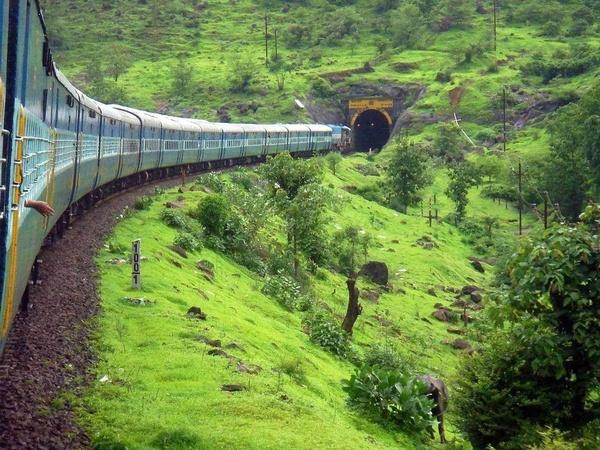

Hero image suggestion: Overnight train leaving Mumbai toward the Konkan coast.
Why I Chose the Overnight Train Instead of the Bus or Flight
Mumbai to Goa by road during the monsoon is its own kind of gamble. Heavy rain can slow traffic dramatically, while buses and cars have to negotiate busy stretches of the coastal highway.
Flying gets you there quickly, but it gives you almost none of the experience of travelling through the Western Ghats.
That was the reason I chose the train.
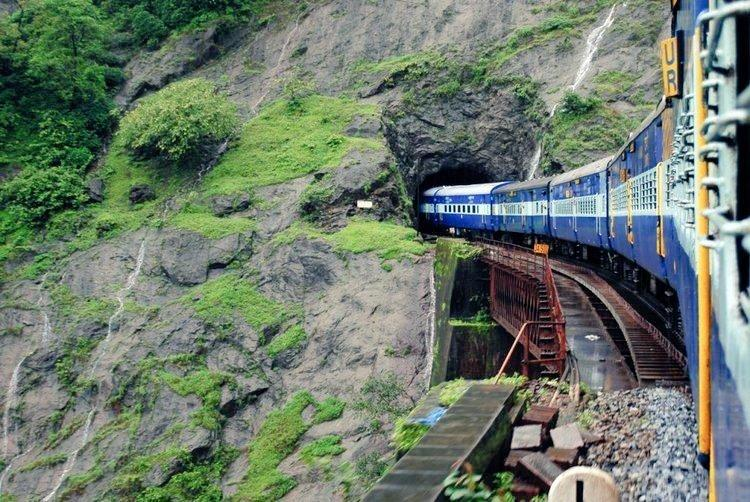
The Konkan Railway is famous for cutting through some of India’s most challenging terrain, connecting the western coast through the hills of Maharashtra, Goa and Karnataka. The route is packed with tunnels, bridges, deep cuttings and dramatic valleys.
And during the monsoon, the landscape changes completely.
The hills turn almost impossibly green. Waterfalls appear along slopes that look dry for much of the year. Streams run beside the railway tracks, clouds settle into the valleys and mist can make entire sections of the landscape disappear.
For me, riding the railway during the rains felt like the only honest way to experience it.
So I booked a sleeper berth on an overnight train from Mumbai, hoping to cross the Ratnagiri–Madgaon section during the early hours of the morning.
That turned out to be both a good decision and a slightly ridiculous one.
The First Two Hours Matched the Vlogs. Almost – Overnight Train.
Leaving Mumbai, everything looked exactly as I had imagined.
The familiar sound of the train settling into its rhythm. Tea vendors moving through the corridor. Passengers arranging bags under their berths. Someone listening to music quietly from the other end of the compartment.
Then the city began to disappear.
Past Panvel, the landscape gradually changed into wet fields and low hills. Further along, the Sahyadri range began appearing through gaps in the rain.
The mountains were dark green and layered, with streams of water running down rock faces.
I took the photos everyone takes.
I pressed my face against the window.
For perhaps ninety minutes, I felt like I was living inside one of those cinematic railway videos.
Then the sun went down.
And the trip stopped cooperating.
What Actually Happens Once the Sun Goes Down – Post Overnight Train
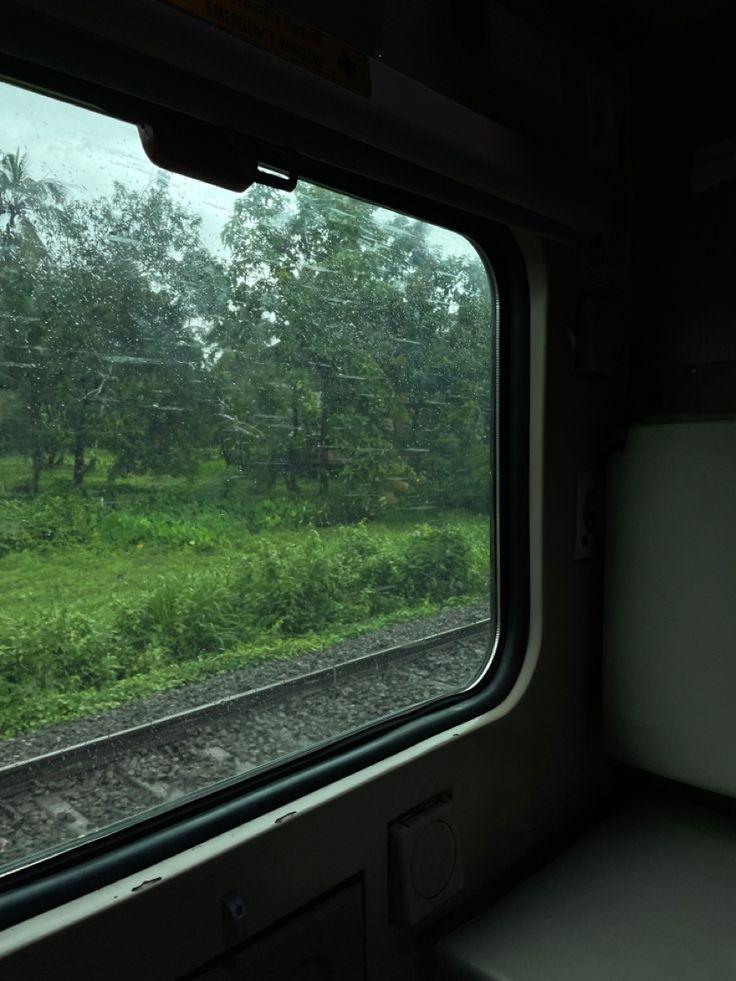
Nobody films the part where the window fogs up and stays that way.
Somewhere along the route, the glass became a grey blur. I wiped it with my sleeve. It cleared for a few seconds before fogging up again.
The famous valleys and waterfalls were still outside.
I just couldn’t see them.
This is one of the biggest differences between watching a Western Ghats train journey on YouTube and actually taking an overnight train through the region.
Travel videos compress hours of waiting, darkness and ordinary train travel into a few seconds.
The real journey is slower.
During the 2026 monsoon season, Konkan Railway’s official monsoon timetable is in effect from 15 June to 20 October, with sectional speed restrictions introduced across vulnerable stretches because of the challenging weather and terrain. Passengers are also advised to check updated train timings before travelling.
So don’t expect the train to glide continuously through the mountains.
Sometimes it crawls.
Sometimes it waits.
Sometimes you’re sitting beside a dark window wondering what is happening outside.
And occasionally, that becomes part of the experience.

The Forty-Minute Stop
Around midnight, the train stopped for what felt like forever.
I had no idea where we were.
An older passenger across the aisle seemed completely unconcerned. He explained that during the monsoon, trains can be slowed or held as railway staff monitor conditions along vulnerable sections.
Then he went straight back to sleep.
I stayed awake.
That conversation made me realize something: for regular passengers, this wasn’t an adventure.
It was simply a train journey during the rainy season.
For me, it was the entire story.
The Compartment Had Its Own Weather System
Outside, there was rain.
Inside, there was another kind of weather.
The air conditioning seemed to alternate between freezing cold and barely noticeable.
One passenger pulled a shawl over his head. Another put on socks. Someone adjusted the vent above their berth.
Then there was the water.
A little rainwater had apparently made its way through a window seal further down the coach. By around 1 a.m., there was a small puddle beside someone’s suitcase.
Nobody panicked.
A young boy grabbed a towel while his mother used her phone flashlight.
Five minutes later, everything was back to normal.
It was strangely ordinary.
That’s something travel videos rarely capture—the little inconveniences that become funny memories once the journey is over.
And Then There Was Dudhsagar
I had been waiting for this part.
The famous Dudhsagar Waterfall.
The waterfall that appears in countless videos and photographs of train journeys through the Western Ghats.
Except I saw it for about four seconds.
It appeared through the darkness and fog—a flash of white water against black rock.
I reached for my phone.
Too late.
Gone.
No cinematic slow-motion shot.
No perfectly timed soundtrack.
Just a brief glimpse before the train disappeared into the darkness again.
And somehow, that made it more memorable.
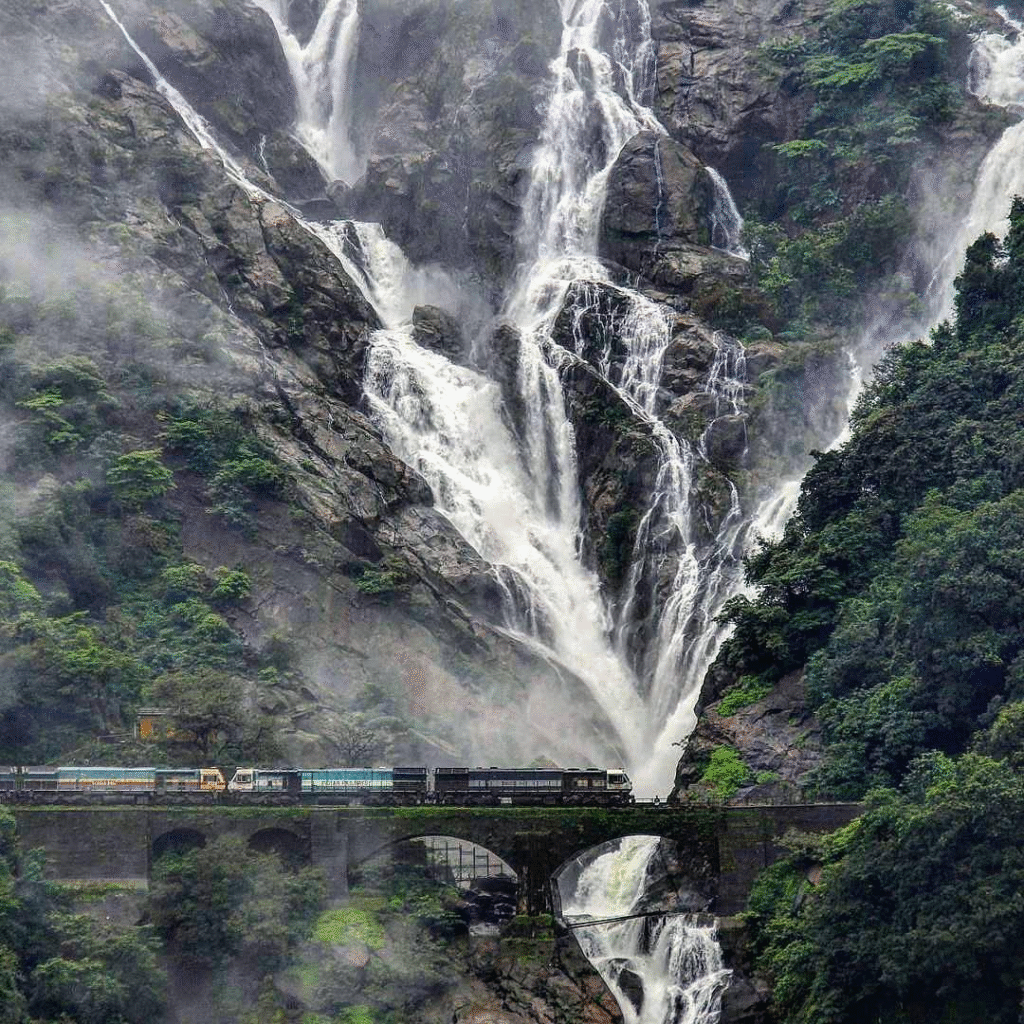


Important: Don’t plan an overnight journey specifically around seeing Dudhsagar from the train. Your ability to see the falls depends heavily on the train’s timing, weather, visibility and route conditions. Daylight services give you a much better chance of appreciating the landscape.
The Real Story Was the People, Not the Scenery – Post Overnight Train
This is the part I remember most.
Around 2 a.m., I was still awake.
I ended up talking to a family travelling to Madgaon for a wedding, a college student heading home for the holidays and an older woman who seemed to have packed enough food for everyone in the compartment.
At some point, filter coffee appeared.
I have no idea who originally owned the thermos.
It simply travelled from one person to another.
Then someone’s phone battery died.
Before he had finished asking for a charger, several people had offered one.
The conversation turned toward the best time to travel on the Konkan Railway.
Late July was recommended by one passenger because of the waterfalls. Another preferred August. Someone else was more interested in avoiding the heaviest rain.
It was the sort of conversation that doesn’t happen when you’re sitting in an airport lounge.
And it certainly doesn’t happen in a nine-minute travel vlog.
The sky eventually began turning grey.
Morning was coming.
What the Vlogs Get Wrong About This Journey
1. The visibility
Most monsoon railway videos are filmed during daylight.
That’s when the Western Ghats look their best.
An overnight journey is different.
For several hours, you’re travelling through darkness. Add fogged windows and rain, and the scenery becomes something you occasionally glimpse rather than continuously watch.
2. The pacing
Videos make the journey look seamless.
Real trains stop.
They wait.
They slow down.
They sit at signals.
During the monsoon, railway operations are deliberately adjusted for safety. Konkan Railway’s 2026 monsoon timetable includes speed restrictions along vulnerable sections, with the timetable running from June 15 to October 20.
That isn’t a flaw.
It’s simply part of travelling through difficult terrain during heavy rain.
3. The comfort
The romantic idea of an overnight train doesn’t include everything that happens after midnight.
Temperature changes.
Humidity.
Noisy berths.
Fogged windows.
Occasional leaks.
A suitcase becoming an obstacle in the corridor.
None of it looks particularly cinematic.
But it is real.
Is the Konkan Railway Worth Taking During the Monsoon?
Absolutely—but go for the journey, not just the photographs.
The daylight sections can be spectacular. The Western Ghats become intensely green, waterfalls appear along the slopes and the railway seems to disappear into the landscape.
But an overnight trip is a different experience.
You get fewer views and more time inside the train.
And that’s not necessarily a bad thing.
The Konkan Railway has strengthened its monsoon safety systems in 2026, including infrastructure checks, geo-safety measures, monitoring systems and intensified patrolling in vulnerable areas.
So if you’re travelling during the rainy season, don’t treat delays or slower running as something that has ruined your trip.
The railway is operating through exactly the conditions that make the scenery so dramatic in the first place.
What I’d Pack for an Overnight Train Monsoon Journey
If I were doing the trip again, I’d pack:
- A light shawl or jacket — AC coaches can get surprisingly cold.
- A power bank — don’t assume you’ll have easy access to charging.
- Waterproof phone protection — especially if you’re constantly photographing through wet windows.
- Small snacks — useful during late-night delays.
- A reusable water bottle
- Tissues and a small towel — surprisingly useful.
- Earphones or earplugs
- A small plastic bag for wet items
- Comfortable clothes
- An open mind about delays
Most importantly, don’t pack your expectations too tightly.
Best Time to Travel on the Konkan Railway
For dramatic monsoon scenery, the core rainy season is the obvious choice.
Late July through September can offer particularly lush landscapes and fuller waterfalls, although heavy rainfall can also bring difficult operating conditions.
If your priority is scenery, travel during daylight.
If your priority is the overnight train experience, darkness isn’t necessarily a disadvantage.
And if you want both, consider breaking the journey into sections rather than expecting one overnight train to deliver the entire cinematic experience.
Was It Still Worth It – Overnight Train?
Completely.
Just not for the reasons I expected.
The daylight stretch out of Mumbai gave me exactly what I had hoped for: green mountains, rain-covered valleys and waterfalls appearing beside the tracks.
But the overnight part gave me something the footage never could.
A few hours inside a small, moving room with strangers.
A delayed train.
A dead phone battery.
A thermos of coffee.
A half-seen waterfall.
A fogged-up window.
And people who treated all of it as completely normal.
That’s the part nobody puts a filter on.
If you’re planning the same Mumbai to Goa train journey during the monsoon, go expecting weather rather than spectacle.
Charge your phone twice.
Carry something warm.
Keep your expectations flexible.
And talk to the person sitting across from you.
They may have done the journey ten times already—and they might tell you something no travel vlog ever will.
Frequently Asked Questions
Is the Konkan Railway route through the Western Ghats worth doing during the monsoon?
Yes. The route becomes exceptionally green during the monsoon, with waterfalls, misty hills and dramatic valleys. However, travellers should expect slower operations, reduced visibility and possible delays during periods of heavy rain.
What is the best time to travel on the Konkan Railway to see waterfalls?
Late July through September is a strong period for monsoon scenery, although conditions vary from year to year. Daytime journeys generally offer much better visibility than overnight train.
Does the Konkan Railway have a different timetable during the monsoon?
Yes. For 2026, Konkan Railway’s monsoon timetable runs from 15 June to 20 October, with sectional speed restrictions introduced during the rainy season.
Can you see Dudhsagar Waterfall from an overnight train?
You might, but it isn’t guaranteed. Darkness, fog, rain, train timing and visibility can make the view extremely brief—or impossible to see clearly.
What should I pack for an overnight monsoon train journey?
Pack a light jacket or shawl, power bank, phone protection, snacks, water, tissues, a small towel and comfortable clothing. A waterproof bag for electronics is also useful.
Is sleeper class comfortable during the monsoon?
It can be, but expectations matter. Temperature changes, humidity, rain and normal overnight-train noise can affect comfort. AC coaches may be preferable if you want a more controlled environment.
Is the Konkan Railway safe during the monsoon?
Konkan Railway implements additional monsoon safety measures because of heavy rainfall and challenging terrain. These include monitoring, patrolling, geo-safety measures and speed restrictions. Travellers should check official railway updates before departure, especially during periods of severe weather.
Plan Your Overnight Train Journey
If you’re building a longer coastal India itinerary, explore Enigma Jaunt’s guides to the best time to visit Goa during the monsoon, monsoon travel in India and what to pack for rainy-season travel.
For more destination ideas, browse our India travel guides.
Internal Links
- The Rise of Do-Less Travel
- Munnar, India: Why This Lush Hill Station Is Becoming One of India’s Hottest Monsoon Escapes in 2026
- The Future of Sustainable Travel: How to Explore Without Leaving a Trace
- Traveling Through the Seasons: Why Every Time of Year Offers a Unique Adventure
- Experience-Led Travel 2026: Okinawa, Marrakech, Swiss Alps
- The Hidden Mental Health Benefits of Travel
- Hidden Gems: Why Offbeat Travel Creates the Best Memories