
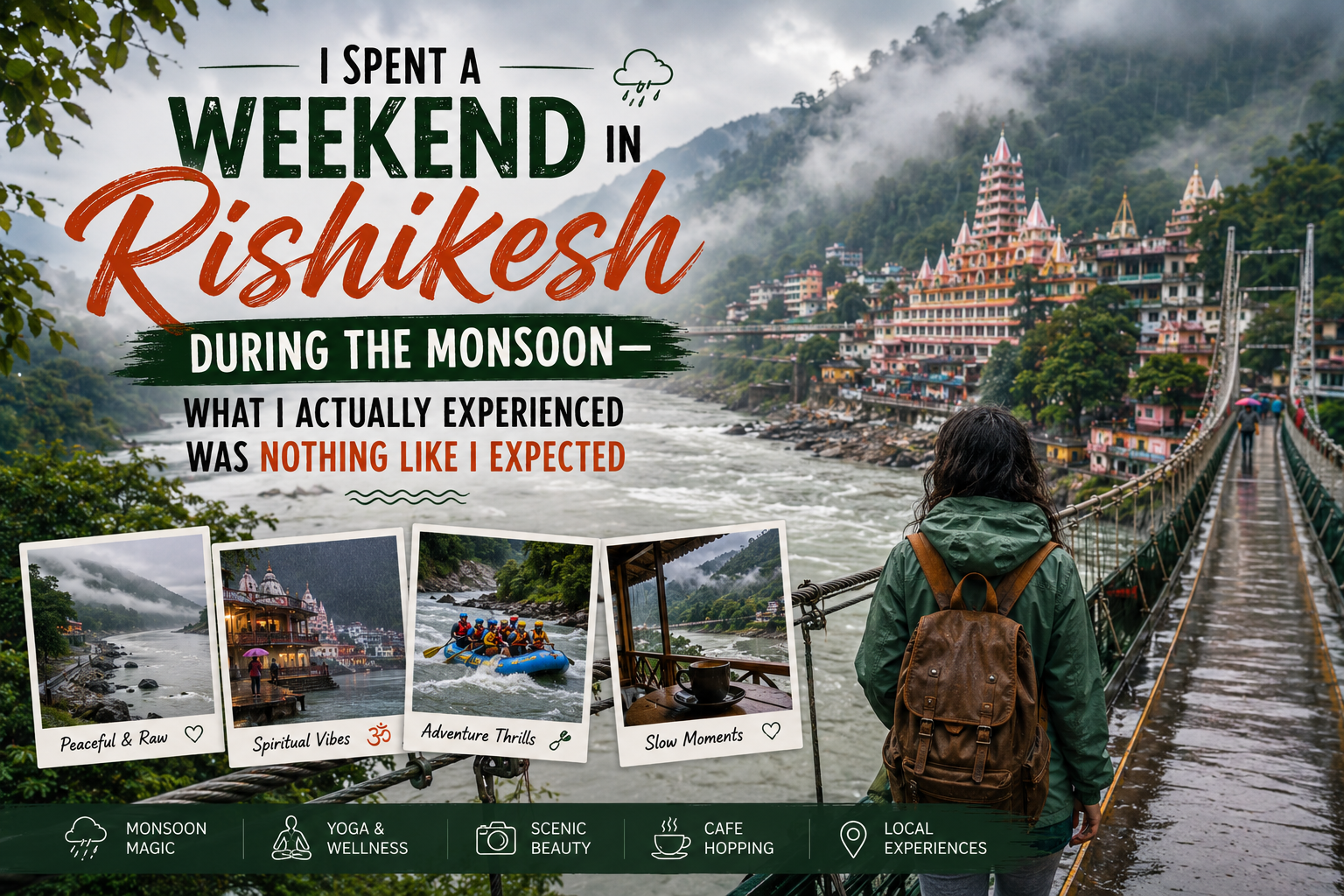
Rishikesh in monsoon season is not the version most travel photos prepare you for.
I had been putting off a trip to Rishikesh for almost two years. Every time I searched for things to do in Rishikesh, the same images appeared: turquoise water, orange-robed sadhus beside the Ganga, rafting boats speeding through rapids, and crowded steps during the evening aarti.
So when a free weekend appeared in July, I booked a bus from Delhi.
I made one small mistake.
I didn’t properly check the Rishikesh weather in monsoon.
The trip turned out to be nothing like the postcard version I had imagined. The Ganga was swollen and brown, rafting was off the table, rain followed me through most of the weekend, and a small landslide delayed my journey by several hours.
But strangely, those things ended up making the trip more memorable.
This is what Rishikesh during monsoon season actually felt like — the beautiful parts, the inconvenient parts, what surprised me, and what I would do differently next time.
Getting to Rishikesh Was the First Warning
The bus from Delhi to Rishikesh normally takes around six hours.
Mine took nine.
Somewhere after Haridwar, traffic slowed dramatically because of a minor landslide on the Rishikesh–Badrinath highway. A road crew was already clearing mud and loose stones, so it wasn’t a major disaster, but it was enough to remind me why people ask, “Is Rishikesh safe in monsoon?”
Monsoon travel in the Himalayan foothills requires a little more flexibility.
By the time I reached my guesthouse near Tapovan, it was after 9 p.m. The Ganga was moving fast and brown beneath the bridges, rain was still falling, and the electricity had already gone out twice.
It wasn’t exactly the peaceful arrival I’d imagined.
Still, I woke up the next morning curious rather than disappointed.
The Ganga Was Completely Different
The river was the first thing I wanted to see.
It was also the first thing that looked nothing like the photographs.

The Ganga during the monsoon can rise dramatically, with stronger currents and a much darker appearance because of sediment carried downstream. The calm turquoise river I had expected had been replaced by powerful brown water rushing beneath the suspension bridges.
And that meant one important thing:
Rishikesh rafting during monsoon was off the itinerary.
Commercial rafting generally closes during the monsoon season because river conditions become unsuitable for recreational rafting. The usual rafting stretch around Shivpuri and Marine Drive was quiet.
No lines of rafts.
No groups getting helmets fitted.
No guides shouting instructions.
Just the river.
I stood near Ram Jhula for several minutes watching it move.
Oddly, that was when the trip started feeling less like a checklist and more like an actual escape.
Triveni Ghat Without the Crowds
I’d seen the famous Ganga aarti in Rishikesh countless times online.
The images usually show packed steps, glowing diyas, photographers, pilgrims, and visitors standing shoulder to shoulder.
During my visit, the scene was completely different.

Rain had been falling on and off throughout the day, and the crowd was much smaller. The priests still performed the evening ceremony. Diyas were still lit. Bells still rang over the river.
But there was space.
I could actually hear the bells.
I could hear the rain hitting umbrellas.
And between the chants, there were moments of almost complete silence.
It wasn’t the grand spectacle I’d seen online. It felt more intimate.
For travelers searching for the best time to visit Rishikesh for fewer crowds, the monsoon can offer a very different experience — although weather and river conditions need to be taken seriously.
Crossing Ram Jhula in the Rain
Rishikesh’s suspension bridges have a certain personality on a normal day.
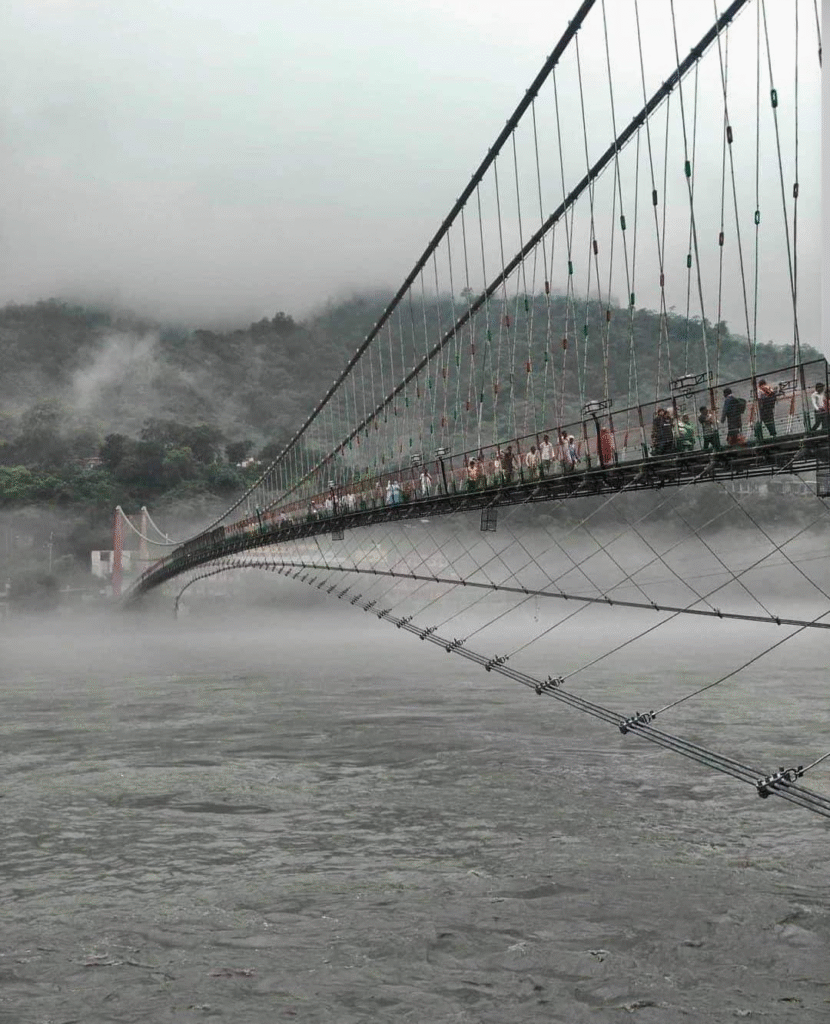
In the rain, they become an entirely different experience.
The metal surface was wet, monkeys were taking shelter beneath shop awnings, and the river below was moving considerably faster than I’d expected.
I crossed Ram Jhula twice that weekend.
Both times it was surprisingly quiet.
There were a few locals carrying umbrellas, shopkeepers waiting for the rain to ease, and a stray dog sleeping beneath a fruit cart.
I found myself holding the railing more tightly than necessary.
It wasn’t dangerous, but the combination of rain, wind, slippery surfaces, and the rushing river definitely made me slow down.
And that became something of a theme for the whole weekend.
The Beatles Ashram Was Better in the Rain
The Beatles Ashram, officially known as Chaurasi Kutia, was one of the places I was most excited to see.

The ashram became internationally famous after The Beatles stayed there in 1968, and today its abandoned meditation huts and colourful murals have become one of Rishikesh’s most recognizable attractions.
I’d expected crowds.
Instead, I found quiet.
The rainy weather had kept many visitors away, and I could wander through parts of the complex without constantly waiting for people to move out of photographs.
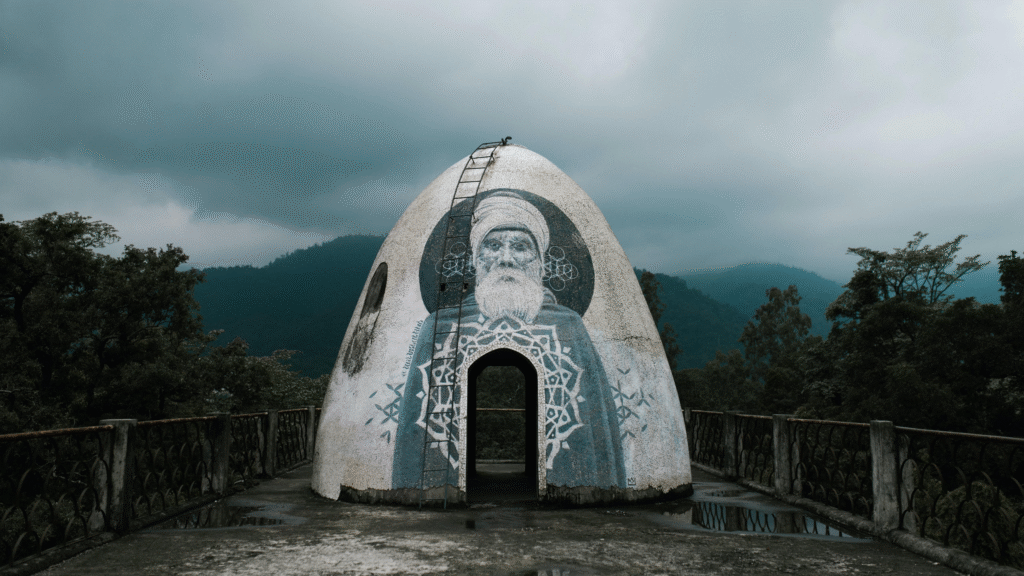
The monsoon light actually made the place look better.
The concrete walls were darker, colours from the graffiti appeared more saturated, and moss had started spreading across sections of the old structures.
It felt atmospheric rather than touristy.
If you’re visiting Rishikesh in July and looking for things to do when rafting isn’t available, this is one place I’d keep on the list.
The Waterfall Trek I Almost Skipped
Sunday morning brought another decision.
Go back to sleep or go hiking?
A fellow guest convinced me to walk toward Neer Garh Waterfall, a popular waterfall near Tapovan.
The sky looked like it could open at any moment.
I nearly stayed behind.
Instead, we went.
The trail was muddy and slippery in places, and the rocks required more attention than they probably would during the dry season. We had been warned about leeches too.
They weren’t kidding.
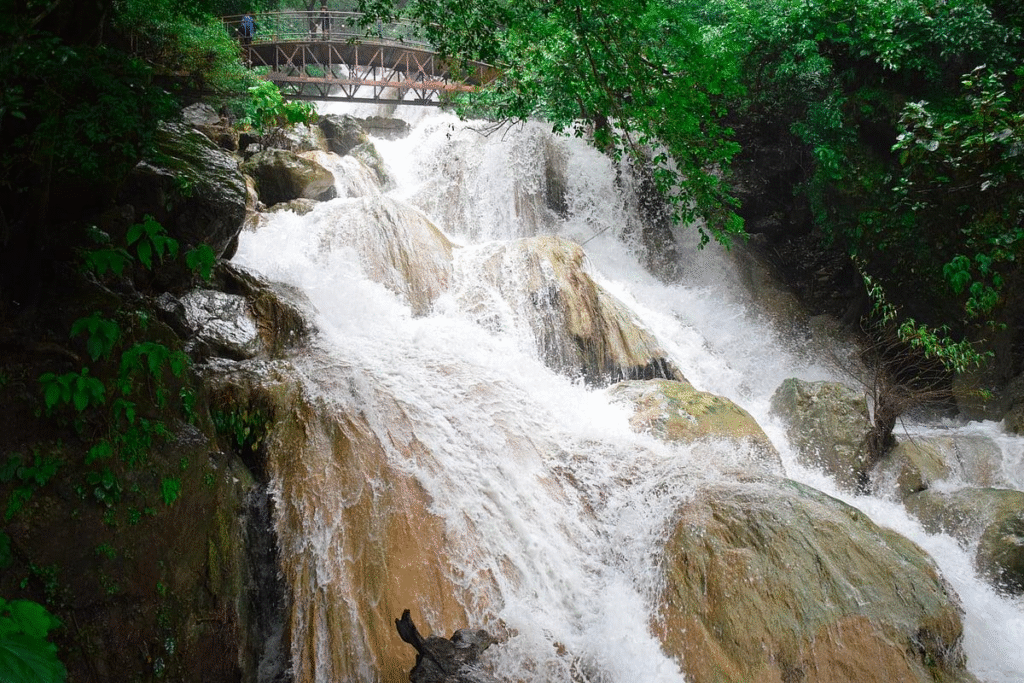
The waterfall itself, however, was impressive.
Monsoon rains had given it considerably more volume, and the sound of water echoing through the surrounding greenery made the entire hike worthwhile.
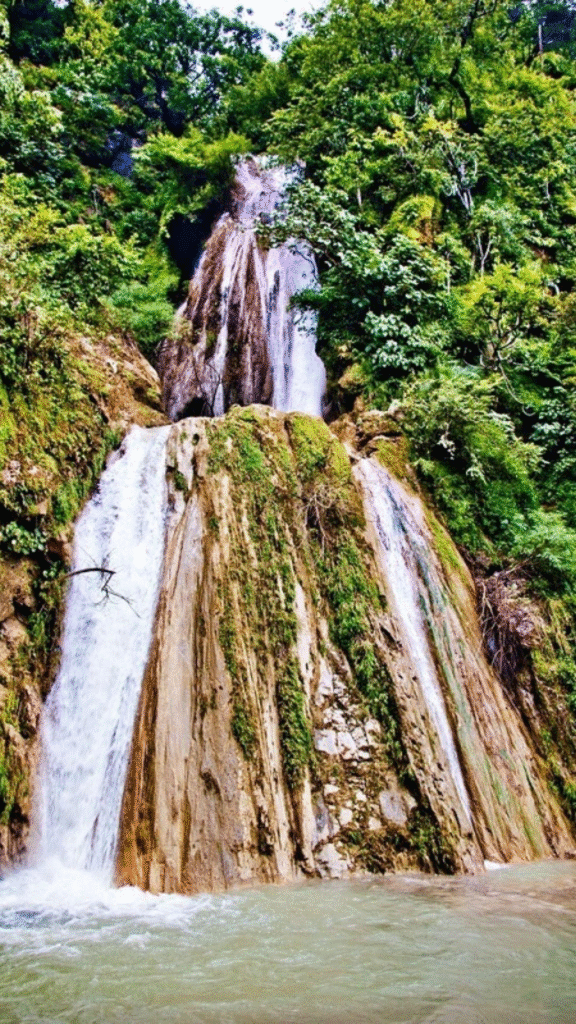
This is one of those experiences where the season changes the attraction itself.
The trail is harder.
The weather is unpredictable.
But the waterfall is at its most dramatic.
If you’re planning monsoon trekking in Rishikesh, proper footwear, rain protection, and checking local trail conditions should be non-negotiable.
What a Budget Rishikesh Trip Actually Cost Me
One of the pleasant surprises was how affordable the weekend turned out to be.
Because I travelled during the monsoon, accommodation was considerably cheaper than the busier October-to-March period.
My approximate expenses were:
| Expense | Approximate Cost |
|---|---|
| Guesthouse near Tapovan | ₹800/night |
| Food and chai | Under ₹600/day |
| Local transport | Around ₹300 total |
| Temple/ashram entries and donations | Around ₹150 |
| Delhi–Rishikesh bus | Varies by operator |
These are personal trip costs rather than fixed prices, so expect rates to vary depending on where you stay, when you travel, and how you get around.
For someone looking for a budget Rishikesh trip, monsoon can be attractive because accommodation and some travel experiences may be cheaper than during the peak season.
What Surprised Me Most About Rishikesh in Monsoon
A few things caught me completely off guard.
The river changes dramatically
The Ganga doesn’t look like the calm, blue-green river seen in many travel photographs. During heavy rainfall, it can become fast, powerful, and muddy.
The crowds disappear
Popular attractions can feel surprisingly peaceful when persistent rain keeps casual tourists away.
The mountains feel closer
Mist settles across the surrounding hills and creates a completely different atmosphere from the bright winter views.
The heat doesn’t disappear
I expected monsoon to mean cool weather.
It doesn’t necessarily.
Humidity can make walking uncomfortable, and breaks in the rain can quickly become warm.
Adventure activities aren’t guaranteed
If your main reason for visiting is rafting, monsoon is the wrong season to build your trip around it.
What I Would Do Differently Next Time
If I returned to Rishikesh, I’d give myself at least four or five days instead of a rushed weekend.
I’d also spend more time exploring beyond the usual attractions.
Wadi-style hikes, waterfalls, yoga sessions, cafés around Tapovan, and quieter stretches of the Ganga would all make the list.
I’d also check road conditions immediately before leaving Delhi.
That’s something I didn’t take seriously enough.
And I’d pack better.
My monsoon essentials would include:
- A proper lightweight rain jacket
- Waterproof footwear with good grip
- A dry bag for electronics
- Extra socks
- Quick-drying clothes
- Mosquito and insect protection
- A small first-aid kit
- Power bank
- Reusable water bottle
- Plastic or waterproof bags for wet clothes
Most importantly, I’d leave room in the itinerary for delays.
That’s probably the biggest lesson from travelling to Rishikesh during the rainy season.
Is Rishikesh Safe During Monsoon?
This is one of the most important questions to consider before planning a Rishikesh monsoon trip.
Rishikesh itself remains a popular destination during the rainy season, but monsoon conditions can create risks that aren’t as significant during the dry months.
Heavy rain can lead to:
- Landslides on mountain roads
- Sudden changes in river levels
- Slippery hiking trails
- Temporary road closures
- Delays in transport
- Strong river currents
- Waterlogged sections of roads and trails
The safest approach is to check local weather and road conditions before travelling, avoid entering restricted river areas, and don’t attempt hikes or water activities when conditions are poor.
The river is beautiful.
During monsoon, it also deserves respect.
What About Rafting in Rishikesh During the Rainy Season?
If rafting is the main reason for your trip, don’t plan your visit around the monsoon.
Commercial rafting operations generally pause during the rainy season because increased river flow and unpredictable conditions make recreational rafting unsuitable.
The popular rafting season generally returns after the monsoon, subject to local conditions and operator availability.
So if your dream Rishikesh itinerary includes rafting through Shivpuri and the famous rapids, plan outside the core monsoon period.
Is Rishikesh Worth Visiting in July?
Yes — but only if you want the right version of Rishikesh.
If you’re looking for rafting, bright skies, comfortable hikes, and the classic postcard version of the city, July isn’t ideal.
But if you enjoy:
- Fewer tourists
- Lower accommodation prices
- Lush green landscapes
- Dramatic waterfalls
- Misty mountain scenery
- Quieter ghats
- A slower travel experience
then Rishikesh in July can be surprisingly rewarding.
You just need to accept that the weather becomes part of the trip rather than something happening in the background.
A Simple Weekend Rishikesh Monsoon Itinerary
Day 1 — Arrive and Explore
Arrive from Delhi and check into your accommodation around Tapovan.
Spend the afternoon exploring the local cafés and nearby streets.
In the evening, head toward Triveni Ghat for the Ganga aarti.
Keep your evening flexible because heavy rain can affect travel times.
Day 2 — Culture and Riverside Walks
Start early with a walk around the quieter parts of Rishikesh.
Visit the Beatles Ashram before the busiest part of the day.
Explore Ram Jhula and the surrounding markets.
In the evening, return to the riverfront and experience Rishikesh at a slower pace.
Day 3 — Waterfall and Departure
If weather and trail conditions are suitable, visit Neer Garh Waterfall in the morning.
Return to Tapovan for lunch before checking out.
Keep enough time for the journey back to Delhi because monsoon traffic and road conditions can cause unexpected delays.
Frequently Asked Questions
Is Rishikesh safe during monsoon?
Rishikesh can be visited during monsoon, but travellers should monitor weather and road conditions, avoid restricted river areas, and exercise extra caution on hiking trails and mountain roads.
Is rafting open in Rishikesh during the rainy season?
Commercial rafting generally closes during the main monsoon period because river conditions become unsuitable for recreational rafting. Always check with local operators before travelling.
What is the best time to visit Rishikesh for fewer crowds?
The monsoon period can bring significantly fewer tourists, although the trade-off is heavier rain, potentially difficult road conditions, and the closure of some adventure activities.
What are the best things to do in Rishikesh during monsoon?
Good options include visiting the Beatles Ashram, attending the Ganga aarti, exploring Tapovan, visiting temples and ashrams, enjoying cafés, and taking carefully planned waterfall walks when local conditions are safe.
What should I pack for a Rishikesh monsoon trip?
Pack a waterproof jacket, quick-drying clothes, shoes with good grip, extra socks, waterproof bags for electronics, insect protection, and a power bank.
Can I visit Rishikesh in July?
Yes. July can be a good choice for travellers who enjoy greenery, rain, quieter attractions, and lower accommodation rates. However, rafting is generally unavailable and outdoor activities depend heavily on weather conditions.
So, Was My Rishikesh Monsoon Trip Worth It?
Absolutely.
I went expecting the Rishikesh from the postcards — blue skies, whitewater rafting, crowded ghats, and bright sunshine.
Instead, I got rain.
I got a brown, swollen Ganga.
I got quiet bridges.
I got an almost-empty Beatles Ashram.
I got a waterfall at its loudest.
And I got a version of Rishikesh that felt slower and more atmospheric than anything I’d seen online.
Would I recommend Rishikesh during monsoon season to everyone?
No.
If your entire trip depends on rafting and adventure sports, wait for another season.
But if you like quiet mornings, misty hills, cheaper stays, green landscapes and the possibility of having famous places almost to yourself, don’t dismiss the rainy season.
Just check the road conditions before you leave, respect the river, pack for wet weather, and don’t expect the Rishikesh you saw on Instagram.
The monsoon has its own version of the city.
And honestly, I liked it more than I expected.
Internal Links
- The Rise of Do-Less Travel
- Munnar, India: Why This Lush Hill Station Is Becoming One of India’s Hottest Monsoon Escapes in 2026
- The Hidden Mental Health Benefits of Travel
- The Future of Sustainable Travel: How to Explore Without Leaving a Trace
- Experience-Led Travel 2026: Okinawa, Marrakech, Swiss Alps
- Hidden Gems: Why Offbeat Travel Creates the Best Memories
- Traveling Through the Seasons: Why Every Time of Year Offers a Unique Adventure