

The bus rolled into Ujjain a little past six in the evening, and the air still smelled of wet earth.
The monsoon had only just pulled back from Madhya Pradesh. Washed rooftops, puddles catching the last orange light, and a breeze that didn’t seem to be in a hurry gave the town a freshness that lasts only for a short part of the year.
I hadn’t planned the timing on purpose.
It simply worked out that way, and looking back, I don’t think I could have picked a better window to see Ujjain.
Unlike some tourist towns, Ujjain doesn’t announce itself when you arrive. There is no grand gate or enormous billboard welcoming you in five different languages.
Instead, the signs are quieter.
Temple bells begin getting louder.
Cows become increasingly comfortable in the middle of the road.
Old buildings lean into one another along narrow streets, almost as though they’ve been standing beside each other for centuries.
That’s how I knew I had arrived.
Why Ujjain, and Why After the Monsoon?
I’d wanted to visit Ujjain for years, mostly because of Mahakaleshwar.
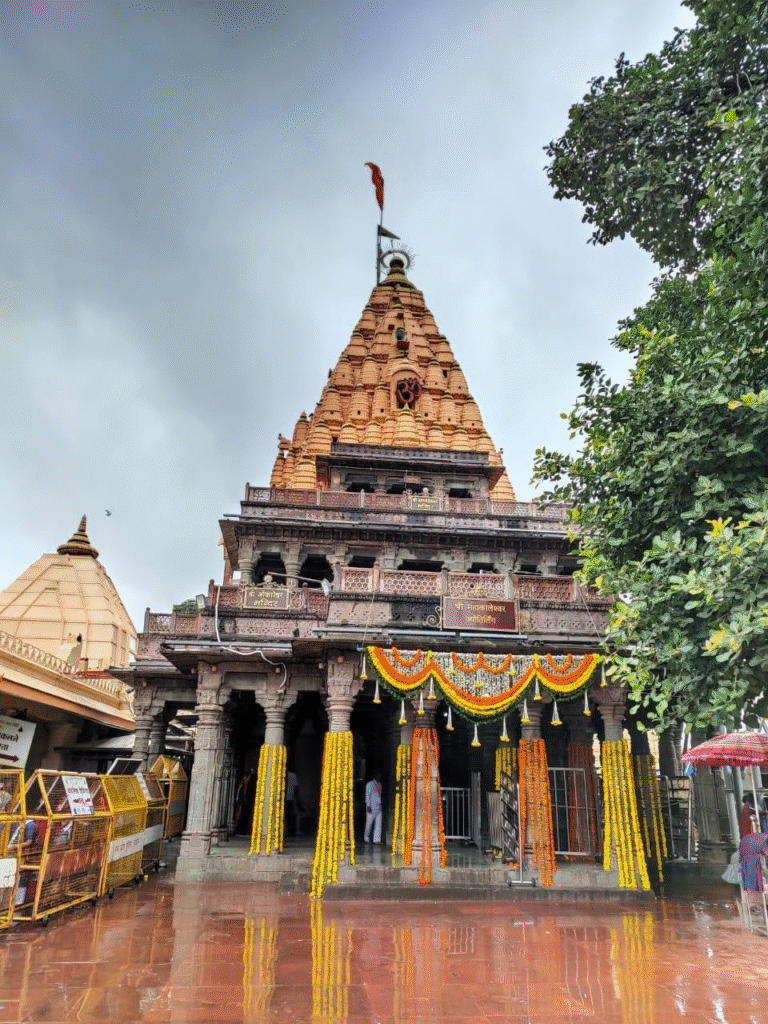
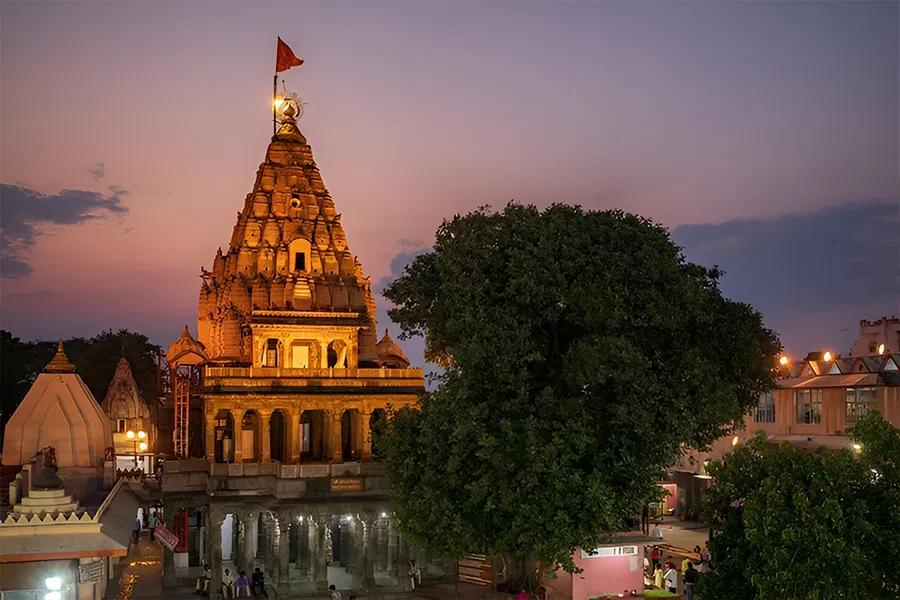
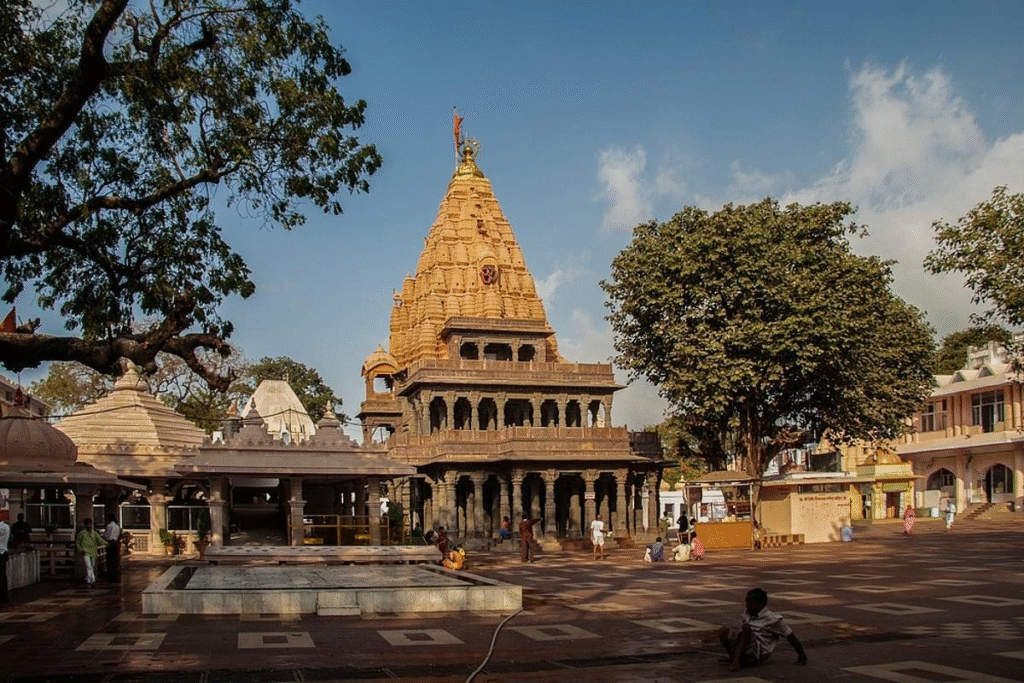
The Mahakaleshwar Jyotirlinga is one of India’s twelve Jyotirlingas dedicated to Lord Shiva. The temple is also known for its south-facing form of Mahakal and the famous Bhasma Aarti performed before sunrise.
Yet my reason for choosing the post-monsoon season was much simpler.
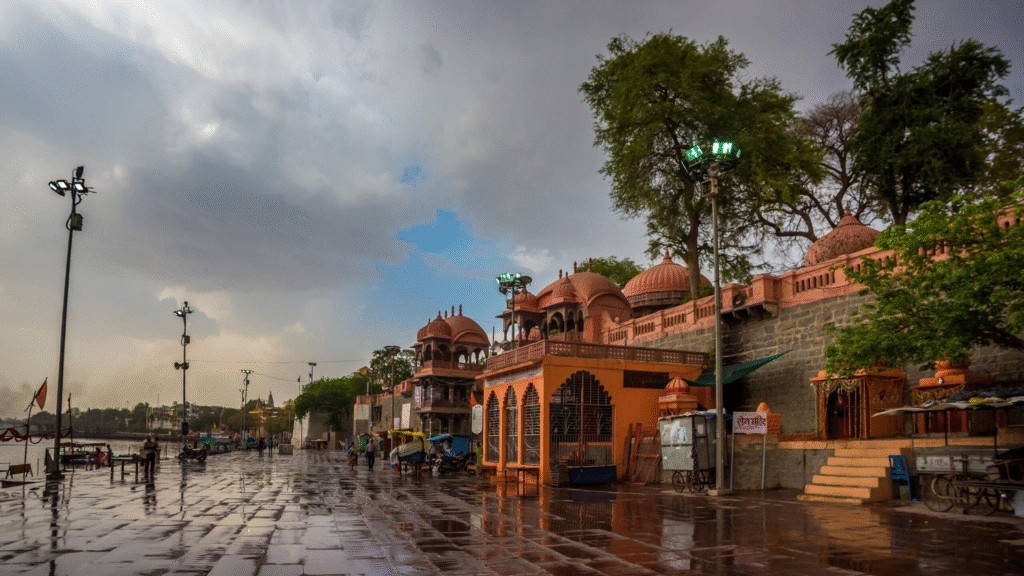
I wanted to see the Shipra River with some water in it.
I also wanted to experience Ujjain after the worst of the summer heat had passed.
Madhya Pradesh can become intensely hot during the summer months. By late September and October, conditions are generally more comfortable, while the landscape still carries traces of the rainy season.
For me, that combination made the city particularly atmospheric.
The ghats looked freshly washed.
The river had regained some of its monsoon volume.
Even the old streets seemed to move at a gentler pace.
The Ancient Temples of Ujjain
Mahakaleshwar Temple was the obvious starting point, and it deserved the attention.
I went for the Bhasma Aarti, which takes place before sunrise. Getting up around 3 a.m. after a long travel day was not something I was particularly excited about.
Once I entered the temple, however, the tiredness became less important.
The lamps cast moving shadows across the stone.
Priests performed the ritual with intense focus.
Inside that ancient space, the experience felt much larger than the physical surroundings.
There was a weight to the moment that had little to do with size or architecture.
Mahakaleshwar Temple and Bhasma Aarti
The Bhasma Aarti is one of the experiences most closely associated with Ujjain.
Advance booking is required, and availability can become especially limited around major festivals.
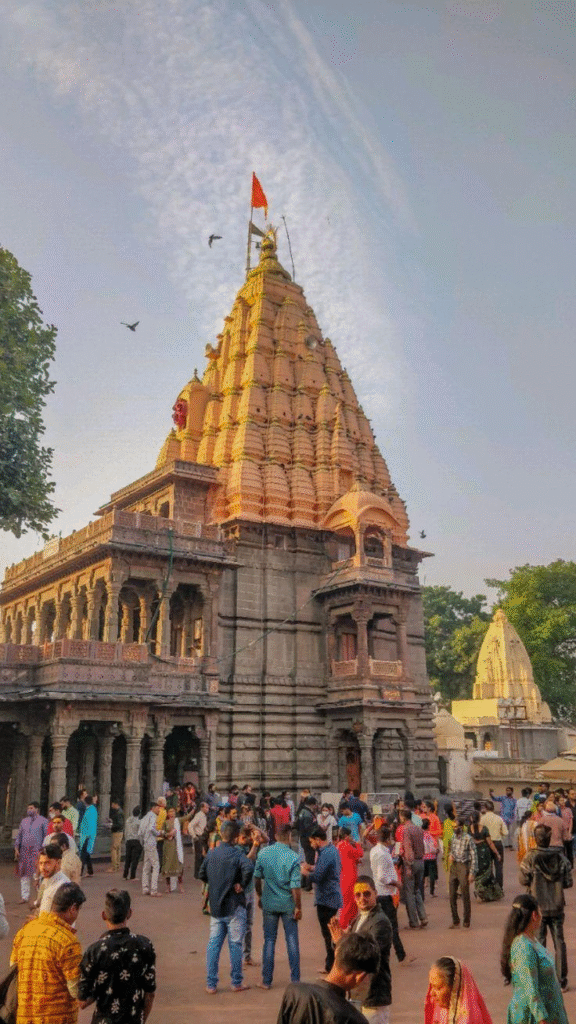
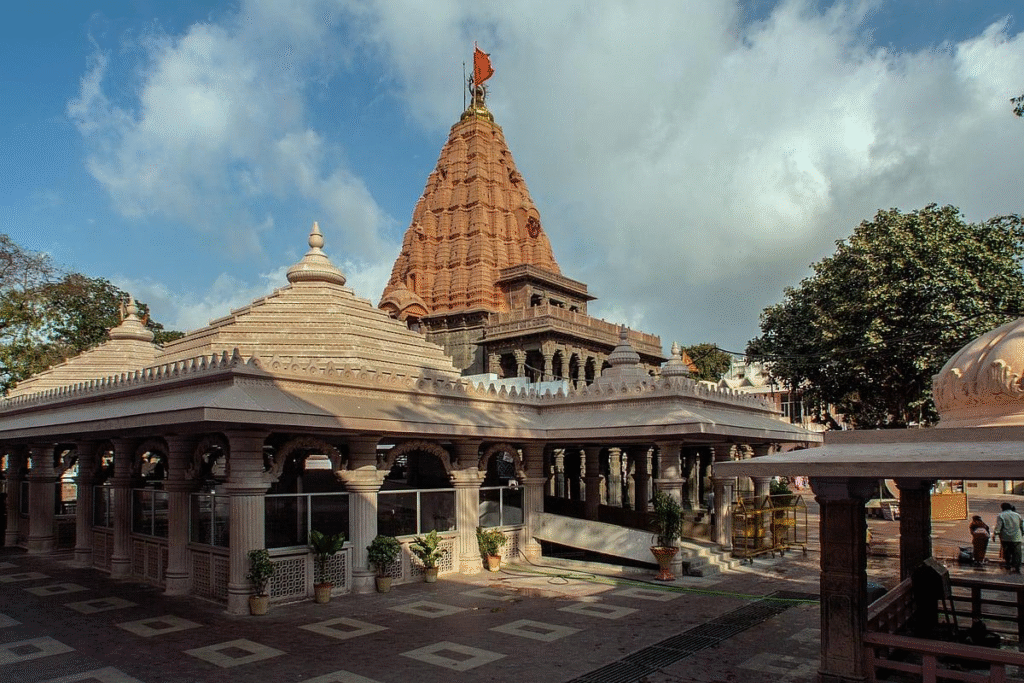
Anyone planning to attend should check the latest official booking rules, timings and entry requirements before travelling.
Photography restrictions also apply in parts of the temple, so it is better to ask rather than assume.
For me, the early start was worth it.
The city outside was still waking up when I finished.
Ujjain’s spiritual rhythm, however, had already begun.
Kal Bhairav Temple
From Mahakaleshwar, I continued to Kal Bhairav Temple.
The temple has a ritual that immediately stands out to visitors.
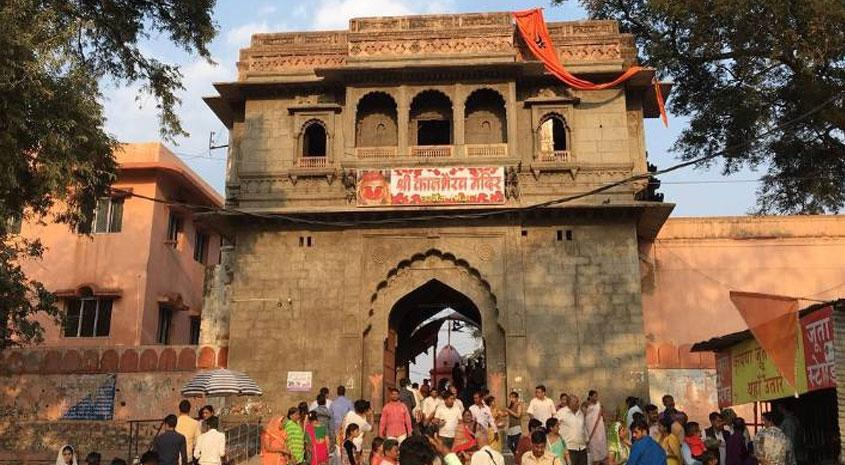
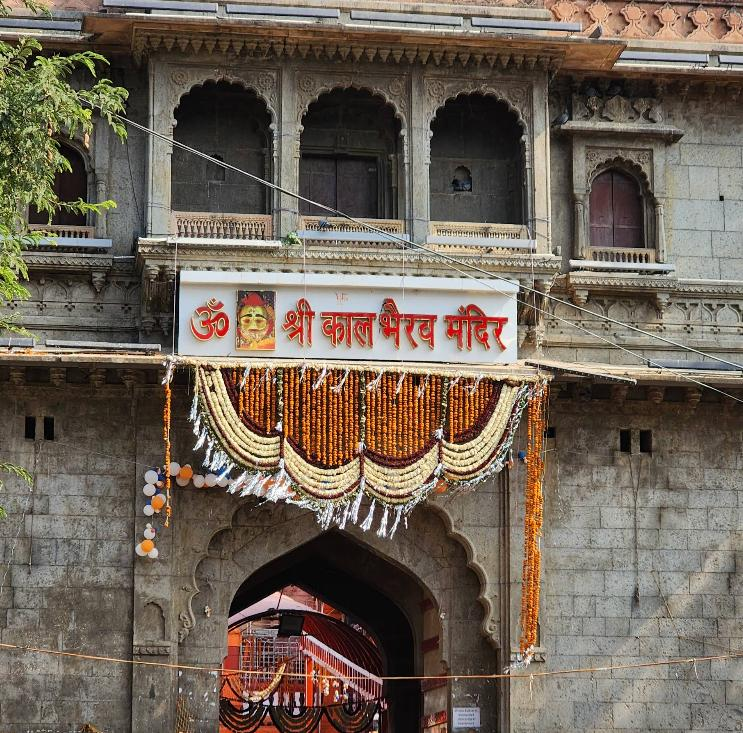
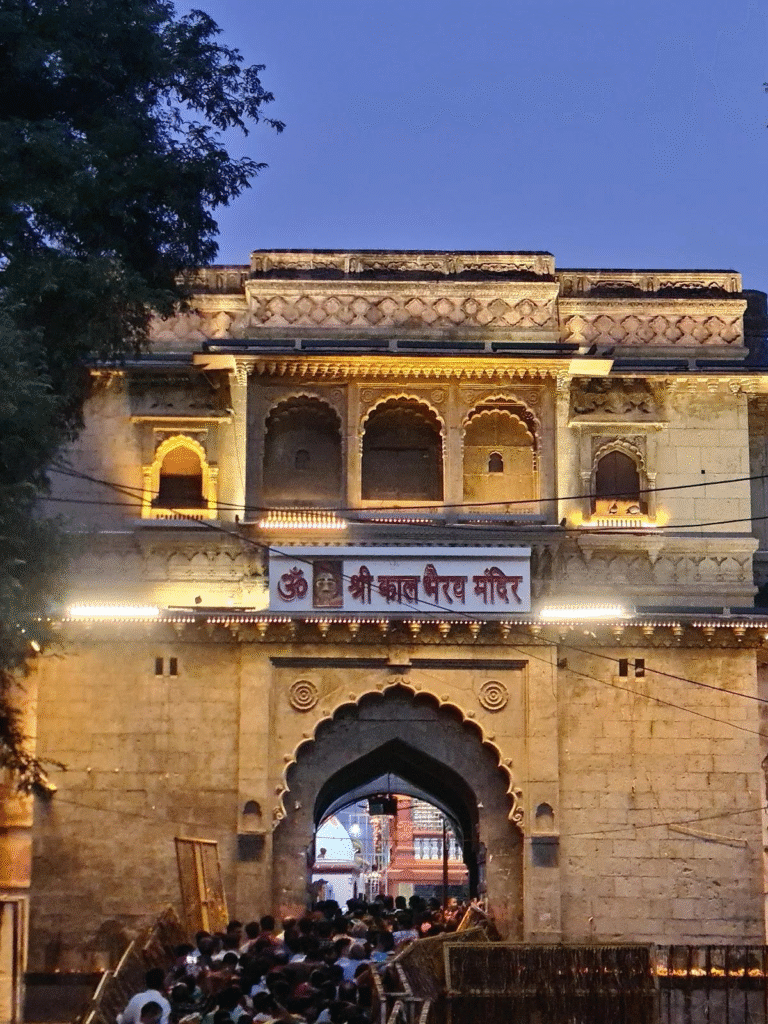
Devotees offer liquor to the deity, and the priest performs the offering as part of the temple’s distinctive tradition.
I watched the ritual with the same curiosity as everyone around me.
Nobody seemed particularly interested in explaining away the mystery.
Perhaps that was part of its charm.
Some traditions are simply experienced rather than reduced to a neat explanation.
Harsiddhi Temple
Harsiddhi Temple sits closer to the Shipra River and has a different atmosphere from Mahakaleshwar.
Its tall lamp pillars are particularly striking when illuminated during festivals.
The crowds also felt lighter during my visit.
That gave me an opportunity to sit on the steps for a while and watch people arrive, pray and leave.
I liked the temple precisely because nothing demanded my attention.
Gopal Mandir and Chintaman Ganesh Temple
Gopal Mandir sits within the old market area and is known for its silver-plated doors.
The location makes it easy to combine the temple with a walk through Ujjain’s older streets.
Chintaman Ganesh Temple offers another important stop for pilgrims and visitors interested in the city’s religious heritage.
None of these places felt particularly distant from one another.
That is one of Ujjain’s advantages.
You can build a packed itinerary if you want to, but the city also rewards simply walking from one temple to the next.
The Shipra River, Swollen and Slow
The Shipra isn’t an enormous river.
After the monsoon, though, it carries a fullness that changes the atmosphere around the ghats.
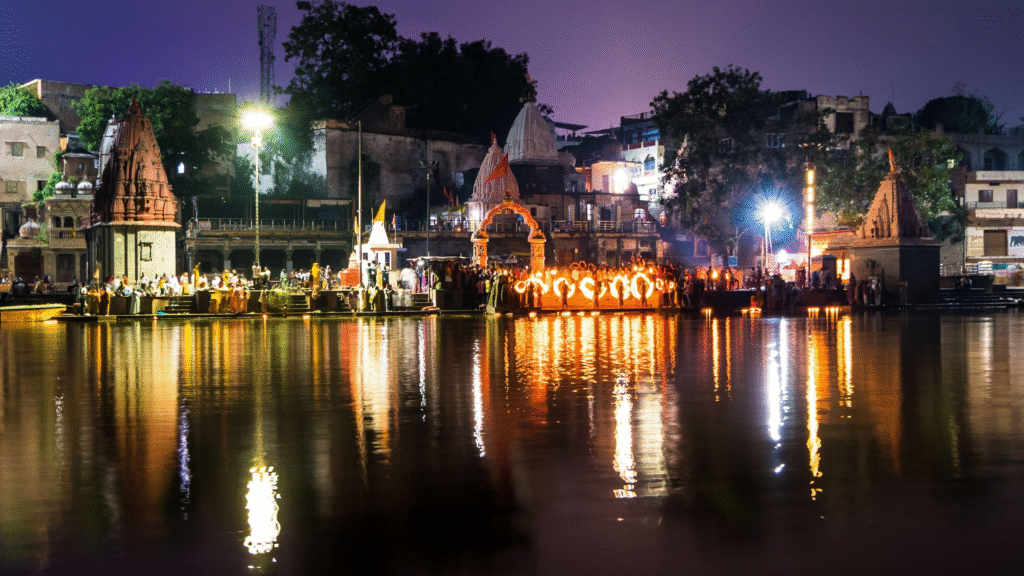
I spent a long while at Ram Ghat during my first afternoon.
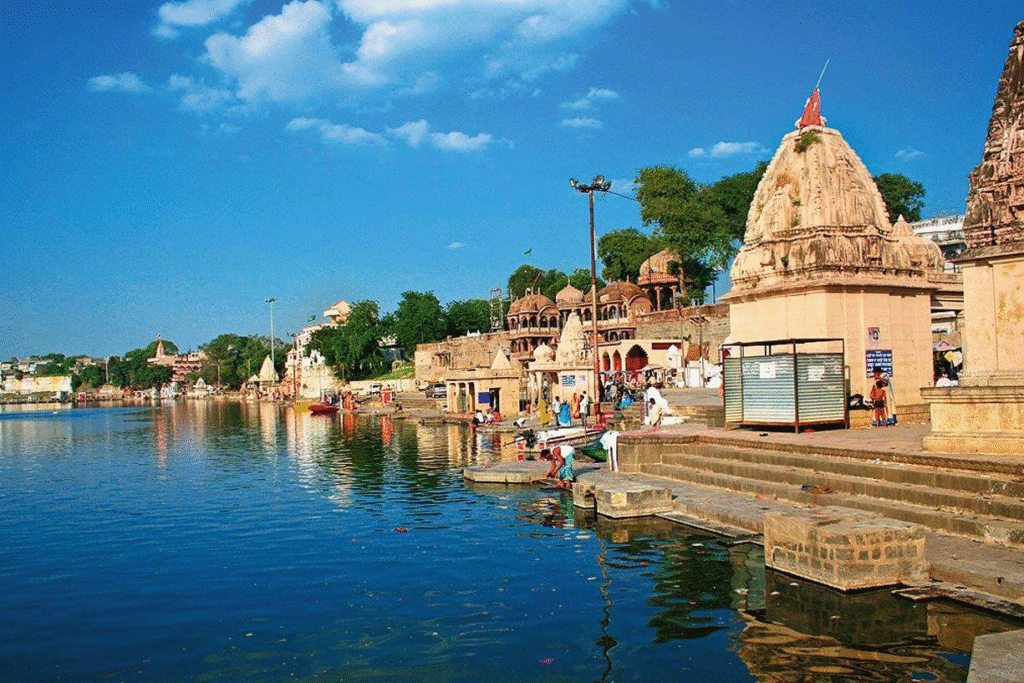
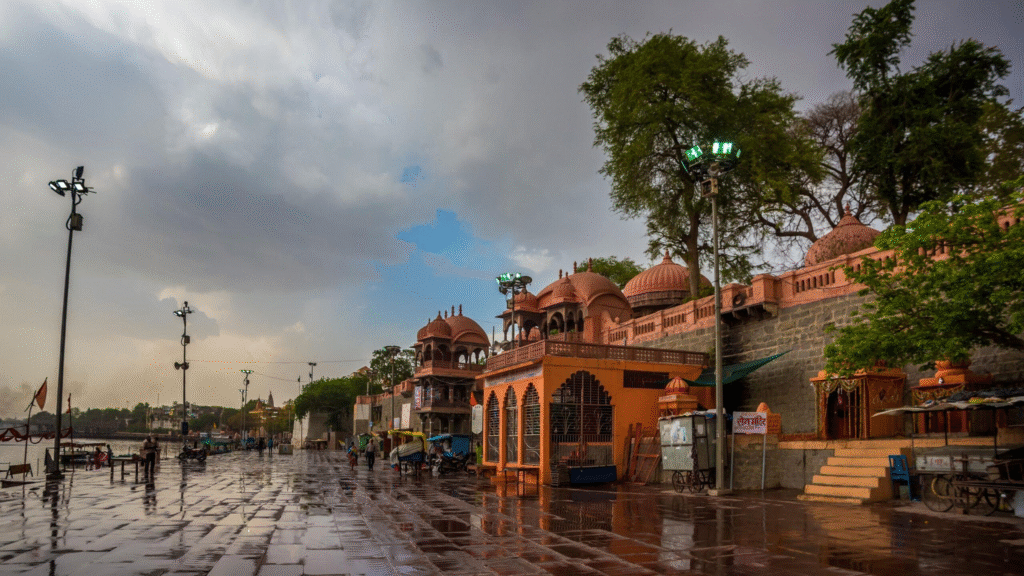
Boatmen moved pilgrims across the water.
Children tried skipping stones.
An old man sat nearby feeding pieces of roti to a stray dog without looking up from his phone.
Nothing particularly dramatic was happening.
That was exactly what made the moment memorable.
The Shipra is deeply connected with Ujjain’s religious identity. The city’s ghats host ritual bathing, prayers, lamps and other religious activities throughout the year.
Ujjain is also one of the four traditional cities associated with the Kumbh Mela. Its festival, known as Simhastha, takes place on the Shipra once every twelve years and brings enormous numbers of pilgrims to the city.
Outside those massive gatherings, the river continues to carry a quieter rhythm.
Morning baths happen beside the ghats.
Small lamps are set afloat.
Offerings are made.
People sit and talk.
The water wasn’t pristine, and I wouldn’t pretend otherwise.
Yet watching the brown river move after the rains, carrying marigolds and fragments of diyas, felt more honest than a perfectly polished postcard image ever could.
Evening Aarti at the Ghats
If Mahakaleshwar gave me the morning, the Shipra gave me the evening.
The evening aarti at Ram Ghat begins as daylight starts fading.
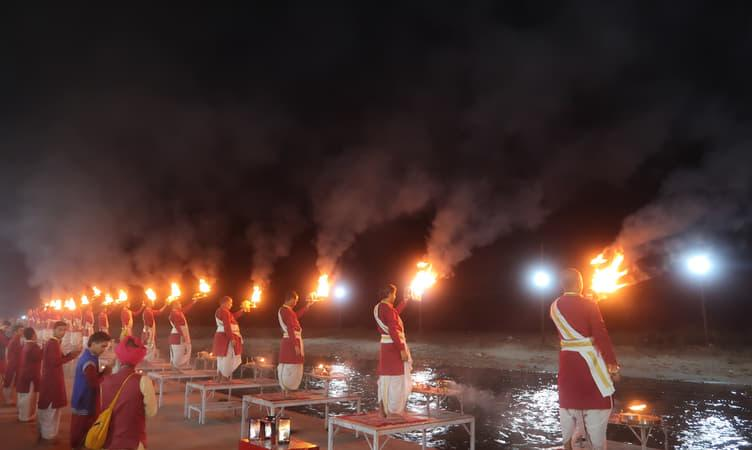
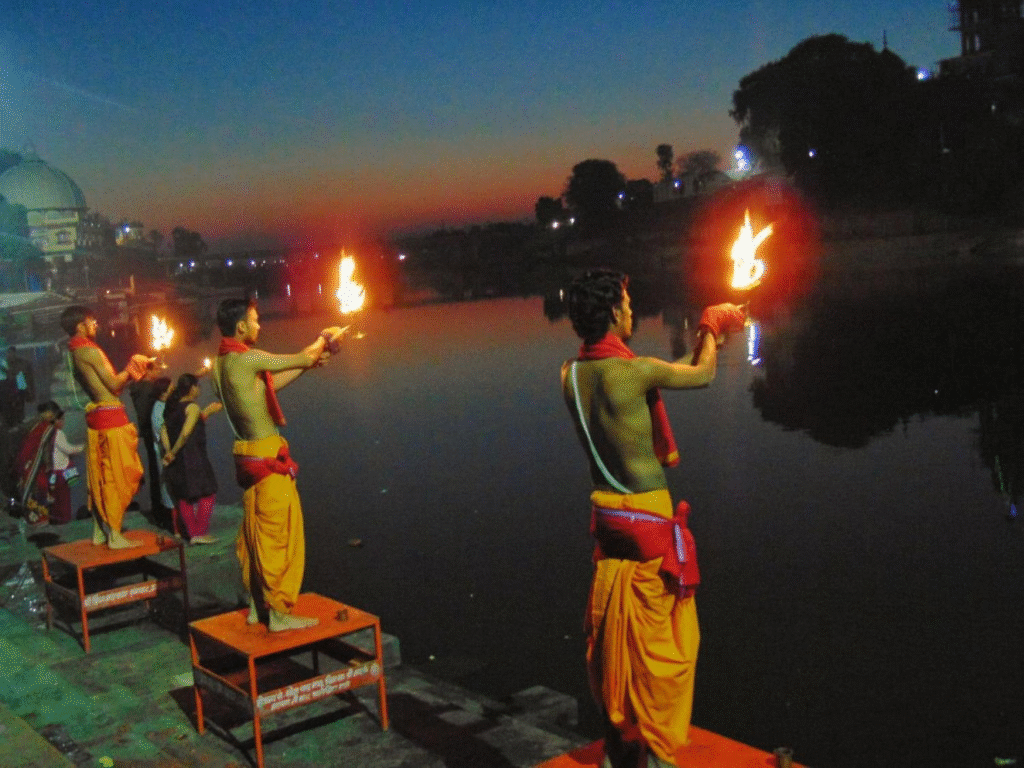
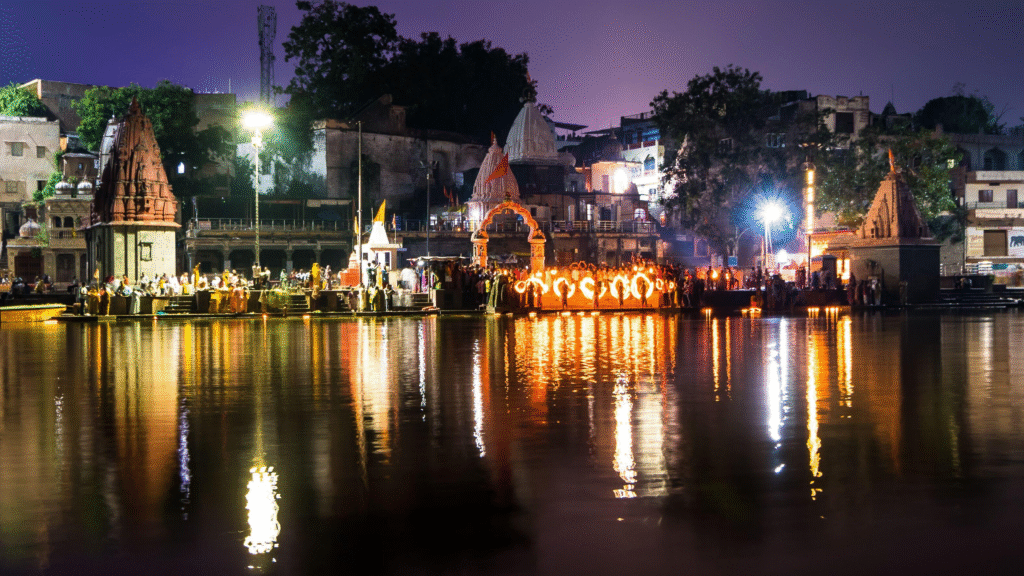
By the time the priests lift the large brass lamps, people have gathered several rows deep along the steps.
Then the atmosphere changes.
Bells begin ringing.
Chanting builds.
Flames rise together from the lamps.
The reflections move across the river as the ceremony continues.
I’ve seen aartis in other Indian river towns, and every place has its own character.
Ujjain’s felt intimate despite the crowd.
Plenty of phones were raised, but the ceremony itself didn’t feel designed around photography.
Instead, it felt like something the city simply does.
Every evening.
Every season.
With or without visitors.
I stayed until the last lamps disappeared into the darkness of the river.
That image stayed with me long after I left the ghat.
Wandering the Old City Streets
The next morning, I put my map away.
Ujjain’s old city seemed better suited to wandering than navigation.
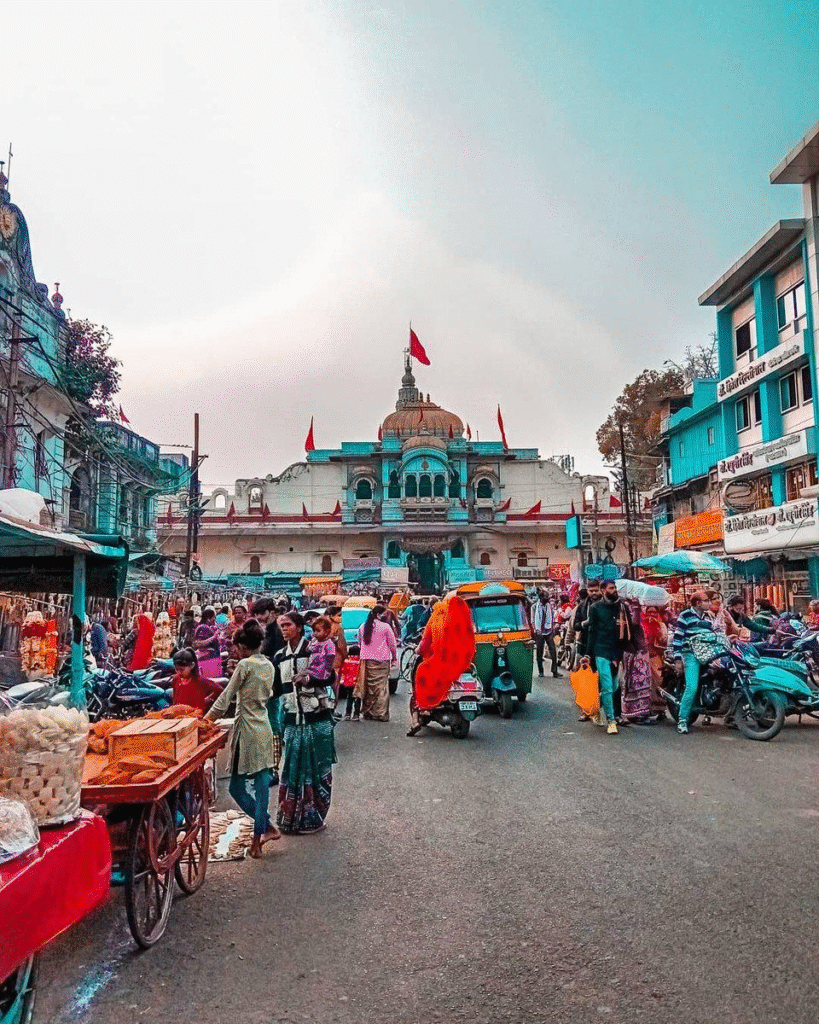
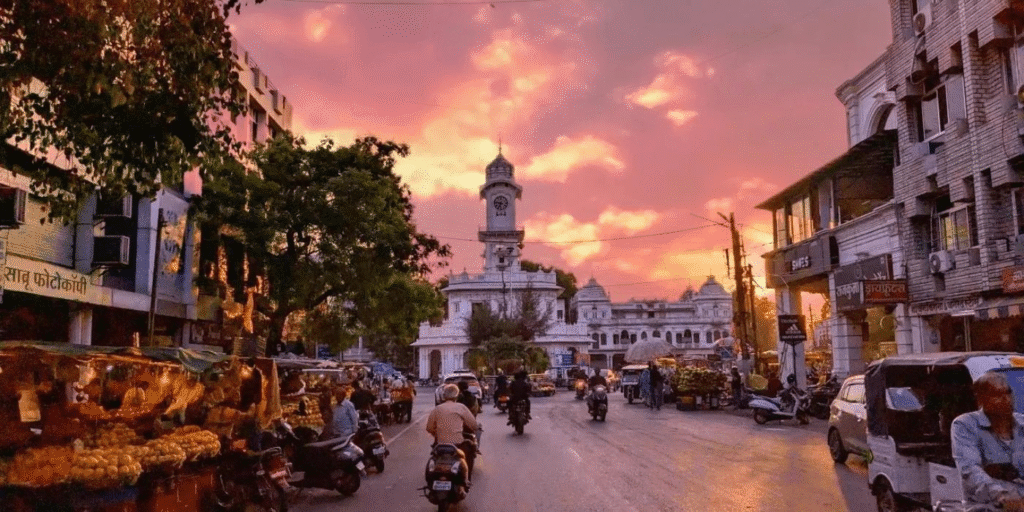
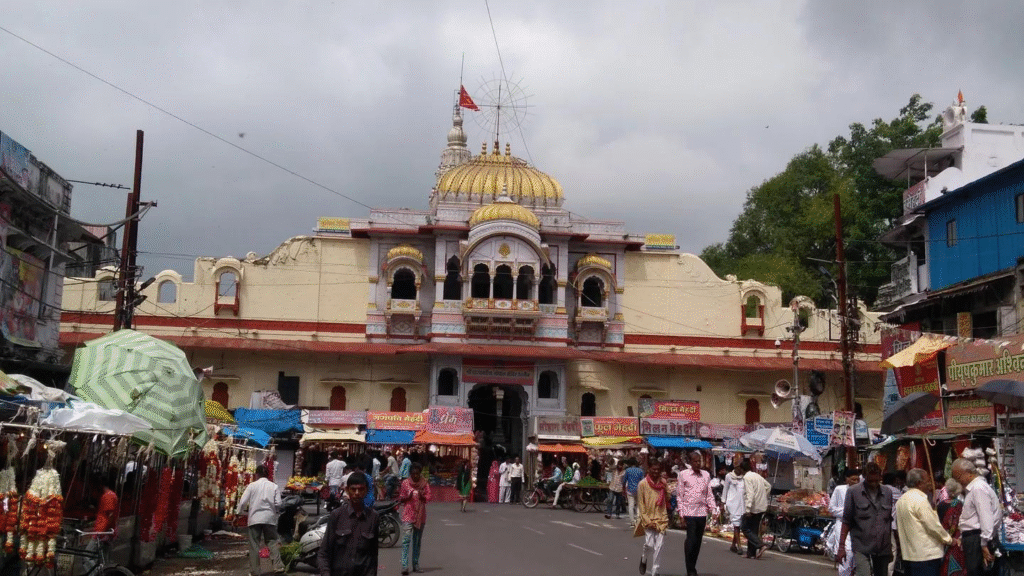
Narrow lanes opened suddenly into small squares.
Shopfronts displayed brass idols, religious items, clothing and everyday household goods.
Jalebis were being fried fresh at roadside stalls.
Incense filled the air around small shops.
At one point, I stepped into a store selling almost nothing except incense.
Twenty minutes later, I walked out having learned more about sandalwood than I expected to learn on a holiday.
The traffic has its own rhythm too.
Cows occupy the roads with complete confidence.
Scooters weave around them.
Pedestrians squeeze through gaps.
Nobody seems particularly surprised by any of it.
Sarafa Bazaar Ujjain
Later, I made my way toward Sarafa Bazaar.
During the day, the area functions primarily as a jewellery market.
After the shops close, the atmosphere changes as food stalls begin appearing.
That evening, I ended up eating much more than I had planned.
There was poha.
There was a stuffed local bread dish whose exact name I still couldn’t confidently pronounce.
A shopkeeper also insisted that I try hot milk flavoured with saffron before allowing me to leave.
The food wasn’t the only memorable part.
What struck me was how ordinary the whole experience felt.
The old city hadn’t reinvented itself around visitors.
Its daily rhythm seemed to continue regardless of who was walking through the lanes.
Getting to Ujjain
Ujjain is well connected to other major cities in Madhya Pradesh and India.
The nearest major airport is Devi Ahilyabai Holkar Airport in Indore, which provides the most convenient air connection for many travellers.
From Indore, Ujjain can be reached by road or train.
Ujjain Junction is also an important railway station, with connections to several major Indian cities.
That makes rail travel particularly convenient if you are already travelling through central or northern India.
Road connections are available from Indore, Bhopal and other cities across Madhya Pradesh.
Getting Around Ujjain
Once you’re in the city, getting around is relatively straightforward.
Several major temples and ghats are close enough to combine into walking routes.
Auto-rickshaws are useful when distances become longer or the afternoon heat becomes uncomfortable.
For the old city, however, walking is the better option.
Cars and larger vehicles can become awkward in the narrow lanes.
More importantly, walking lets you notice the details that disappear from a vehicle window.
A small shrine.
A sweets shop.
An old doorway.
A flower seller preparing offerings.
Those little details became part of my Ujjain experience.
Best Time to Visit Ujjain After the Monsoon
For the experience I wanted, late September through October worked particularly well.
The monsoon had started retreating.
The river still had some post-rain fullness.
Temperatures were more manageable than during summer.
Winter can also be pleasant, especially from November through February.
Festival dates are another consideration.
Major religious occasions can dramatically change the number of visitors, accommodation availability and traffic conditions.
Travellers who prefer a quieter experience should check the festival calendar before choosing exact dates.
A Few Practical Notes Before Visiting Ujjain
Book Bhasma Aarti in Advance
The Bhasma Aarti at Mahakaleshwar requires advance arrangements.
Availability can become particularly competitive around major festivals.
Check the latest official temple information before your trip.
Dress Modestly
Ujjain is a major pilgrimage destination.
Modest clothing is appropriate at all temples, while certain temple areas may have additional dress requirements.
Carry Cash
Digital payments are increasingly common, but cash remains useful for smaller shops, street food stalls, flower sellers and local transport.
Ask Before Photographing
Photography rules differ between locations.
Some temple interiors and sanctum areas have restrictions.
Following the instructions of temple staff is the safest approach.
Expect Festival Crowds
Ujjain can become exceptionally busy during major religious festivals.
If your goal is a relaxed post-monsoon trip, ordinary weekdays outside major festival periods may be more comfortable.
Things to Do in Ujjain in 2 to 3 Days
Two to three days gives you enough time to experience the major temples, ghats and old-city atmosphere without rushing.
Day 1: Mahakaleshwar and the Old City
- Attend the Bhasma Aarti if you have secured the required booking
- Visit Mahakaleshwar Temple
- Explore Kal Bhairav Temple
- Walk through the old city
- Visit Gopal Mandir
- Explore local markets
Day 2: Shipra River and Temples
- Visit Harsiddhi Temple
- Spend time around Ram Ghat
- Explore Chintaman Ganesh Temple
- Walk through local markets
- Return to Ram Ghat for the evening aarti
- Try local food after sunset
Day 3: Slow Ujjain
Use the final day at a slower pace.
Revisit the Shipra ghats in the morning.
Explore streets you missed earlier.
Try local breakfast.
Pick up religious handicrafts or souvenirs.
Then leave enough time for your onward journey.
What Is Ujjain Famous For?
Ujjain is particularly known for Mahakaleshwar Jyotirlinga, one of the twelve Jyotirlingas associated with Lord Shiva.
The city is also closely connected with the sacred Shipra River and the Simhastha Kumbh Mela, held there once every twelve years.
Its long religious history has shaped everything from the temple landscape to the markets surrounding the old city.
That heritage is not confined to one monument.
It is visible throughout the city.
How Many Days Are Enough for Ujjain?
For most first-time visitors, two to three days is a practical amount of time.
Two days can cover the major temples, Shipra ghats, evening aarti and old city.
Three days allows you to slow down and revisit places without turning the trip into a checklist.
I would personally choose three if time allows.
Ujjain is more enjoyable when you leave some space between temple visits.
Frequently Asked Questions
What is Ujjain famous for?
Ujjain is best known for Mahakaleshwar Jyotirlinga, one of the twelve Jyotirlingas associated with Lord Shiva. The city is also famous for the sacred Shipra River and the Simhastha Kumbh Mela held every twelve years.
When is the best time to visit Ujjain?
Late September through February is generally a comfortable period for visiting Ujjain. Late September and October can be particularly appealing after the monsoon because the weather becomes more manageable and the Shipra still carries the effects of the rainy season.
How do I reach Ujjain?
Ujjain can be reached by train, road and air via nearby Indore. Indore’s airport is the nearest major airport, while Ujjain Junction provides railway connections to several major Indian cities.
What is the Shipra River known for?
The Shipra is a sacred river associated with Ujjain’s religious traditions. Its ghats host ritual bathing, prayers and aarti ceremonies, while the city hosts the Simhastha Kumbh Mela on its banks once every twelve years.
What is the Bhasma Aarti at Mahakaleshwar?
The Bhasma Aarti is an important pre-dawn ritual performed at Mahakaleshwar Temple. It is one of the temple’s most distinctive ceremonies and requires advance arrangements for visitors.
What is the evening aarti in Ujjain?
The evening aarti at the Shipra ghats, particularly around Ram Ghat, is a daily devotional ceremony involving prayers, bells, chanting and illuminated lamps.
How many days are enough for an Ujjain trip?
Two to three days are generally enough to explore the major temples, Shipra River ghats, old city and local food scene. Three days gives you more time to experience the city without rushing.
Is Ujjain worth visiting after the monsoon?
The post-monsoon period can be particularly atmospheric because the heat has eased, the landscape feels refreshed and the Shipra River can carry more water after the rains. Exact conditions vary each year.
Leaving Ujjain
On my last morning, I went back to Ram Ghat before catching my train.
The river had become quiet again.
A few boats were tied along the edge.
One priest was preparing for the morning rituals.
People were beginning another ordinary day.
For a moment, I didn’t feel as though I had checked a destination off a list.
Instead, it felt like I had briefly stepped into something that had been happening long before I arrived and would continue long after I left.
That is a rare feeling on a trip.
Most destinations eventually become photographs, restaurant names and a collection of places you visited.
Ujjain felt different.
Its temples, river, rituals and old streets seemed to exist on a much slower clock.
The monsoon had passed.
The crowds would eventually change.
My train would leave.
Yet the bells would keep ringing, lamps would continue floating down the Shipra, and the narrow streets would wake up again the following morning.
Perhaps that’s why Ujjain stayed with me.
It didn’t feel like a place I had discovered.
It felt like a place that had simply allowed me to witness it for a few days.
Internal Links
- The Rise of Do-Less Travel
- The Hidden Mental Health Benefits of Travel
- Hidden Gems: Why Offbeat Travel Creates the Best Memories
- Forgotten Kingdoms: Ancient Cities Every History Lover Should Visit
- Traveling Through the Seasons: Why Every Time of Year Offers a Unique Adventure
- The Joy of Getting Lost: Why Unplanned Travel Adventures Are the Most Rewarding
- The Future of Sustainable Travel: How to Explore Without Leaving a Trace