
Ask a traveler what they know about Gaziantep, and the answer will probably involve pistachios and baklava. The city has earned that reputation fairly. UNESCO named Gaziantep a Creative City of Gastronomy in 2015, and its food culture alone is enough reason to visit.
Yet there is far more to Gaziantep than its famous kitchens.
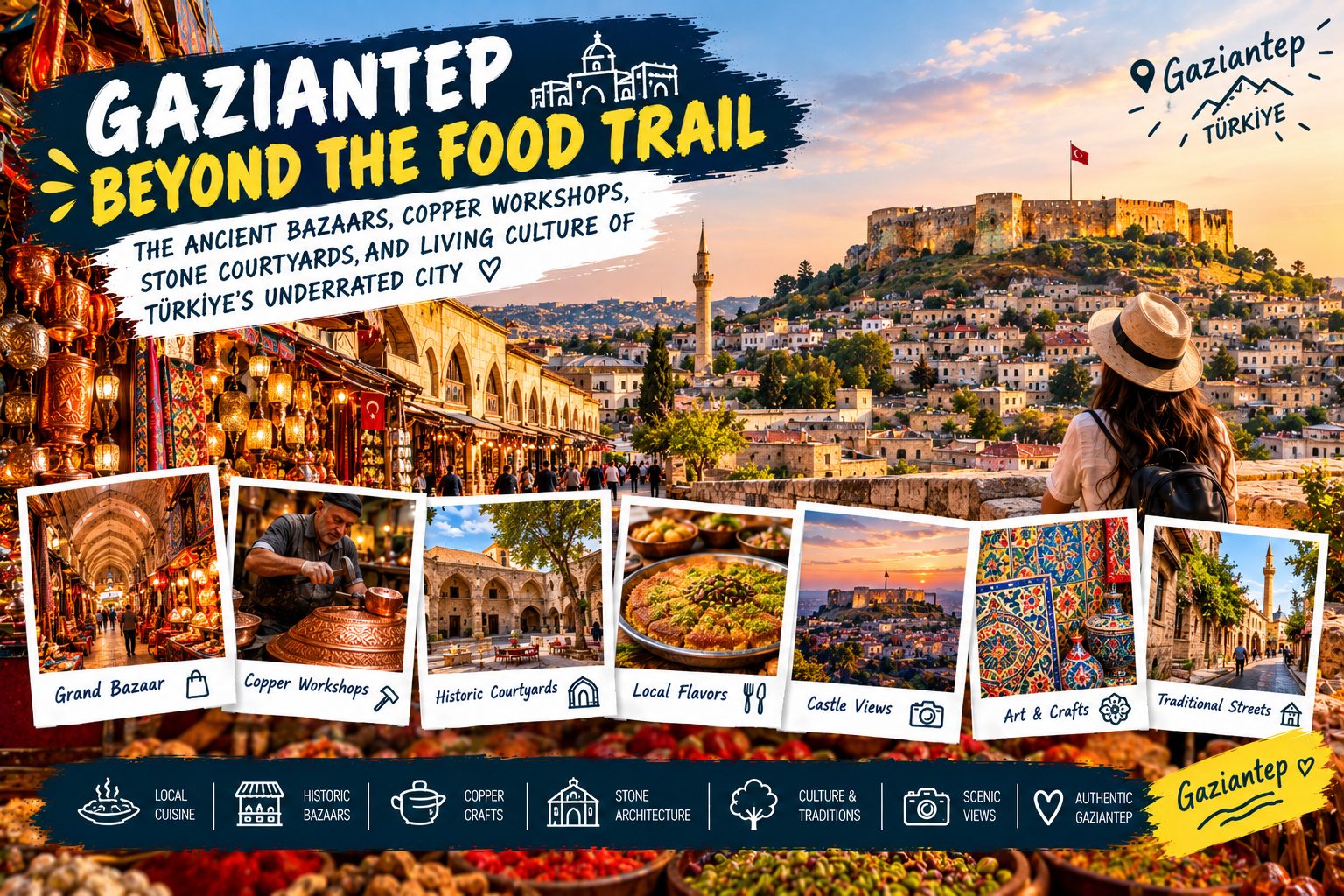
Walk a few streets beyond the baklava shops and another side of the city begins to appear. Ancient bazaars, copper workshops, honey-colored stone houses, shaded courtyards and centuries-old religious buildings reveal a destination shaped by trade, craftsmanship and everyday traditions.
This is southeastern Türkiye’s quiet heavyweight. Located near the Syrian border and close to historic Silk Road routes, Gaziantep has long been a crossroads of commerce and culture. Its old city still feels lived in rather than staged for visitors.
If you want to experience Gaziantep beyond food, slow down and explore the places where its history continues to unfold every day.
Why Visit Gaziantep Beyond Food?
Food remains an important part of any Gaziantep travel experience, but it is only one layer of the city.
The historic center is filled with working markets, traditional workshops and stone architecture. Instead of encountering history only inside museums, visitors can see craftspeople working, merchants trading and families using spaces that have served their communities for generations.
That combination makes Gaziantep especially rewarding for travelers interested in culture and slow travel.
Here, a morning can begin among copper workshops and continue through a historic bedesten. Later, you can wander past old stone houses before ending the day in a courtyard café or beneath the silhouette of Gaziantep Castle.
Explore Gaziantep’s Historic Bazaars
One of the best ways to understand Gaziantep is simply to walk through its old markets.
The historic center is connected by a network of covered bazaars, bedestens and narrow streets. Unlike markets created mainly for tourism, many of these spaces continue to function as places of everyday commerce.
Merchants are still working. Craftspeople are still producing goods. Shoppers still come here for practical items as well as traditional products.
That everyday activity gives the old city its character.
Bakırcılar Çarşısı: Gaziantep’s Copper Bazaar
Bakırcılar Çarşısı, or the coppersmiths’ bazaar, is one of the most atmospheric places to begin exploring the old city.
The experience starts with sound. Hammers strike copper sheets inside small workshops, creating a steady rhythm that has become part of the character of the neighborhood.
Inside the bazaar, traditional copper objects sit alongside tools and finished pieces. Trays, coffee pots and cooking vessels are among the items visitors may see being shaped and decorated.
For travelers interested in traditional craftsmanship, this is more than a shopping stop. It is an opportunity to see an old trade continuing in its original environment.
Zincirli Bedesten
Nearby, Zincirli Bedesten offers another glimpse into Gaziantep’s commercial past.
The covered market is built from the warm-colored limestone commonly associated with the city’s historic architecture. Today, its shops include textiles, antiques, carpets and other traditional goods.
Take your time here rather than simply walking through. Conversations with local sellers can become part of the experience, especially when they explain the history behind a textile, carpet or handmade object.
Kemikli Bedesten and Tahmis Çarşısı
Kemikli Bedesten and Tahmis Çarşısı add further layers to the old-market district.
Tahmis is particularly associated with the historic coffee-roasting tradition. The area is also connected with one of the city’s old coffeehouse traditions, where visitors can experience thick, aromatic coffee in an atmosphere shaped by generations of local life.
Together, these markets show why Gaziantep’s old city is best explored on foot.
Discover Gaziantep’s Copper Workshops
Copper craftsmanship, locally known as bakırcılık, is one of the traditions that gives Gaziantep a distinctive identity.
Inside the old workshops, sheets of copper are shaped, hammered and decorated by hand. The tools may appear simple, but the skill required to transform a flat sheet into a functional object is anything but.
A traditional piece can pass through several stages of work. Craftspeople shape the metal over an anvil, refine its form and add decorative details with chisels. Some vessels are also tinned on the inside to make them suitable for food use.
From Craft to Art
The decorative work is where the craftsmanship becomes especially impressive.
Geometric patterns, floral designs and calligraphic elements can be carefully engraved into the metal. Many artisans learn the techniques through generations of family knowledge, creating a direct connection between today’s workshops and the city’s craft traditions.
Unfortunately, traditional coppersmithing faces the same challenge found in many handmade industries. Younger generations can be drawn toward careers that are less physically demanding and offer more predictable income.
That makes the remaining workshops particularly meaningful.
Buying a handmade copper piece from a local artisan can be more than purchasing a souvenir. It can also support a traditional craft that continues to survive through skilled makers and interested visitors.
Walk Through Gaziantep’s Stone Courtyards
Beyond the markets, Gaziantep reveals another side of its identity through its historic residential architecture.
Traditional houses were built using local limestone, with thick walls that helped create cooler interiors during the hot summer months. Many were organized around central courtyards that provided shade, privacy and a place for everyday family life.
These courtyards were practical spaces rather than decorative features.
Families could cook, work, rest and gather there while remaining protected from the intensity of the street and summer heat.
Avlu, Hayat and Eyvan
Traditional architectural elements add to the character of these houses.
The avlu, or courtyard, formed the central space around which different parts of the home were organized. A hayat could provide a raised open sitting area, while an eyvan was a vaulted, three-sided space opening toward the courtyard.
Together, these features created homes designed around climate, privacy and communal living.
Hasan Süzer Ethnography Museum
One of the best places to appreciate this architecture is the Hasan Süzer Ethnography Museum, located in a restored historic mansion.
The building itself is an important part of the experience. Stone arches, a central courtyard and traditionally arranged rooms offer a glimpse into how an affluent Gaziantep household might once have lived.
Rather than rushing through the exhibits, pay attention to the architecture around you. The building helps explain how local homes responded to both climate and social life.
Kurtuluş Mahallesi
A walk through Kurtuluş Mahallesi offers another opportunity to see historic residential architecture.
Some houses have been restored, while others show the effects of age. Together, they create a neighborhood where different layers of Gaziantep’s past remain visible.
This is an area worth exploring without a strict itinerary. Slow walks through residential streets can reveal architectural details that are easy to miss when moving from one major attraction to another.
Visit Gaziantep Castle
Rising above the historic center, Gaziantep Castle is one of the city’s most recognizable landmarks.
The hilltop location makes the castle visible from many parts of the old city. Its history stretches back to ancient periods, with later rebuilding and modifications contributing to the structure seen today.
A short climb brings visitors closer to the city’s military history and offers a different perspective over the surrounding streets.
Gaziantep’s Story of Resistance
The castle is also connected with one of the defining chapters of modern Gaziantep history.
Inside the complex is the Gaziantep Defense and Heroism Panoramic Museum, which focuses on the city’s resistance during the Turkish War of Independence.
That history helps explain the city’s name. The title “Gazi” means veteran or war hero and was associated with Gaziantep in recognition of its resistance.
Understanding this chapter adds another dimension to the destination. Gaziantep is not simply a city of food, crafts and old architecture. Its identity has also been shaped by conflict, resilience and collective memory.
Step Into the Zeugma Mosaic Museum
For ancient history, the Zeugma Mosaic Museum is one of the most important places to visit in Gaziantep.
Located in the city, the museum houses remarkable mosaics recovered from the ancient settlement of Zeugma, a Hellenistic and Roman city associated with the Euphrates region.
Many of the mosaics once formed part of the floors of wealthy ancient residences.
The Famous Gypsy Girl Mosaic
Among the museum’s most recognizable works is the mosaic commonly known as the Gypsy Girl.
Her expressive eyes have become closely associated with Gaziantep and are one of the images many visitors remember after exploring the museum.
Walking through the galleries provides a powerful reminder that the history of this region extends far beyond the Ottoman period.
Long before today’s bazaars and stone houses developed, communities were already building cities, creating art and trading across this part of Anatolia.
Experience Gaziantep’s Living Culture
What makes Gaziantep especially interesting is that its heritage has not been completely separated from everyday life.
Coppersmiths continue to work. Markets continue to trade. Traditional architecture remains part of the urban landscape. Families still use courtyards and local traditions continue to shape community life.
Music is another important part of the cultural landscape.
Gaziantep has a strong tradition of regional folk music and dance. During celebrations, weddings and local events, visitors may encounter halay, a traditional line dance performed with instruments such as the davul drum and zurna.
The sound can carry through streets and neighborhoods, creating a very different experience from simply visiting a museum.
Mosques and Everyday Religious Life
Religious buildings also remain active parts of the city.
Kurtuluş Camii and Şirvani Mosque, among other historic mosques, are places of worship as well as architectural landmarks. Their continued use helps maintain the connection between Gaziantep’s historic buildings and modern community life.
For visitors, this is an important distinction.
These are not simply monuments preserved behind barriers. They remain part of the daily rhythm of the city.
The Best Things to Do in Gaziantep Beyond Food
If your goal is to experience Gaziantep beyond its famous cuisine, prioritize places and experiences that reveal its history and craftsmanship.
1. Walk Bakırcılar Çarşısı
Listen to the sound of copper being hammered and watch artisans shape traditional objects by hand.
2. Explore Zincirli Bedesten
Browse the historic covered market and take time to speak with local merchants.
3. Discover Traditional Copper Craft
Look closely at engraved trays, coffee pots and vessels to appreciate the skill behind each handmade piece.
4. Visit Hasan Süzer Ethnography Museum
Explore a traditional mansion and learn how historic Gaziantep homes were designed around courtyards and climate.
5. Wander Through Kurtuluş Mahallesi
Take a slow architectural walk through streets lined with historic stone houses.
6. Climb Gaziantep Castle
Combine the landmark with the city’s history of resistance at the Defense and Heroism Panoramic Museum.
7. Visit the Zeugma Mosaic Museum
Spend time with the ancient mosaics and look for the famous Gypsy Girl.
8. Experience Local Culture
If your visit coincides with a wedding, festival or local celebration, look out for traditional music and halay performances.
How Much Time Do You Need in Gaziantep?
A minimum of two full days in Gaziantep allows enough time to explore the historic center without turning the trip into a rushed checklist.
Use the first day for the bazaars and copper workshops. Bakırcılar Çarşısı, Zincirli Bedesten, Kemikli Bedesten and Tahmis Çarşısı can easily form the backbone of a slow walking day.
On the second day, explore Gaziantep Castle and the Hasan Süzer Ethnography Museum before visiting the Zeugma Mosaic Museum.
Of course, travelers with more time can slow the itinerary down further. That approach is particularly rewarding in Gaziantep because some of the city’s best experiences happen between the major attractions.
Practical Tips for Visiting Gaziantep
A little preparation can make exploring Gaziantep more comfortable.
Wear Comfortable Shoes
Historic streets and stone-paved areas are best explored on foot. Comfortable shoes will make long walks through the old city much easier.
Carry Some Cash
Small workshops and independent sellers may be more convenient for cash purchases, particularly when buying traditional crafts.
Take Your Time in the Bazaars
Do not treat the bazaars as attractions to tick off a list. Watch the craftsmen work, browse slowly and ask questions when appropriate.
Respect Working Spaces
Remember that many workshops and markets are active workplaces rather than tourist displays. Ask before taking close-up photographs of people or their work.
Allow Time for Unplanned Stops
Some of the most memorable moments can happen between the main sights. A quiet courtyard, an old doorway or a conversation with a local artisan may become more memorable than a scheduled attraction.
A Slow Travel Approach to Gaziantep
Gaziantep is particularly well suited to slow travel.
Instead of moving quickly between restaurants and landmarks, spend time understanding how the city works. Follow the sound of copper hammers through the old market. Pause beneath the shade of a stone courtyard. Watch merchants arrange their goods. Study the details carved into old buildings.
This approach also reveals why the city feels different from destinations that have been transformed almost entirely around tourism.
Here, heritage is still connected to work and daily life.
Why Gaziantep Deserves More Than a Food Stop
Gaziantep will probably always be associated with pistachios, baklava and extraordinary food. That reputation is deserved.
Still, reducing the city to its cuisine leaves out an important part of its story.
The bazaars reveal its commercial heritage. Copper workshops preserve generations of craftsmanship. Stone courtyards show how architecture adapted to climate and family life. Gaziantep Castle recalls periods of conflict and resistance, while the Zeugma Mosaic Museum reaches much further back into the region’s ancient past.
Most importantly, these traditions are not simply displayed for visitors.
They continue to exist within the everyday life of the city.
That is what makes Gaziantep worth exploring beyond the food trail. Come for the baklava if you must, but stay long enough to hear the copper hammers, walk the old stone streets and discover the living culture that gives this southeastern Turkish city its character.
Frequently Asked Questions About Gaziantep
Is Gaziantep worth visiting beyond food?
Yes. Gaziantep offers historic bazaars, traditional copper workshops, stone architecture, Gaziantep Castle, museums and a strong living cultural tradition alongside its famous food scene.
What is Gaziantep famous for besides food?
Gaziantep is known for its historic bazaars, copper craftsmanship, traditional stone houses, Gaziantep Castle, cultural heritage and the Zeugma Mosaic Museum.
How many days are enough for Gaziantep?
Two full days are a good starting point for exploring Gaziantep’s historic center, bazaars, museums and major cultural attractions at a comfortable pace.
What can you see in Gaziantep’s old city?
The old city includes Bakırcılar Çarşısı, Zincirli Bedesten, Kemikli Bedesten, Tahmis Çarşısı, historic stone houses, traditional workshops and access to Gaziantep Castle.
Why is Gaziantep called a Gazi city?
The title “Gazi,” meaning veteran or war hero, is associated with Gaziantep in recognition of the city’s resistance during the Turkish War of Independence.
What is the Zeugma Mosaic Museum?
The Zeugma Mosaic Museum houses important mosaics recovered from the ancient city of Zeugma and is particularly known for the mosaic commonly called the Gypsy Girl.
Final Thoughts
Gaziantep is easy to underestimate if you arrive expecting only a food destination.
Look beyond the restaurants, however, and the city becomes much more layered. Ancient trade routes, working bazaars, copper workshops, stone courtyards, historic mosques, military history and Roman mosaics all contribute to its identity.
Perhaps the best way to experience Gaziantep is to arrive without trying to see everything.
Walk slowly. Listen carefully. Talk to craftspeople. Look beyond the famous dishes.
The food may bring you here, but the living history of Gaziantep is what can make you stay.
Internal Links
- Forgotten Kingdoms: Ancient Cities Every History Lover Should Visit
- Hidden Gems: Why Offbeat Travel Creates the Best Memories
- The Rise of Do-Less Travel
- The Joy of Getting Lost: Why Unplanned Travel Adventures Are the Most Rewarding
- The Future of Sustainable Travel: How to Explore Without Leaving a Trace
- Experience-Led Travel 2026: Okinawa, Marrakech, Swiss Alps
- Traveling Through the Seasons: Why Every Time of Year Offers a Unique Adventure
- Floating Villages Around the World: Communities Living on Water