
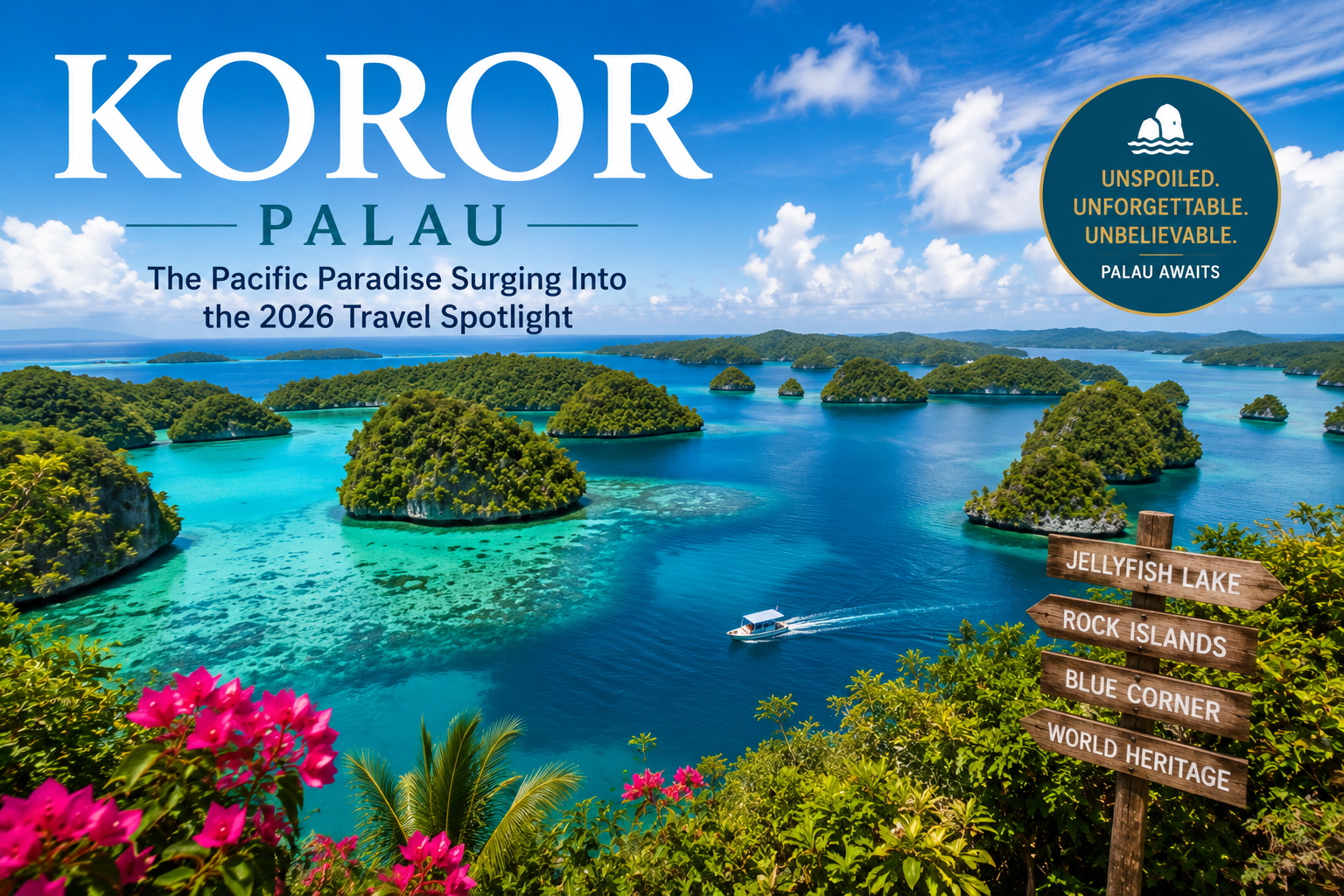
Koror, Palau: A Pacific Destination on the Rise in 2026
For years, Koror, Palau was best known among divers and serious ocean travelers. Its name appeared in dive magazines and liveaboard itineraries alongside some of the Pacific’s most famous underwater destinations.
That is changing.
In 2026, more travelers are discovering Koror as a gateway to turquoise lagoons, limestone islands, marine wildlife, historic sites, and one of the world’s most distinctive island environments.
Koror is the commercial center of the Republic of Palau. Although it is no longer the country’s capital, with that role now held by Ngerulmud on Babeldaob, Koror remains the main base for hotels, restaurants, tour operators, and boat excursions.
For travelers searching for a Pacific escape that combines adventure, nature, culture, and responsible tourism, Koror deserves a closer look.
Why Koror Is Becoming Popular in 2026
Koror’s growing appeal comes from more than its spectacular scenery.
Better Access
Palau’s international connections make Koror increasingly accessible from major Asian travel hubs. Most international visitors arrive at Roman Tmetuchl International Airport on Babeldaob before continuing to Koror.
Because air schedules can change seasonally, travelers should check current routes and flight frequencies before booking.
A Strong Sustainable Tourism Identity
Palau has built a distinctive reputation around marine conservation and responsible tourism.
One of the country’s most recognizable initiatives is the Palau Pledge, which asks visitors to respect the environment and protect the country’s natural and cultural heritage.
This approach appeals to travelers who want their Pacific holiday to have a lighter environmental footprint.
More Than a Diving Destination
Diving remains one of Palau’s biggest attractions, but you do not need to be a diver to enjoy the destination.
Boat tours, snorkeling, kayaking, beaches, museums, wildlife, cultural experiences, and World War II history give non-divers plenty to explore.
Getting to Koror
Most international visitors arrive at Roman Tmetuchl International Airport, located on Babeldaob.
From the airport, Koror can be reached by road via the Japan-Palau Friendship Bridge. The drive is relatively straightforward, although actual journey times depend on traffic and weather.
Once in Koror, travelers can use taxis, rental cars, and organized tours.
Taxis generally do not operate like metered city taxis, so confirming the fare before starting a journey is a sensible practice.
If you plan to explore beyond central Koror, renting a car can provide greater flexibility.
Best Time to Visit Koror, Palau
Palau has a tropical climate, so temperatures remain warm throughout the year.
For many travelers, November to April is an attractive period for outdoor activities and diving because conditions can be more favorable.
The wetter period generally falls between May and October. Rain can be frequent, but showers do not necessarily last all day, and travelers may find fewer visitors during some periods.
The best time to visit ultimately depends on your priorities:
- November–April: Popular for diving and outdoor activities
- May–October: Wetter conditions and potentially fewer crowds
- Year-round: Warm tropical temperatures and excellent marine experiences
Always check the latest weather and marine conditions before booking boat trips.
Top Things to Do in Koror and Palau
Explore the Rock Islands Southern Lagoon
The Rock Islands Southern Lagoon is the centerpiece of many Palau itineraries.
Hundreds of mushroom-shaped limestone islands rise from clear turquoise water, creating a landscape that looks almost otherworldly.
Boat excursions from Koror can take visitors through lagoons, channels, beaches, and snorkeling locations.
The area is also recognized as a UNESCO World Heritage site for its exceptional natural and cultural significance.
Visit Jellyfish Lake
Jellyfish Lake is one of Palau’s most famous natural attractions.
The marine lake is home to golden jellyfish that have evolved in isolation from their ocean relatives. Their population and behavior can change over time, so visitors should follow current conservation guidance before entering the water.
The experience is unusual, but the lake is also a fragile ecosystem. Responsible behavior is essential.
Go Diving and Snorkeling
Palau’s underwater environment is the destination’s biggest draw for many visitors.
Popular dive locations include:
- Blue Corner
- German Channel
- Ulong Channel
- WWII-era wreck sites
- Coral walls and reef systems around the Rock Islands
Divers may encounter reef sharks, rays, turtles, large schools of fish, and other marine life.
Snorkelers can also experience excellent marine environments in shallower areas.
Conditions vary by site, so local dive operators are the best source of current information.
Discover Palau’s Museums and Culture
Not every experience in Koror happens on the water.
Palau National Museum
The Palau National Museum provides an introduction to the country’s history, traditions, and cultural heritage.
It is a useful stop before exploring Palau’s villages and natural attractions.
Etpison Museum
The Etpison Museum focuses on Palauan culture and history and offers another perspective on the islands’ traditions.
Together, the museums provide context that can make the rest of a Palau trip more meaningful.
Explore Peleliu’s World War II History
For travelers interested in history, Peleliu offers a powerful experience.
The island was the site of the Battle of Peleliu during World War II. Remnants of the conflict, including bunkers, military equipment, and other wartime sites, remain across parts of the island.
Visiting Peleliu provides a sobering contrast to the tropical scenery and highlights the strategic importance of these islands during the Pacific War.
What to Eat in Koror
Koror’s food scene reflects Palau’s location and history.
Traditional ingredients include:
- Taro
- Breadfruit
- Fresh fish
- Coconut
- Reef seafood
- Mangrove crab
You will also find strong Japanese, Filipino, Chinese, Korean, and American influences throughout the local dining scene.
For a more authentic experience, consider trying locally prepared dishes and asking residents or hotel staff for recommendations.
Where to Stay in Koror
Koror has accommodation options for different budgets and travel styles.
Budget and Guesthouse Stays
Simple guesthouses are useful for backpackers, independent travelers, and divers who plan to spend most of their days on boats.
Mid-Range Hotels
Mid-range hotels offer a balance of comfort, location, and value and are suitable for couples and families.
Resorts
Higher-end resorts provide additional amenities and can be a good choice for travelers looking for a more relaxed island holiday.
For most first-time visitors, staying in or near Koror is convenient because many boat tours and diving excursions depart from the area.
Practical Tips for Visiting Koror
A few preparations can make a Palau trip easier.
Budget for Conservation Fees
Visitors may need to pay environmental or conservation-related fees associated with entering Palau and participating in certain activities. Check the latest requirements before departure because fees and regulations can change.
Carry Cash
The US dollar is Palau’s official currency. Cards are accepted at many hotels and businesses, but carrying some cash can be useful for smaller establishments and local activities.
Pack for the Tropics
Useful items include:
- Lightweight, quick-drying clothing
- Reef-conscious sunscreen
- Swimwear
- Waterproof or dry bags
- Comfortable walking shoes
- A reusable water bottle
- Lightweight rain protection
Check Entry Requirements
Visa and entry requirements vary according to nationality and can change.
Travelers should confirm the latest requirements with official Palauan authorities or their airline before departure.
Sustainable Travel in Palau
Palau’s natural environment is the main reason people visit, which makes responsible tourism particularly important.
Travelers can help protect the destination by:
- Following marine park rules.
- Never touching coral or marine animals.
- Avoiding single-use plastics where possible.
- Taking all waste back with them.
- Respecting local customs.
- Choosing responsible tour operators.
- Following current rules for protected areas.
In a destination built around fragile marine ecosystems, small actions can have a meaningful impact.
Is Koror Worth Visiting in 2026?
Koror is not a conventional tropical resort town.
It is functional, compact, humid, and built around the needs of residents and the tourism industry. The real attraction begins beyond the town, where limestone islands, coral reefs, marine lakes, and historic sites create a remarkable travel experience.
That is precisely what makes Koror, Palau interesting in 2026.
It offers the adventure of a remote Pacific destination without requiring travelers to completely disconnect from modern conveniences.
For divers, it remains one of the world’s standout destinations. For everyone else, the Rock Islands, Jellyfish Lake, wildlife, culture, and World War II history provide more than enough reasons to visit.
If your idea of a Pacific holiday involves clear water, dramatic landscapes, underwater adventures, and responsible travel, Koror deserves a place on your 2026 itinerary.
Frequently Asked Questions About Koror, Palau
Is Koror the capital of Palau?
No. Koror was formerly the capital and remains the country’s commercial center. Palau’s current capital is Ngerulmud, located on Babeldaob.
What is Koror, Palau, known for?
Koror is best known as the gateway to Palau’s Rock Islands, diving and snorkeling sites, Jellyfish Lake, marine wildlife, and cultural attractions.
What is the best time to visit Koror?
Palau can be visited year-round. November through April is generally popular for outdoor and diving activities, while May through October can bring wetter weather and potentially fewer visitors.
Is Koror good for non-divers?
Yes. Non-divers can explore the Rock Islands, take lagoon tours, snorkel, visit museums, discover Palauan culture, explore beaches, and learn about World War II history.
How many days do you need in Koror?
A five- to seven-day trip allows enough time for several boat excursions, snorkeling or diving, cultural attractions, and a visit to one of Palau’s historical or natural highlights.
What currency is used in Palau?
The US dollar is the official currency of Palau.
Internal Links
- Island-Hopping Beyond the Crowds: Lesser-Known Archipelagos Worth Discovering
- The Future of Sustainable Travel: How to Explore Without Leaving a Trace
- The Rise of Do-Less Travel
- Experience-Led Travel 2026: Okinawa, Marrakech, Swiss Alps
- Hidden Gems: Why Offbeat Travel Creates the Best Memories
- St. Lucia: The Caribbean Island Emerging as One of 2026’s Hottest Travel Escapes
- Floating Villages Around the World: Communities Living on Water