
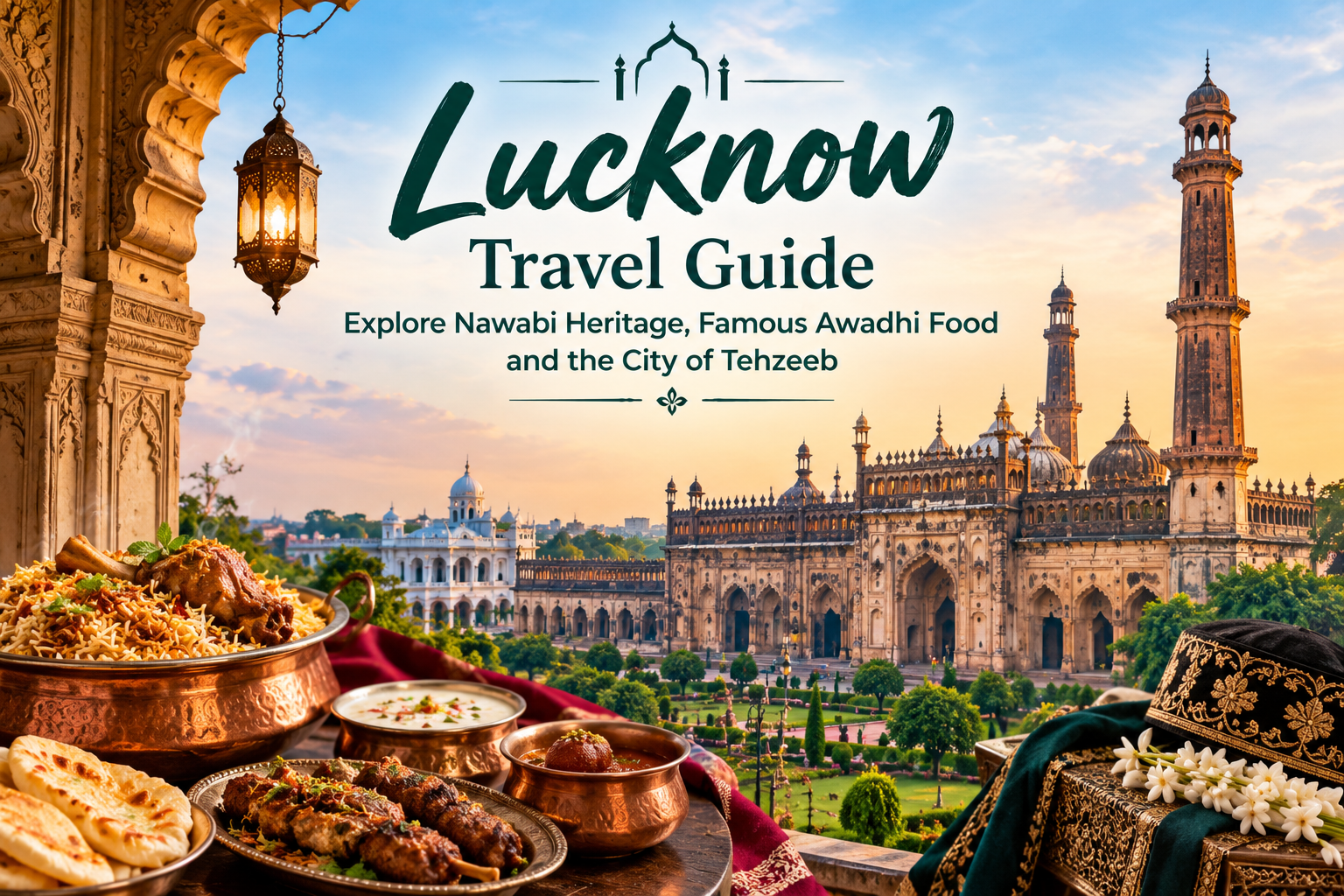
Some cities impress visitors with towering skyscrapers. Others win them over through history, architecture, food, and everyday charm. Lucknow belongs to the second category. Known as the City of Nawabs, the capital of Uttar Pradesh offers a fascinating blend of grand monuments, traditional markets, beautiful craftsmanship, and celebrated regional cuisine.
From the magnificent Bara Imambara and the iconic Rumi Darwaza to the narrow lanes of old Lucknow, every corner tells a story. The aroma of kebabs, biryani, and traditional sweets adds another dimension to the city’s character.
Lucknow is equally famous for its tehzeeb, a culture of politeness, hospitality, and refined manners. This tradition remains an important part of the city’s identity.
Whether you enjoy history, food, architecture, photography, or cultural experiences, Lucknow has plenty to offer. This travel guide covers the best places to visit, famous Awadhi dishes, traditional shopping areas, and a suggested three-day itinerary.
Why Visit Lucknow?
Lucknow has a distinctive personality shaped by its Nawabi history, architecture, literature, music, and culinary traditions.
The city was once an important centre of the Awadh region. Under the Nawabs, it developed a reputation for elegant buildings, refined courtly culture, and artistic expression.
Today, visitors can experience this heritage through historic monuments, traditional eateries, bustling bazaars, and cultural institutions.
Here are some reasons to add Lucknow to your travel list:
- Explore remarkable Nawabi-era architecture.
- Taste authentic Awadhi kebabs, biryani, and traditional sweets.
- Discover the famous Chikankari embroidery craft.
- Walk through historic neighbourhoods and traditional markets.
- Learn about Lucknow’s role in India’s history.
- Experience the blend of traditional culture and modern city life.
The city’s appeal lies in this combination of experiences. You can spend the morning exploring historical monuments and the evening discovering its food and shopping culture.
Top Places to Visit in Lucknow
Lucknow has several remarkable historical landmarks. Many reflect the architectural traditions of the Nawabi period, while others tell stories of India’s colonial past and modern history.
1. Bara Imambara
Bara Imambara is one of Lucknow’s most recognisable historical landmarks. It is also a must-visit attraction for first-time travellers.
Built by Nawab Asaf-ud-Daula in 1784, the complex is admired for its impressive architecture and enormous central hall. The site also includes the Asafi Mosque, Shahi Baoli, and the famous Bhul Bhulaiya.
The Bhul Bhulaiya is a maze of narrow corridors and interconnected passages. Its unusual layout attracts visitors interested in architecture and historic spaces. For a better experience, explore it with an authorised guide rather than navigating the maze independently.
Take time to appreciate the building’s design and spacious courtyards. The architectural details make Bara Imambara an important part of Lucknow’s cultural heritage.
2. Rumi Darwaza
Rumi Darwaza is among the most photographed landmarks in Lucknow. This impressive gateway, built under the patronage of Nawab Asaf-ud-Daula in 1784, stands approximately 60 feet tall.
Its elaborate design reflects the architectural style of the Awadh period. The gateway is also associated with famine-relief construction projects that provided employment during a difficult period.
Located close to Bara Imambara, Rumi Darwaza is easy to include in the same sightseeing trip.
Visit during the morning or late afternoon for attractive photography conditions. Since the monument stands beside busy city roads, take care when crossing and choosing photography spots.
3. Chhota Imambara
Chhota Imambara, also known as Hussainabad Imambara, is another beautiful example of Lucknow’s architectural heritage.
Built during the 19th century under Nawab Muhammad Ali Shah, the monument is known for its decorative interiors, chandeliers, ornamental details, and elegant exterior.
Its atmosphere differs from that of Bara Imambara. Visitors can appreciate the craftsmanship, historical significance, and decorative elements throughout the complex.
Architecture enthusiasts and photographers should include this landmark in their Lucknow itinerary.
4. The Residency
The Residency is an important historical site associated with the events of the 1857 uprising.
The complex contains the remains of buildings damaged during the Siege of Lucknow. Its preserved walls, old structures, and memorials offer insight into a significant chapter of India’s colonial history.
Walking through the grounds provides a quieter experience compared with the busy streets around the city’s main monuments.
History enthusiasts will find this site particularly interesting. It is also a rewarding destination for heritage photography and leisurely walks.
5. Ambedkar Memorial Park
For a different architectural experience, visit Ambedkar Memorial Park.
This large public memorial complex features expansive pathways, monumental stone structures, open spaces, and distinctive architectural designs. Its scale creates a striking contrast with Lucknow’s older historical monuments.
The park is a good place for a relaxed walk and photography. Visit during the cooler hours, especially if you plan to explore the grounds on foot.
Experience the Famous Food of Lucknow
A trip to Lucknow is incomplete without exploring its food culture. The city is widely associated with Awadhi cuisine, which is known for aromatic spices, slow-cooked preparations, rich gravies, and carefully developed flavours.
Food is more than a dining experience here. It is an important part of Lucknow’s identity and cultural heritage.
Here are some traditional dishes worth trying during your visit.
1. Galouti Kebab
Galouti kebabs are among Lucknow’s most famous culinary specialities.
Traditionally prepared using finely minced meat and a carefully balanced blend of spices, these kebabs are known for their soft texture and rich flavour.
They are commonly served with paratha or other accompaniments. Vegetarians can also look for restaurants offering meat-free interpretations of this popular dish.
2. Lucknowi Biryani
Awadhi biryani is another speciality that deserves a place on your food list.
Known for fragrant rice, aromatic spices, and carefully cooked meat or vegetables, it offers a flavour profile that differs from several other regional biryani styles.
Choose a well-established local restaurant to experience a traditional preparation.
3. Nihari and Kulcha
Nihari is a slow-cooked preparation known for its rich flavour and hearty texture.
In Lucknow, it is commonly paired with kulcha or other breads. The dish is especially popular as a substantial breakfast or early meal in traditional food neighbourhoods.
For food lovers, exploring old Lucknow’s breakfast culture can be a memorable experience.
4. Sheermal
Sheermal is a mildly sweet, saffron-flavoured flatbread associated with Awadhi cuisine.
Its soft texture and delicate flavour make it a popular accompaniment to rich meat preparations and other traditional dishes.
Try it alongside a traditional Awadhi meal to appreciate its place in the local food culture.
5. Malai Makhan
If you visit Lucknow during winter, look for Malai Makhan, also known as Nimish.
This light, creamy sweet is traditionally associated with the city. It is prepared using milk cream and delicate flavourings.
Its seasonal availability makes it particularly interesting for winter visitors. Ask local residents or sweet-shop owners where to find a fresh serving.
6. Traditional Sweets
Lucknow has plenty of sweet shops offering regional favourites and classic Indian desserts.
Explore local establishments for traditional mithai, kulfi, rabri, and other seasonal treats. Rather than choosing only heavily advertised shops, ask residents about their favourite neighbourhood sweet shops.
Explore Lucknow’s Traditional Markets
Lucknow’s markets are an essential part of the city’s travel experience. They offer everything from traditional clothing and handmade products to street food and everyday shopping.
Chowk Market
Chowk is one of the best places to experience the traditional character of old Lucknow.
Its narrow lanes are known for clothing, embroidery, food establishments, and local products. Spend some time exploring the shops and discovering the commercial traditions that have shaped this historic neighbourhood.
Food lovers can also combine their market visit with a stop at a traditional eatery.
Hazratganj
Hazratganj offers a more modern shopping experience. The area features retail stores, cafés, restaurants, and established shopping outlets.
It is a good choice for an evening walk, casual shopping, or a relaxed meal. The neighbourhood also provides a different perspective on Lucknow’s modern urban lifestyle.
Aminabad
Aminabad is a lively market known for clothing, footwear, accessories, and local shopping.
Visitors can find a wide range of products at different price points. Bargaining may be possible at some independent shops, so compare prices before purchasing.
Allow enough time to explore the busy lanes without rushing.
Discover Lucknow’s Famous Chikankari Craft
Lucknow is internationally recognised for its Chikankari embroidery, a traditional craft involving delicate hand-stitched patterns on fabric.
This embroidery appears on kurtas, sarees, dupattas, shirts, and other garments. Its detailed patterns and elegant appearance make it a popular choice for visitors looking for a meaningful souvenir.
Traditional markets such as Chowk and Aminabad are good places to explore Chikankari products.
When shopping, examine the stitching carefully. Ask sellers whether a garment is hand-embroidered or machine-produced. Buying authentic work from reputable sellers can help support the artisans who continue this traditional craft.
A Chikankari garment is more than a shopping purchase. It is also a way to take home a piece of Lucknow’s artistic heritage.
Experience Lucknow’s Cultural Heritage
Lucknow’s cultural identity extends far beyond its monuments and cuisine. The city has a long association with classical music, poetry, Kathak dance, Urdu literature, and traditional performing arts.
Kathak is particularly significant to Lucknow’s artistic heritage. The Lucknow gharana is one of the best-known traditions of this classical dance form.
Its expressive movements, graceful gestures, and intricate footwork make it an important part of North Indian performing arts.
Visitors interested in cultural experiences can look for dance performances, music programmes, theatre events, and exhibitions during their stay.
The city’s historic buildings and cultural institutions also offer opportunities to learn more about the literary and artistic traditions of Awadh.
Suggested 3-Day Lucknow Travel Itinerary
Three days are a good starting point for exploring Lucknow’s main attractions. This itinerary combines historical landmarks, traditional shopping, and local food experiences.
Day 1: Discover Nawabi Architecture
Begin your trip with Bara Imambara and its historic complex.
- Explore the Bhul Bhulaiya with an authorised guide.
- Visit Rumi Darwaza and nearby heritage landmarks.
- Continue to Chhota Imambara.
- Enjoy traditional Awadhi cuisine for dinner.
This first day introduces you to the architectural heritage that makes Lucknow famous.
Day 2: History and Local Shopping
Spend the second day exploring Lucknow’s historical and modern attractions.
- Visit the Residency and learn about the events of 1857.
- Explore Ambedkar Memorial Park.
- Spend the afternoon shopping for Chikankari embroidery.
- Visit Hazratganj for cafés, shopping, and an evening walk.
The combination of heritage and shopping provides a different perspective on the city.
Day 3: Food and Old Lucknow
Reserve your final day for the city’s traditional markets and culinary specialities.
- Begin with a traditional breakfast featuring local dishes.
- Explore Chowk and Aminabad markets.
- Taste Galouti kebabs, biryani, and local sweets.
- Enjoy a relaxed evening before departing.
You can adjust the itinerary according to monument opening hours, local traffic, and personal interests.
How to Reach Lucknow
Lucknow is well connected with major Indian cities by air, rail, and road. Travellers can choose the most convenient option depending on their starting point.
By Air
Chaudhary Charan Singh International Airport connects Lucknow with several domestic and international destinations.
After landing, visitors can arrange taxis and other transport options to reach their accommodation or sightseeing locations.
By Train
Lucknow has major railway stations, including Lucknow Charbagh, with connections to many parts of India.
Train travel is a convenient option for visitors arriving from nearby cities and other major destinations.
By Road
National highways and regional roads connect Lucknow with cities such as Kanpur, Ayodhya, Prayagraj, and Varanasi.
Buses, taxis, and private vehicles are common options for reaching the city.
For visits during weekends and holiday periods, booking accommodation and transport in advance is recommended.
Best Time to Visit Lucknow
October to March is generally a comfortable period for exploring Lucknow. The weather during these months is more suitable for heritage walks, market visits, and outdoor sightseeing.
| Season | What to Expect |
|---|---|
| October–November | Pleasant sightseeing weather and cooler evenings |
| December–January | Winter atmosphere, cool mornings, and seasonal food |
| February–March | Comfortable conditions for heritage walks and shopping |
| April–June | Hot weather, making midday sightseeing less comfortable |
| July–September | Monsoon showers and humid conditions |
For a food-focused trip, winter is particularly appealing. Seasonal specialities such as Malai Makhan may be available during this period.
If outdoor sightseeing is your priority, plan visits during the morning and late afternoon. This helps you avoid the hottest hours and enjoy a more comfortable experience.
Travel Tips for Visiting Lucknow
A little preparation can make your Lucknow trip more enjoyable. Keep these practical suggestions in mind while planning your itinerary.
- Wear comfortable shoes: Many heritage attractions involve walking through large courtyards and historic complexes.
- Hire authorised guides: A knowledgeable guide can make visits to places such as Bara Imambara more informative.
- Respect religious spaces: Follow local dress requirements and photography restrictions.
- Plan food stops: Popular eateries can become crowded during peak meal times.
- Shop thoughtfully: Compare prices and check the quality of Chikankari embroidery before purchasing.
- Allow time for traffic: Busy market areas can take longer to explore than expected.
- Carry some cash: Smaller shops and street-food vendors may not always accept digital payments.
- Check opening hours: Confirm monument timings and entry arrangements before starting your sightseeing day.
Frequently Asked Questions About Lucknow
What is Lucknow famous for?
Lucknow is famous for its Nawabi heritage, Awadhi cuisine, Chikankari embroidery, historical monuments, classical music, Kathak dance, and refined cultural traditions.
How many days are enough to explore Lucknow?
Three days are a good starting point for visiting major monuments, exploring traditional markets, and enjoying the city’s food. A longer stay allows more time for museums and cultural experiences.
Which food should I try in Lucknow?
Some popular specialities include Galouti kebabs, Lucknowi biryani, Nihari, Sheermal, and Malai Makhan during winter. Traditional sweets and local snacks are also worth exploring.
What is the best time to visit Lucknow?
October to March is generally suitable for sightseeing. December and January offer a cooler winter atmosphere, while February and March are also comfortable for exploring heritage sites and markets.
Is Lucknow suitable for a family trip?
Yes. Lucknow has historical attractions, public parks, shopping areas, and food experiences suitable for a family holiday. Plan visits according to everyone’s walking comfort and interests.
What can I buy in Lucknow?
Chikankari garments, embroidered fabrics, traditional clothing, handicrafts, and local food products are popular shopping choices.
What is Lucknow’s famous Chikankari embroidery?
Chikankari is a traditional embroidery craft associated with Lucknow. It involves delicate stitching on fabric and is commonly found on kurtas, sarees, dupattas, and other garments.
Final Thoughts
Lucknow is a destination that rewards travellers who enjoy discovering a city’s character rather than simply ticking off famous attractions.
Its grand monuments reveal the architectural legacy of the Nawabs. Traditional markets preserve generations of craftsmanship, while Awadhi cuisine offers a memorable introduction to North Indian food culture.
Whether you are walking through the historic surroundings of Bara Imambara, admiring Rumi Darwaza, shopping for Chikankari embroidery, or enjoying freshly prepared kebabs, the city offers plenty of experiences to make your visit memorable.
If you are planning your next city break, consider adding Lucknow to your travel list. Come for the history, stay for the food, and discover why the City of Nawabs continues to attract travellers from across India and beyond.
Internal Links
- Forgotten Kingdoms: Ancient Cities Every History Lover Should Visit
- The First Evening in Jaipur Felt Different: Blue Lanes, Rooftop Views, Local Markets, and a Side of Rajasthan I Hadn’t Seen Before
- I Arrived in Ujjain After the Monsoon—The Ancient Temples, Shipra River, Evening Aarti, and Old City Streets Made the Whole Trip Feel Timeless
- Bali Jatra 2026: Discover Odisha’s Historic Maritime Festival in Cuttack
- Sonepur Mela 2026: Explore Bihar’s Famous Cattle Fair, Sacred Riverbanks and Vibrant Folk Culture
- The Rise of Do-Less Travel
- Hidden Gems: Why Offbeat Travel Creates the Best Memories
- The Future of Sustainable Travel: How to Explore Without Leaving a Trace