
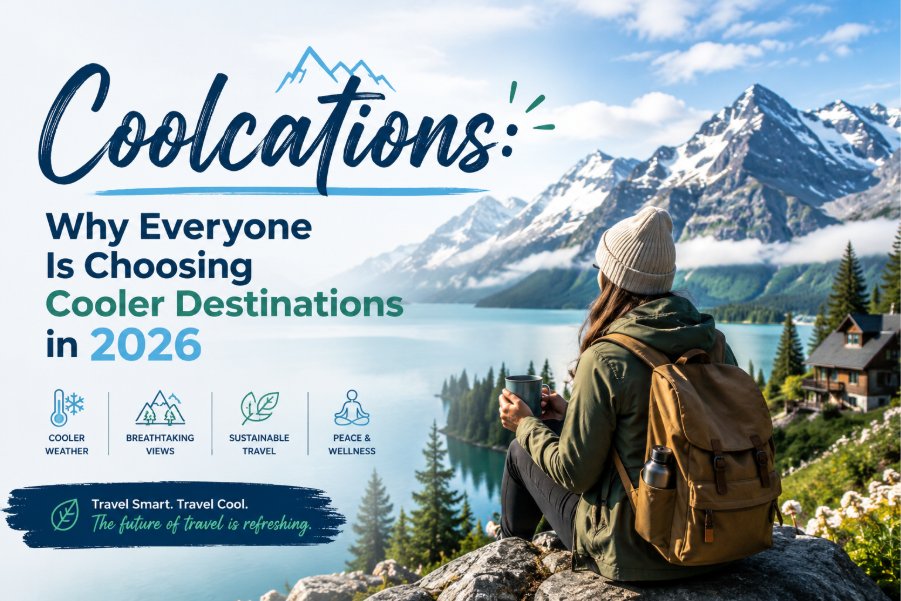
A coolcation is one of the fastest-growing travel trends of 2026, with more travelers choosing cooler destinations instead of traditional beach vacations. Whether you’re escaping record-breaking summer temperatures or simply looking for refreshing mountain, Nordic, or alpine escapes, a coolcation offers the perfect blend of comfort, adventure, and unforgettable scenery.
For as long as most of us can remember, a summer holiday meant one thing: sun, sand, and a beach chair somewhere near the Mediterranean.
According to the World Meteorological Organization, rising global temperatures are influencing travel patterns worldwide.
That formula is starting to crack. Ask a travel agent, check a booking platform, or scroll through a few travel forums, and one word keeps coming up this year: coolcation.
What Is a Coolcation, Exactly?
A coolcation is a trip planned around escaping heat rather than seeking it. Instead of guaranteed sunshine, travelers are booking trips to places with mild, cool, or downright cold weather — on purpose.
Think:
- Fjords instead of beaches
- Glaciers instead of pool bars
- Daytime highs in the teens (°C) instead of the mid-30s
These destinations usually sit between 8°C and 20°C during peak travel months. They tend to be found in northern latitudes, at high altitude, or in the Southern Hemisphere during its winter season.
Popular picks: Iceland, Norway, Switzerland, Scotland, Slovenia, and Canada — alongside rising names like Greenland, the Faroe Islands, and Tasmania.
Rather than a beach towel and sunscreen, the coolcation itinerary revolves around comfort, quiet, and cooler air: hiking, glacier tours, lake cruises, and northern lights viewing replace snorkeling and sunbathing.
Why the Sudden Shift?
A few forces are driving this trend at once — and none of them look temporary.
Record heat is changing travel math. Summer 2026 has already broken temperature records across parts of Europe and the U.S., with France and Germany both recording their hottest days on record in June. When a beach town that used to be pleasant turns risky to walk around in at noon, travelers start looking elsewhere. Search platforms report a sharp year-on-year jump in queries for cooler destinations, and flight searches to places like Iceland have climbed sharply.
Overtourism fatigue is real. Southern Europe’s most famous coastal towns have spent the last few summers dealing with protests, capacity limits, and locals pushing back against sheer visitor volume. Many travelers are simply tired of queuing for a table, a viewpoint, or a beach umbrella. Quieter alpine villages and northern coastal towns offer similar scenery — minus the crowd control barriers.
Wellness is part of the itinerary now, not an afterthought. Cooler air tends to mean better sleep, less heat exhaustion, and more energy for hiking or sightseeing. For families with young children or older relatives, that matters more than a tan.
Sustainability is shaping choices too. Many coolcation destinations — particularly in Scandinavia — have invested heavily in electric public transport, eco-certified lodging, and car-free travel options. Choosing a place already running on greener infrastructure fits neatly into a broader shift toward more conscious travel.
The Numbers Behind the Trend
- Trip.com reported a sharp year-on-year rise in searches for cooler-climate destinations at the start of 2026
- Scandinavia bookings have climbed roughly a third compared with last year (per rental and travel industry projections)
- Greenland’s tourism board expects a notable rise in visitors this year, helped by new airport infrastructure
- Flight searches toward cooler, high-altitude regions like Yunnan, China have jumped
- Highland cities like Da Lat, Vietnam have climbed several spots on the list of most-searched domestic summer destinations
Industry analysts expect shoulder-season and off-peak travel to keep growing as climate patterns continue pushing traditional summer destinations toward extreme heat. This isn’t a one-season fad.
Best Coolcation Destinations to Watch in 2026
| Destination | Why Go |
|---|---|
| Iceland | Long daylight hours, glacier hikes, geothermal spas — one of the most-searched spots this year |
| Norway | Fjords around Bergen, Geiranger, and Ålesund, plus the Lofoten Islands, deliver dramatic scenery with mild summer air |
| Switzerland | Alpine towns stay pleasantly cool while offering lake cruises, cycling routes, and mountain trains |
| Scotland | Lochs, coastlines, and castles — one of the most accessible picks for travelers from warmer climates |
| Slovenia | Lake Bled and Triglav National Park offer Alpine views without Italy or Austria’s crowds |
| Greenland | New airports at Nuuk and Qaqortoq have made it far more reachable; icebergs and silence draw a steady stream of visitors |
| Canada | From Banff to the Pacific Northwest, mountain air and coastal climate without the heat |
| Tasmania & Patagonia | For travelers willing to fly further: winter conditions during the Northern Hemisphere’s hottest months |
Coolcations vs. the Traditional Summer Trip
| Classic Beach Holiday | Coolcation | |
|---|---|---|
| Weather | Guaranteed sun | Milder, changes through the day |
| Pace | Resort-centered, relaxed | Slower, exploration-based |
| Activities | Lounging, pool, sunbathing | Hiking, boat tours, cultural stops |
| Trip length | Often a two-week resort stay | Often 3–4 days, paired with a longer itinerary |
Neither style is objectively better. What’s changed is that coolcations are no longer the fallback for people who dislike heat — they’ve become a first choice for travelers wanting comfort, fewer crowds, and different scenery altogether.
How to Plan Your Own Coolcation
- Pack for layers, not just sun. Coastal Norway or the Scottish Highlands can swing from 12°C to 20°C and back in a single day. A light jacket and a few thin layers do more work than one heavy coat.
- Book accommodation early. Destinations like Greenland and the Lofoten Islands have limited capacity, and peak-month rooms are filling up faster than before.
- Check daylight hours. Northern destinations can offer close to 24 hours of daylight in summer — worth factoring into your itinerary since it changes how much you can realistically fit into a day.
- Think about transport. Many coolcation regions favor trains, ferries, and guided tours over rental cars, so check availability before you land.
Need help coordinating all this? Our customized trip planning service handles the details, our budget planning guides help map out pricing for less conventional destinations, and our visa and documentation guides cover entry requirements that don’t always match the rest of the Schengen area (Greenland and Iceland included).
Still torn between a coolcation and a classic escape? Check out our guide to the best summer destinations for peace and adventure. And whichever way you go, our packing smart guide and travel safety basics are worth a read before you leave home.
Frequently Asked Questions
What is a coolcation? A vacation planned around escaping heat by choosing a destination with mild or cold weather (typically 8°C–20°C), rather than booking around guaranteed sunshine.
Why are coolcations trending in 2026? Record summer heat across Europe and the U.S., frustration with overcrowded beach destinations, and a growing focus on wellness and sustainable travel.
Where are the most popular coolcation destinations right now? Iceland, Norway, Switzerland, Scotland, Slovenia, Greenland, and Canada top most 2026 lists, with Tasmania and Patagonia gaining ground for travelers chasing winter weather during the northern summer.
Are coolcations more expensive than a typical beach holiday? It depends on the destination. Nordic countries and Switzerland can run higher on daily costs, but shorter trips and off-peak timing often help balance the budget.
Is a coolcation only a summer trend? Not necessarily. While the current surge is tied to summer heat, the appeal of quieter, cooler, less crowded destinations is shaping travel choices in other seasons too — especially shoulder-season trips in spring and autumn.
Coolcations aren’t about avoiding summer. They’re about choosing a version of it that feels comfortable instead of exhausting. Whether that means chasing the midnight sun in Norway, hiking beside a Swiss lake, or watching icebergs drift past a boat in Greenland, the destinations reshaping travel in 2026 all share one thing: they let you enjoy the season instead of surviving it.
Internal Links:
Outbound Links: