
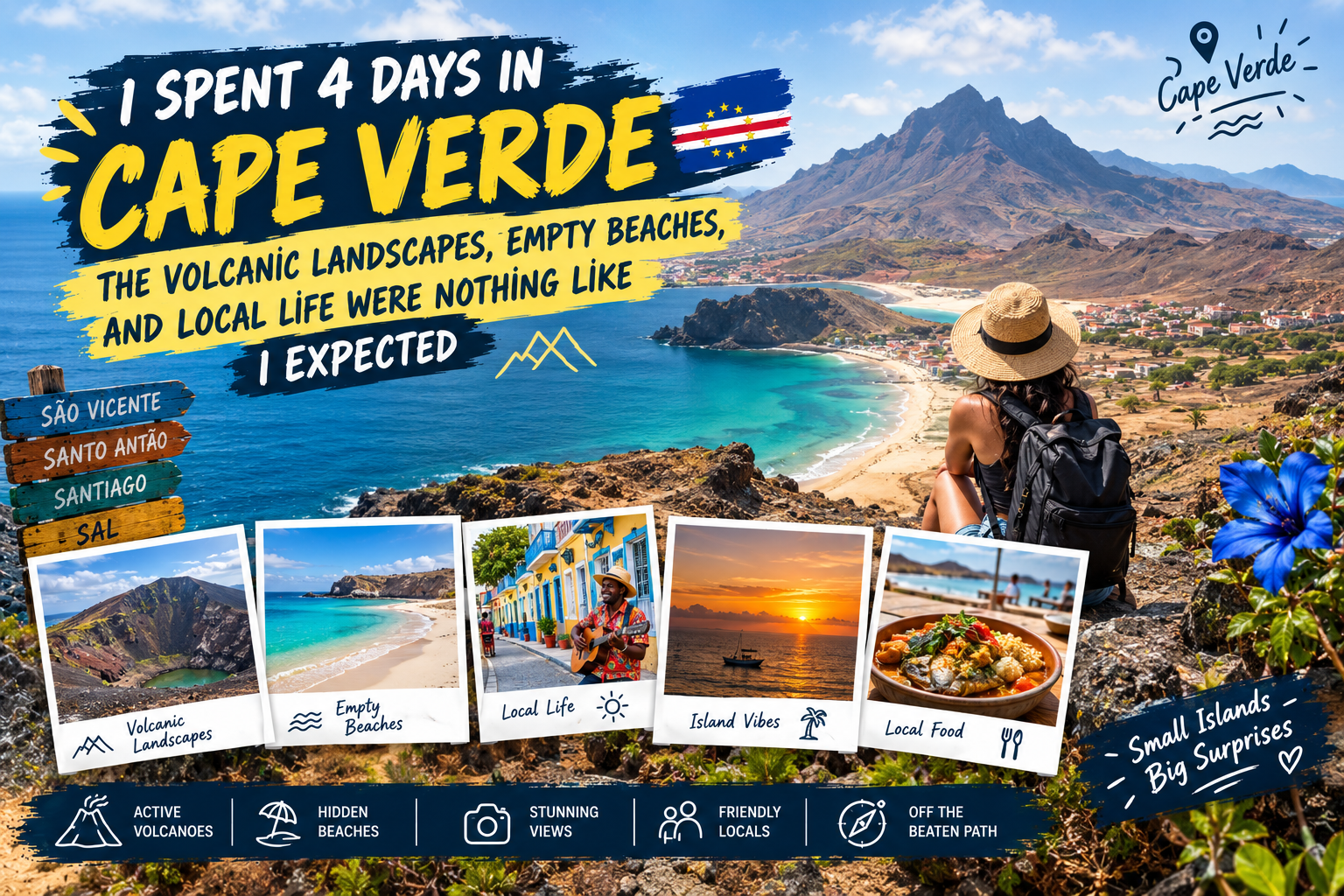
I had a picture in my head before I ever landed in Cape Verde, and it was wrong on almost every count.
My expectation was simple. I imagined an African version of the Canary Islands, complete with rows of sun loungers, all-inclusive resorts and calm blue water. Sal and Boa Vista are certainly known for that kind of holiday, so I assumed the rest of the country would feel similar.
Four days changed that assumption completely.
Instead of spending my entire trip beside a resort pool, I climbed an active volcano, slept near a settlement inside a volcanic crater and ate fish stew prepared in a local kitchen. The beaches were quieter than I expected, the landscapes were far more dramatic, and everyday life turned out to be more interesting than the tourist infrastructure.
This is not a list of the top things to do in Cape Verde. It is my account of four days across Santiago and Fogo, along with the practical lessons I wish I had known before travelling.
Why Cape Verde Doesn’t Look Like the Brochures
Cape Verde is an archipelago of ten islands off the coast of West Africa. Nine of those islands are inhabited, and each has its own landscape, culture and personality.
Sal and Boa Vista are the best-known holiday islands. Their beaches, resorts and reliable sunshine have made them popular with European travellers looking for a warm winter escape.
The rest of the country feels very different.
Santiago, Fogo, Santo Antão, São Vicente, Brava and Maio offer more opportunities to experience local communities, volcanic landscapes, mountain scenery and traditional food. Tourism is present, but it does not dominate everyday life in the same way.
I decided to split my four days between Santiago and Fogo. That turned out to be one of the best decisions of the trip.
Santiago gave me the capital, markets and a closer look at Cape Verdean life. Fogo provided the dramatic volcanic landscapes that had originally attracted me to the country.
Together, the two islands showed me why a Cape Verde itinerary should go beyond the usual resort experience.
Day 1: Landing in Praia and Forgetting the Beach-Holiday Idea
My flight arrived in Praia, the capital of Santiago Island.
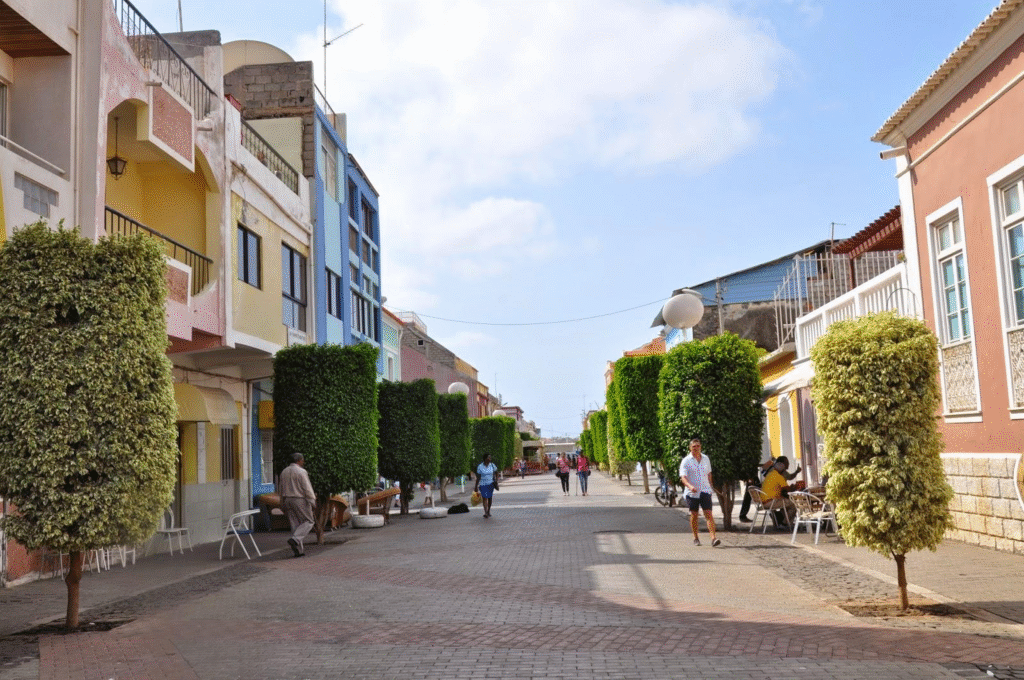
The first impression was not what I expected from a major tourist destination. There were no endless rows of souvenir shops outside the airport and no obvious resort atmosphere. Praia felt like a working city.
Government buildings, residential neighbourhoods, busy streets and older colonial architecture filled much of the centre. People were going about their daily routines rather than catering specifically to visitors.
I spent my first afternoon exploring the Plateau district, the historic centre of Praia. Pastel-coloured buildings lined the streets, while views opened toward the Atlantic from several points around the neighbourhood.
The atmosphere changed again when I reached the local market.
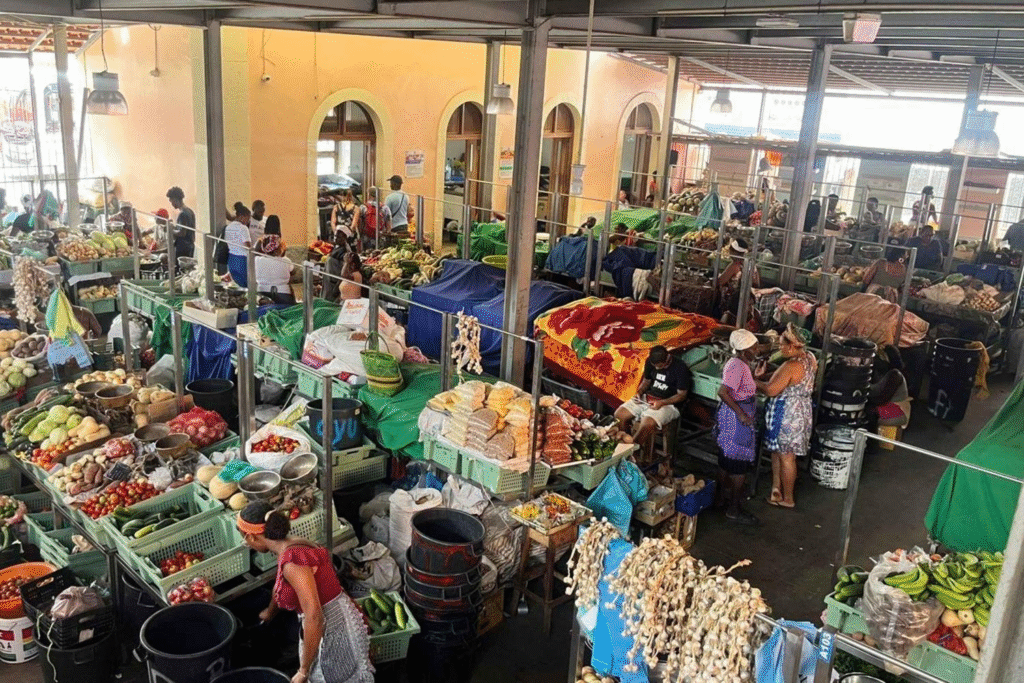
Fresh fruit, vegetables, dried fish, clothing and everyday household goods filled the stalls. Vendors called out to customers while people moved between the narrow spaces.
Almost everyone around me appeared to be local.
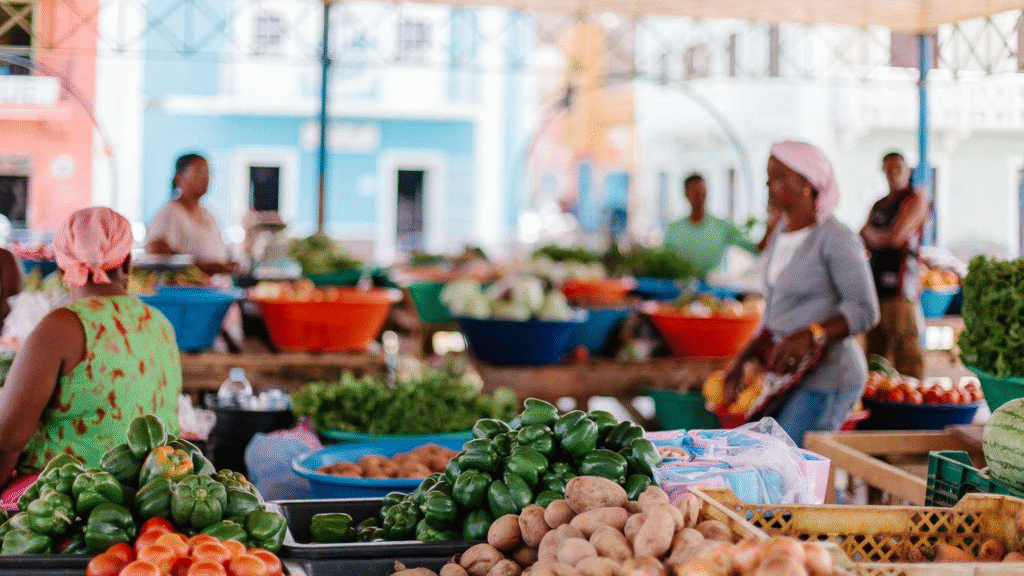
That was when the Cape Verde I had imagined finally disappeared.
Trying Cachupa for the First Time
Dinner introduced me to another important part of the country: food.
I ordered cachupa, Cape Verde’s famous slow-cooked stew made with corn, beans and other ingredients that can include vegetables, meat or fish. Recipes vary between households and islands, which is part of what makes the dish interesting.
My meal was hearty rather than elaborate.
There was nothing particularly luxurious about it, and that was exactly what I liked. It felt like the sort of food people eat because it belongs to their everyday lives rather than because visitors expect to find it on a menu.
By the end of the evening, I had already started changing my plans.
A Practical Tip for Praia
If Praia is your entry point, give yourself at least half a day to explore the Plateau and local markets.
Leaving immediately for another attraction would mean missing one of the easiest ways to understand Santiago before travelling deeper into the country.
Day 2: The Ferry to Fogo and a Landscape That Looks Like Another Planet
The second day started early.
I travelled from Praia toward Fogo Island, where the landscape changes dramatically from the urban streets of Santiago to volcanic terrain.
Fogo means “fire” in Portuguese, and the name makes sense as soon as the volcano appears.
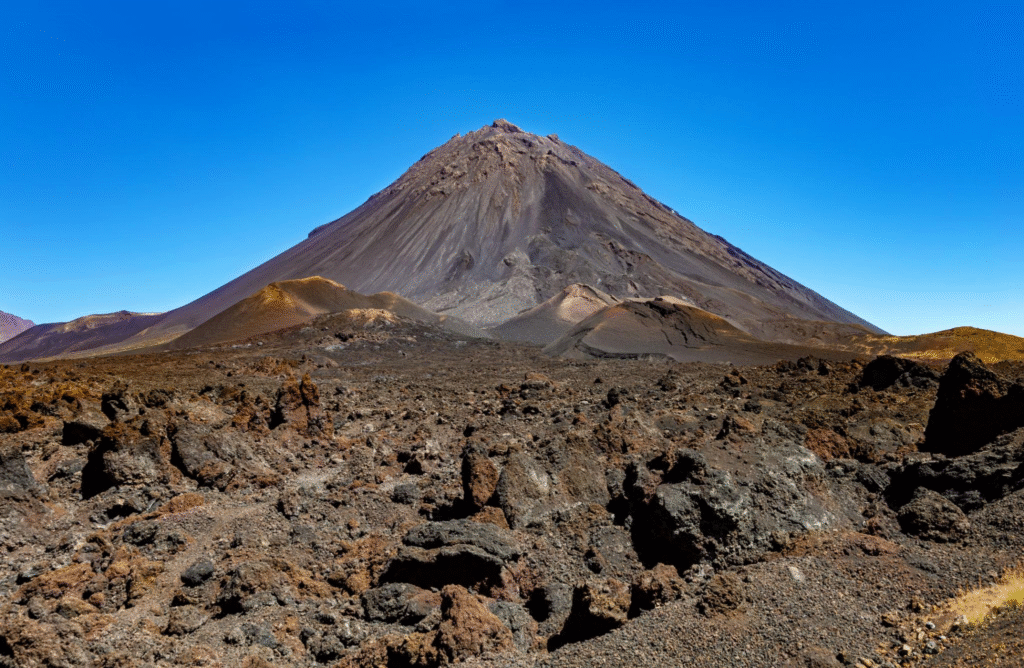
The island is dominated by Pico do Fogo, an active volcano that rises dramatically above the surrounding landscape.
The journey itself became part of the experience. Watching Santiago disappear behind us and the volcanic outline of Fogo gradually become clearer made the destination feel increasingly remote.
Arriving in São Filipe
Fogo’s main city, São Filipe, was another surprise.
I expected a rough volcanic landscape from the moment I arrived. Instead, the town had colourful colonial buildings, basalt-paved streets and a relaxed coastal atmosphere.
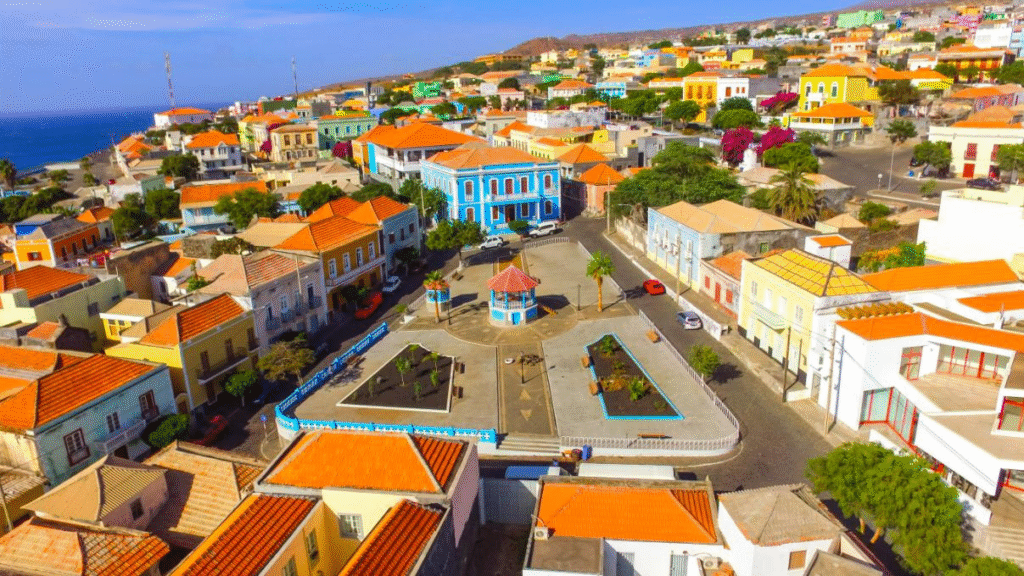
The architecture reflected Cape Verde’s Portuguese history, while the dark volcanic coastline provided a striking contrast.
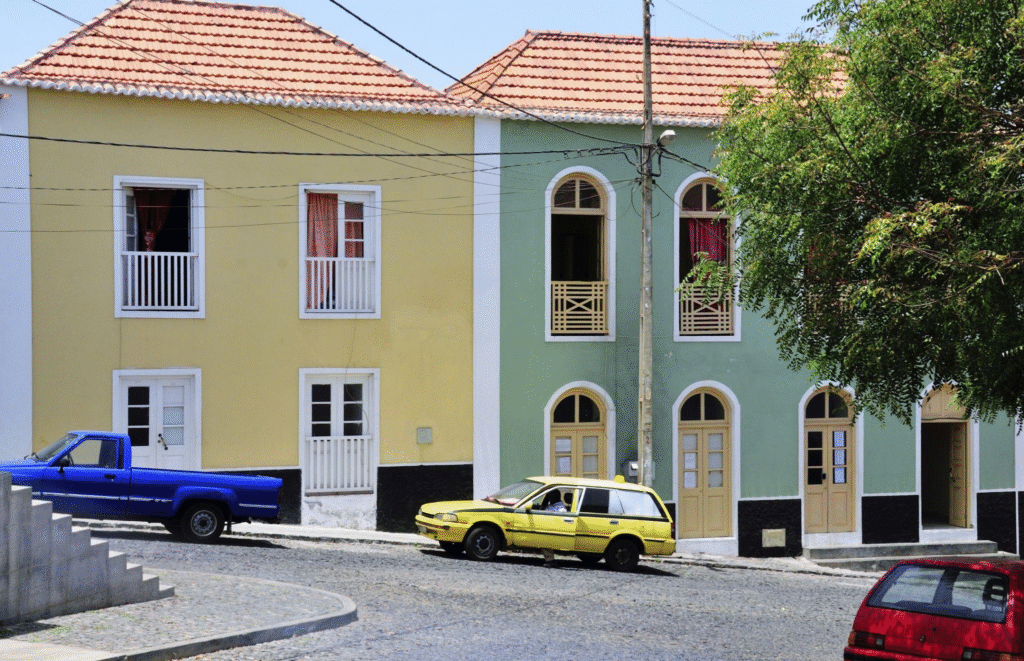
I spent the evening walking around São Filipe before heading toward the volcanic interior the following morning.
Sunset from the cliffs was especially memorable. The ocean stretched out beneath the town while the volcanic landscape dominated the horizon.
There were no large crowds around me.
A few local families were outside, and the evening felt much more like an ordinary part of island life than a tourist spectacle.
Fogo’s 2014 Eruption
Fogo remains an active volcanic island.
The most recent major eruption occurred in 2014, and its effects are still visible around the caldera. Lava destroyed parts of settlements in the area, including sections of Chã das Caldeiras.
Yet people returned and rebuilt.
That resilience is one of the things that makes Fogo so compelling. The volcano is not simply scenery here. It is part of the landscape, economy, history and identity of the communities living around it.
Day 3: Hiking Into the Fogo Volcano Caldera
Day three was the most physically demanding part of the trip.
The destination was Chã das Caldeiras, a settlement located inside the enormous volcanic caldera.
The drive upward was almost as memorable as the hike itself.
Roads twisted through the mountains, with sharp bends and steep drops appearing around almost every corner. Green terraces gradually gave way to darker volcanic terrain as we climbed higher.
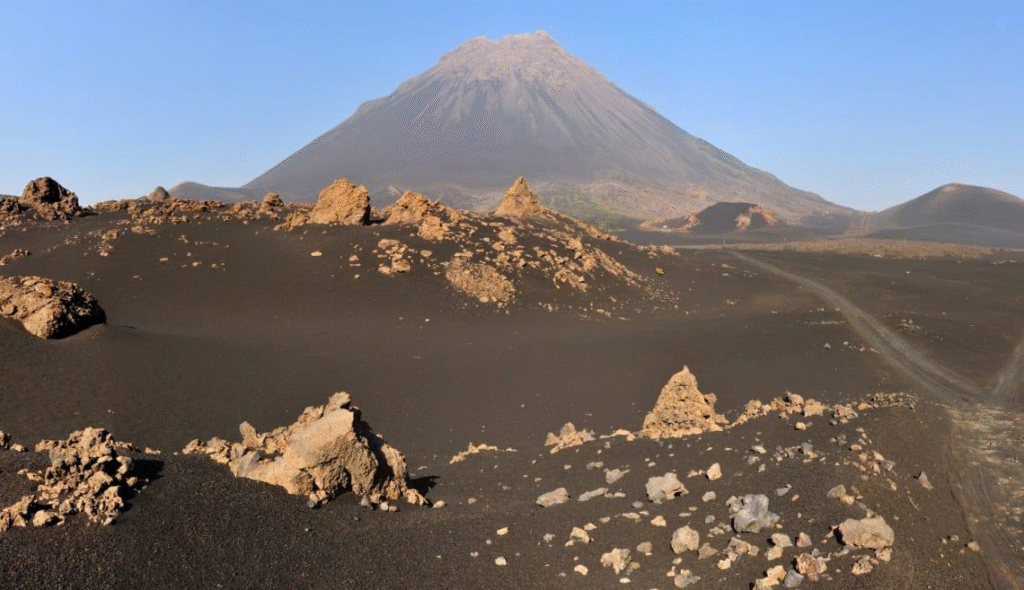
Eventually, the landscape looked almost unreal.
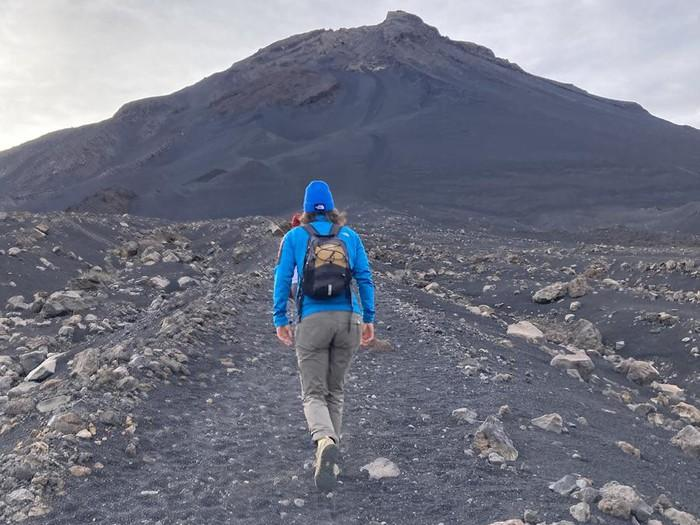
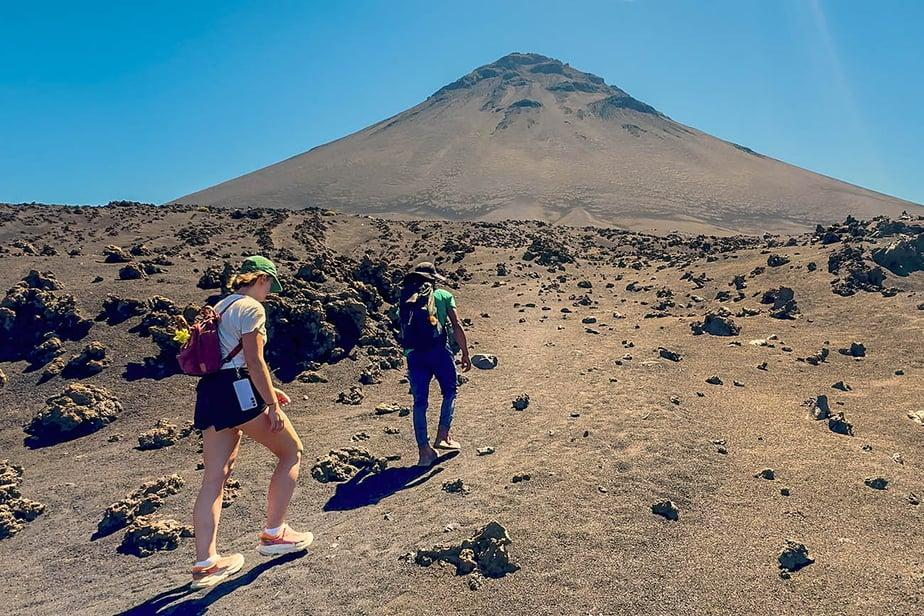
Black volcanic gravel covered much of the ground. Old lava flows cut across the slopes, while the summit rose above the crater.
For the main summit hike, I went with a local guide.
That was important not only because of the terrain but also because volcanic landscapes can be difficult to navigate. A local guide understands the routes, conditions and changing terrain far better than a first-time visitor.
Walking Through Chã das Caldeiras
The settlement itself was fascinating.
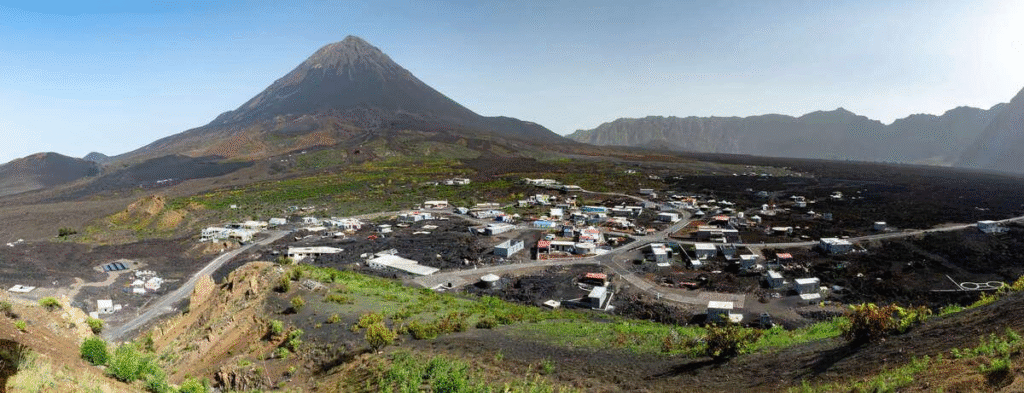
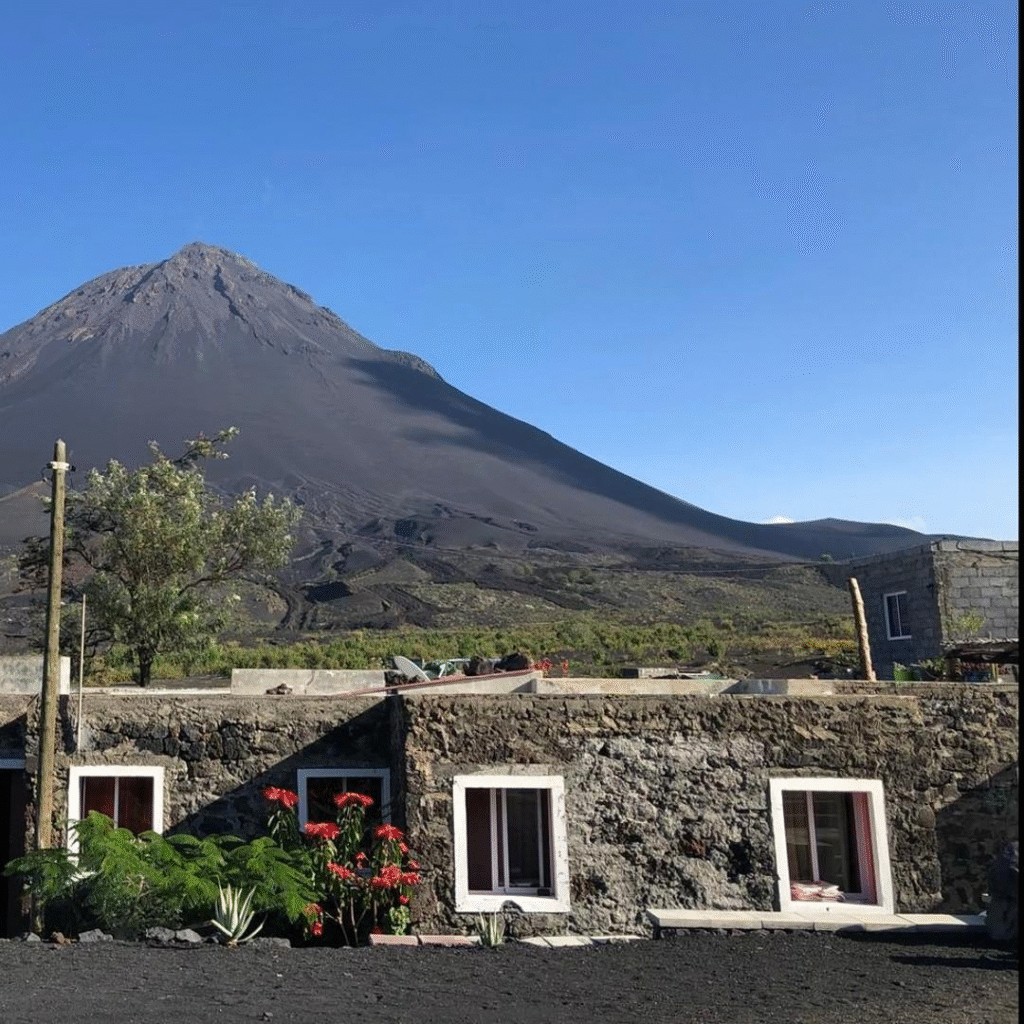
Homes and small businesses sit surrounded by enormous volcanic walls. The contrast between human settlement and the scale of the crater makes the area feel almost surreal.
Even more surprising was the agriculture.
Despite the black volcanic ground, people cultivate grapes and other crops in parts of the caldera.
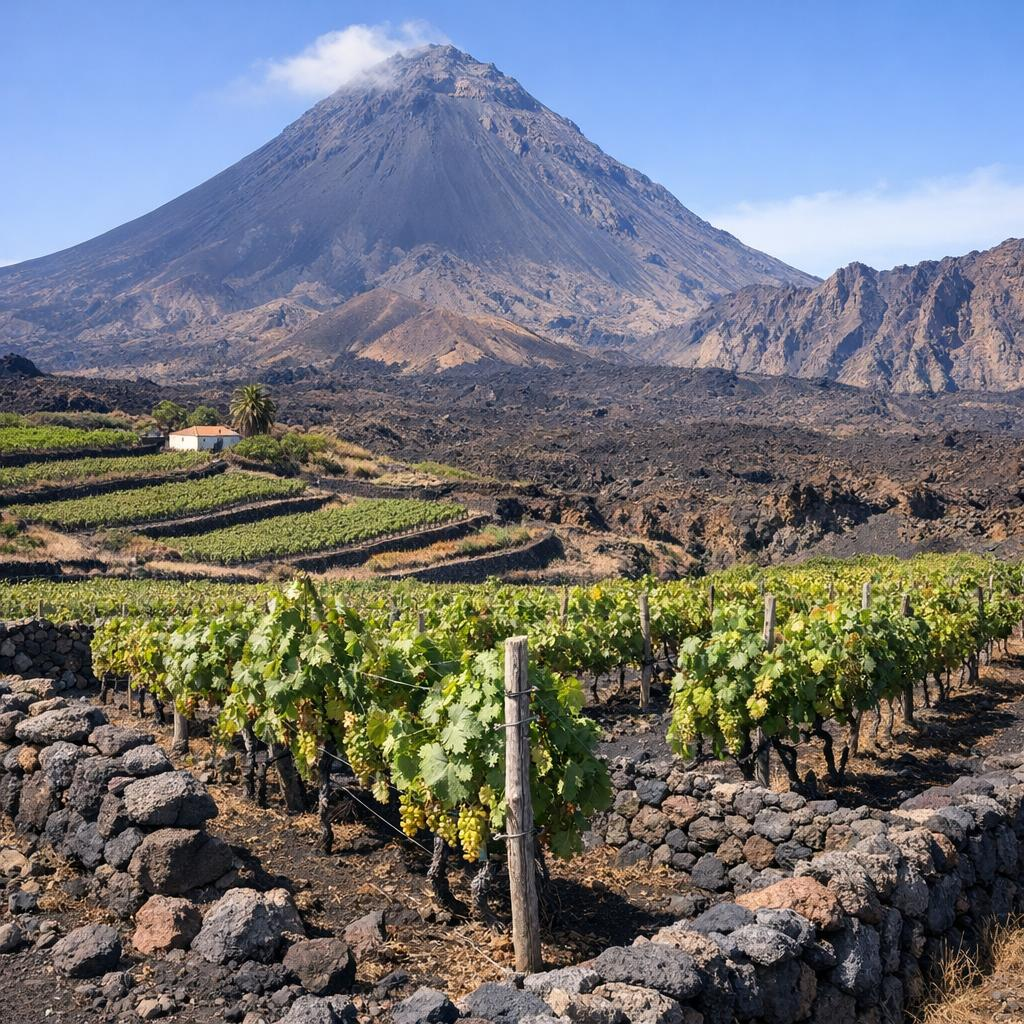
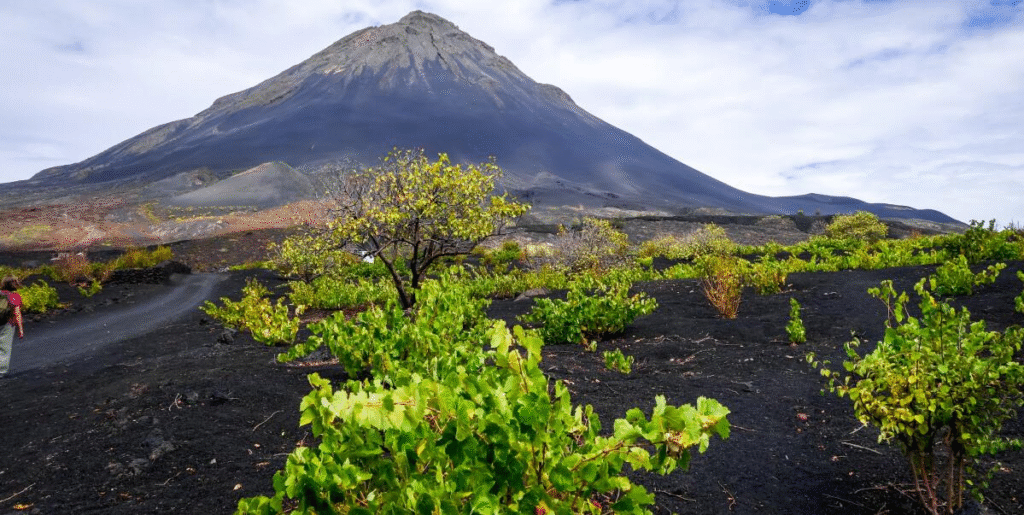
The volcanic environment creates unusual growing conditions, and Fogo is particularly known for its local wine.
Hiking Fogo Volcano
The higher we climbed, the more dramatic the landscape became.
Vegetation gradually disappeared. Red and black volcanic gravel replaced soil, while small cones and lava formations appeared across the terrain.
Walking uphill was tiring.
Coming back down was an entirely different challenge.
Loose volcanic scree shifted under every step, so sections of the descent became more like controlled sliding than ordinary hiking.
It was messy, physical and completely unforgettable.
Drinking Fogo Wine Inside the Crater
Lunch brought another memorable experience.
A small local restaurant served us food alongside a glass of wine produced from grapes grown in the volcanic landscape.
Fogo wine has a character that feels closely connected to its surroundings.
Drinking it while looking across the lava fields made the experience feel far more meaningful than simply ordering a bottle in a restaurant elsewhere.
The landscape was in the glass as much as it was outside the window.
Practical Tip for the Fogo Hike
Arrange a local guide before the morning of the hike if you plan to climb toward the summit.
Conditions can change, and local knowledge makes a significant difference on volcanic terrain. Comfortable hiking shoes, sun protection, water and layers are also essential.
Day 4: Empty Beaches, Quiet Villages and a Slower Goodbye
My final day was deliberately less ambitious.
After travelling back toward Santiago, I headed to Tarrafal Beach on the northern coast.
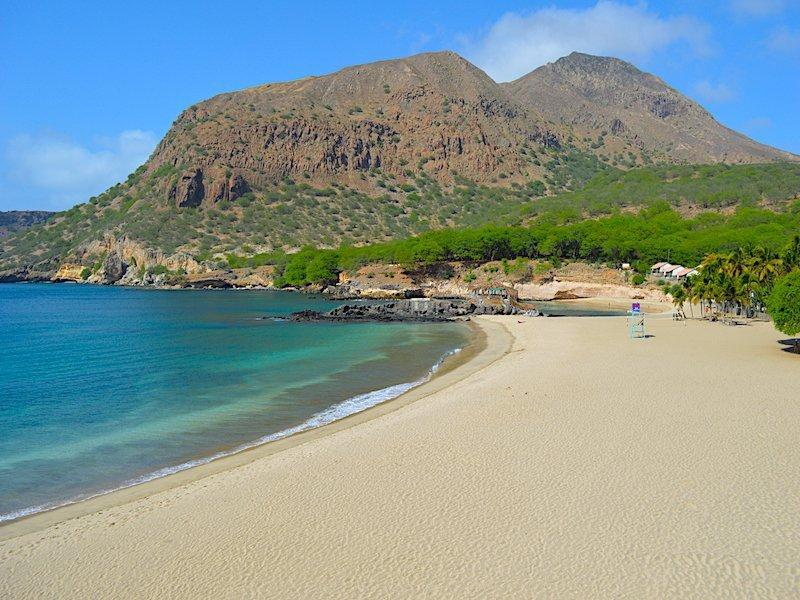
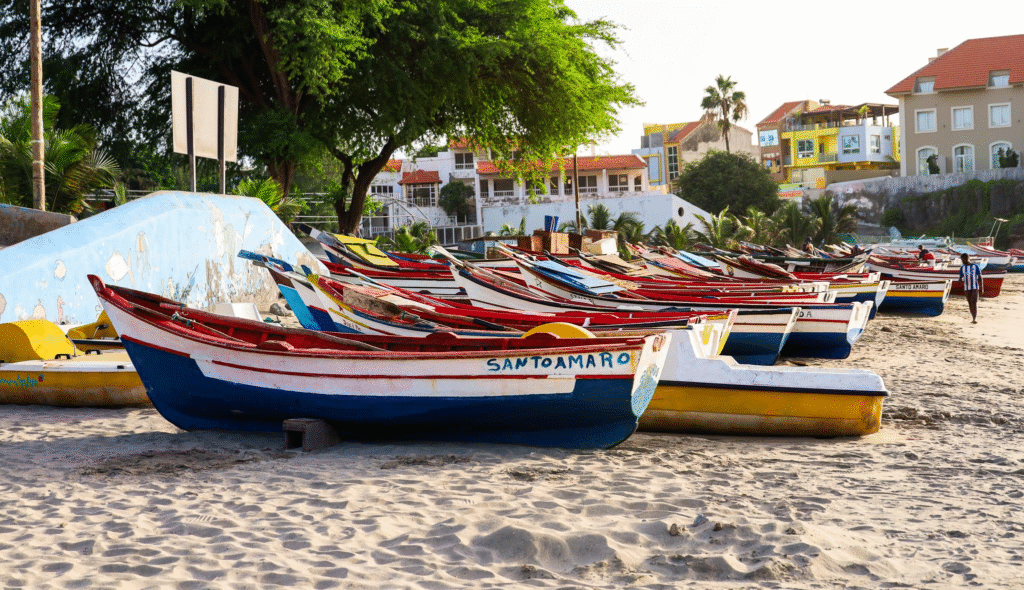
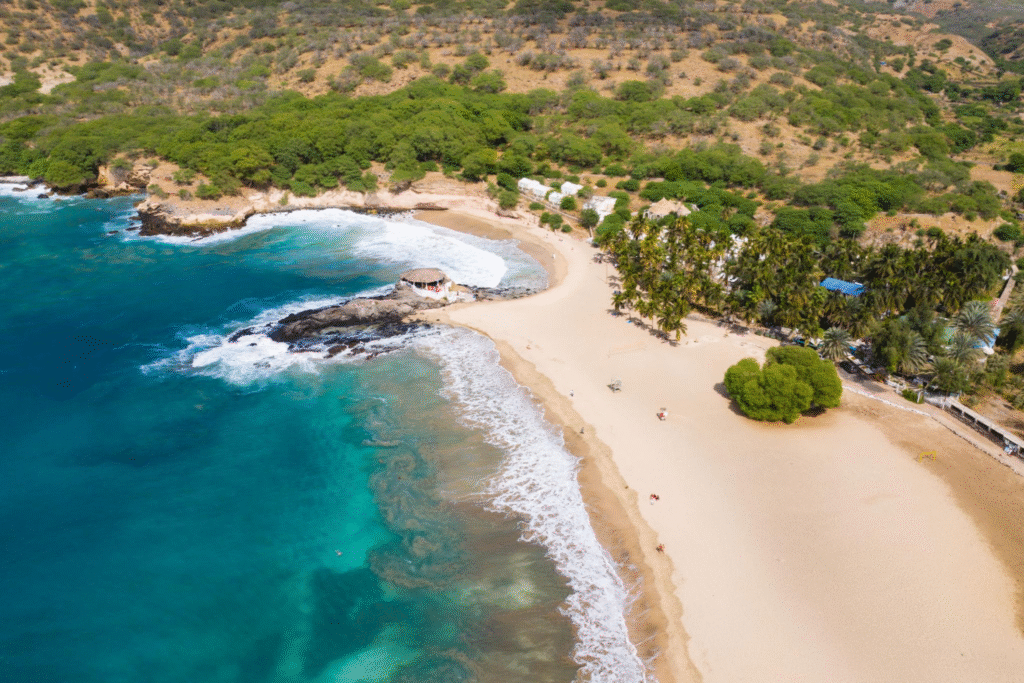
Tarrafal immediately gave me another version of Cape Verde.
There were no large resort complexes dominating the shoreline. Instead, I found sand, clear water, fishing boats and local families spending time near the beach.
The atmosphere was relaxed.
I swam for nearly an hour without seeing another international tourist in the water.
That experience made me think about the difference between visiting Cape Verde and simply staying in Cape Verde.
A resort can give you comfort.
Travelling through the islands gives you context.
An Unexpected Village Encounter
The afternoon became even more personal.
I stopped in a small inland village outside Praia, where an older woman was preparing bread in an outdoor clay oven.
We barely shared a common language.
Still, she invited me to sit nearby and eventually handed me a piece of freshly baked bread.
Nothing had been arranged.
There was no tour guide explaining the moment and no itinerary telling me to be there.
That simple interaction became one of my strongest memories from Cape Verde.
By the time I returned to Praia, the country felt completely different from the place I had imagined before arriving.
What I’d Tell Anyone Planning a Short Cape Verde Trip
A few practical lessons became clear during my four days.
Don’t Judge Cape Verde by Sal or Boa Vista Alone
Sal and Boa Vista are excellent choices for travellers who want beaches, resorts and a straightforward holiday.
They simply don’t represent the entire country.
Santiago offers history and urban life, while Fogo brings volcanic scenery. Santo Antão is known for dramatic mountain landscapes, and São Vicente has its own cultural and musical identity.
The islands are different enough that choosing one based only on photographs can give you a very incomplete picture.
Four Days Is Enough for Two Islands
Four days gave me enough time to combine Santiago and Fogo without constantly feeling rushed.
Trying to squeeze in three or four islands would have changed the character of the trip.
For a short Cape Verde itinerary, two islands make more sense than collecting as many destinations as possible.
Book Your Fogo Guide Ahead
The summit hike is not something I would treat casually.
Arranging a local guide in advance gives you more certainty and provides valuable knowledge about the route and conditions.
The volcanic terrain is beautiful, but it can also be loose, steep and physically demanding.
Leave Extra Time for Island Travel
Flights and ferries between Cape Verde’s islands can be affected by weather, schedules and operational changes.
Avoid planning an important international connection immediately after an island transfer.
If your flight home is fixed, leave yourself enough buffer to deal with unexpected delays.
Carry Cash
Cash is particularly useful outside major hotels and established tourist businesses.
Small restaurants, markets, local transport and businesses on smaller islands may not always accept cards.
Keeping some Cape Verdean escudos with you makes everyday travel much easier.
Try Local Food and Fogo Wine
Cachupa should be near the top of your Cape Verde food list.
On Fogo, local wine is another experience worth seeking out, particularly if you are already exploring Chã das Caldeiras.
The food is one of the easiest ways to understand the islands beyond their landscapes.
What Is Cape Verde Known For?
Cape Verde is known for volcanic landscapes, Atlantic beaches, Creole culture, music, mountainous islands and a strong connection between Portuguese and West African influences.
The country is also famous for destinations such as Sal and Boa Vista, which attract beach-focused travellers.
Beyond those islands, Cape Verde offers hiking, local food, historic towns and volcanic scenery.
For me, that combination was much more interesting than the resort image I had seen before travelling.
Is Cape Verde Worth Visiting?
Yes, especially if you are willing to explore beyond the major resort islands.
Travellers looking for a conventional beach holiday may find exactly what they need on Sal or Boa Vista.
Those who want a more adventurous Cape Verde travel experience should consider adding Santiago, Fogo, Santo Antão or São Vicente.
The country becomes much more rewarding when you give yourself time to experience its communities and landscapes rather than treating it as a resort destination.
How Many Days Do You Need in Cape Verde?
Four days can work well for a short trip if you focus on two islands.
Santiago and Fogo make a particularly interesting combination because they offer very different experiences.
A longer trip of seven to ten days gives you more flexibility and allows you to explore additional islands without rushing through transport connections.
For a four-day itinerary, I would rather explore two islands properly than visit four islands superficially.
Best Islands to Visit in Cape Verde
The best island depends on the kind of trip you want.
Santiago is ideal for history, Praia and local culture.
Fogo is the choice for volcanic landscapes, hiking and the Fogo wine region.
Sal works well for beaches, watersports and resort holidays.
Boa Vista is another strong choice for long sandy beaches and relaxed coastal stays.
Santo Antão is particularly appealing to hikers looking for dramatic valleys and mountain scenery.
São Vicente is a good option for music, culture and the lively atmosphere of Mindelo.
There is no single best island for everyone.
What to Eat in Cape Verde
Cape Verdean food is hearty, simple and strongly connected to local ingredients.
Cachupa
Cachupa is the country’s best-known dish.
The stew traditionally combines corn and beans with vegetables, meat or fish. Different households and islands have their own versions.
Fogo Wine
Fogo’s volcanic environment supports vineyards around Chã das Caldeiras.
Trying locally produced wine while exploring the crater gives you a direct connection between the food, landscape and people of the island.
Fresh Fish and Seafood
With the Atlantic surrounding the islands, fresh fish and seafood naturally play an important role in local cuisine.
Small restaurants can be some of the best places to try them.
Is Fogo Volcano Safe to Hike?
Fogo Volcano can be hiked, but visitors should treat it as a serious volcanic environment rather than an ordinary mountain trail.
A local guide is strongly recommended for the summit route.
Weather, terrain and volcanic conditions can change, while loose gravel makes both climbing and descending physically demanding.
Anyone planning the hike should check current local conditions and follow guidance from local authorities and experienced guides.
Cape Verde vs the Canary Islands
Cape Verde and the Canary Islands can look similar on the surface because both offer warm Atlantic weather, volcanic landscapes and beaches.
The travel experience is different.
The Canary Islands have significantly more developed tourism infrastructure across their major destinations.
Cape Verde feels more varied from island to island, with a stronger sense of everyday local life in many places outside the major resort areas.
If your priority is convenience and extensive tourism infrastructure, the Canary Islands may be easier.
For a more culturally immersive and off-the-beaten-path island experience, Cape Verde can be much more rewarding.
Cape Verde Travel Tips for First-Time Visitors
Plan Around the Islands
Do not think of Cape Verde as one destination.
Each island has its own geography and atmosphere, so choose your route based on what you actually want to experience.
Don’t Overpack Your Itinerary
Island-hopping takes time.
A slower route through two islands will usually be more enjoyable than trying to see everything in four days.
Prepare for Different Terrain
Beach clothes alone will not be enough if you are visiting Fogo or another mountainous island.
Bring sturdy shoes, comfortable walking clothes, sun protection and a light layer.
Expect a Different Pace
Cape Verde rewards patience.
Transport schedules may not always operate with the precision you are used to, and spontaneous conversations or unexpected stops can become the highlights of the trip.
Frequently Asked Questions
What is Cape Verde known for?
Cape Verde is known for volcanic landscapes, beaches, hiking, Creole culture, music and Atlantic island life. Sal and Boa Vista are famous for resorts, while islands such as Fogo and Santiago offer a more cultural and adventurous experience.
Is Cape Verde worth visiting?
Yes. Cape Verde is particularly rewarding for travellers who want more than a resort holiday. The country combines beaches, volcanic landscapes, mountain villages, local food and distinctive island cultures.
How many days do you need in Cape Verde?
Four days is enough to explore two islands without rushing too much. A week or longer is better if you want to combine several islands and allow extra time for transport.
What are the best islands to visit in Cape Verde?
Santiago is excellent for culture and Praia, Fogo is ideal for volcanic scenery and hiking, Sal and Boa Vista are popular for beaches, Santo Antão is known for hiking, and São Vicente offers music and culture.
What should you eat in Cape Verde?
Start with cachupa, the country’s signature corn-and-bean stew. Fresh fish, seafood and local specialities vary between islands, while Fogo is particularly interesting for locally produced volcanic-soil wine.
Is Fogo Volcano safe to hike?
Fogo can be hiked, but the summit route involves steep and loose volcanic terrain. Travellers should use a local guide, check current conditions and follow local safety advice.
How do you get from Sal to Fogo Island?
The most practical connection depends on current flight and ferry schedules. Because inter-island services can change, check the latest schedule before building a tight itinerary around a specific connection.
Is Cape Verde good for an off-the-beaten-path trip?
Yes. While Sal and Boa Vista have established tourism infrastructure, islands such as Santiago, Fogo and Santo Antão provide opportunities to experience quieter villages, mountain landscapes and local communities.
Final Thoughts: The Cape Verde I Didn’t Expect
Cape Verde wasn’t the destination I thought I had booked.
I expected beaches.
Instead, I found volcanoes.
The trip began with the familiar image of a warm island holiday, but that idea disappeared almost immediately after I arrived in Praia. The market was more interesting than the airport. A bowl of cachupa told me more about the country than a resort brochure ever could.
Fogo changed the trip completely.
Standing inside the volcanic caldera, walking across black lava fields and looking down toward Chã das Caldeiras made the landscape feel almost otherworldly.
Then came Tarrafal.
The empty beach brought everything back to sea level and slowed the trip down again.
What stayed with me most, though, was not a particular viewpoint or landmark. It was the ordinary moments: sharing freshly baked bread with someone I couldn’t properly communicate with, watching fishermen work beside the beach and drinking local wine inside a volcanic crater.
Cape Verde is not one destination.
It is a collection of islands with very different personalities.
Four days across Santiago and Fogo showed me only a small part of the country, but that was enough to understand why looking beyond the resort islands is worthwhile.
If you are planning a Cape Verde trip, don’t just ask which beach has the best view.
Ask which island will give you the kind of experience you actually want.
For me, the answer was Fogo and Santiago.
And that unexpected choice is exactly what made the trip memorable.
Internal Links
- St. Lucia: The Caribbean Island Emerging as One of 2026’s Hottest Travel Escapes
- Island-Hopping Beyond the Crowds: Lesser-Known Archipelagos Worth Discovering
- The Rise of Do-Less Travel
- The Future of Sustainable Travel: How to Explore Without Leaving a Trace
- Hidden Gems: Why Offbeat Travel Creates the Best Memories
- Experience-Led Travel 2026: Okinawa, Marrakech, Swiss Alps
- The World’s Most Breathtaking Cliffside Villages You Need to See Once in Your Lifetime