
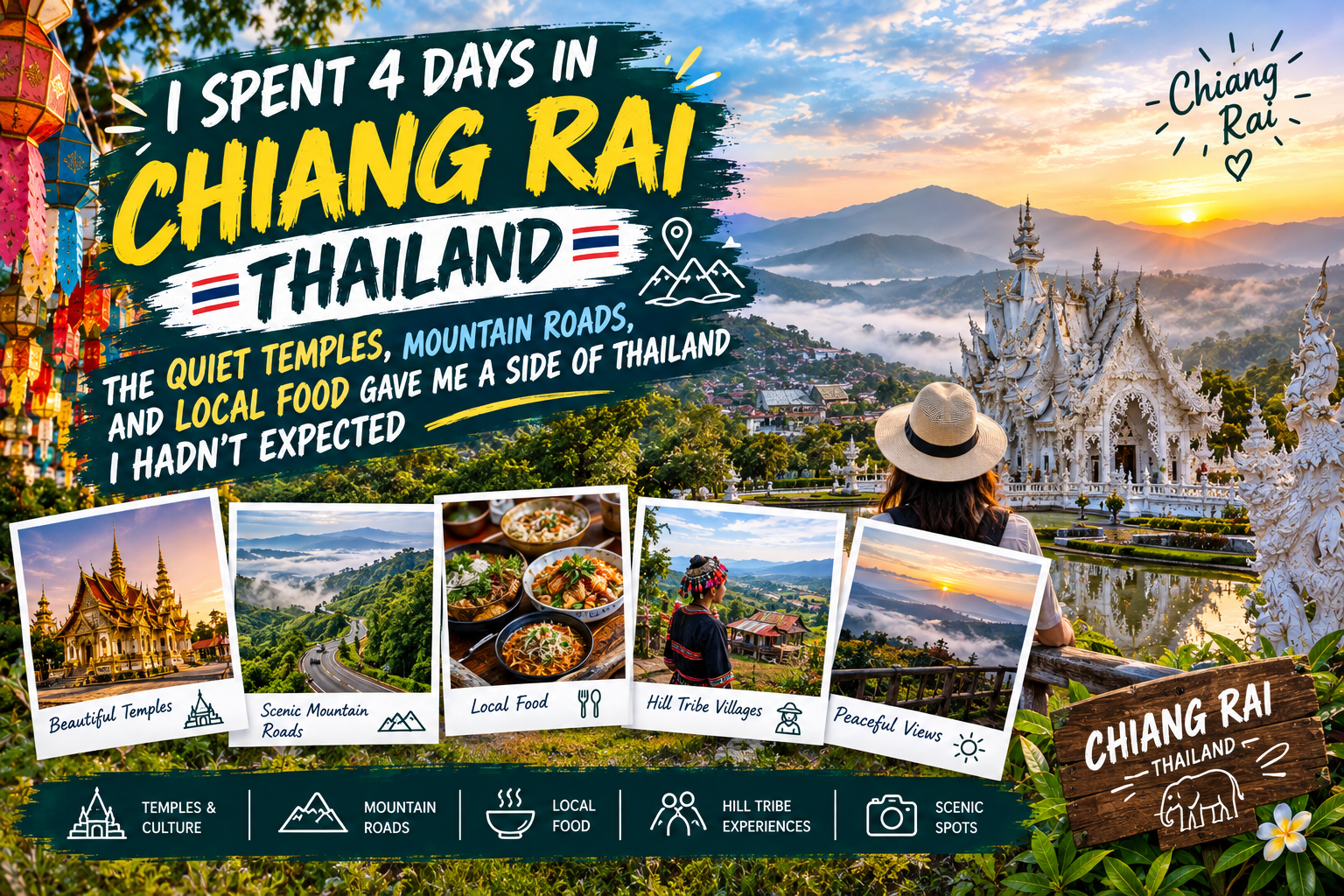
I went to Chiang Rai mostly because Chiang Mai was full.
That’s the honest answer.
Three weeks in northern Thailand sounded perfect, but my original plan had been built almost entirely around Chiang Mai. Then a guesthouse booking fell through two days before I arrived, leaving me with four unexpected days and no real idea what to do with them.
A friend who had backpacked through northern Thailand years earlier offered a simple suggestion.
“Just go up to Chiang Rai instead. It’s quieter.”
At that point, I knew almost nothing about Chiang Rai.
One photograph of a completely white temple sat somewhere in my camera roll. Beyond that image, I had no detailed itinerary, no hotel booking and very few expectations.
So I booked a bus ticket, packed light and headed north.
Four days later, I was telling other travellers to spend more time in Chiang Rai instead of rushing through it as a day trip.
The difference wasn’t dramatic in the way I expected.
Chiang Rai simply moved at another pace.
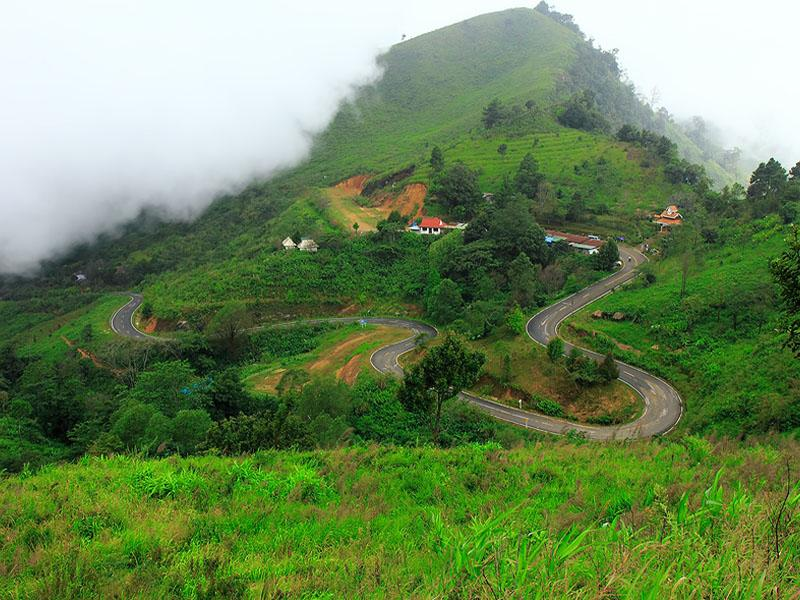
Mountain roads curled through green hills, temples looked more like contemporary art installations, and small food stalls served dishes without trying to turn dinner into a tourist attraction.
That slower rhythm became the unexpected highlight of my trip.
Getting There: Chiang Mai to Chiang Rai
Most travellers I met were considering Chiang Rai as a day trip from Chiang Mai.
I wouldn’t recommend that if you have the time to stay longer.
The road journey takes several hours, and squeezing the city into a single day means spending a significant part of your visit in transit.
I took a bus from Chiang Mai’s Arcade bus station and arrived with enough time to check into my guesthouse, explore the old town and have dinner without rushing.
That slower arrival turned out to matter.
Chiang Rai isn’t a destination that rewards ticking attractions off a list.
Instead, it works better when you leave space for wandering.
Travellers arriving from Bangkok can also fly directly to Chiang Rai International Airport, which is another convenient option.
For a first visit, I would allow at least three full days.
Four days felt even better because it gave me room for the mountains, temples, food and quieter moments.
Before booking your trip, check Thailand’s current visa requirements based on your passport and planned length of stay.
Day One: Settling In and the Chiang Rai Night Bazaar
I arrived in the early afternoon and checked into a small guesthouse near the clock tower.
Then came something I rarely allow myself to do on the first day of a trip.
Nothing.
There was no attraction I needed to reach before sunset.
No restaurant reservation was waiting.
Even the camera stayed in my bag for most of the afternoon.
Instead, I walked.
Chiang Rai’s central area is compact enough to explore on foot, and that aimless wandering gave me my first genuine impression of the city.
The famous golden clock tower sits near the centre, surrounded by restaurants, cafés and small shops.
After sunset, the area takes on a completely different atmosphere.
My first dinner came from the Chiang Rai Night Bazaar, where a covered food court was already filling with locals and travellers.
Pad see ew was my first order.
Then came khao soi.
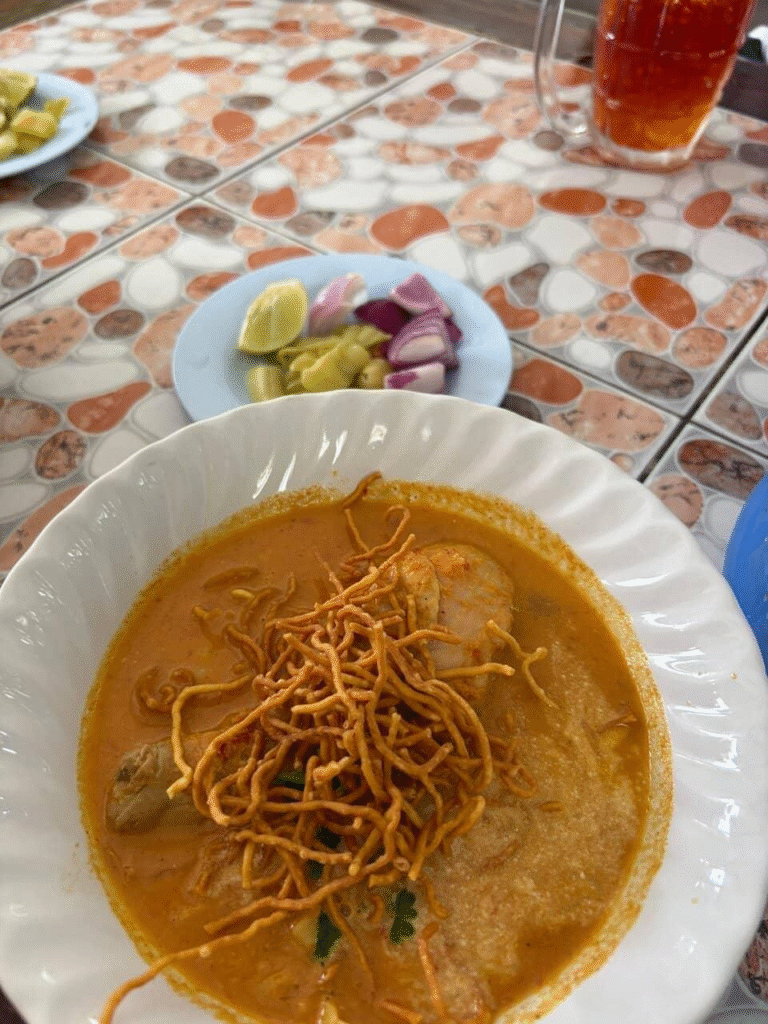
The bowl was exactly what I had hoped northern Thai food would taste like: rich, aromatic and slightly spicy, with soft noodles underneath crispy noodles and a squeeze of lime cutting through the curry.
The price was surprisingly modest.
More importantly, the meal felt like everyday food rather than something created specifically for visitors.
Nearby, a small stage had traditional music playing.
Handwoven textiles and local handicrafts filled some of the surrounding stalls.
Families sat together over dinner while vendors continued serving customers.
Nobody seemed particularly interested in performing a version of local life for tourists.
That first evening gave me one of my clearest impressions of Chiang Rai.
The city wasn’t trying too hard.
I returned to the guesthouse earlier than expected.
The following morning, I had an early start.
Day Two: The Temples That Aren’t Really Temples
This was the day I had unknowingly built the whole trip around.
My first stop was Wat Rong Khun, better known as the White Temple Chiang Rai.
Photographs don’t really prepare you for it.
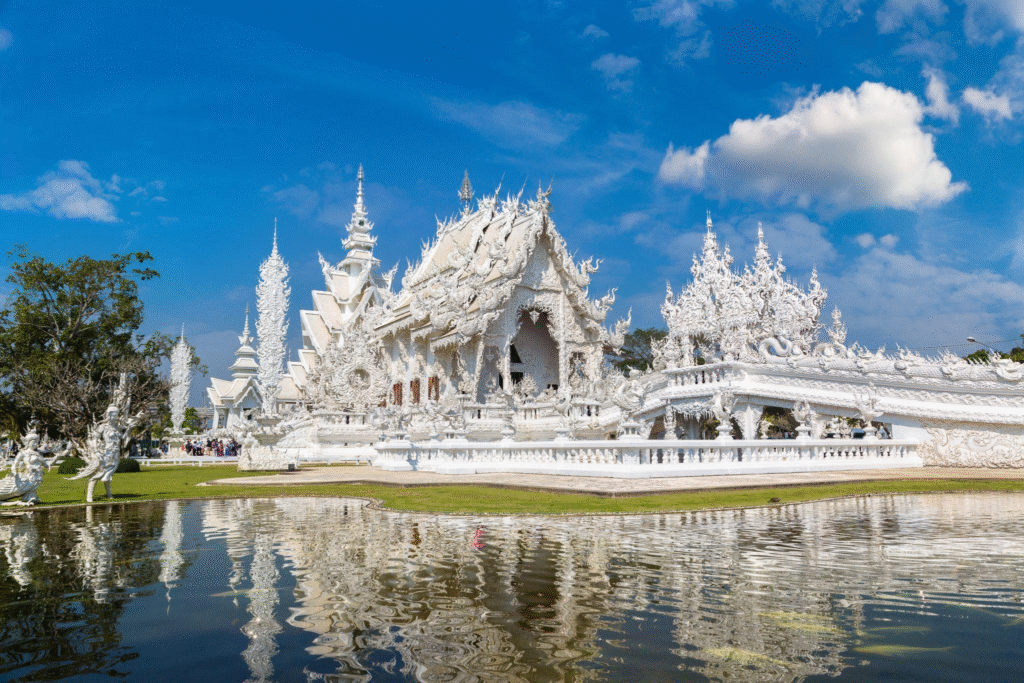
Every surface appears intensely white, while thousands of tiny mirror fragments catch the light across the architecture.
Thai artist Chalermchai Kositpipat created the complex as an artistic and religious project, which makes it very different from a conventional historic Buddhist temple.
The famous bridge leading toward the main hall passes above sculptures of reaching hands.
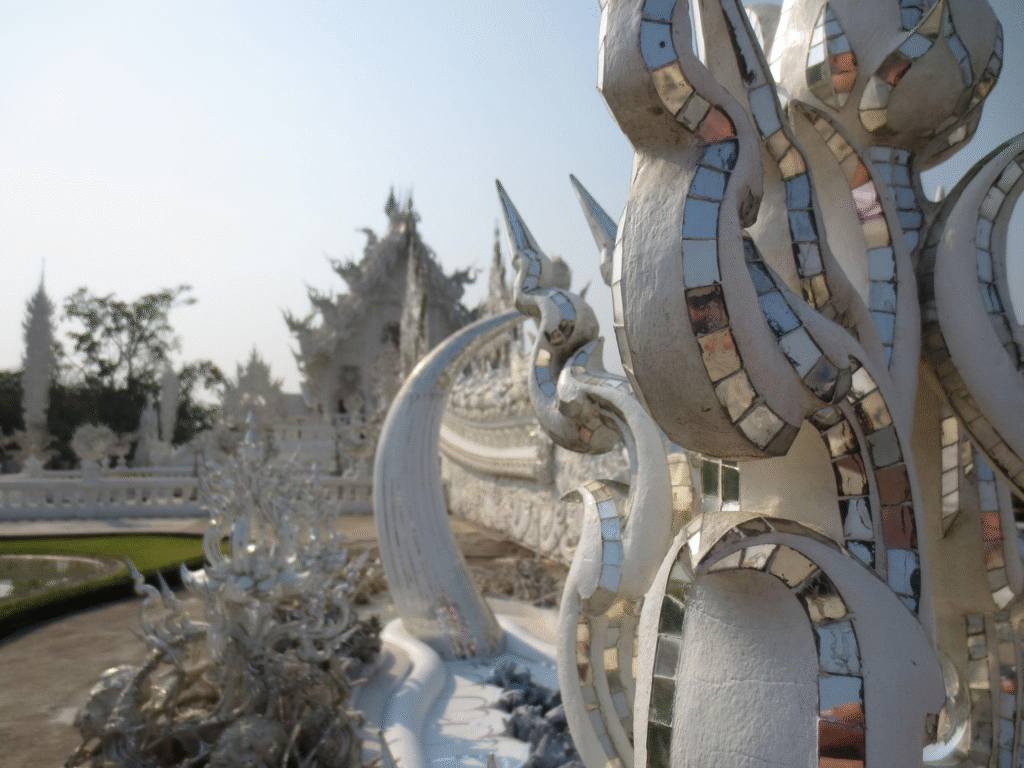
Those figures represent desire and suffering.
Walking across them before nine in the morning felt strangely theatrical.
I had already seen hundreds of photographs of the White Temple.
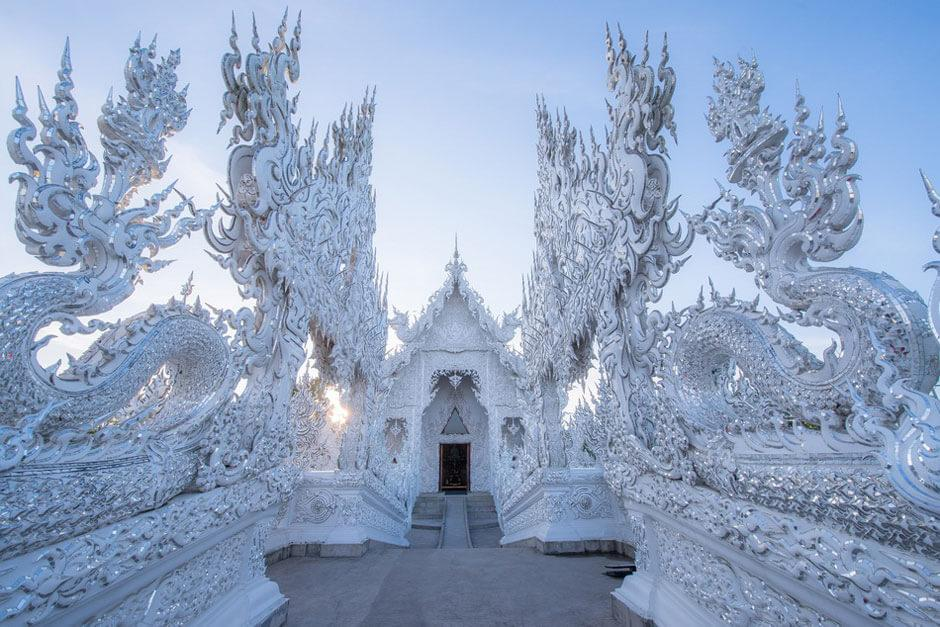
Standing there in person still felt completely different.
An early arrival is worth considering because the site becomes busier as tour groups arrive.
Wat Rong Suea Ten: Chiang Rai’s Blue Temple
The next stop was Wat Rong Suea Ten, commonly known as the Blue Temple.
Its appearance couldn’t be more different from the White Temple.
Deep cobalt blue dominates the exterior, while gold details frame the architecture.
Inside, a large white Buddha image creates a striking contrast against the darker walls.
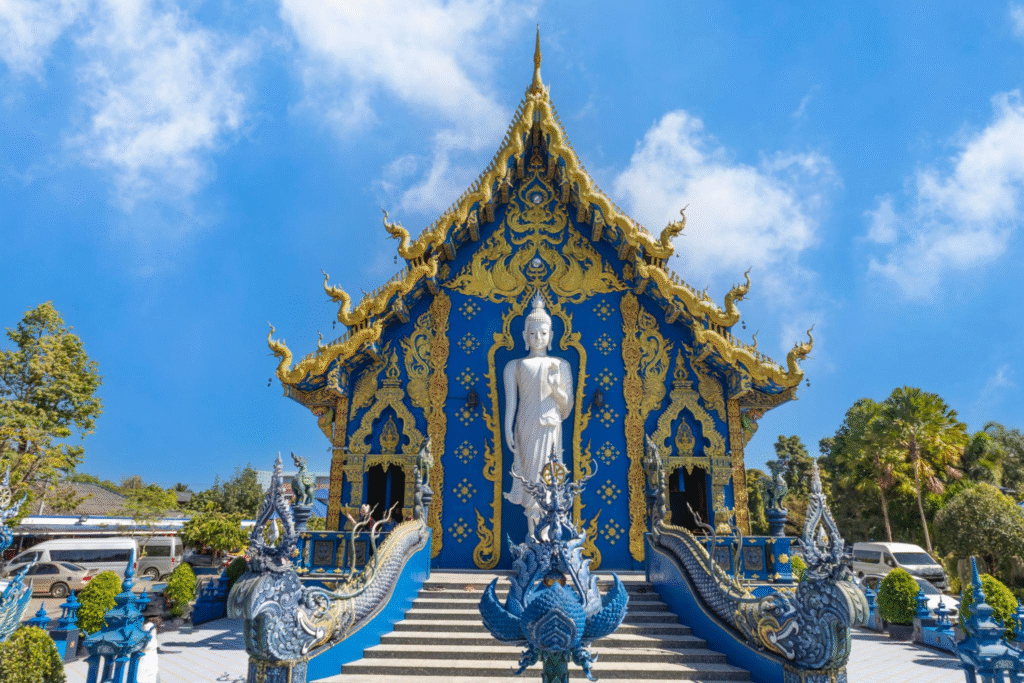
Naga sculptures guard the entrance, adding another layer of colour to the already dramatic setting.
Visitors do come here, but the atmosphere felt much calmer during my visit.
For nearly twenty minutes, I had little reason to do anything except sit in the courtyard.
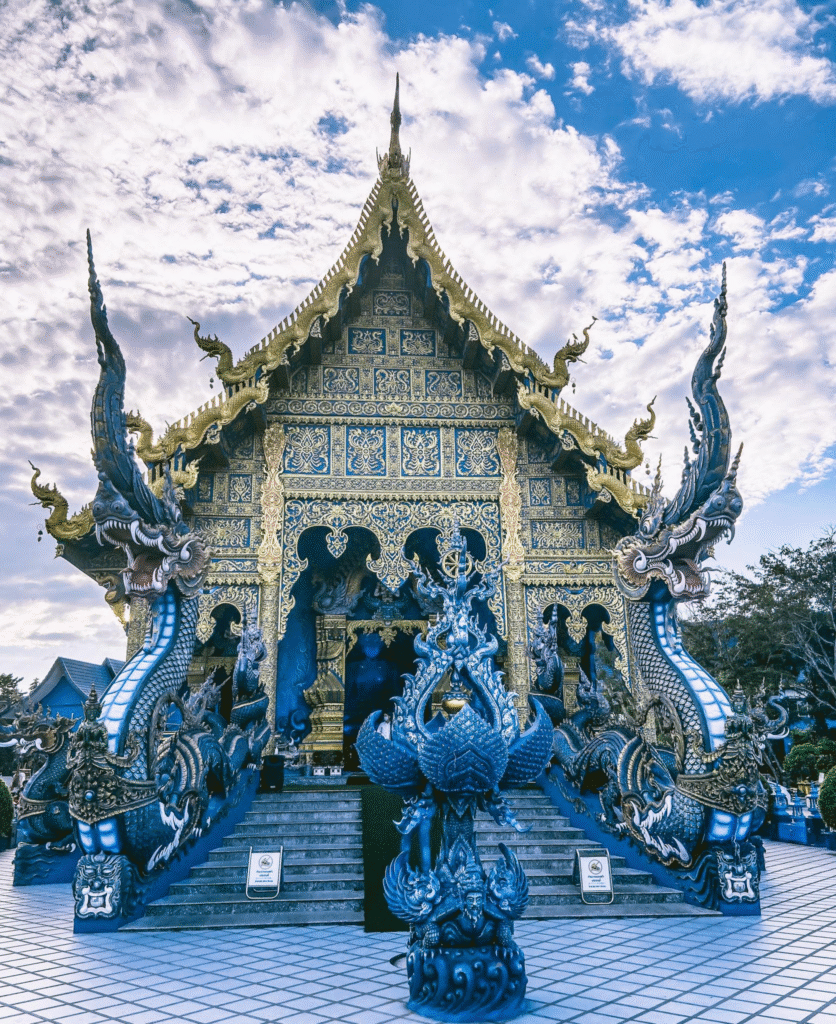
There was no schedule pressing me to move.
That was becoming a theme of the trip.
Baan Dam: The Black House
The final stop of the day became my favourite.
Baan Dam Museum, also known as the Black House Chiang Rai, isn’t a temple.
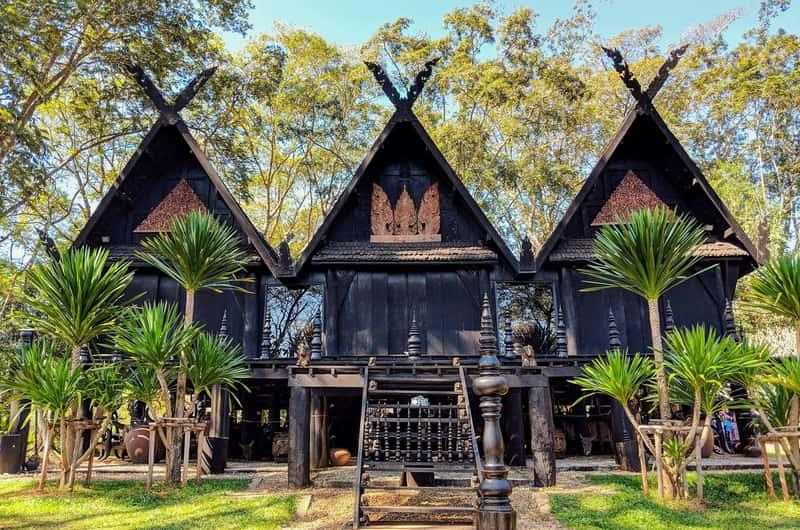
Instead, it is an art complex created by Thai artist Thawan Duchanee.
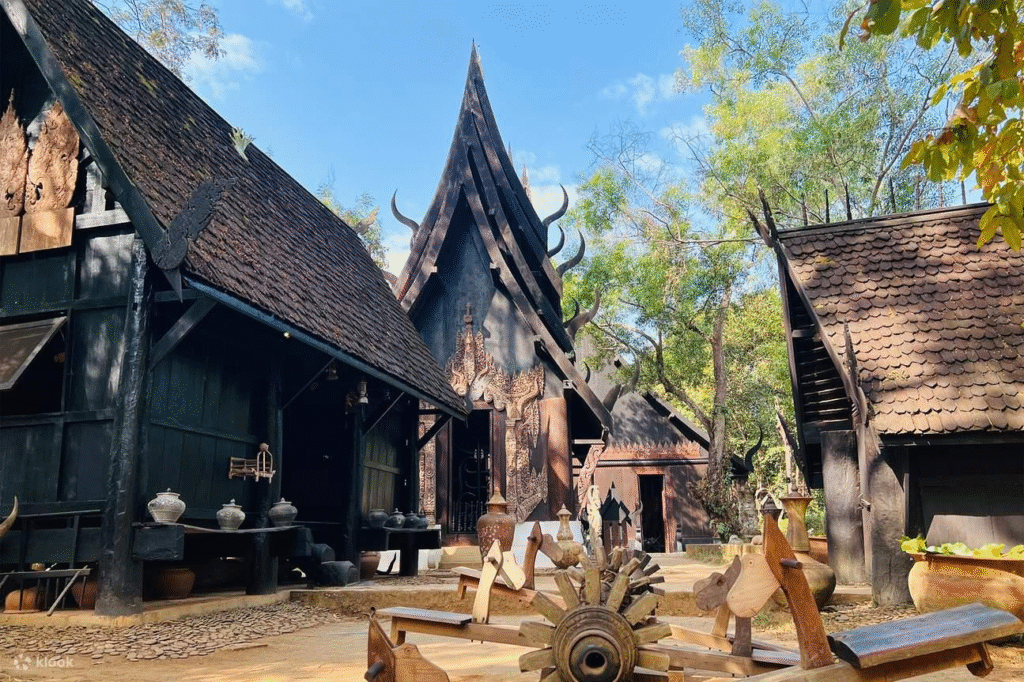
Around forty dark wooden buildings are spread across a garden, with interiors containing animal horns, bones, skins, furniture and artworks.
The atmosphere is intentionally dramatic.
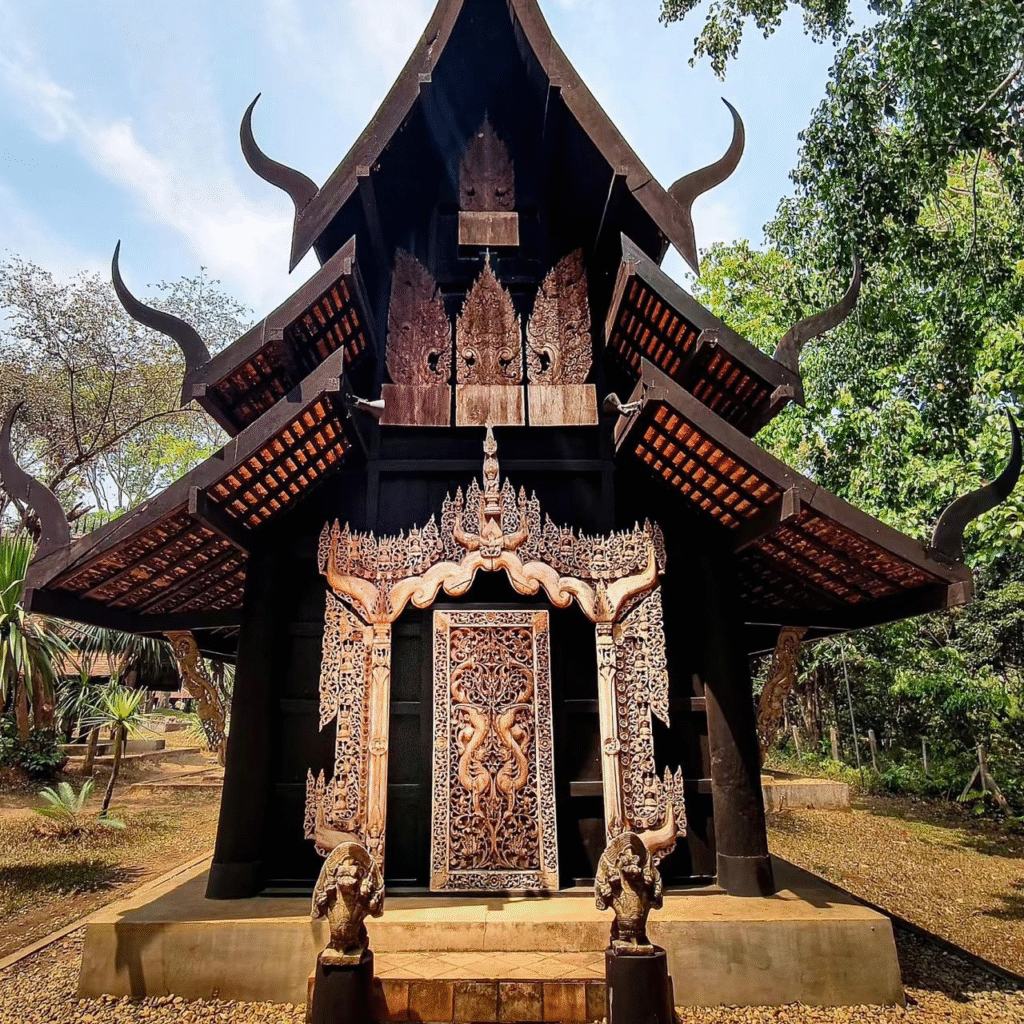
Some rooms feel almost ceremonial.
Others are distinctly eerie.
Compared with the White Temple’s bright and reflective symbolism, Baan Dam feels darker and much more mysterious.
Seeing both on the same day gave me a better understanding of Chiang Rai’s artistic identity.
The city has much more to offer than conventional Buddhist architecture.
By late afternoon, I had had enough sightseeing.
Another attraction could have easily been added to the itinerary.
Instead, I found a café and stayed there for almost an hour.
That became my preferred way of travelling through Chiang Rai.
See something interesting.
Stop for a while.
Eat.
Walk.
Continue.
Day Three: Mountain Roads, Tea, Coffee and the Golden Triangle
Day three changed the entire character of the trip.
Until then, Chiang Rai had felt primarily like a city-and-temple destination.
Suddenly, it became a road trip.
I hired a driver through my guesthouse and headed north toward Doi Mae Salong.
The road gradually climbed into the mountains.
Curves became tighter as buildings disappeared behind us.
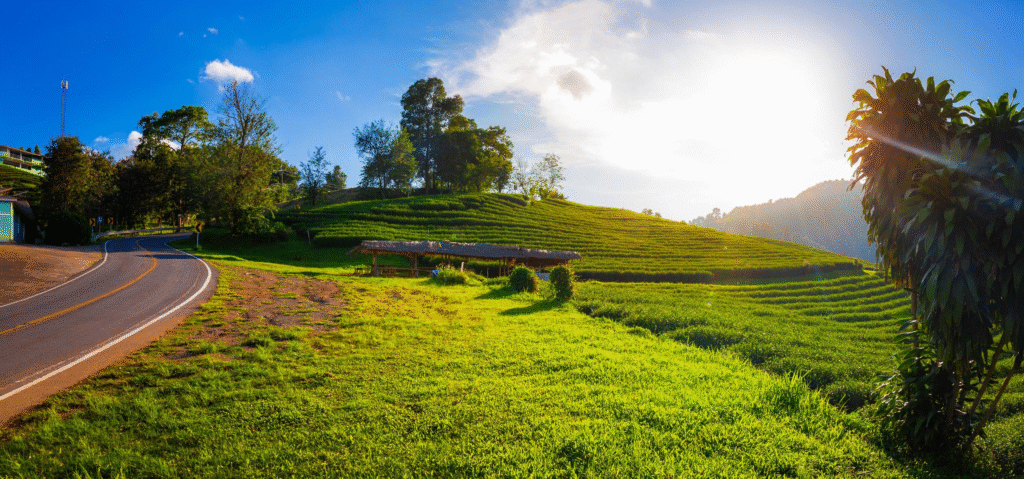
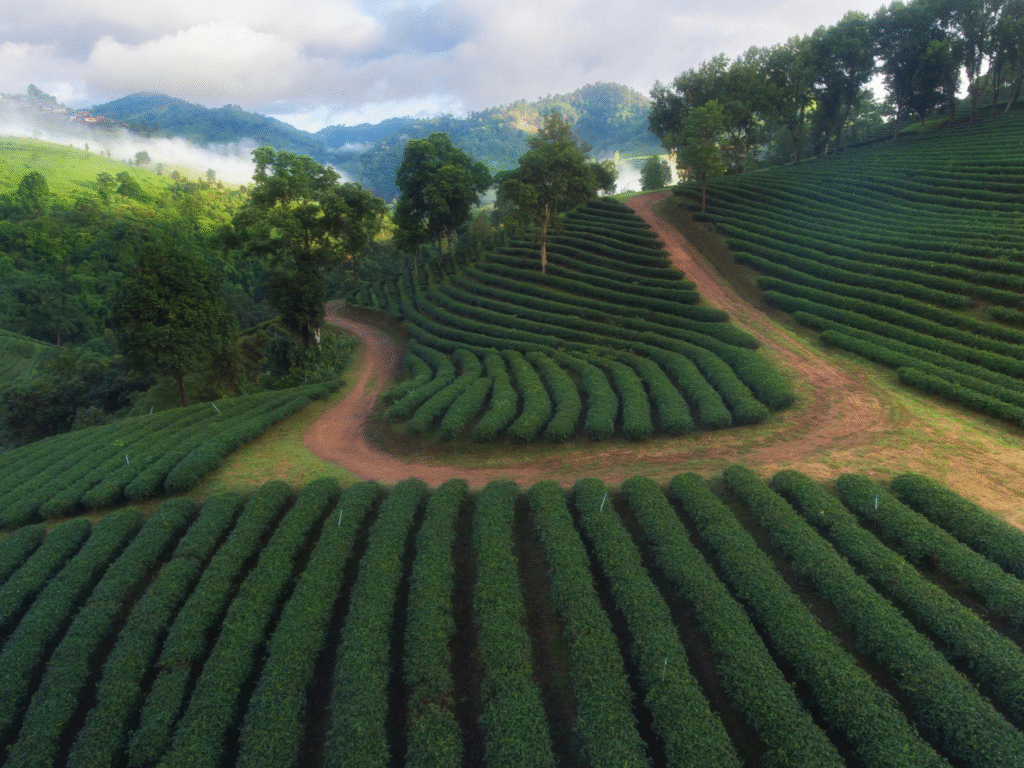
Tea plantations began appearing across the hillsides.
With every kilometre, the landscape became greener and quieter.
Doi Mae Salong has a distinctive history connected to Chinese communities that settled in the mountains after the Chinese Civil War.
Today, the area is known for tea plantations, mountain scenery and Chinese-influenced food and culture.
For me, the road was almost as memorable as the destination.
Long stretches passed without another tourist vehicle.
That sense of space was exactly what I had been looking for.
Doi Mae Salong Tea Country
Tea plantations covered the slopes in neat green patterns.
At one stop, I tried locally grown oolong tea while looking across the mountains.
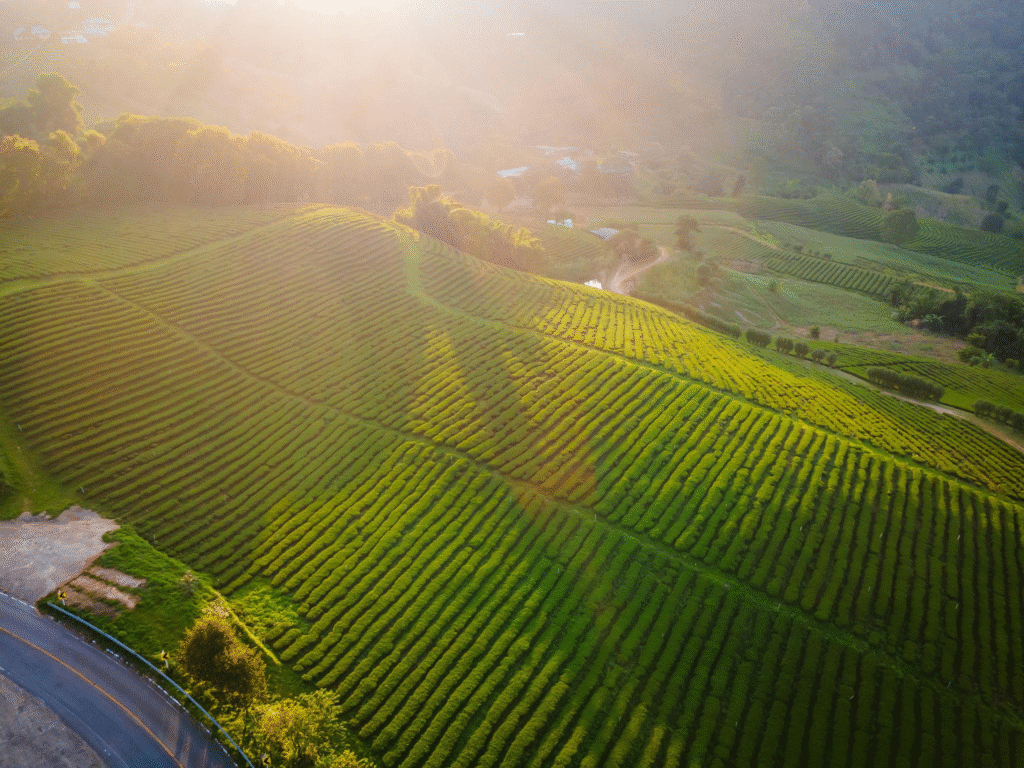
Drinking tea in that setting felt completely different from ordering a cup in a Bangkok café.
For the first time, I could see the landscape behind the drink.
That connection between food and place became one of my favourite parts of northern Thailand.
Coffee offered a similar experience later that day.
Doi Chang Coffee
On the way back, we stopped around Doi Chang, one of Thailand’s better-known coffee-growing regions.
A small roadside café sat directly on the hillside.
I ordered a black coffee made with beans grown in the surrounding area.
Mist slowly moved through the valley below while I sat outside.
There was no famous landmark nearby.
Nothing demanded a photograph.
No attraction was waiting around the corner.
Still, I stayed.
Those unplanned moments reminded me why I enjoy travelling without filling every hour of an itinerary.
The Golden Triangle
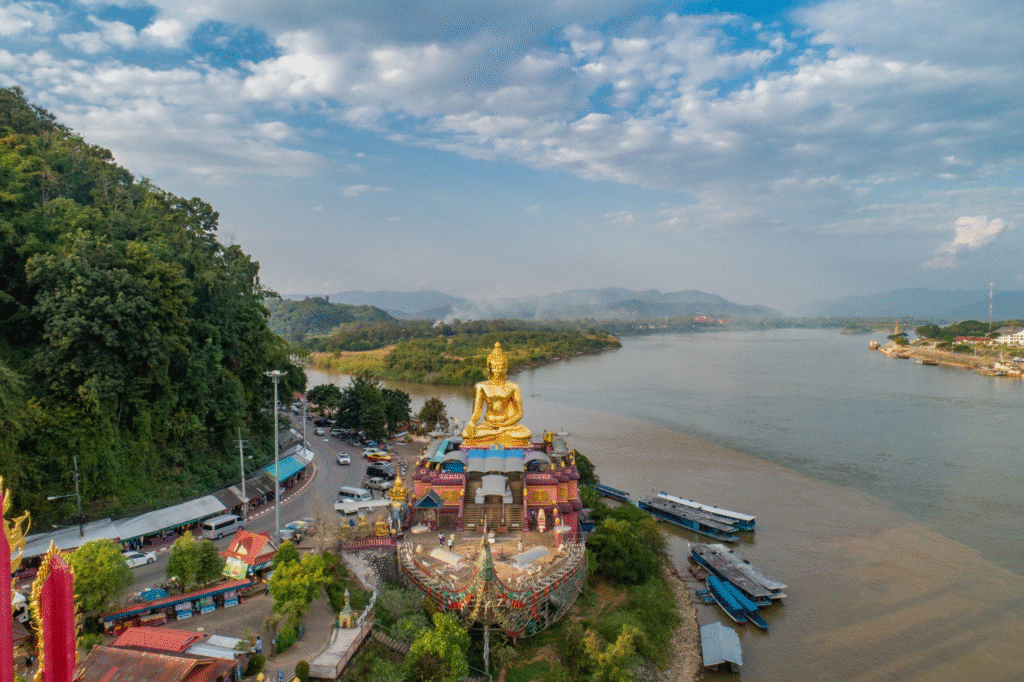
By afternoon, we continued north toward the Golden Triangle Thailand, where Thailand, Laos and Myanmar meet around the Mekong River.
The geography alone makes the area fascinating.
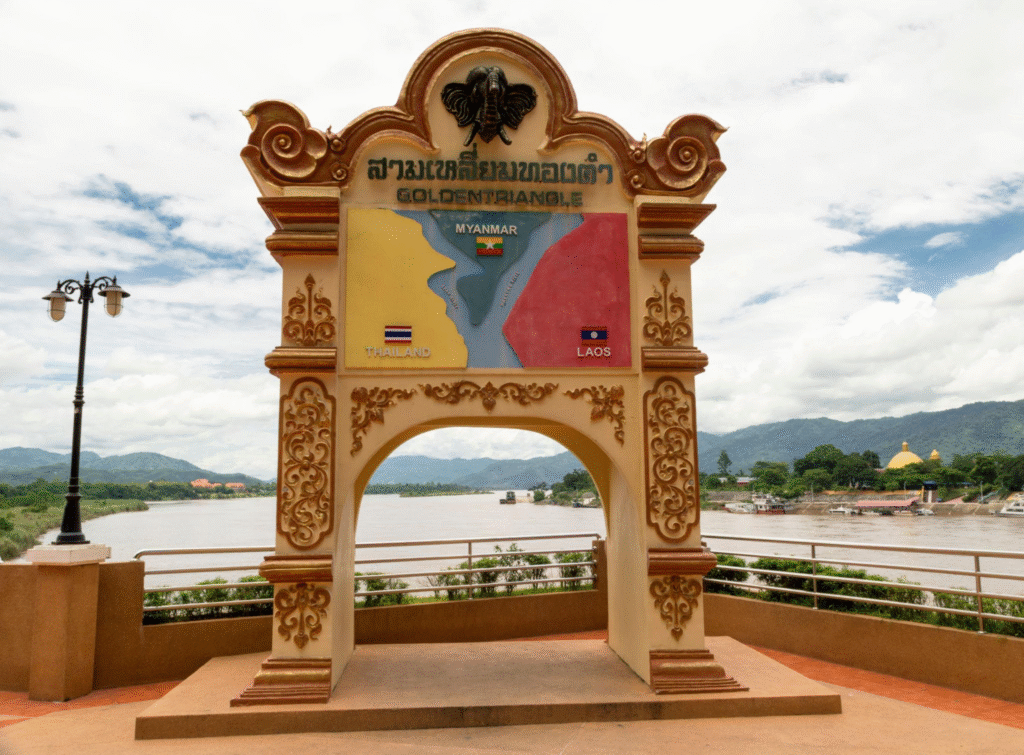
Three countries surround the same river landscape.
A viewpoint provides a broad perspective across the region, while sightseeing boats offer another way to experience the river.
Tourism has certainly developed here.
Souvenir shops, restaurants and visitor facilities are easy to find.
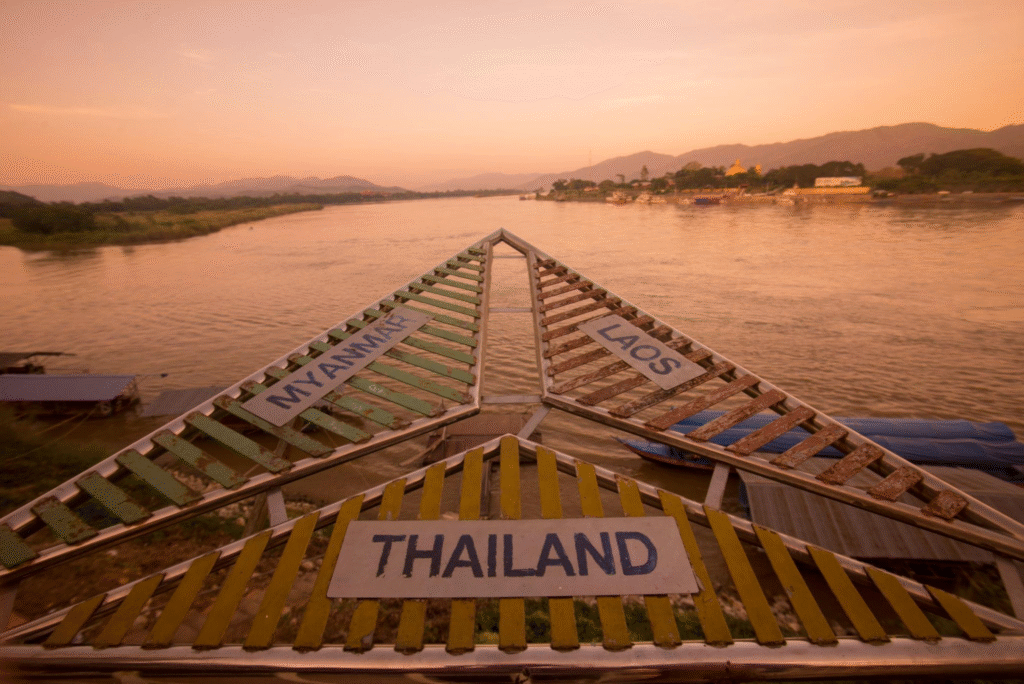
Even so, standing above the Mekong and looking toward neighbouring countries made the stop worthwhile.
I didn’t spend the entire afternoon there.
Twenty or thirty minutes was enough for me.
The journey back to Chiang Rai was more appealing anyway.
Mountain shadows stretched across the road as the sun began dropping.
By the time we returned to the city, I was tired in the satisfying way that only a full day on the road can make you.
Day Four: The Big Buddha, Mae Fah Luang Garden and One Last Meal
My final day was deliberately slower.
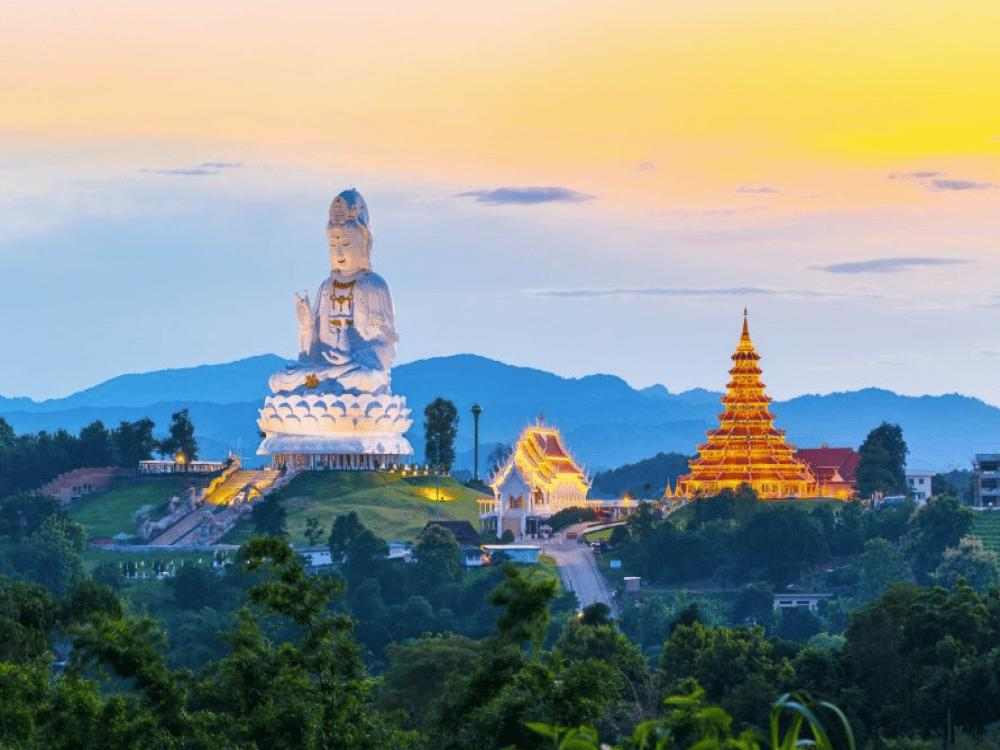
I started at Wat Huay Pla Kang, a hilltop temple complex often called the Big Buddha by visitors.
Technically, the enormous white figure is a Guanyin statue, not a traditional Buddha statue.
A large nine-tiered pagoda stands beside it, while the hilltop location provides broad views over the surrounding landscape.
The combination makes Wat Huay Pla Kang one of Chiang Rai’s most recognisable religious sites.
I arrived early.
Almost nobody was around.
For twenty minutes, the entire complex felt incredibly still.
That quietness ended up being more memorable than the size of the statue.
Mae Fah Luang Garden
From there, I continued toward Mae Fah Luang Garden in the Doi Tung area.
The landscaped gardens are known for seasonal flowers, carefully maintained paths and cool mountain scenery.
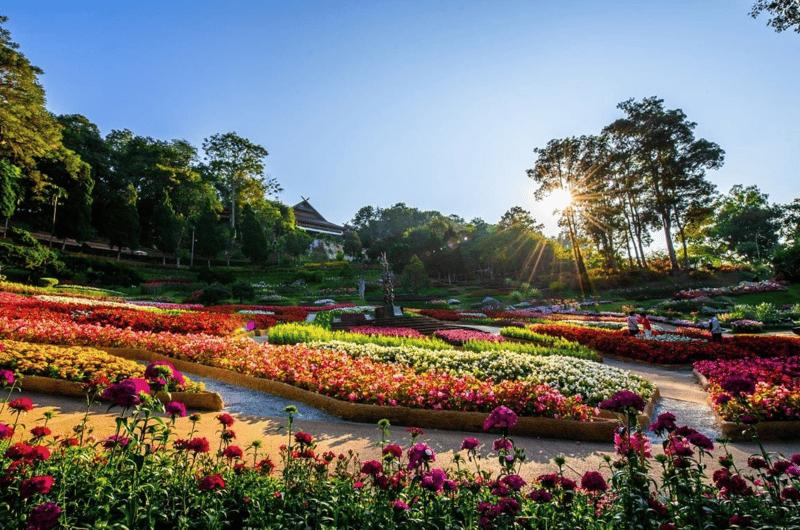
Flower beds stretched across the hillside.
Trees framed views of the surrounding mountains.
Visitors moved through the gardens at an easy pace.
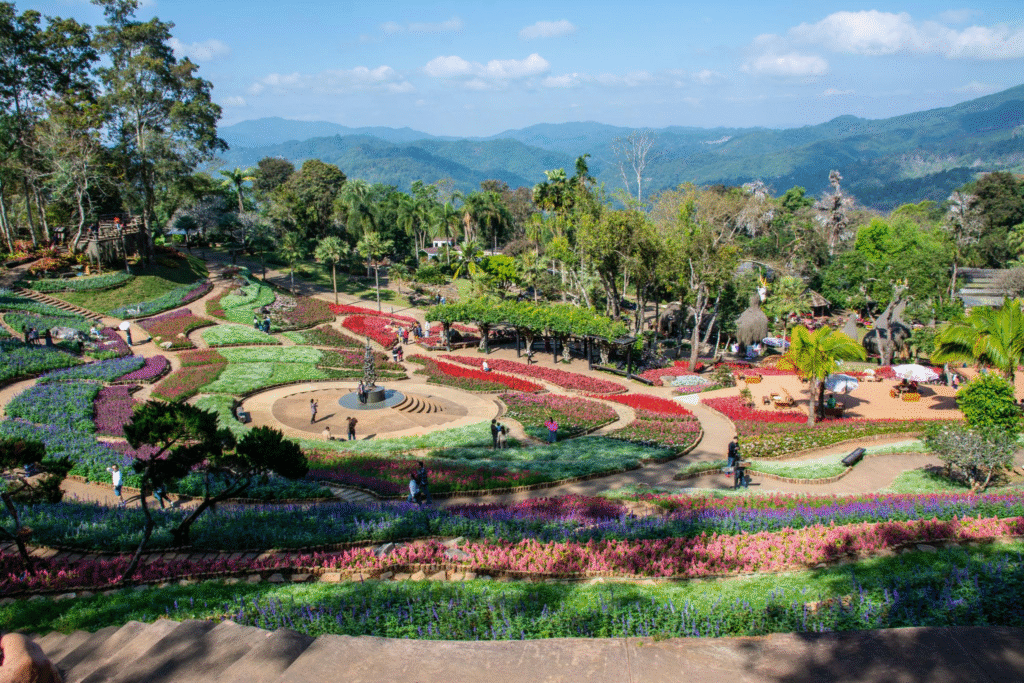
Nothing encouraged me to hurry.
I spent a couple of hours there before continuing back toward town.
The visit was a fitting final attraction because it combined natural beauty with the region’s more recent social and agricultural history.
My Last Meal in Chiang Rai
For my final dinner, I skipped the night bazaar.
Instead, I found a small family-run restaurant a few streets away from the old town.
There was no elaborate menu.
I ordered sai oua, the northern Thai grilled sausage packed with herbs and spices.
Sticky rice came alongside it.
Another plate held nam prik ong, a tomato-and-pork chilli dip served with vegetables.
The food was simple.
It was also one of the best meals I had eaten during my entire northern Thailand trip.
Northern Thai cuisine has its own personality, built around herbs, chilli pastes, fermented ingredients, grilled meats and regional noodles.
Khao soi may be the dish most visitors know, but it is only the beginning.
That final dinner felt right.
No rooftop restaurant.
No expensive tasting menu.
Just good food at a small table.
What Four Days Actually Gets You in Chiang Rai
So, is 4 days enough for Chiang Rai?
Yes.
Four days gives you enough time to experience the major Chiang Rai temples, spend a full day exploring the mountains and Golden Triangle, and still leave room for slow mornings and long meals.
Three days would work for a shorter trip.
However, compressing everything into a single weekend would make the experience much more rushed.
The mountain day deserves time.
So does the city itself.
A four-day Chiang Rai itinerary gives you room to experience the destination rather than simply photograph it.
Chiang Rai vs Chiang Mai: Which Should You Visit?
I wouldn’t treat Chiang Rai vs Chiang Mai as an either-or decision.
The two destinations offer very different experiences.
Chiang Mai has more infrastructure, nightlife, restaurants, cafés, accommodation choices and established tourist routes.
Chiang Rai feels smaller and less crowded.
Mountain roads begin relatively quickly outside the city.
The temples have an unusually artistic character, while tea and coffee country provide a completely different side of northern Thailand.
That slower atmosphere reminded me of other destinations where the landscape itself sets the pace of the trip.
For travellers with enough time, visiting both makes more sense than choosing only one.
How Much Does Four Days in Chiang Rai Cost?
My own four-day trip cost well under US$200 for a basic guesthouse, food, local transportation, a private driver for the mountain day and entry fees.
Of course, your total can be considerably higher or lower.
Accommodation will be one of the biggest variables.
Private drivers and longer excursions can also increase the daily cost.
A simple budget covering accommodation, food, transport, attractions and activities is enough to avoid unpleasant surprises.
Mountain travel also comes with a packing consideration.
Northern Thailand can be warm during the day while hill areas become noticeably cooler in the morning.
A light jacket is worth carrying.
Practical Chiang Rai Travel Guide
Best Time to Visit Chiang Rai
The best time to visit Chiang Rai Thailand for most travellers is generally November through February.
Cooler and drier conditions make this period comfortable for temples, markets and mountain drives.
March and April can be very hot, while northern Thailand may also experience seasonal smoke and haze during the burning season.
Travellers visiting during the late dry season should check current air-quality conditions before planning mountain excursions.
Getting Around Chiang Rai
The central city is easy enough to explore using tuk-tuks, songthaews and taxis.
Once you head toward Doi Mae Salong, Doi Chang, Doi Tung or the Golden Triangle, distances increase significantly.
For a full mountain day, I found a hired driver much easier than coordinating several separate rides.
Scooters are another possibility for experienced riders.
However, Chiang Rai’s mountain roads are winding, and riders should be comfortable with long distances and changing road conditions.
Where to Stay in Chiang Rai
The old town and area around the clock tower are convenient for first-time visitors.
Restaurants, markets and central attractions are all relatively close.
Travellers looking for more peace can choose guesthouses outside the centre or accommodation closer to the countryside.
I preferred staying near the centre because evening food walks were easy.
Money and Payments
Cash remains useful for markets, small restaurants, local transport and smaller attractions.
Larger hotels and established businesses may accept cards.
Carrying enough Thai baht for the day saves the trouble of looking for an ATM whenever you want street food or a small local purchase.
Things to Do in Chiang Rai in 4 Days
If I were planning the trip again, my Chiang Rai itinerary would look like this.
Day 1
- Arrive from Chiang Mai
- Check into accommodation near the old town
- Walk around the clock tower
- Explore Chiang Rai Night Bazaar
- Try khao soi and northern Thai food
Day 2
- Visit Wat Rong Khun / White Temple
- Explore Wat Rong Suea Ten / Blue Temple
- Visit Baan Dam / Black House
- Spend a relaxed afternoon at a café
Day 3
- Drive toward Doi Mae Salong
- Explore tea plantations
- Stop around Doi Chang for coffee
- Continue toward the Golden Triangle
- Return to Chiang Rai
Day 4
- Visit Wat Huay Pla Kang
- Explore Mae Fah Luang Garden
- Enjoy a slow afternoon
- Finish with sai oua and nam prik ong
This itinerary covers the major highlights without turning every hour into a race.
What Food Should You Try in Chiang Rai?
If food is one of your reasons for visiting northern Thailand, don’t limit yourself to familiar Thai dishes.
Start with khao soi, the famous northern Thai curry noodle dish.
Next, try sai oua, a herb-filled grilled sausage that works beautifully with sticky rice.
Another dish worth ordering is nam prik ong, a tomato-and-pork chilli dip traditionally served with vegetables and other accompaniments.
Markets and small restaurants are also good places to look for regional noodles, grilled meats, chilli pastes and local snacks.
Some of my best meals in Chiang Rai were the least planned ones.
Frequently Asked Questions
Is 4 days enough for Chiang Rai?
Yes. Four days in Chiang Rai is enough to explore the White Temple, Blue Temple and Black House, spend a full day around Doi Mae Salong and the Golden Triangle, and still have time for local food and a slower final day.
How do you get from Chiang Mai to Chiang Rai?
The easiest option for most travellers is a bus or minivan from Chiang Mai. The road journey takes several hours, depending on traffic and the service you choose. Direct flights from Bangkok to Chiang Rai are another option for travellers arriving from elsewhere in Thailand.
Is Chiang Rai worth visiting?
Absolutely. Chiang Rai is worth visiting if you enjoy temples, mountain landscapes, local food, tea and coffee plantations, road trips and quieter destinations. The province offers a distinctly different atmosphere from Chiang Mai.
What food should you try in Chiang Rai?
Try khao soi, sai oua and nam prik ong. Together, they provide a good introduction to the flavours of northern Thai cuisine.
What is the best time to visit Chiang Rai Thailand?
November through February is generally the most comfortable period because of cooler, drier conditions. Travellers visiting during March and April should also check current air-quality conditions because seasonal haze can affect northern Thailand.
Chiang Rai vs Chiang Mai: which is better?
Neither destination is objectively better. Chiang Mai offers more nightlife, infrastructure and established tourist experiences, while Chiang Rai offers a quieter atmosphere, distinctive temples and easier access to mountain landscapes.
Can you visit Chiang Rai as a day trip from Chiang Mai?
Yes, but I wouldn’t recommend it if you have enough time to stay overnight. The journey takes several hours each way, leaving limited time to experience Chiang Rai properly.
How many days should you spend in Chiang Rai?
Three days is enough for the main highlights. Four days is better if you want to include Doi Mae Salong, the Golden Triangle, local food and slower mornings without constantly watching the clock.
Final Thoughts: The Chiang Rai I Didn’t Expect
I didn’t go to Chiang Rai expecting much.
That probably explains why the place stayed with me.
No single spectacular moment defined the trip.
Instead, it was the accumulation of small ones.
A bowl of khao soi at the night bazaar.
The blue walls of Wat Rong Suea Ten.
The strange darkness of Baan Dam.
A mountain road disappearing into tea plantations.
Coffee overlooking a misty valley.
The Mekong stretching toward three different countries.
A quiet morning at Wat Huay Pla Kang.
One last plate of sai oua before leaving.
Chiang Rai doesn’t seem interested in competing with Bangkok or Chiang Mai.
It doesn’t need to.
What it offers is different.
This is northern Thailand at a slower pace: artistic temples, winding mountain roads, tea and coffee country, local food and long stretches of road where the only plan is to keep going.
For anyone planning a longer Southeast Asia route, Chiang Rai deserves more than a rushed overnight stop.
Four days gave me enough time to see the highlights.
More importantly, those four days gave me enough time to stop rushing.
That turned out to be the part of the trip I remembered most.
Internal Links
- Experience-Led Travel in 2026: Okinawa, Marrakech, Swiss Alps
- Why Do-Less Travel Is Becoming More Popular
- Why Offbeat Destinations Create Better Travel Memories
- How to Travel More Sustainably
- The Joy of Exploring Without a Fixed Plan
- How Travel Can Support Your Mental Well-Being
- Lesser-Known Islands Beyond the Tourist Crowds