
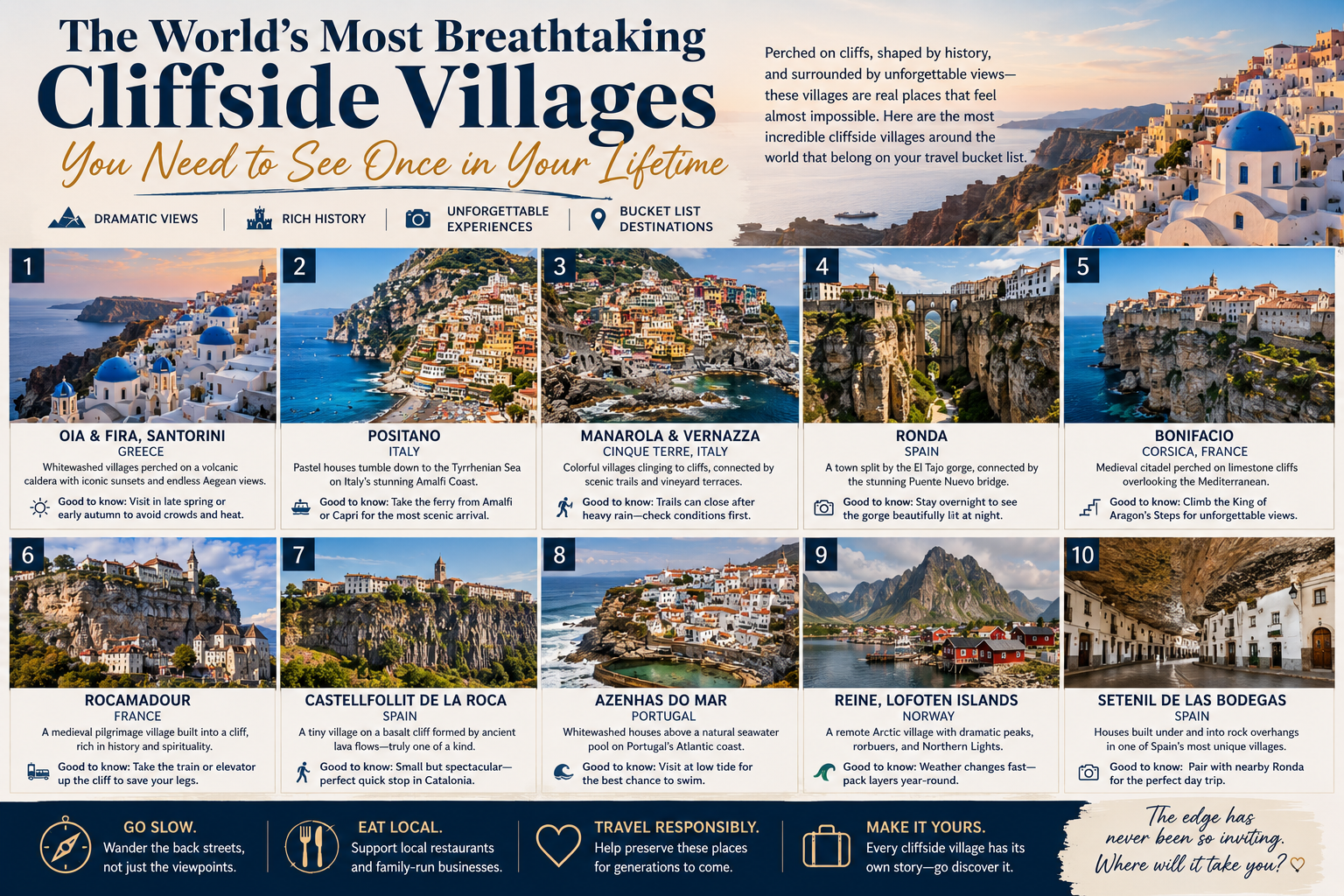
There is something unforgettable about cliffside villages. Perched high above the sea, rivers, or deep valleys, these remarkable settlements combine breathtaking views with centuries of history. Long before tourism existed, people built these villages for protection, fishing, trade, and survival. Today, they rank among the world’s most scenic travel destinations.
From the whitewashed streets of Santorini to the colorful cliffs of Italy’s Amalfi Coast, cliffside villages offer dramatic landscapes, rich culture, and unforgettable experiences. Whether you’re planning your next adventure or searching for travel inspiration, these destinations deserve a place on your bucket list.
Why Visit Cliffside Villages?
Cliffside villages offer much more than beautiful views. They combine history, culture, architecture, and nature in one unforgettable destination.
Here are a few reasons why travelers love visiting them:
- Spectacular views over oceans, valleys, and mountains.
- Historic streets filled with local culture.
- Unique architecture shaped by the landscape.
- Incredible photography opportunities.
- Authentic local restaurants and traditional cuisine.
- Hiking trails with unforgettable scenery.
Unlike modern resorts, these villages have grown naturally over centuries, giving each destination its own character and charm.
1. Oia and Fira, Santorini, Greece: cliffside villages
No list of cliffside villages is complete without Santorini.
Oia and Fira sit along the rim of a volcanic caldera overlooking the sparkling Aegean Sea. Whitewashed houses, blue-domed churches, and narrow streets create one of the world’s most recognizable landscapes.
Fira is the island’s lively center, offering cafés, restaurants, boutique shops, and spectacular viewpoints. Oia, located further north, is quieter and famous for its world-class sunsets. Every evening, visitors gather near the old castle to watch the sun disappear below the horizon.
Arrive early in the morning to explore peaceful streets before cruise ships bring larger crowds.
Best Time to Visit Santorini
Visit between April and June or September and October for pleasant weather and fewer tourists.
2. Positano, Italy: cliffside villages
Few cliffside villages are as famous as Positano.
Located on Italy’s Amalfi Coast, this picturesque village features colorful houses cascading down steep cliffs toward the Tyrrhenian Sea. Every street leads to stunning coastal views, while charming cafés and boutique shops create a relaxed Mediterranean atmosphere.
At the bottom of the village lies Spiaggia Grande, Positano’s main beach. Visitors can also hike the famous Path of the Gods, one of Italy’s most scenic coastal trails.
Fresh seafood, homemade pasta, and locally grown lemons complete the experience.
Travel Tip
Instead of driving, arrive by ferry from Amalfi or Capri to enjoy spectacular views from the water.
3. Manarola and Vernazza, Cinque Terre, Italy
The Cinque Terre is home to five beautiful cliffside villages, but Manarola and Vernazza remain the most photographed.
Manarola features colorful houses rising above a small fishing harbor. Boats rest along the rocky shoreline, while vineyards cover the surrounding hills.
Just a short train ride away, Vernazza sits around a natural harbor protected by a medieval watchtower. Narrow streets lead to waterfront cafés serving fresh seafood and local Ligurian specialties.
Both villages belong to the Cinque Terre UNESCO World Heritage Site and are connected by scenic hiking trails.
Don’t Miss
Walk a section of the famous coastal trail for unforgettable views of the Mediterranean Sea.
4. Ronda, Spain: cliffside villages
Unlike most cliffside villages, Ronda overlooks a dramatic canyon instead of the sea.
The town stands above the El Tajo Gorge, where cliffs drop nearly 100 meters to the river below. The impressive Puente Nuevo Bridge connects the historic old town with the newer district.
Ronda also preserves an important part of Spain’s history. Visitors can explore ancient Moorish streets, historic churches, and one of Spain’s oldest bullrings.
Several walking trails below the bridge offer spectacular views of the village towering above the gorge.
Travel Tip
Spend one night in Ronda to enjoy the illuminated bridge after sunset, when most day-trippers have left.
5. Bonifacio, Corsica, France
Bonifacio ranks among Europe’s most dramatic cliffside villages.
Built on towering limestone cliffs overlooking the Mediterranean Sea, the historic town appears to float above the water. Narrow streets, stone houses, and centuries-old fortifications create an unforgettable atmosphere.
One of Bonifacio’s highlights is the famous King of Aragon’s Steps, a staircase carved directly into the cliff. The climb is challenging, but the panoramic coastal views make every step worthwhile.
Boat tours also provide an entirely different perspective, allowing visitors to admire the impressive cliffs, hidden sea caves, and historic citadel from below.
Best Experience
Take a sunset boat cruise to see Bonifacio glowing above the limestone cliffs while the Mediterranean reflects the evening light.
6. Rocamadour, France
Among Europe’s most remarkable cliffside villages, Rocamadour stands out for its history and spiritual significance. Built into a towering limestone cliff in the Lot Valley, this medieval village has attracted pilgrims for centuries.
Stone houses, ancient chapels, and a hilltop castle rise in layers along the cliff, creating a breathtaking skyline. At the heart of the village lies the Sanctuary of Our Lady of Rocamadour, home to the famous Black Madonna statue.
Walking through its narrow streets feels like stepping back in time. Every corner reveals impressive architecture, historic landmarks, and panoramic valley views.
Travel Tip
Visit early in the morning or late afternoon to enjoy quieter streets and better lighting for photography.
7. Castellfollit de la Roca, Spain
Castellfollit de la Roca is one of Spain’s most unique cliffside villages. It sits on a narrow basalt cliff created by ancient lava flows in Catalonia’s Garrotxa Volcanic Zone.
From a distance, the village appears to balance on the edge of the rock. Stone houses line the cliff, while the Church of Sant Salvador stands dramatically near its highest point.
Several walking trails below the village offer spectacular views of the basalt columns and surrounding volcanic landscape. Despite its popularity, the village remains peaceful and easy to explore on foot.
Don’t Miss
Visit the viewpoint below the cliff for one of the most iconic photo opportunities in Catalonia.
8. Azenhas do Mar, Portugal
Perched along Portugal’s Atlantic coastline, Azenhas do Mar is one of the country’s hidden gems.
Whitewashed houses cascade down the cliffs toward a natural seawater pool carved into the rocks. The village offers stunning ocean views, fresh seafood restaurants, and a relaxed atmosphere away from busy tourist destinations.
During low tide, visitors can swim in the famous seawater pool while listening to waves crashing against the cliffs. Sunset is particularly magical as golden light reflects across the Atlantic Ocean.
Best Time to Visit – cliffside villages
Plan your visit around low tide if you want to enjoy the natural swimming pool.
9. Reine, Lofoten Islands, Norway
If you’re looking for Arctic beauty, Reine is one of the world’s most spectacular cliffside villages.
Located in Norway’s Lofoten Islands, this fishing village sits beneath dramatic granite peaks that rise directly from crystal-clear fjords. Traditional red fishing cabins, known as rorbuer, create a striking contrast against the surrounding mountains.
During winter, visitors can witness the Northern Lights dancing across the sky. In summer, the Midnight Sun provides nearly endless daylight for hiking, kayaking, and photography.
Nature lovers will find countless opportunities to explore nearby mountains, beaches, and scenic viewpoints.
Travel Tip
Pack waterproof clothing throughout the year because weather conditions can change quickly.
10. Setenil de las Bodegas, Spain
Unlike any other destination on this list, Setenil de las Bodegas takes the concept of cliffside villages to another level.
Many homes are built directly beneath enormous rock overhangs. Instead of constructing roofs, residents simply used the natural cliffs for shelter.
Walking through streets such as Calle Cuevas del Sol feels extraordinary. Massive rock formations stretch above cafés, restaurants, and homes, creating one of Spain’s most unusual landscapes.
The village combines fascinating geology with traditional Andalusian architecture, making it a must-visit destination.
Best Experience of cliffside villages
Enjoy lunch beneath the towering rock formations while exploring the village’s charming streets.
Why Cliffside Villages Continue to Inspire Travelers
Every one of these cliffside villages tells a story of resilience and adaptation. Long before modern engineering, communities built homes in locations that offered safety, access to resources, and breathtaking views.
Today, these villages attract visitors from around the world. However, responsible tourism remains essential. Choosing locally owned accommodations, respecting cultural traditions, and supporting small businesses helps preserve these remarkable places for future generations.
Travel slowly, explore beyond the main viewpoints, and take time to appreciate the history behind each destination. The memories you create will last far longer than any photograph.
Frequently Asked Questions
What are cliffside villages?
Cliffside villages are settlements built on steep cliffs overlooking seas, rivers, valleys, or mountains. Many were originally established for protection, fishing, farming, or trade.
Which cliffside village is the most famous?
Santorini’s villages of Oia and Fira are among the world’s most famous cliffside villages, thanks to their white buildings, blue domes, and spectacular sunsets.
When is the best time to visit cliffside villages?
Spring and autumn usually offer pleasant weather, fewer crowds, and lower accommodation prices than the busy summer season.
Are cliffside villages villages suitable for families?
Yes. Many cliffside villages welcome families, but visitors should expect steep streets, staircases, and uneven pathways in historic areas.
Internal Links
- Forgotten Kingdoms: Ancient Cities Every History Lover Should Visit
- Island-Hopping Beyond the Crowds: Lesser-Known Archipelagos Worth Discovering
- Volcanoes, Waterfalls, and Glaciers: The Most Dramatic Landscapes on Earth
- Experience-Led Travel 2026
- Best Destination Dupes 2026
- Best Weekend Getaways
- Packing Smart: Travel Light, Experience More