
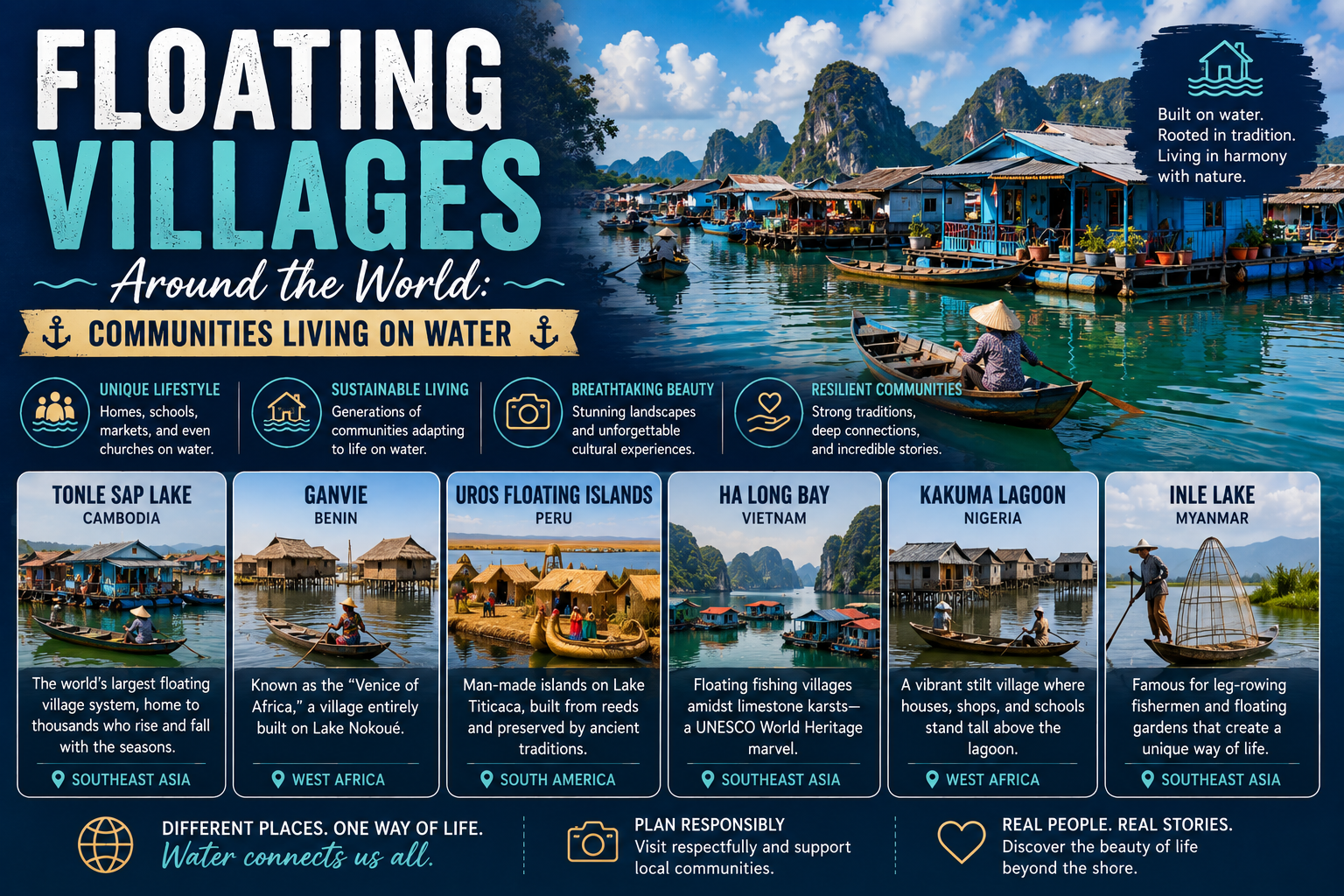
Across the world, floating villages have allowed communities to thrive on lakes, rivers, and wetlands for centuries. These remarkable settlements showcase human creativity and resilience. Instead of building on solid ground, residents created homes on floating platforms, reed islands, or wooden stilts to adapt to changing environments, seasonal floods, and limited land.
Today, many floating villages remain active communities where families live, children attend school, and local traditions continue to flourish. While tourism has brought global attention to these destinations, they remain much more than attractions. They represent unique cultures, sustainable lifestyles, and centuries of history.
What Are Floating Villages?
Floating villages are communities built directly on water. Some rest on floating platforms or artificial islands that rise and fall with changing water levels. Others stand on wooden stilts above lakes or rivers, protecting homes from seasonal flooding.
People built these settlements for many reasons. Some communities sought protection from conflict, while others settled close to fishing grounds or trade routes. In every case, floating villages reflect the ability of people to adapt to challenging environments.
Famous Floating Villages Around the World
Uros Floating Islands, Peru
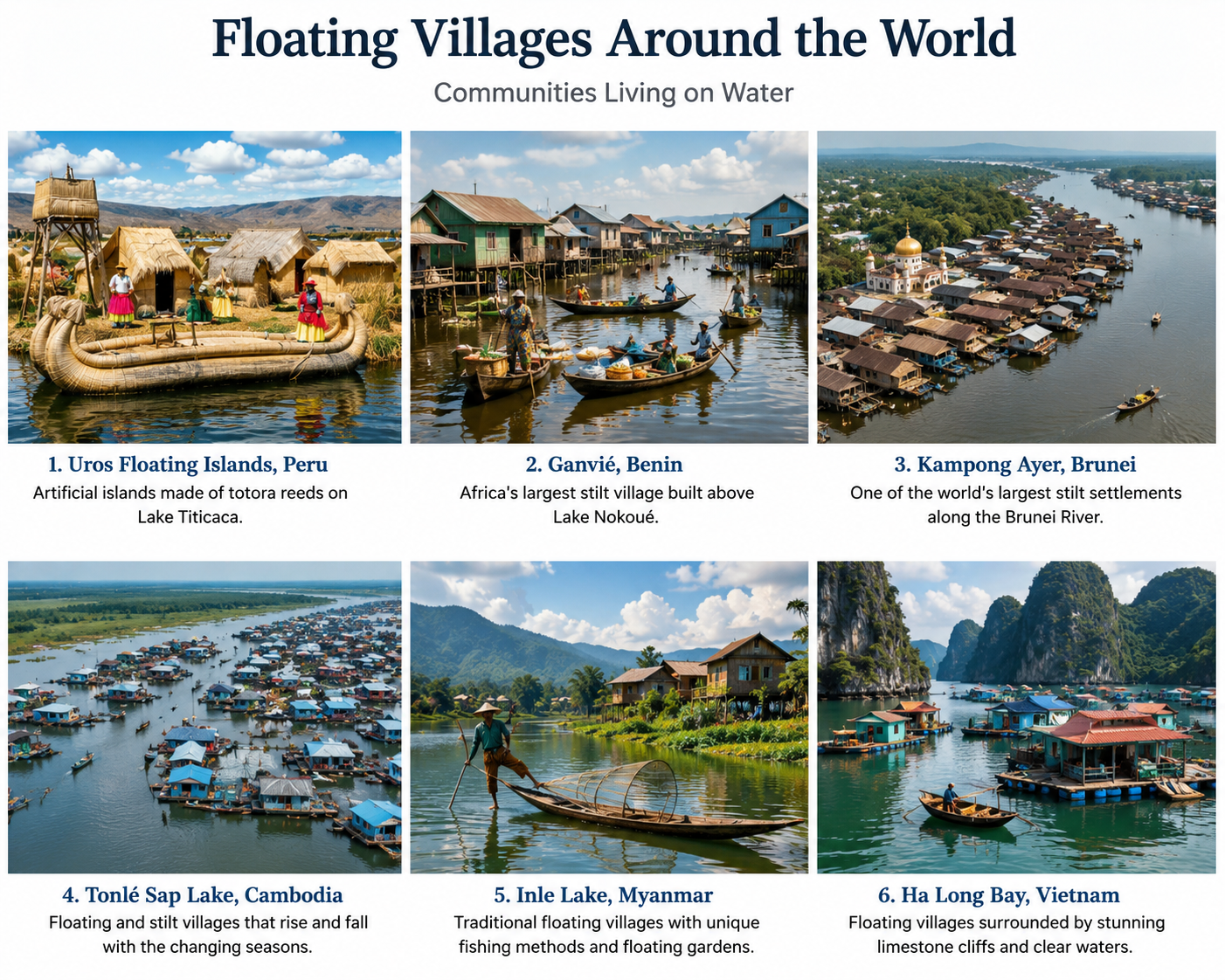
The Uros Floating Islands on Lake Titicaca are among the world’s best-known floating villages. The Uros people construct artificial islands using layers of totora reeds, which naturally float on the lake. Families regularly add fresh reeds to maintain the islands and replace older layers.
Visitors can experience traditional reed houses, handcrafted boats, and breathtaking views of the world’s highest navigable lake. Despite modern conveniences like solar panels and motorboats, the Uros continue to preserve many of their ancient customs.
Ganvié, Benin
Ganvié is Africa’s largest lake settlement and one of the continent’s most fascinating water villages. Built above Lake Nokoué, the community was established by the Tofinu people during the 17th century as a refuge from slave raids.
Today, thousands of residents live in stilt houses connected by canals instead of streets. Boats serve as taxis, delivery vehicles, and market stalls, creating a vibrant community centered around the water.
Kampong Ayer, Brunei
Often called the “Venice of the East,” Kampong Ayer is one of the oldest continuously inhabited floating villages in the world. Located along the Brunei River, it consists of dozens of interconnected neighborhoods built on stilts.
Modern infrastructure blends with tradition. Homes have electricity, schools, health clinics, and internet access, while boats remain the primary mode of transportation.
Tonlé Sap, Cambodia
Cambodia’s Tonlé Sap Lake hosts several remarkable water villages that change with the seasons. During the monsoon, water levels rise dramatically, allowing floating homes to move with the expanding lake. Nearby stilt houses remain elevated above floodwaters.
Fishing supports most local families, making the lake one of Cambodia’s most important natural resources. Visitors can also see floating schools, markets, and even churches.
Inle Lake, Myanmar
Inle Lake combines beautiful scenery with one of Asia’s most unique water villages. The Intha people are famous for rowing boats with one leg while using both hands to fish.
The lake is equally known for its floating gardens, where vegetables grow on anchored beds of vegetation. This remarkable farming method has supported local communities for generations.
Why Were Floating Villages Built?
The history of floating villages differs across regions, but several common reasons explain their development.
Many communities built homes on water for protection from enemies. Others settled near rich fishing grounds to secure food and income. Seasonal flooding also encouraged people to build above water rather than constantly rebuild on land.
In some areas, waterways served as major trade routes, making life on the water practical for commerce. Limited land availability also encouraged communities to develop innovative floating settlements.
Challenges Facing Floating Villages Today
Although many floating villages continue to thrive, they face growing environmental and social challenges.
Climate change affects rainfall patterns, water levels, and fish populations. Pollution threatens lakes and rivers that communities depend on for drinking, fishing, and transportation. Younger generations often move to cities for education and employment, reducing local populations.
Tourism creates both opportunities and challenges. Responsible tourism supports local businesses and cultural preservation, while uncontrolled tourism can strain natural resources and disrupt daily life.
Protecting these communities requires sustainable tourism, environmental conservation, and continued support for local traditions.
Tips for Visiting Floating Villages
If you plan to visit floating villages, travel responsibly to help preserve these remarkable communities.
- Choose locally operated boat tours whenever possible.
- Ask permission before photographing residents.
- Support local artisans by purchasing handmade products.
- Avoid littering or disturbing wildlife.
- Respect local customs and cultural traditions.
Small actions can make a meaningful difference while ensuring these communities continue to flourish.
Frequently Asked Questions
What are floating villages?
Floating villages are settlements built on floating platforms, artificial islands, or wooden stilts above lakes and rivers. Many remain active communities with permanent residents.
Which country has the most famous floating villages?
Peru, Cambodia, Brunei, Myanmar, and Benin all feature well-known water villages, each with unique history and architecture.
Can tourists visit floating villages?
Yes. Most water villages welcome visitors through guided boat tours. Choosing community-operated experiences helps support local families.
Why do people still live in floating villages?
Many residents continue traditional occupations such as fishing, farming, weaving, and boat building. These communities also preserve cultural heritage that has existed for centuries.
Final Thoughts
Floating villages are more than scenic destinations. They represent centuries of innovation, resilience, and cultural identity. From Peru’s reed islands to Cambodia’s floating homes and Brunei’s historic stilt communities, these settlements demonstrate how people can successfully adapt to life on water.
Whether you’re planning your next adventure or simply exploring unique destinations from home, floating villages offer an unforgettable glimpse into one of the world’s most extraordinary ways of life.
Outbound Links:
- https://whc.unesco.org
- https://www.nationalgeographic.com/travel
- https://www.unesco.org
- https://www.worldwildlife.org
- https://www.iucn.org
- https://www.britannica.com
- https://earthobservatory.nasa.gov
- https://oceanservice.noaa.gov
- https://www.lonelyplanet.com
- https://www.cntraveler.com