
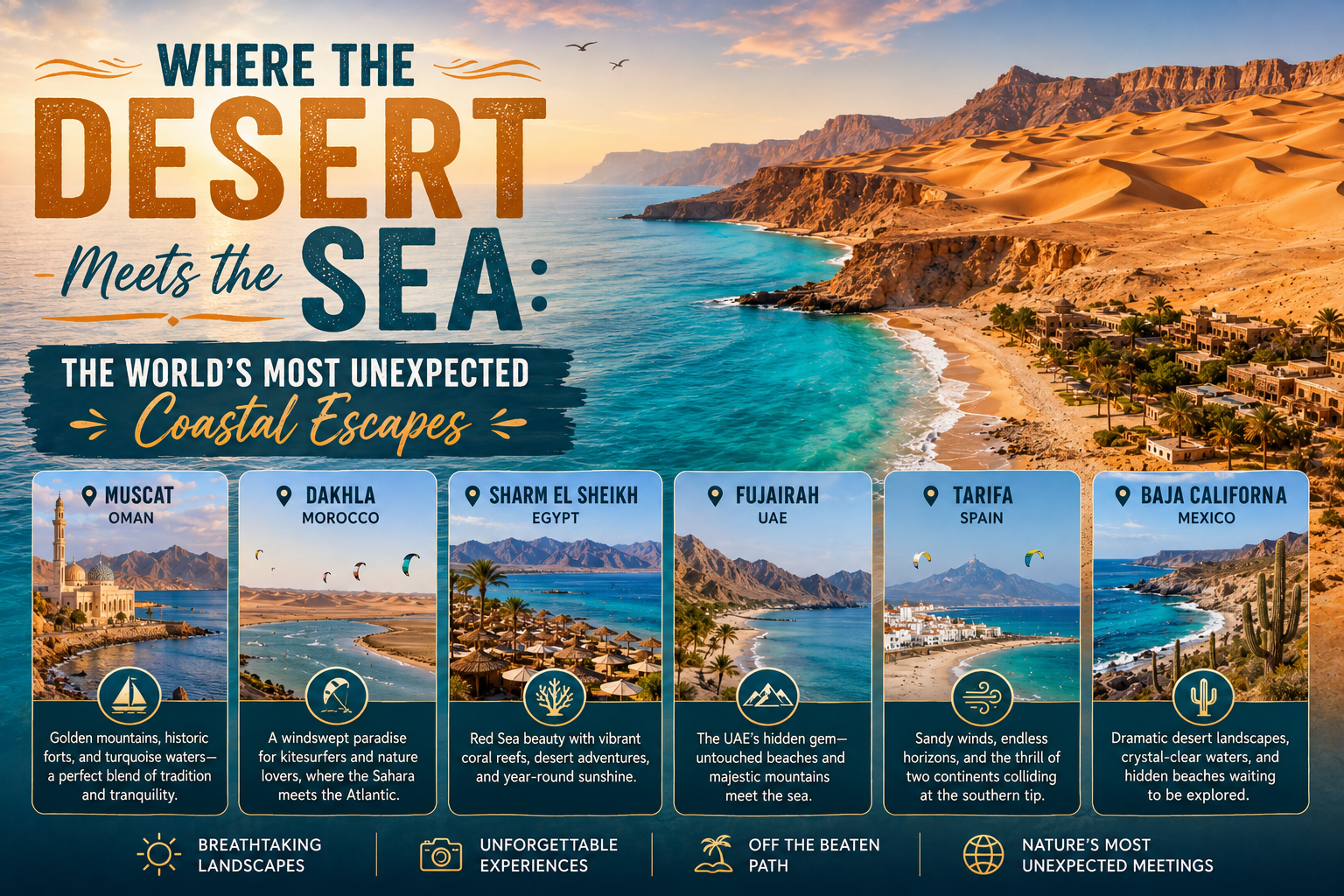
A strange silence settles over places where sand dunes roll straight into the surf desert coastlines. There are no palm trees. No coral reef postcards. Just heat rising off red rock and a cold wind off the water. The coastline looks like two different planets stitched together.
These desert coastlines exist in more corners of the world than most travelers realize. They reward the people who go out of their way to find them.
This is not a list of typical beach holidays. It’s a look at the strange, beautiful seams where desert meets ocean. Camels sometimes graze within sight of whales. Dunes tower over fishing villages. The usual rules of a “coastal getaway” simply don’t apply here. If you’re tired of crowded shorelines, these destinations are worth putting on your map.
Why Desert Coastlines Feel So Different
Most of the planet’s great deserts sit inland, far from any ocean. But a handful run right up to the water’s edge. This usually happens because a cold ocean current keeps rain away from the coast. Even so, the sea can sit just a few hundred meters from dry dunes.
The result is a landscape that shouldn’t make sense, and somehow does. Fog rolls over sand. Seals lounge beside sandstone cliffs. Sunsets turn both the water and the dunes the same shade of orange.
These regions also tend to be quieter than classic beach spots. There’s no resort strip. No crowd fighting for the same stretch of sand. Just space, silence, and scenery that looks like nowhere else on earth.
1. Skeleton Coast, Namibia
Namibia’s Skeleton Coast is the best-known place where desert meets sea, and it earns its dramatic name. Shipwrecks rust along the shore, half-buried in sand. The Namib Desert — one of the oldest deserts on the planet — stretches inland in towering dunes. The cold Benguela Current keeps the water icy even under the desert sun. That cold water is part of why so many ships sank here.
Travelers come for the seal colonies at Cape Cross and the eerie wrecks. You can also drive through dunes that rise straight out of the Atlantic surf. Sossusvlei, a short trip inland, adds some of the tallest sand dunes on earth. Few places combine shipwreck history, desert views, and marine wildlife this well.
2. The Atacama Coast, Chile
The Atacama Desert is one of the driest places on earth. Yet it sits right along the Pacific coast for much of its length. Towns like Antofagasta and Pan de Azúcar National Park show off the contrast best. Rust-colored cliffs drop straight into blue water. Penguins waddle along beaches backed by desert scrub. The Humboldt Current keeps the sea full of life, despite the dry land nearby.
Stargazers already know this region for its clear night skies, some of the best on earth for watching stars. Pair a coastal drive here with a night under those skies. Your trip will cover two very different kinds of wonder.
3. Guajira Peninsula, Colombia
Few places blend desert and sea as vividly as La Guajira, in Colombia’s far north. Rust-red dunes tumble into the turquoise Caribbean. The wind never seems to stop. This is Wayuu territory, home to an Indigenous community. Their culture shapes daily life here. You can see it in the woven bags sold roadside and the slow rhythm of desert village life.
Punta Gallinas is the northernmost point of South America. It sits at the heart of this landscape, where huge dunes meet Caribbean waves. The result looks almost unreal in photos. Getting there takes effort — usually a rough drive across open desert. That difficulty is exactly why it still feels undiscovered.
4. Dakhla, Morocco
On the edge of the Sahara, where Morocco’s coast curves along the Atlantic, sits Dakhla. This lagoon town has quietly become a magnet for kitesurfers and wanderers looking for something different. Endless dunes roll toward a calm, shallow lagoon on one side. The open ocean sits on the other. It’s a rare setup where flat water and desert views sit side by side.
Beyond the sport crowd, Dakhla offers camel treks across the dunes and fresh oysters straight from the lagoon. The pace here is slower than Morocco’s busier coastal cities further north. It remains one of the more overlooked desert-meets-sea spots, even among well-traveled explorers.
5. Ningaloo Reef and Cape Range, Australia
Western Australia holds one of the most unusual pairings on this list: a coral reef running along a desert coastline. Cape Range National Park backs directly onto Ningaloo Reef. Red rock gorges and dry outback scrub sit within walking distance of the reef. That reef is full of whale sharks, manta rays, and turtles.
It’s a rare setup. Most reef destinations sit near lush, tropical land, not dry outback. Snorkelers can step off a desert beach and swim alongside whale sharks within minutes. Almost no other coastline on earth allows that.
6. Paracas, Peru
South America offers another striking example along Peru’s southern coast. Paracas sits where the Sechura Desert meets the Pacific. Its red-sand cliffs drop into cold, nutrient-rich water. The nearby Ballestas Islands are often called a budget version of the Galápagos. They draw sea lions, penguins, and thousands of seabirds just offshore from scenery that looks almost Martian.
The Paracas National Reserve protects miles of this desert coastline. It includes candelabra-shaped carvings cut into a hillside, visible from the water. This spot is an easy add-on for travelers already exploring Peru’s ancient sites. It’s a reminder that some of the country’s most striking scenery has nothing to do with mountains at all.
7. Baja California Sur, Mexico
Along Mexico’s Baja Peninsula, the Sonoran Desert runs straight into the Sea of Cortez. Jacques Cousteau once called this water “the aquarium of the world.” Cardón cacti, some of the tallest in existence, stand just steps from the beach. Gray whales come to calve here every winter.
Towns like Loreto and La Paz make good bases for exploring this coastline. You’ll find whale-watching boat trips and hikes through cactus-covered hills that end at empty coves. The desert-to-sea drive along the peninsula’s eastern edge is one of the most scenic road trips in North America. It rarely gets the attention it deserves compared to Baja’s more famous surf towns further north.
Planning a Trip to a Desert Coastline
A few things set these trips apart from a standard beach vacation. It helps to plan around them:
- Pack for two climates in one day. Desert coastlines often swing from cold, foggy mornings to hot afternoons. Layers matter more here than sunscreen alone.
- Expect fewer services. Many of these regions are remote by design. Fuel stops, restaurants, and lodging can be spread far apart. Research before you go.
- Go for the light. Sunrise and sunset here tend to be dramatic. Sand, rock, and water catch color in a way few other places manage.
- Respect the ecosystems. These coastlines are often fragile. Dunes erode easily, and marine life along desert coasts can be more sensitive to disturbance than in busier tourist spots. Stick to marked paths and licensed guides where possible.
A desert coastline pairs naturally with other dramatic, less-visited landscapes. See our guide to volcanoes, waterfalls, and glaciers for a similar spirit of chasing nature at its wildest. Clear night skies are part of the appeal too. Many of these regions, especially the Atacama, double as some of the best stargazing spots on earth.
Frequently Asked Questions
What is a desert coastline, and why do they exist? A desert coastline forms where a dry region borders the ocean directly. This usually happens because a cold ocean current blocks rain along the coast, even though the sea is close by. The result is dry, sandy land right next to cold, often wildlife-rich water. This combination only exists in a handful of places worldwide.
Which country has the most famous desert-meets-sea landscape? Namibia’s Skeleton Coast is generally seen as the most iconic example. It’s known for its shipwrecks, towering dunes, and seal colonies along the Atlantic Ocean.
Are desert coastal destinations good for beginners, or only experienced travelers? Some, like Baja California Sur or Ningaloo Reef, have solid tourism infrastructure and suit most travelers. Others, like the Guajira Peninsula, need more planning — often a guide or a rugged vehicle to reach comfortably.
Is it safe to swim along desert coastlines? It depends on the location. Currents can be strong, and the water is often colder than you’d expect given the desert heat. Check local conditions and swim in designated areas for the safest experience.
What is the best time of year to visit these destinations? This varies by region. Many desert coastlines are most comfortable outside of peak summer, when daytime heat is less extreme. Water temperatures and wildlife activity stay favorable during these cooler months too. Think whale migrations in Baja or seabird colonies in Peru.
Outbound Links
- https://whc.unesco.org
- https://www.nationalgeographic.com/travel
- https://www.lonelyplanet.com
- https://earthobservatory.nasa.gov
- https://www.britannica.com
- https://www.unep.org
- https://oceanservice.noaa.gov
- https://www.iucn.org
- https://www.worldwildlife.org
- https://www.cntraveler.com