
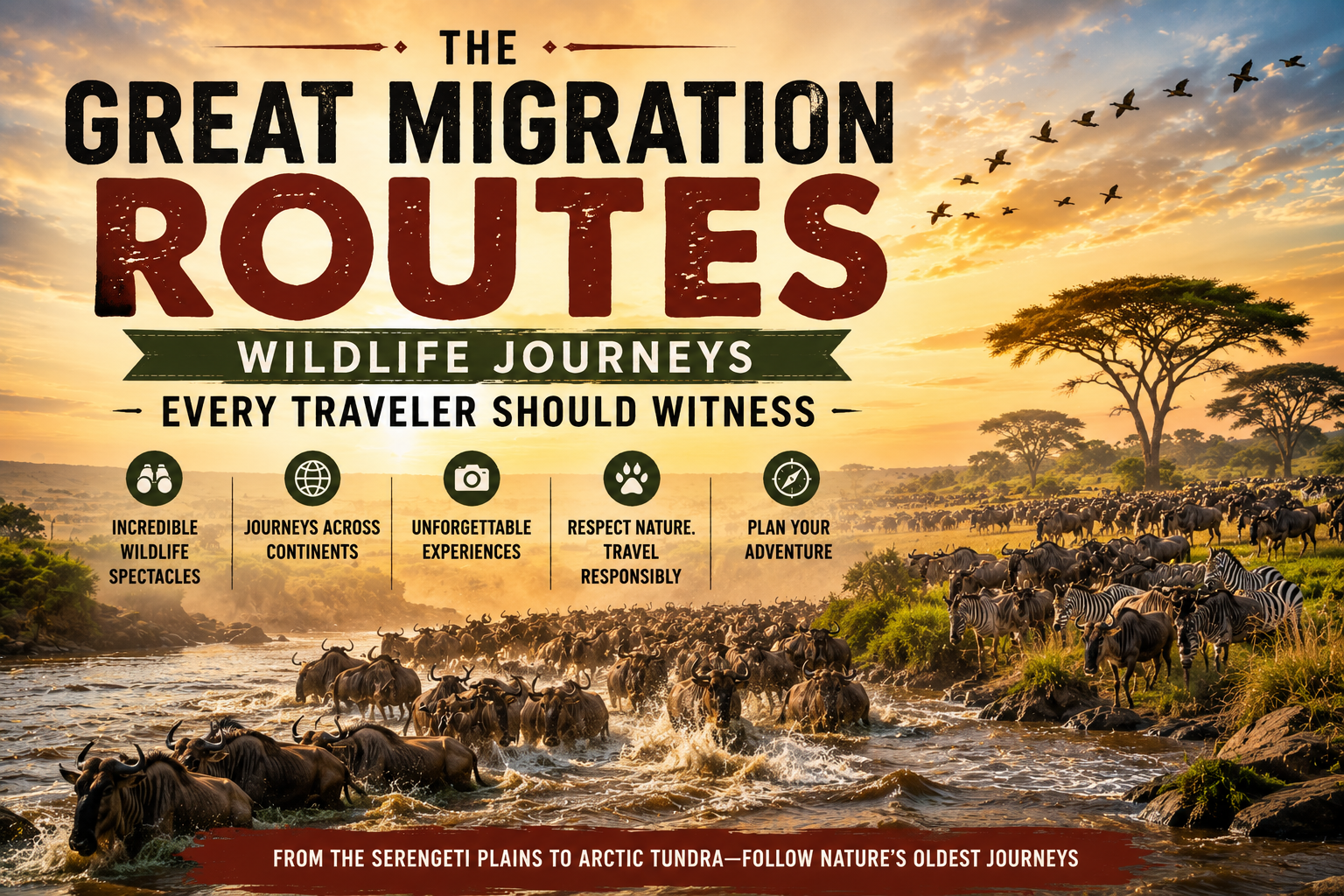
Every year, millions of animals embark on extraordinary journeys across continents, oceans, and skies. These great wildlife migrations are among the most incredible natural events on Earth, driven by the search for food, breeding grounds, and favorable climates.
From vast herds crossing African rivers to butterflies traveling thousands of miles, these migrations demonstrate the resilience and instinct of wildlife. For travelers, witnessing one of these events is an unforgettable experience that offers a deeper appreciation of the natural world.
If you’re planning a nature-focused adventure, these great wildlife migrations deserve a place on your travel bucket list.
Why Witness Great Wildlife Migrations?
Watching great wildlife migrations is unlike any other travel experience. Instead of visiting animals in a single location, you see them moving through landscapes exactly as they have for thousands of years.
Here are a few reasons why these journeys attract travelers from around the world:
- Witness nature’s most remarkable survival strategies.
- Observe millions of animals in their natural habitat.
- Capture incredible wildlife photography.
- Explore some of the world’s most beautiful national parks.
- Support conservation through responsible tourism.
Many migration routes also pass through protected reserves, helping preserve these ecosystems for future generations.
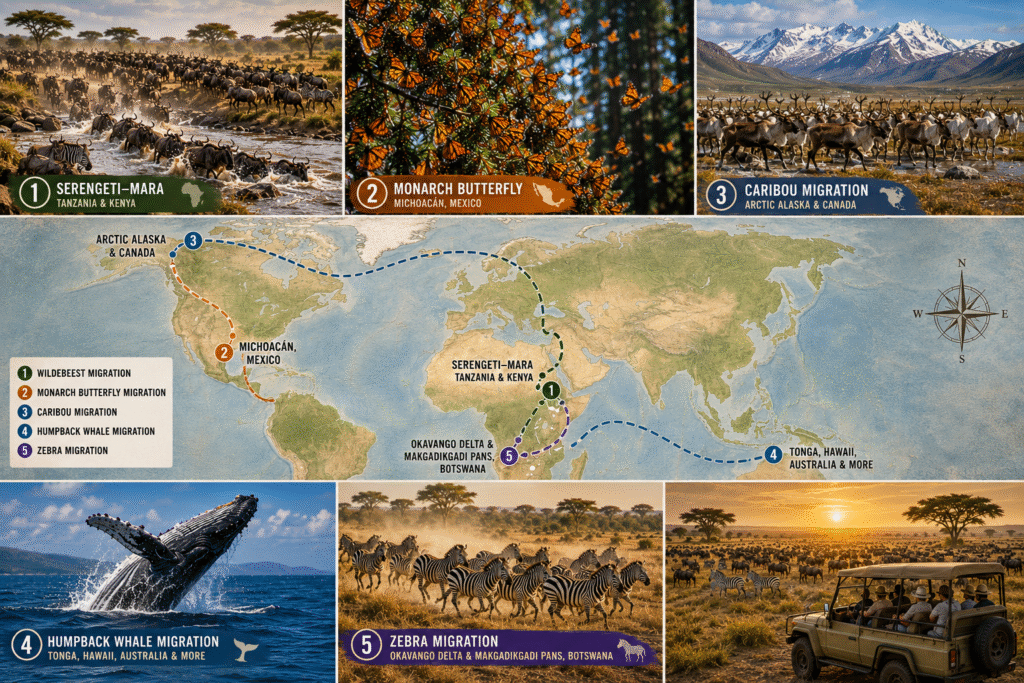
1. The Great Wildebeest Migration, Tanzania and Kenya
The Great Wildebeest Migration is widely regarded as the world’s most spectacular wildlife migration.
Every year, more than a million wildebeest, accompanied by hundreds of thousands of zebras and gazelles, travel across the Serengeti National Park in Tanzania and Kenya’s Maasai Mara National Reserve.
The migration follows seasonal rainfall as animals search for fresh grass and water. Along the journey, they face dangerous predators, including lions, crocodiles, cheetahs, and hyenas.
One of the most dramatic moments occurs during the famous Mara River crossings. Thousands of wildebeest plunge into crocodile-filled waters while predators wait along the riverbanks. These crossings create one of the greatest wildlife spectacles on the planet.
Best Time to Visit
The exact timing changes each year, but the river crossings usually occur between July and October, making this the most popular season for visitors.
2. Monarch Butterfly Migration, North America
Although tiny in size, monarch butterflies complete one of the longest insect migrations on Earth.
Each autumn, millions of butterflies travel thousands of kilometers from Canada and the United States to the mountain forests of central Mexico. There, they gather in enormous colonies that cover entire trees with bright orange wings.
The migration is particularly remarkable because several generations complete the round-trip journey. Individual butterflies never make the entire cycle, yet each new generation instinctively follows the same route.
Visiting the wintering forests provides an unforgettable opportunity to watch millions of butterflies flutter through the cool mountain air.
Travel Tip
Plan your visit between November and February when monarch butterflies gather in Mexico’s protected reserves.
3. Caribou Migration, Arctic North America
The caribou migration is one of the longest land migrations undertaken by mammals.
Each year, vast herds travel across the Arctic tundra of Alaska and northern Canada. Their journey covers hundreds of miles as they move between winter forests and summer calving grounds.
This migration supports an entire Arctic ecosystem. Wolves, bears, and golden eagles all depend on healthy caribou populations, while Indigenous communities have relied on these animals for generations.
Despite harsh weather and rugged landscapes, the herds continue their ancient journey every year.
Best Time to Visit
Late spring and early summer offer excellent opportunities to observe migrating caribou across the Arctic tundra.
4. Humpback Whale Migration
Among the most impressive great wildlife migrations are the annual journeys made by humpback whales.
These giant marine mammals travel thousands of kilometers between cold feeding grounds and warm tropical breeding waters. During the migration, visitors may witness spectacular breaches, tail slaps, and playful behavior near the ocean’s surface.
Popular whale-watching destinations include Australia, Hawaii, Alaska, Iceland, and parts of South America, where responsible tours allow travelers to observe these magnificent creatures while respecting their natural habitat.
Don’t Miss
Choose licensed whale-watching operators that follow responsible wildlife viewing guidelines to minimize disturbance to the animals.
5. Zebra Migration, Botswana
While the Serengeti migration receives most of the attention, Botswana hosts one of Africa’s most remarkable great wildlife migrations. Every year, thousands of zebras travel between the Chobe River floodplains and the Makgadikgadi Salt Pans in search of fresh grazing after seasonal rains.
This journey, once interrupted by fencing, has returned thanks to successful conservation efforts. Today, it is considered one of the longest zebra migrations in Africa and offers visitors a quieter alternative to East Africa’s famous wildlife spectacles.
Travelers visiting Botswana can also spot elephants, giraffes, lions, cheetahs, and countless bird species, making the migration an excellent addition to any safari itinerary.
Best Time to Visit
Visit between November and December when zebras begin their migration toward the Makgadikgadi Salt Pans after the first seasonal rains.
Best Time to See Great Wildlife Migrations
The timing of great wildlife migrations depends on weather, rainfall, and breeding seasons. Planning your trip around these natural cycles gives you the best chance of witnessing these extraordinary events.
Here is a quick guide:
| Migration | Best Time |
|---|---|
| Great Wildebeest Migration | July–October |
| Monarch Butterfly Migration | November–February |
| Caribou Migration | Late Spring–Early Summer |
| Humpback Whale Migration | Varies by destination |
| Botswana Zebra Migration | November–December |
Always check seasonal updates before booking because migration dates can change slightly each year.
Tips for Responsible Wildlife Travel
Watching great wildlife migrations is a privilege, and responsible tourism helps protect these incredible natural events.
Choose Ethical Tour Operators
Book safaris and wildlife tours with licensed operators who follow conservation guidelines and maintain safe distances from animals.
Respect Wildlife
Avoid making loud noises, feeding animals, or attempting to get too close for photographs.
Support Conservation
Many national parks and wildlife reserves use tourism revenue to protect migration routes and endangered species. By visiting responsibly, you contribute to long-term conservation efforts.
Pack Responsibly
Bring binoculars, reusable water bottles, neutral-colored clothing, sunscreen, and a good camera to make the most of your experience.
Why Great Wildlife Migrations Matter
The world’s great wildlife migrations are more than breathtaking travel experiences. They play a vital role in maintaining healthy ecosystems by supporting predator populations, spreading nutrients, and sustaining biodiversity.
Unfortunately, habitat loss, climate change, and human development threaten many migration routes. Responsible travel and conservation programs help ensure these incredible journeys continue for future generations.
Whether you dream of watching wildebeest cross the Mara River, seeing monarch butterflies blanket Mexican forests, or spotting humpback whales breaching offshore, witnessing one of these migrations offers memories that last a lifetime.
Final Thoughts
Few travel experiences compare to witnessing great wildlife migrations in person. These remarkable journeys showcase nature’s resilience, beauty, and incredible instinct.
From the plains of East Africa to the Arctic tundra and the forests of Mexico, each migration tells a unique story of survival. Planning your visit carefully and traveling responsibly allows you to enjoy these natural wonders while helping protect them for years to come.
If you’re looking for an unforgettable wildlife adventure, add one of these great wildlife migrations to your travel bucket list.
Frequently Asked Questions
What are great wildlife migrations?
Great wildlife migrations are large-scale seasonal movements made by animals as they search for food, breeding grounds, or suitable climates.
Which wildlife migration is the largest?
The Great Wildebeest Migration in Tanzania and Kenya is widely considered the world’s largest land animal migration.
When is the best time to see wildlife migrations?
The ideal time depends on the species and destination. Most migrations follow seasonal weather patterns and rainfall.
Are wildlife migration tours suitable for families?
Yes. Many national parks and guided safaris welcome families and provide safe opportunities to observe wildlife while following conservation guidelines.
Internal Links
- Experience-Led Travel 2026
- Best Weekend Getaways
- Island-Hopping Beyond the Crowds: Lesser-Known Archipelagos Worth Discovering
- Cloud Forests of the World: Mystical Destinations Above the Mist
- Hidden Valleys of the World: Secret Landscapes That Feel Like Another Planet
- Packing Smart: Travel Light, Experience More
- Why More People Are Traveling Solo and Slowing Down