
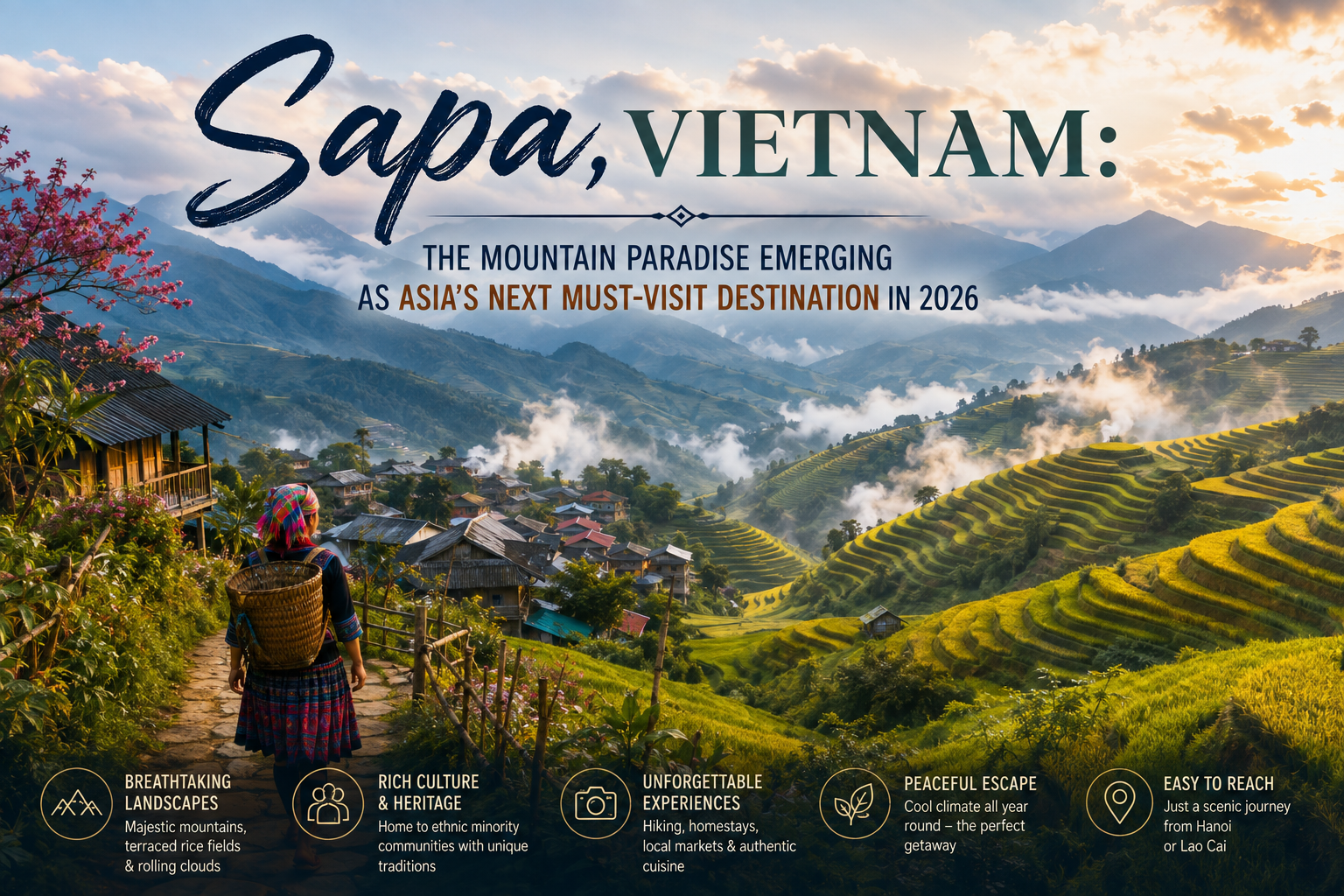
There is a town in northern Vietnam where rice terraces climb mountainsides like giant green staircases, clouds settle into valleys, and travelers can reach the highest point in Indochina by cable car. That town is Sapa.
For years, Sapa played second fiddle to Hanoi and Ha Long Bay on many Vietnam itineraries. Now, however, the mountain destination is attracting more attention. Its dramatic landscapes, ethnic minority communities, trekking routes, and improved infrastructure make it one of northern Vietnam’s most appealing destinations.
This Sapa Vietnam travel guide 2026 covers the best things to do, when to visit, how to get there, where to stay, what to eat, and how to experience Sapa beyond the busiest tourist spots.
Why Sapa Is Trending in 2026
Sapa sits in Lao Cai Province in northwestern Vietnam, within the Hoang Lien Son mountain range. At roughly 1,500 to 1,650 meters above sea level, it has a noticeably cooler climate than much of the country.
That elevation is one of its biggest attractions.
While Hanoi can be hot and humid, Sapa offers cooler mountain air. Winter can even bring frost and occasional snow, creating a landscape that feels very different from the rest of Vietnam.
Sapa has also become easier to reach. The Hanoi–Lao Cai Expressway has shortened road travel, while the Fansipan cable car and funicular have made the region’s highest peak accessible to travelers who may not want to undertake a multi-day trek.
At the same time, newer trails and lesser-known villages are helping spread visitors beyond the busiest parts of town.
Getting to Sapa From Hanoi
Sapa does not have its own airport, so most travelers arrive from Hanoi or Lao Cai.
Sleeper Bus or Limousine Van
This is one of the easiest options. Modern sleeper buses and limousine vans typically take around five to six hours from Hanoi, depending on traffic and the service chosen.
Overnight Train
Another popular option is taking an overnight train from Hanoi to Lao Cai. From Lao Cai, Sapa is reached by road with a short transfer.
This option works particularly well for travelers who want to save a hotel night while experiencing a classic northern Vietnam journey.
Private Car or Motorbike
A private vehicle provides more flexibility. You can stop along the way, including at viewpoints around the spectacular O Quy Ho Pass.
If you are planning a larger northern Vietnam itinerary, Sapa can also be combined with destinations such as Ha Giang and Mu Cang Chai.
Best Time to Visit Sapa
Sapa experiences four distinct seasons, making timing important.
September to November
This is one of the most popular periods because the rice terraces turn golden during harvest season. Clearer skies and cooler temperatures also make trekking comfortable.
March to May
Spring offers another excellent window. Rice terraces can be filled with water before planting, creating reflective landscapes that are particularly beautiful for photography.
June to August
Summer brings warmer weather and occasional rain. However, this is when the rice terraces are at their greenest.
December to February
Winter is cold and can be foggy. Fansipan may disappear behind clouds for days, but the quieter atmosphere appeals to travelers who prefer fewer crowds.
Top Things to Do in Sapa in 2026
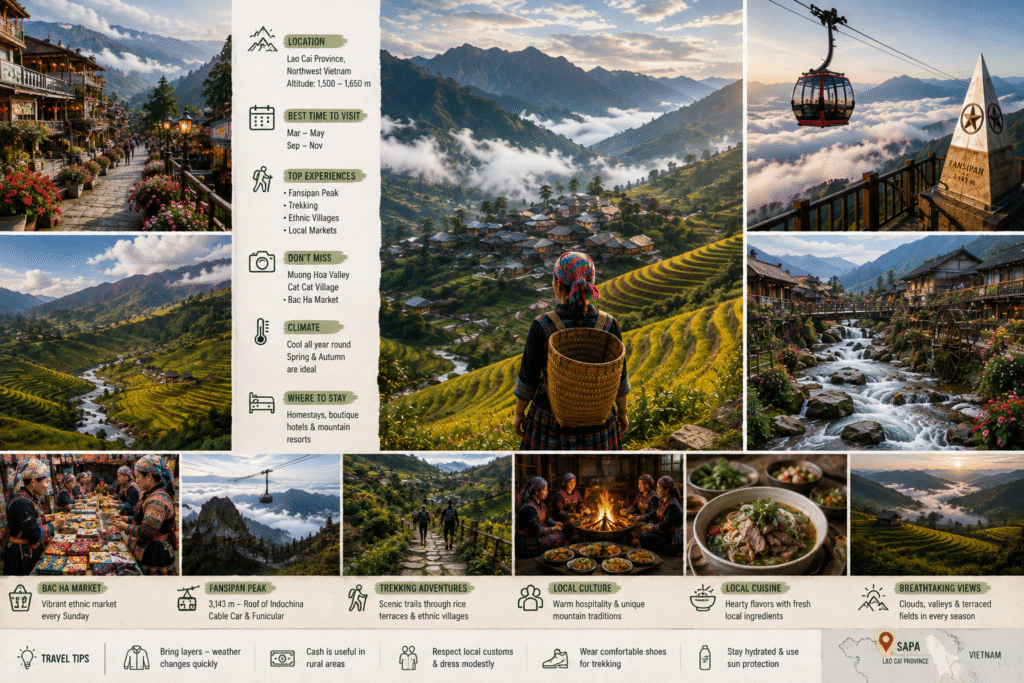
Ride the Cable Car to Fansipan
At 3,143 meters, Fansipan is the highest mountain in Vietnam and the Indochinese Peninsula.
Traditionally, reaching the summit required a challenging multi-day trek. Today, the Sun World Fansipan Legend cable car can take visitors close to the summit in around 15 minutes.
A funicular then helps travelers reach the upper section.
On a clear day, panoramic views stretch across the Hoang Lien Son range. However, visibility can change quickly, so choose your timing carefully.
The summit area has also gained attention for its high-altitude Starbucks location, which adds a distinctly modern touch to an otherwise dramatic mountain experience.
Trek Through Muong Hoa Valley
If Fansipan is Sapa’s headline attraction, Muong Hoa Valley is its heart.
The valley is surrounded by layered rice terraces, mountains, streams, and traditional villages. One of the popular walking routes connects Lao Chai and Ta Van, passing through farming communities along the way.
This is one of the best ways to experience Sapa’s landscapes at walking pace.
Explore Cat Cat Village
Cat Cat Village is one of Sapa’s most visited cultural attractions.
It has become more commercialized over the years, with entrance fees and souvenir stalls along sections of the route. Still, the village provides an introduction to H’mong culture and traditional farming.
Arriving early can help you avoid the busiest periods.
Discover Sapa’s Quieter Villages
Travelers looking for a more peaceful experience should venture beyond Sapa’s most famous attractions.
Sau Chua has attracted mountain bikers and outdoor enthusiasts, while Suoi Thau is increasingly popular with photographers.
For a deeper rural experience, consider villages such as Nam Cang, Ban Ho, Y Ty, or Ta Giang Phin.
Staying overnight with a local family can also transform the experience from a sightseeing trip into a genuine cultural stay.
Visit Bac Ha Sunday Market
Around two and a half hours from Sapa, Bac Ha hosts one of northern Vietnam’s best-known traditional markets.
The Sunday market brings together ethnic minority communities, including Flower H’mong traders, selling produce, textiles, livestock, and other local products.
It requires a full day, but it can be worthwhile for travelers interested in the region’s cultural diversity.
Where to Stay in Sapa
Accommodation ranges from simple family homestays to luxury mountain resorts.
Staying in Sapa town provides easy access to restaurants, shops, transport, and the Fansipan cable car.
For a quieter experience, consider a homestay in Ta Van, Lao Chai, or Nam Cang.
Homestays are particularly rewarding for travelers who want to eat with a local family, learn about village life, and wake up surrounded by rice terraces rather than hotel buildings.
What to Eat in Sapa
Sapa’s mountain climate lends itself to hearty food.
Some local specialties worth trying include:
- Thang co — a traditional H’mong stew that is an acquired taste.
- Grilled meats and vegetables — commonly enjoyed in the evenings.
- Local salmon and trout — raised in mountain farms around the region.
- Com lam — sticky rice cooked inside bamboo tubes.
- Local mountain dishes — often influenced by the ethnic communities living in the surrounding valleys.
Food is an important part of the Sapa experience, especially when enjoyed in a village homestay.
Is Sapa Still Worth Visiting in 2026?
Absolutely, although it helps to have realistic expectations.
Sapa town itself has become significantly more developed. Some popular villages can feel crowded, particularly during weekends and holidays. The Fansipan cable car can also attract long queues during busy periods.
However, the wider region remains remarkably scenic.
The best way to experience Sapa is to slow down. Travel during weekdays, stay at least one night in a village, and consider hiring a local guide for quieter trails.
That approach allows you to see a side of Sapa that is much closer to the mountain destination that originally attracted trekkers.
Practical Tips for Visiting Sapa
Keep these points in mind when planning your trip:
- Bring layers. Mountain temperatures can change quickly.
- Wear proper hiking shoes if you plan to trek.
- Check the weather before visiting Fansipan. Clouds can dramatically reduce visibility.
- Travel on weekdays when possible to avoid the largest crowds.
- Stay in a village homestay for a more immersive experience.
- Hire a local guide for longer or less-established trekking routes.
- Carry cash for smaller villages and local businesses.
- Allow extra time if weather affects transport or mountain activities.
Frequently Asked Questions About Visiting Sapa
Is Sapa worth visiting in 2026?
Yes. Sapa combines spectacular mountain scenery, rice terraces, trekking routes, ethnic minority cultures, and improved tourism infrastructure. It remains one of northern Vietnam’s most rewarding destinations.
How do you get to Sapa from Hanoi?
You can travel by sleeper bus, limousine van, overnight train to Lao Cai followed by a transfer, or private vehicle. The road journey from Hanoi generally takes around five to six hours.
What is the best time to visit Sapa?
September to November is ideal for golden rice terraces and harvest landscapes. March to May is another excellent period, especially for seeing flooded rice terraces and spring scenery.
How many days do you need in Sapa?
Two days covers Fansipan and a basic village trek. Three to four days is better if you want deeper trekking, a homestay, and additional villages or a Bac Ha market trip.
Is Sapa safe for travelers?
Sapa has a well-developed tourism infrastructure and is widely visited by independent travelers and organized groups. As always, use normal precautions and follow local guidance when trekking in mountainous areas.
What is the highest point in Sapa?
Fansipan is 3,143 meters high. It is the highest mountain in Vietnam and the wider Indochinese Peninsula.
Final Thoughts
Sapa in 2026 sits at an interesting crossroads.
It is now easy enough to reach, comfortable enough for a wide range of travelers, and equipped with modern attractions such as the Fansipan cable car. Yet step beyond the town center and you can quickly find yourself surrounded by rice terraces, Sapa Vietnam, mountain paths, forests, and villages where traditional ways of life remain part of everyday life.
For the best experience, do not treat Sapa as a quick stop for a cable-car ride and a few photographs. Give yourself time to walk through Muong Hoa Valley, stay with a local family, explore quieter villages, and experience the mountains at a slower pace.
Pair Sapa with Ha Giang or Mu Cang Chai if you have more time. Even on its own, however, Sapa deserves a place on a serious northern Vietnam itinerary.
Internal Links
- Walking Through the Clouds: The World’s Most Spectacular Mountain Trails for Every Explorer
- Hidden Valleys of the World: Secret Landscapes That Feel Like Another Planet
- Cloud Forests of the World: Mystical Destinations Above the Mist
- The World’s Most Magical Waterfalls: Hidden Cascades Worth the Journey
- Earth’s Blue Wonders: The Clearest Lakes and Rivers You Have to See to Believe
- Experience-Led Travel 2026
- Packing Smart: Travel Light, Experience More