
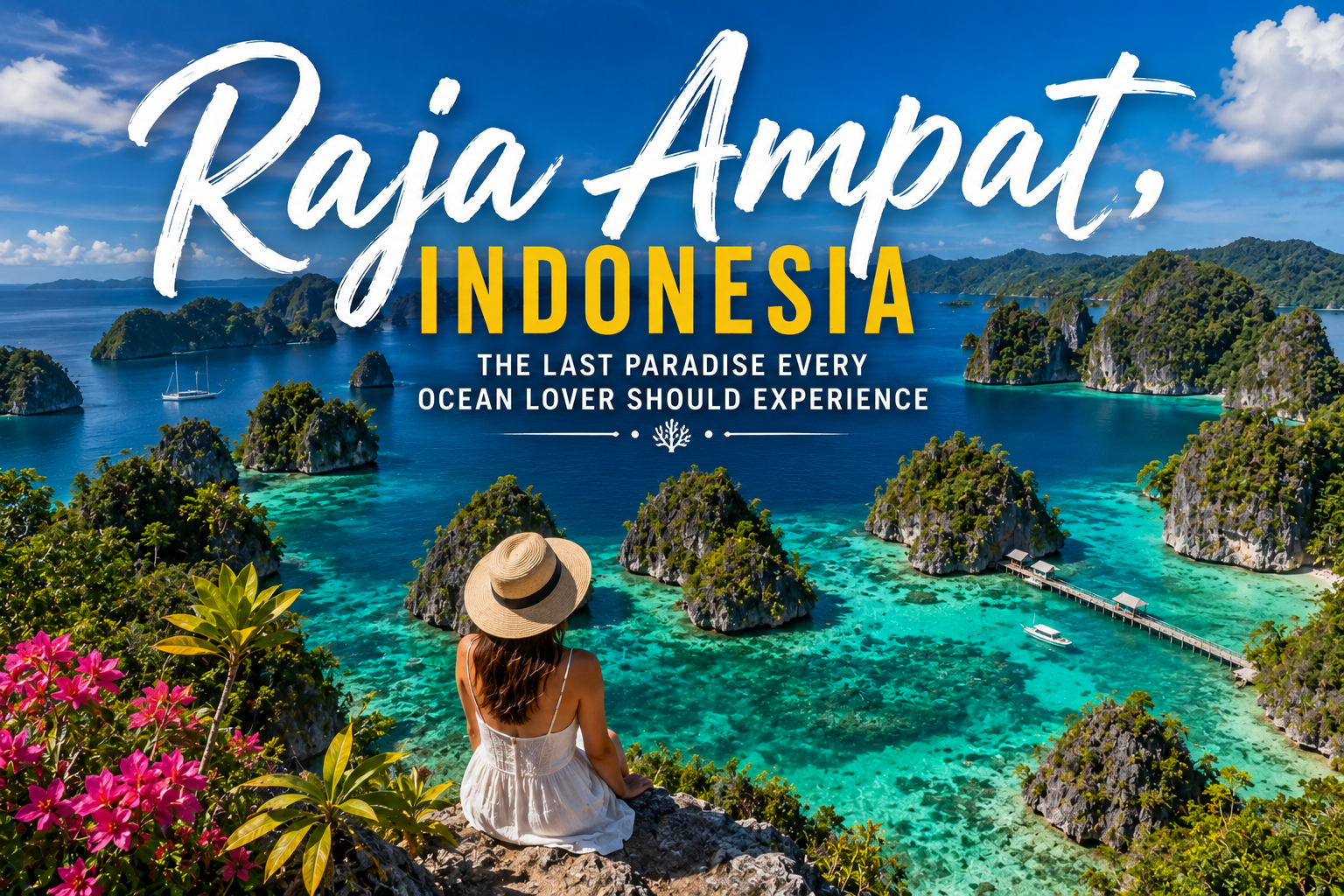
There are tropical islands, and then there is Raja Ampat. Located off the northwest coast of West Papua, Indonesia, this breathtaking archipelago is considered one of the world’s richest marine ecosystems. If you’re looking for the ultimate Raja Ampat’s Travel Guide, you’ve come to the right place.
Made up of more than 1,500 islands, limestone islets, and coral reefs, Raja Ampat’s lies at the center of the Coral Triangle—often called the “Amazon of the Oceans.” The journey isn’t simple, but that’s exactly what helps preserve its untouched beauty. Crystal-clear waters, spectacular limestone landscapes, vibrant coral reefs, and incredible biodiversity make Raja Ampat one of the world’s most rewarding destinations for divers, snorkelers, photographers, and nature lovers.
Quick Facts About Raja Ampat
| Information | Details |
|---|---|
| Country | Indonesia |
| Province | Southwest Papua |
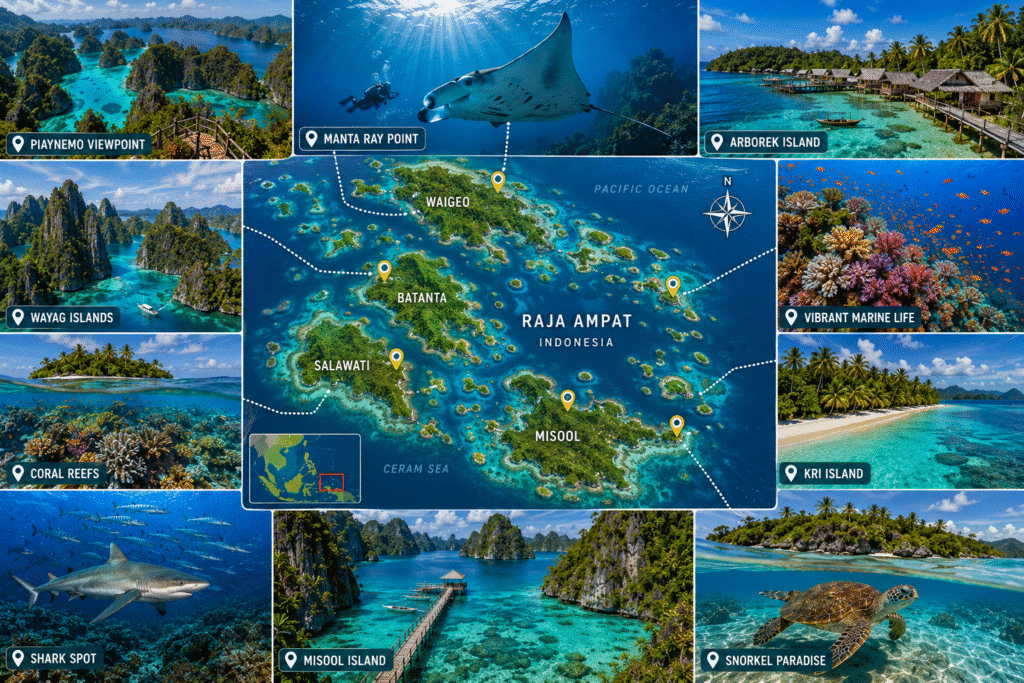
| Main Islands | Waigeo, Misool, Salawati, Batanta |
| Best For | Diving, snorkeling, island hopping, wildlife |
| Famous Viewpoints | Piaynemo, Wayag |
| Closest Airport | Sorong (SOQ) |
| Best Time to Visit | October to April |
| Marine Park Permit | Required |
Why Visit Raja Ampat in 2026?
Few destinations remain as untouched as Raja Ampat.
Located where the Pacific and Indian Oceans meet, the archipelago supports one of the highest concentrations of marine life ever recorded. Unlike many tropical destinations, Raja Ampat has protected much of its natural environment through marine conservation and community-led tourism.
Travelers come here for world-class diving, remote islands, limestone karsts, hidden lagoons, whale-sized manta rays, and reefs that remain remarkably healthy.
Although reaching Raja Ampat requires several connections, every step of the journey feels worthwhile once you arrive.
What Makes Raja Ampat So Special?
The name Raja Ampat, meaning “Four Kings,” refers to the region’s four largest islands:
- Waigeo
- Misool
- Salawati
- Batanta
Together, these islands form one of Earth’s most important marine ecosystems.
The powerful Indonesian Throughflow carries nutrient-rich water between the Pacific and Indian Oceans. As a result, Raja Ampat’s supports extraordinary biodiversity.
Scientists have recorded:
- More than 550 coral species
- Over 1,400 reef fish species
- Hundreds of mollusk species
- Countless endemic marine creatures
Cape Kri even holds the world record for the highest number of fish species recorded during a single dive.
Best Time to Visit Raja Ampat
Because Raja Ampat’s sits close to the equator, temperatures remain warm throughout the year.
However, sea conditions change by season.
October to April
This is considered the best time to visit.
The sea is calmer, visibility is excellent, and manta ray sightings are at their peak.
Most dive resorts and liveaboards operate at full capacity during this period.
November to February
These months are ideal for spotting reef and oceanic manta rays at cleaning stations.
March
Many dive operators consider March the best month for underwater photography thanks to calm seas and exceptional visibility.
June to September
Southern islands such as Misool experience rougher seas and stronger winds.
However, northern islands are quieter, accommodations are cheaper, and tourist numbers are lower.
How to Reach Raja Ampat
Getting to Raja Ampat’s takes planning but is relatively straightforward.
First, fly into Sorong (SOQ) in West Papua.
Most international travelers connect through:
- Jakarta
- Bali
- Makassar
After arriving in Sorong:
- Take a taxi to Sorong Harbour.
- Board the ferry or speedboat to Waisai.
- Transfer by boat to your resort or homestay.
Since very few roads exist beyond Waisai, boats remain the primary mode of transportation throughout the islands.
Marine Park Entry Permit
Every visitor must purchase a Marine Park Entry Permit (PIN).
The permit helps fund:
- Marine conservation
- Reef protection
- Local communities
- Tourism infrastructure
Foreign visitors generally pay around IDR 1,000,000, although fees may change.
Additional village conservation fees may apply at destinations such as:
- Piaynemo
- Arborek
These contributions directly support local communities and environmental protection.
Best Places to Visit in Raja Ampat
Dampier Strait
This is the heart of Raja Ampat and one of the world’s finest diving regions.
Popular dive sites include:
- Cape Kri
- Blue Magic
Expect reef sharks, manta rays, schools of barracuda, colorful reef fish, and even the famous wobbegong shark.
Piaynemo
No Raja Ampat itinerary is complete without visiting Piaynemo.
A short but steep staircase leads to one of Indonesia’s most iconic viewpoints overlooking emerald lagoons and limestone islands.
Wayag
Often considered the most beautiful part of Raja Ampat, Wayag offers dramatic limestone peaks rising from turquoise waters.
Although reaching Wayag requires a longer boat journey, the scenery is unforgettable.
Misool
Misool is quieter, more remote, and famous for pristine coral reefs.
Its protected marine reserves have become one of the world’s leading examples of successful reef conservation.
Many luxury liveaboards include Misool in their itineraries.
Arborek
This small island combines excellent snorkeling with authentic Papuan village life.
Its wooden jetty is one of the best places to encounter colorful reef fish without needing scuba equipment.
Sawinggrai
Sawinggrai is known for snorkeling, local culture, and opportunities to spot the spectacular Wilson’s Bird-of-Paradise.
Where to Stay in Raja Ampat
Homestays
Family-operated wooden bungalows offer authentic experiences at affordable prices.
Meals are usually included, making them excellent value.
Eco-Resorts
Eco-resorts provide comfortable accommodation with private facilities, dive centers, and organized excursions.
They are ideal for travelers seeking convenience while supporting sustainable tourism.
Liveaboards
For divers, liveaboards provide the most comprehensive experience.
These multi-day cruises allow visitors to explore remote reefs around Wayag, Misool, and Dampier Strait without repeatedly changing accommodation.
Practical Travel Tips
- Carry sufficient cash beyond Sorong.
- Pack reef-safe sunscreen.
- Bring lightweight clothing and waterproof bags.
- Consult your doctor regarding malaria prevention.
- Use insect repellent against mosquitoes.
- Purchase comprehensive travel insurance.
- Strong currents make Advanced Open Water certification recommended for many dive sites.
- Respect marine park regulations and avoid touching coral.
Frequently Asked Questions
Is Raja Ampat suitable for beginner divers?
Strong currents make many dive sites better suited to experienced divers. However, snorkeling is excellent for beginners.
How many days should you spend in Raja Ampat?
Five to seven days allows visitors to explore one region comfortably. Ten to fourteen days is ideal for multiple islands and diving areas.
Do you need a permit?
Yes. Every visitor must purchase a Marine Park Entry Permit before exploring Raja Ampat.
What is the nearest airport?
Sorong’s Domine Eduard Osok Airport (SOQ) serves as the main gateway to Raja Ampat.
Can non-divers enjoy Raja Ampat?
Absolutely. Snorkeling, birdwatching, kayaking, island hopping, village visits, and spectacular viewpoints make Raja Ampat rewarding even without scuba diving.
Final Thoughts
The Raja Ampat Travel Guide highlights one of the last truly untouched marine destinations on Earth. From the incredible reefs of Dampier Strait and the world-famous viewpoints of Piaynemo and Wayag to the remote beauty of Misool, the vibrant villages of Arborek and Sawinggrai, and the remarkable biodiversity of the Coral Triangle, every part of Raja Ampat offers unforgettable experiences.
Whether you’re planning your first diving expedition, an island-hopping adventure, or simply looking for one of the world’s most pristine tropical escapes, Raja Ampat rewards every effort it takes to get there. Travel responsibly, support local communities, respect marine conservation rules, and you’ll discover why this Indonesian paradise remains one of the greatest ocean destinations on the planet.
Internal Links
- Island-Hopping Beyond the Crowds: Lesser-Known Archipelagos Worth Discovering
- Earth’s Blue Wonders: The Clearest Lakes and Rivers You Have to See to Believe
- Where the Desert Meets the Sea: The World’s Most Unexpected Coastal Escapes
- Floating Villages Around the World: Communities Living on Water
- Best Weekend Getaways
- Experience-Led Travel 2026
- Packing Smart: Travel Light, Experience More